
Reviewed · WALKING TOURS
Lost Stories of Black Charleston Walking Tour
History here has receipts. I like the way this 2-hour walk uses Damon Fordham to connect facts with personal perspective, and I also love the route that brings you past Old Slave Mart Museum and into waterfront history. One heads-up: you will be on your feet for a while, and two key stops have admission not included.
The payoff is that you do not just look at old buildings. You listen to the stories that explain how Black Charleston shaped the city, from slavery-era power to Reconstruction and civil rights. I also appreciate the small group size, with a maximum of 20 people, which keeps questions possible and the pace human.
If you want Charleston told through a full spectrum lens, this is a strong fit. The tour runs in English, starts at 3:30pm from Buxton Books on King Street, and ends back where you began, so it is easy to slot into your day. One more note, the tone is passionate and can feel direct at times, so it is best if you are ready for history that hits.
In This Review
- Key things to know before you go
- Start at Buxton Books, right when the city warms up
- Damon Fordham turns street corners into story corners
- City Market to Catfish Row: the stop that sets the stage
- Heyward-Washington House: a quick pass that still makes you think
- Old Slave Mart Museum: where the city’s past turns real
- Waterfront Park and the harbor walk: from slavery to civil rights
- How this tour builds value beyond postcards
- Who should book this walk, and who might want a different fit
- Practical tips to enjoy every stop
- Should you book Lost Stories of Black Charleston?
- FAQ
- What is the price of the Lost Stories of Black Charleston Walking Tour?
- How long is the walking tour?
- Where does the tour start?
- What time does the tour start?
- Is the tour offered in English?
- How large is the group?
- What stops are included on the tour?
- Are admission tickets included for the museums?
- Are children allowed?
- Are service animals allowed?
- What is the cancellation policy?
Key things to know before you go
- Damon Fordham leads the stories: writer, historian, educator, and licensed tour guide.
- You stop at major sites: City Market, Catfish Row area linked to Porgy and Bess, Heyward-Washington House, and Old Slave Mart Museum.
- You walk the waterline: Waterfront Park and the harbor area help connect the city’s past to today.
- Some admissions are free, some are not included: City Market and Waterfront Park are ticket-free on this tour, while the Heyward-Washington House and Old Slave Mart Museum are not included.
- Expect standing and listening: plan for moments where the group stays put while stories land.
- Most travel styles fit: kids are welcome with an adult, and service animals are allowed.
Start at Buxton Books, right when the city warms up
The tour meets at Buxton Books, 160 King St in Charleston, at 3:30pm. That timing matters. You get daylight for the walking, and late afternoon light tends to make Charleston’s streets feel easier to read, especially when you are looking at old corners, passageways, and waterfront views.
I like that the tour ends back at the meeting point. When a walking tour loops cleanly like that, you can eat after without doing extra figuring. This one is also built for a small group, with a maximum of 20 travelers, so it does not feel like you are being marched through history on a conveyor belt.
Price is $39 per person for about two hours. For Charleston, that is not a throwaway add-on. You are paying for a licensed guide who is also a writer and educator, not just someone reading off a pamphlet, plus a route that hits several high-impact sites. If you come to Charleston planning to learn the real story behind the postcards, this is a good spend.
More Walking Tours in Charleston
- Historic Charleston Guided Sightseeing Walking Tour
★ 5.0 · 6,216 reviews - Ghosts of Charleston Night-Time Walking Tour with Unitarian Church Graveyard
★ 4.5 · 2,835 reviews - Hidden Alleyways and Historic Sites Small-Group Walking Tour
★ 5.0 · 2,335 reviews
Damon Fordham turns street corners into story corners
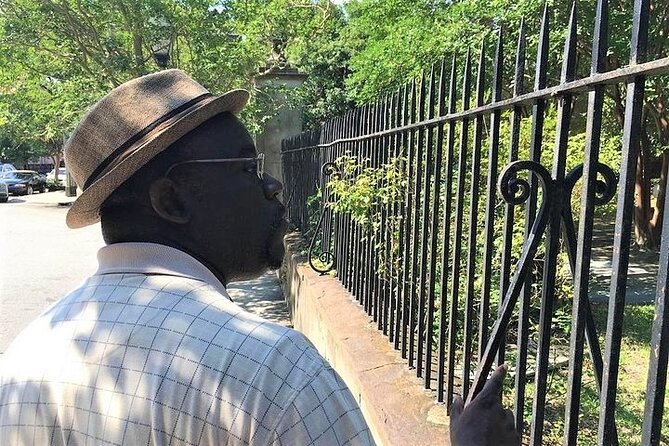
The biggest reason this tour earns such a high rating, a 4.9 average with 412 ratings and 98% recommending, is the guide. Damon Fordham is not only a tour guide. He is a writer, historian, educator, and licensed guide, and you feel that in how he structures the walk.
I like that his approach blends historical context with personal and family perspective. That means you are not only memorizing dates. You are hearing how the past shaped real lives, including stories around Mother Emanuel A.M.E. Church that have faded from memory over time.
Expect entertainment too, not just lectures. Several people highlight his humor and engaging delivery, and at least one review notes music with a melodica. If you are the type who learns best when a guide keeps you paying attention, this format should work well.
Now for the honest consideration: one review described his delivery as awkward, saying the tone felt harsh at times, including scolding or correcting guests. That is not how everyone experiences him, and most comments praise his warmth. Still, if you prefer a softer, more chatty style throughout, be aware this tour can be direct.
City Market to Catfish Row: the stop that sets the stage
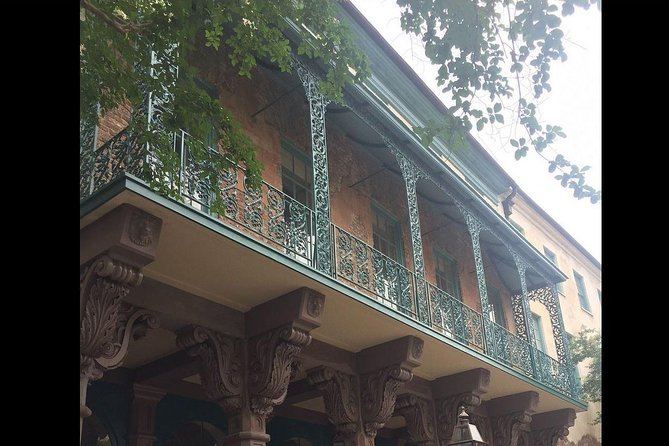
The first leg starts at the Charleston City Market, then you work your way toward the Jehu Jones Hotel site and the Catfish Row area tied to the setting of Porgy and Bess. City Market is your early visual anchor. It is a historic downtown marketplace, and it gives you that immediate sense that this city has long been a crossroads.
This segment is scheduled for about 30 minutes, and importantly, the City Market part is ticket-free on the tour. That matters because you can keep moving without adding an extra line and extra cost right away.
What you should watch for as you listen: the way this part of the walk connects business and community life. Markets and hotels are not neutral locations. In Charleston, they often sit near stories about labor, race, and everyday survival. The guide uses the nearby references, including the Catfish Row association with Porgy and Bess, to show you how culture and history overlap in the same streets.
A practical note: early in a walking tour, you can still adjust. If you realize you want shade, water, or a quick bathroom stop before the more intense museum moments, City Market is the moment to do that.
Heyward-Washington House: a quick pass that still makes you think
Next, you pass by the Heyward-Washington House, connected to Thomas Heyward Jr., a signer of the Declaration of Independence. This stop is only about 10 minutes and the admission is not included.
Even though you are not going inside as part of this tour, I still like the value of this quick pass. It forces a specific kind of question: whose freedom is being referenced when you see famous names on famous buildings? That is the kind of tension this tour keeps returning to, especially when you later step into spaces tied to slavery.
The drawback here is also clear. If you love museums and want more time inside, 10 minutes might feel short. But the time compression is intentional. It keeps you moving toward the places where the story becomes harder to ignore.
If you do want to see the house more deeply on your own later, plan for extra time since admission is not part of the tour.
Other Charleston outings to compare
- Highlights of Charleston Guided Walking Tour
★ 5.0 · 2,206 reviews - Charleston Haunted Booze and Boos Ghost Walking Tour
★ 5.0 · 1,569 reviews - Charleston’s Pleasing Terrors Night-Time Walking Ghost Tour
★ 5.0 · 1,345 reviews - Charleston historical walking tour with a Professor of History at The Citadel
★ 5.0 · 1,284 reviews
Old Slave Mart Museum: where the city’s past turns real
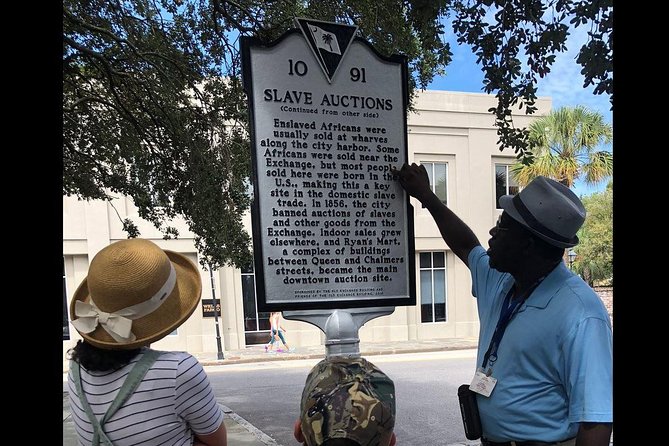
The tour then visits the Old Slave Mart Museum, which was the building used for slave auction galleries in downtown Charleston. This stop is about 15 minutes, and admission is not included.
This is the point in the walk where your notes start to feel heavier. You are not learning this history as an abstract concept. The guide brings the context so the building reads like evidence, not just architecture.
A key practical consideration: you will likely spend time standing and listening while the guide tells the stories tied to the site. One review specifically warned that you should be ready to stand in one spot for extended periods while Damon tells the stories. That is especially true here.
If you are traveling with someone who gets overwhelmed by difficult topics, talk it through before the tour. The overall tone of this walk is meant to confront realities, including sadness and frustration. Most people find the experience thought-provoking and respectful, but it is still heavy material.
Also, because admission is not included, double-check how you want to handle entry. The tour structure gives you access to the stop, but it does not bundle the ticket price for the museum itself.
Waterfront Park and the harbor walk: from slavery to civil rights
After the museum stop, the tour heads along Charleston Waterfront Park and toward the harbor. This part is about 30 minutes, and it is scheduled with ticket-free admission on the tour.
This is where I think the guide’s storytelling has room to breathe. You can look out at water while the narrative covers the arc from slavery through Reconstruction to civil rights. Being near the ocean changes the feeling of the story. It makes it easier to connect the city’s physical geography to the human movement behind it.
I like that this section is explicitly framed as lesser-known places where heroes and heroines made history, but which may not show up in the first sweep of typical tourist history. The harbor path helps you understand that Charleston’s story is not confined to grand houses or tidy timelines.
One thing to consider: because this is an outdoor walk, weather matters. The tour requires good weather, and you will be walking outdoors in the late afternoon. Bring water, wear walking shoes, and plan for heat if you travel in warmer months.
How this tour builds value beyond postcards
Charleston is good at selling beauty. This walking tour is good at selling understanding. You get a route that deliberately avoids letting history stay trapped in the past.
Here is what the structure helps you do:
- Connect places to eras: City Market and Catfish Row associations help you start with daily life and culture, then you move toward the hard records at Old Slave Mart.
- See the city as a timeline: Heyward-Washington House sits in the world of famous names, then you move into sites tied to slavery and the fight for civil rights.
- Leave with context for today: Many reviews describe the tour as thought-provoking and framed in a way that connects past and present. The guide’s educator brain shows up in how he explains why stories fade and how they can be recovered.
That is why the price can feel worth it. You are not paying only for walking and locations. You are paying for interpretation, pacing, and a guide who knows how to handle sensitive material without turning it into a script.
Who should book this walk, and who might want a different fit
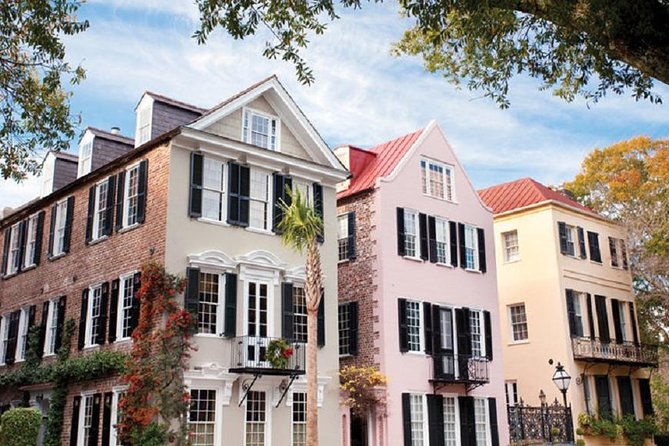
This tour fits many trip styles. It is English-language, it is doable for most travelers, and kids can come as long as an adult accompanies them. If you are a couple looking for a meaningful activity, it is a strong pick. If you are a family that wants a guided way to learn beyond what you remember from school, this can work too, as long as you are prepared for hard history.
It is also well-suited for solo travelers who like guided focus. With a small group size up to 20 people, you can usually ask questions without shouting across the sidewalk.
Potential mismatch: if you hate direct storytelling or dislike being corrected, note the one critical review about delivery tone. If you know you prefer light banter and zero intensity, you might find the approach a bit too straight-faced.
Still, the overall trend is clear. People praise Damon’s passion, his researched background, and his willingness to answer questions. That combination tends to create a tour you remember, not just one you check off.
Practical tips to enjoy every stop
Here are my best practical tips based on how this experience is set up.
- Wear comfortable shoes. This is a walking tour with multiple stops, and you should assume there will be time standing in place while stories are told.
- Bring water and plan for weather. The tour requires good weather, so if conditions are marginal, the operator may adjust your plans.
- Expect a mix of inside and outside. Two stops are not included for admission, so you may decide later whether you want deeper time.
- If you like learning from authors, ask about books. Multiple comments mention Damon’s books and suggest buying one for an autograph.
Also, if you are taking photos, remember that during story-heavy moments, the guide may keep the group focused. You can usually take pictures before or after, but be respectful of pacing.
Should you book Lost Stories of Black Charleston?
If you want Charleston history that goes beyond the usual big-name highlights, I think you should book this. You are paying $39 for a short, focused, two-hour walk led by a licensed guide who is also a writer and educator, and you get a route that touches City Market, Catfish Row associations, Heyward-Washington House, and the Old Slave Mart Museum, plus the harbor story through Waterfront Park.
Book it if:
- you like story-led walking tours
- you want Black Charleston told with context from slavery-era power to Reconstruction and civil rights
- you are okay with the emotional weight of the subject
Skip it or choose a lighter option if:
- you dislike intense, no-nonsense delivery
- you do not want to deal with outdoor walking in the late afternoon
- you prefer fully guided museum entry where admissions are always bundled (here, some admissions are not included)
If you do decide to go, arrive ready to listen. This is not a tour that treats history like trivia. It treats it like something you should carry with you when the photos stop and the day ends.
FAQ
What is the price of the Lost Stories of Black Charleston Walking Tour?
The tour costs $39.00 per person.
How long is the walking tour?
The tour lasts about 2 hours.
Where does the tour start?
The meeting point is Buxton Books, 160 King St, Charleston, SC 29401, USA.
What time does the tour start?
You meet at 3:30pm at the tour office at the start location.
Is the tour offered in English?
Yes, the tour is offered in English.
How large is the group?
This activity has a maximum of 20 travelers.
What stops are included on the tour?
You will visit or pass by Charleston City Market, the Heyward-Washington House (pass by), the Old Slave Mart Museum, and Charleston Waterfront Park. You will also walk by areas connected to the Jehu Jones Hotel site and Catfish Row.
Are admission tickets included for the museums?
Charleston City Market and Charleston Waterfront Park are listed as ticket-free on the tour. The Heyward-Washington House and the Old Slave Mart Museum are noted as admission not included.
Are children allowed?
Children must be accompanied by an adult.
Are service animals allowed?
Yes, service animals are allowed.
What is the cancellation policy?
Free cancellation is available. You can cancel up to 24 hours in advance for a full refund. If you cancel less than 24 hours before the experience starts, the amount paid is not refunded. The experience requires good weather, and if it is canceled due to poor weather, you will be offered a different date or a full refund.
Newest Charleston reviews on the site
- Middleton Place Admission with Self Guided Tour and Lunch★ 4.5 · 326 reviews
- Charleston Ghosts of Liberty Guided Walking Tour★ 4.5 · 473 reviews
- Charleston’s Best Highlights: History, Culture & Architecture★ 5.0 · 422 reviews
- Charleston Chicora 2 Hours Walking Tour★ 5.0 · 264 reviews
- Small-Group Tour: Charleston Old Walled City Historical Walking Tour★ 4.5 · 283 reviews
- 2-Hour Guided Kayak Eco Tour in Charleston★ 5.0 · 954 reviews
- Sip History in The Sun Cabana Covered Cocktail Class★ 5.0 · 332 reviews
- Private Luxury Yacht Charters, BYOB & Dolphins★ 5.0 · 395 reviews
Walking Tours, compared.
History and Hauntings of Salem Guided Walking Tour
Read our review →
New Orleans Premier Ghost, Voodoo and Vampire Walking Tour
Read our review →

Freedom Trail History Small Group Walking Tour
Read our review →
Historic Charleston Guided Sightseeing Walking Tour
Read our review →
New Orleans Food Walking Tour of the French Quarter with Small-Group Option
Read our review →
St. Louis Cemetery No. 1 Official Walking Tour
Read our review →Browse the lists this tour appears in