

Reviewed · WALKING TOURS
Charleston historical walking tour with a Professor of History at The Citadel
One walking tour can make an entire city snap into focus. This one is led by a Ph.D historian at The Citadel, and it turns Charleston’s streets into a timeline you can actually walk.
What I love is the small group limit (12 or fewer), which keeps the pace conversational and makes it easy to ask questions. I also like that the route hits major sights from the French Quarter to St. Michael’s Church, with quick stops that still feel story-rich rather than rushed.
The only thing to consider is that the schedule is packed into about 3 hours, so you’ll want comfortable shoes and a willingness to keep moving from stop to stop.
In This Review
- Key things that make this Charleston history walk work
- Meet your guide: a Ph.D. historian at The Citadel
- Price and value: why $40 feels fair here
- The walk route: starting on Meeting Street, ending near Rainbow Row
- Stop 1: Mills House and the Civil War setting you can feel
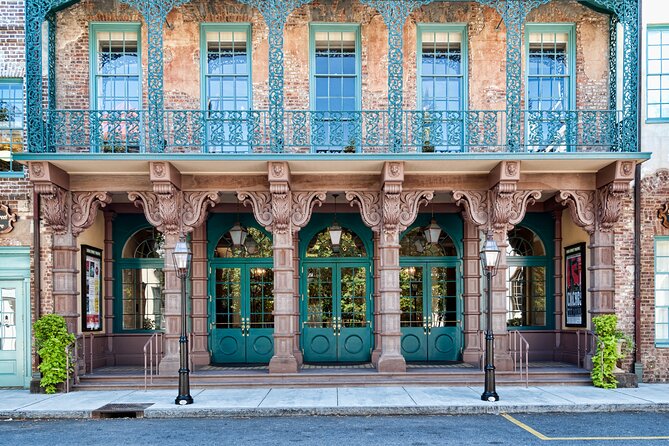
- Stop 2: Dock Street Theater and early American theater myths
- Stop 3: Pink House Gallery, circa 1712
- Stop 4: Washington Square and the monuments you shouldn’t ignore
- Stop 5: Charleston City Hall, from market and bank to government
- Stop 6: Charleston County Courthouse and the old statehouse layer
- Stop 7: St. Michael’s Church, finished in 1761
- Stop 8: Heyward-Washington House, where Washington stayed in 1791
- Stop 9: Old Exchange and Provost Dungeon, British power and the Constitution
- Stop 10: French Huguenot Church and Gothic Revival firsts
- Stop 11: The French Quarter, charm with a purpose
- Stop 12: Hibernian Hall and the Greek Revival connection
- Stop 13: Fort Sumter National Monument, looking from the Battery
- What you should do during the walk to get the most
- Who this tour is best for
- Should you book the Charleston historical walking tour with Eric Lager, Ph.D.?
- FAQ
- How long is the Charleston historical walking tour?
- How much does it cost?
- What is the group size limit?
- Is the tour offered in English?
- Where does the tour start and end?
- Are admission tickets included for all stops?
- Is bottled water included?
- Is there free cancellation?
- Is the tour suitable for everyone physically?
Key things that make this Charleston history walk work
- Professor-led storytelling: A true academic at The Citadel frames what you see in context, not trivia
- Max 12 people: You can hear well and get personal attention, even with questions
- A sweep from early settlement to the Civil War: The walk covers centuries of major turning points
- Landmark stops in quick succession: You get a lot of Charleston for a modest price
- Some entrances cost extra if you want inside access: A few stops note admission not included
- Ends by the Battery near Rainbow Row: Great for continuing your own exploring
Meet your guide: a Ph.D. historian at The Citadel
If you’re serious about Charleston history, you want more than dates and big names. This tour is built around a Professor of History from The Citadel, and the difference shows in how the city is explained.
You’re not just pointed at buildings. You’re guided through why certain structures exist where they do, and how politics, religion, and money shaped the streets. The style that tends to win people over is the way the guide can connect the dots across time, then slow down for what matters most while you’re standing in the place where it happened.
A big plus is the Q and A friendly format. With a group capped at 12 or fewer, you’re not shouting over other voices, and your questions can actually land. If you like digging into the details, this tour is the right kind of environment.
More Walking Tours in Charleston
- Historic Charleston Guided Sightseeing Walking Tour
★ 5.0 · 6,216 reviews - Ghosts of Charleston Night-Time Walking Tour with Unitarian Church Graveyard
★ 4.5 · 2,835 reviews - Hidden Alleyways and Historic Sites Small-Group Walking Tour
★ 5.0 · 2,335 reviews
Price and value: why $40 feels fair here
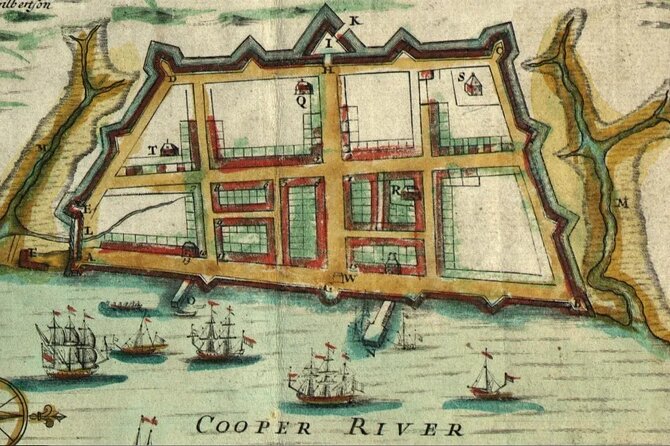
At $40 per person for about 3 hours, the value comes from focus, not volume. You get a guided walk through a cluster of major historic sites, with multiple stops that are listed as admission ticket free, plus several additional landmarks along the way.
Also, the price covers all fees and taxes. That matters in Charleston, where you can end up paying separately for a few attractions and suddenly the math gets messy.
Here’s the tradeoff: a few stops indicate admission ticket not included. That doesn’t make the tour a bad deal. It just means you should plan for the possibility of small add-on costs if you want to go inside at certain buildings. If you’re happy viewing key structures from outside, you may spend mostly just the tour price.
Bottom line: this is a smart buy if you want a structured, professor-led way to get oriented fast and learn the meaning behind what you’re seeing.
The walk route: starting on Meeting Street, ending near Rainbow Row
The tour starts at 108 Meeting St and ends at 39 E Battery, finishing near Rainbow Row. That end point is a practical gift. You’ll be in the right area to keep walking, grabbing a snack, or lining up your next stop without needing to reposition.
It also shapes the experience. Meeting Street and the central historic district area let the guide connect early settlement and civic development to the architecture you see clustered around squares, churches, and former public buildings. Then the route naturally guides you toward the harbor side where the Civil War story becomes impossible to ignore.
If you’re planning the rest of your day, think of this tour as your “map with meaning.” Afterward, you’ll know what to revisit on your own and what you can skip, because the walk gives you context you can actually use.
Stop 1: Mills House and the Civil War setting you can feel
You begin at Mills House Charleston, Curio Collection by Hilton, a historic hotel tied to the early Civil War. Even if you’re mostly there for outdoor views, this start matters. Hotels and lodging sites often became strategic places in wartime, and the guide uses that connection to set the tone for what comes next.
Why it’s worth your attention: Charleston history isn’t just about one era. It’s about how each period leaves fingerprints on the next, and this stop gives you a Civil War entry point without requiring a long detour.
Time at the stop is short, around 10 minutes, so treat it as a launch pad. You’ll get the story beat, then you’ll move.
Other Charleston outings to compare
- Highlights of Charleston Guided Walking Tour
★ 5.0 · 2,206 reviews - Charleston Haunted Booze and Boos Ghost Walking Tour
★ 5.0 · 1,569 reviews - Charleston’s Pleasing Terrors Night-Time Walking Ghost Tour
★ 5.0 · 1,345 reviews - Charleston Ghost & Graveyard Night-Time Guided Walking Tour
★ 4.5 · 1,100 reviews
Stop 2: Dock Street Theater and early American theater myths
Next up is Dock Street Theater, where you’ll learn about the first theatre built in North America and the infamous characters tied to its history. This is a fun pivot point because it connects art and public life with the darker, more complicated side of the city’s past.
The benefit of a theater stop on a history walk: it reminds you that cities aren’t only shaped by governments and wars. Social life, performance, and public spectacle also matter, and Charleston’s elite culture left real traces.
You’ll spend about 10 minutes here. That short window works because the guide’s job is to point out what to notice, then explain why it matters.
Stop 3: Pink House Gallery, circa 1712
From there, you stop at the Pink House Gallery, noted as one of Charleston’s oldest buildings, dating to around 1712. This kind of stop can be easy to underappreciate if you rush past it. But on this tour, it’s used to talk about how the early city grew and how buildings from the earliest phases became landmarks later.
At about 5 minutes, it’s quick. Still, it’s a great reminder that Charleston’s “pretty” streets are also old streets, with structures that survived long enough to become part of the modern postcard.
Stop 4: Washington Square and the monuments you shouldn’t ignore
Then you reach Washington Square, a historic square with multiple monuments. Squares are the city’s stage sets. They show how community identity gets built in stone, and how power is displayed.
The short stop, around 15 minutes, gives you time for the guide to point out how the monuments relate to Charleston’s civic story. Even if you’ve seen squares before, this is where you’ll start to notice the pattern: Charleston keeps telling you who it thinks mattered.
Stop 5: Charleston City Hall, from market and bank to government
At Charleston City Hall, you’ll learn how this beautiful building evolved over time, including a time when it served as a meat market and bank before becoming City Hall.
This is one of those stops that teaches a useful travel skill. Instead of treating buildings as fixed museum objects, you start reading them as assets that changed hands and uses as the city changed.
You’ll likely spend around 10 minutes, enough to connect the building’s past to the present role it plays in civic life.
Stop 6: Charleston County Courthouse and the old statehouse layer
Next is Charleston County Courthouse, where the guide explains what used to be the old South Carolina statehouse. Again, you’re learning how Charleston’s governance shifted location and function across time.
The lesson here is subtle but powerful: when governments move, the buildings they leave behind become part of the city’s memory. You’re walking through those layers, not just around them.
Time at the stop is about 10 minutes.
Stop 7: St. Michael’s Church, finished in 1761
Then comes St. Michael’s Church, Charleston’s oldest church edifice, completed in 1761. A church stop on a walking tour is never only about religion. It’s about architecture, community leadership, and how faith communities anchored neighborhoods.
You’ll get the story in roughly 10 minutes, and the guide usually ties the church into the broader timeline of Charleston’s development. If you care about architecture, this is where the city’s craftsmanship starts to feel like part of its political and social structure, too.
Stop 8: Heyward-Washington House, where Washington stayed in 1791
At Heyward-Washington House, you’ll see where George Washington stayed while visiting Charleston in 1791. This stop has admission ticket not included, so you should be ready for the possibility of paying separately if you want to go inside.
Even if you only observe from the outside, it helps anchor the story of early U.S. leadership in a very specific place. The city becomes more than a Southern backdrop, it becomes part of the early national narrative.
Stop 9: Old Exchange and Provost Dungeon, British power and the Constitution
This stop is a highlight for history buffs: Old Exchange & Provost Dungeon. You’ll learn it was the last public building built by the British in North America and that the Constitution was ratified there in 1788.
Admission is listed as not included, so again, consider whether you want interior access. If you do, plan for extra time and a potential additional ticket.
Why this stop matters: it’s one of the few places in the U.S. where you can connect a national political milestone to a concrete local building that once served as a center of control. The guide’s explanations make the place feel alive, not like a plaque.
Expect about 5 minutes for the stop itself, so don’t plan to read every detail unless the guide pauses long enough for you to catch up.
Stop 10: French Huguenot Church and Gothic Revival firsts
You’ll next visit the French Huguenot Church, known for the history of French Huguenots in Charleston and for being described as the first church built in the Gothic Revival style. This is a smart inclusion because it adds a real immigrant community story to the tour, not just the dominant English colonial thread.
You’ll spend about 10 minutes here, and it works best if you pay attention to how the guide ties architecture to identity. Religious communities often chose styles that signaled who they were and where they belonged culturally.
Admission is listed as free, which is a nice bonus.
Stop 11: The French Quarter, charm with a purpose
Then you get French Quarter time, described as the place to take in the beauty and charm of Charleston’s French Quarter. This is the lighter breathing spot in the middle of heavier civic and political stops.
It’s also not filler. A good history guide uses charming areas to talk about who lived where, how neighborhoods formed, and how trade and settlement patterns shaped street life.
You’ll spend about 15 minutes, which is long enough for photos and for the guide to connect the scenery back to the bigger story.
Stop 12: Hibernian Hall and the Greek Revival connection
Next is Hibernian Hall, where you’ll learn about where the seeds of disunion were sown and get a connection to Greek Revival architecture.
This stop is listed as admission ticket not included, so you’ll likely get the key exterior context on the walk. Still, the building’s place in the story is meaningful, and it’s one of those “wait, so that’s why the building is there” moments.
Also, Greek Revival architecture is a Charleston signature worth understanding. The guide uses it as a clue to broader American ideas, not just decorative taste. That’s the kind of interpretive skill you’ll appreciate long after the tour ends.
Stop 13: Fort Sumter National Monument, looking from the Battery
You finish with Fort Sumter National Monument, but you view it from the Battery on Charleston Harbor. The tour notes you do not go out to the fort. You’ll learn where the first shots of the Civil War were fired.
Admission is listed as not included, which fits the format. This is a viewpoint stop. The goal is to connect the national turning point to the geography of Charleston Harbor.
This ending works well because it gives you a clear visual anchor for the Civil War narrative. You’ll understand why people cared so much about this coastline and these waters, and it ties back to the Mills House Civil War connection earlier in the tour.
What you should do during the walk to get the most
This is a “watch, listen, ask” type of tour. Here’s how to get maximum payoff without getting mentally overloaded.
- Bring a good attitude for questions. The tour is designed for back-and-forth, and you’re encouraged to pick the historian’s brain.
- Wear shoes you trust. The stops are spread out enough to keep you moving, and the tour suggests a moderate physical fitness level.
- Plan to bring your own water. Bottled water is not included, so grab some before you meet.
- If you care about architecture, don’t tune out. The guide uses buildings as evidence, not scenery.
Also, weather matters. The tour is described as requiring good weather, and if poor weather cancels it, you’re offered a different date or a full refund.
Who this tour is best for
This is a great match if you fall into any of these buckets:
- You love history, especially the Revolution and Civil War eras
- You care about architecture and how it links to power, identity, and community life
- You want more than surface facts, and you like being able to ask follow-up questions
- You prefer a small group experience where you can hear the guide without stress
It may feel less ideal if you want a slow, leisurely stroll with lots of free time at each stop. This tour moves, and it keeps the story coming, by design.
Should you book the Charleston historical walking tour with Eric Lager, Ph.D.?
Yes, if you want a history professor-led Charleston walk that covers a lot of ground while still staying structured and question-friendly.
Book it early in your trip. Getting a strong timeline and an interpretive framework before you explore on your own makes everything else easier to enjoy. After this tour, you’ll know what each building is doing in the story, not just what it looks like.
One final practical note: because some stops list admission not included, keep a little flexibility in your day and wallet if you decide you want to go inside at those locations. If you’re good with that, this is one of the most cost-effective ways to get real context in a short afternoon walk through historic Charleston.
FAQ
How long is the Charleston historical walking tour?
The tour runs about 3 hours.
How much does it cost?
It costs $40.00 per person.
What is the group size limit?
The tour has a maximum of 12 travelers.
Is the tour offered in English?
Yes, it is offered in English.
Where does the tour start and end?
It starts at 108 Meeting St, Charleston, SC 29401 and ends at 39 E Battery, near the Rainbow Row area.
Are admission tickets included for all stops?
All fees and taxes are included, and some stops list admission ticket free. A few stops list admission ticket not included, so you may have extra costs if you choose to go inside.
Is bottled water included?
No, bottled water is not included.
Is there free cancellation?
Yes. You can cancel for a full refund up to 24 hours in advance. If you cancel within 24 hours, you do not receive a refund. If the experience is canceled due to poor weather, you get a different date or a full refund.
Is the tour suitable for everyone physically?
The tour is listed as having a moderate physical fitness level requirement, and it’s a walking experience with multiple stops.
More Historical Tours in Charleston
- Charleston’s Old South Carriage Historic Horse & Carriage Tour
★ 5.0 · 10,023 reviews - Charleston Horse-Drawn Carriage Tour: Explore Historic Charleston
★ 5.0 · 3,561 reviews - Charleston Harbor History Day-Time or Sunset Boat Cruise
★ 4.5 · 2,788 reviews - Charleston: Daytime or Sunset Historic Harbor Cruise
★ 4.5 · 1,352 reviews
Newest Charleston reviews on the site
- Middleton Place Admission with Self Guided Tour and Lunch★ 4.5 · 326 reviews
- Charleston Ghosts of Liberty Guided Walking Tour★ 4.5 · 473 reviews
- Charleston’s Best Highlights: History, Culture & Architecture★ 5.0 · 422 reviews
- Charleston Chicora 2 Hours Walking Tour★ 5.0 · 264 reviews
- Small-Group Tour: Charleston Old Walled City Historical Walking Tour★ 4.5 · 283 reviews
- 2-Hour Guided Kayak Eco Tour in Charleston★ 5.0 · 954 reviews
- Sip History in The Sun Cabana Covered Cocktail Class★ 5.0 · 332 reviews
- Private Luxury Yacht Charters, BYOB & Dolphins★ 5.0 · 395 reviews
Walking Tours, compared.

History and Hauntings of Salem Guided Walking Tour
Read our review →
New Orleans Premier Ghost, Voodoo and Vampire Walking Tour
Read our review →

Freedom Trail History Small Group Walking Tour
Read our review →
Historic Charleston Guided Sightseeing Walking Tour
Read our review →
New Orleans Food Walking Tour of the French Quarter with Small-Group Option
Read our review →
St. Louis Cemetery No. 1 Official Walking Tour
Read our review →Browse the lists this tour appears in