
Reviewed · WALKING TOURS
Small-Group Tour: Charleston Old Walled City Historical Walking Tour
Old Charleston reads better with a guide. This small-group walk threads French Quarter lanes and major landmarks, and I love the hill-free route plus the free access to major stops. One watch-out: the pace and clarity can vary by guide, so if you need extra time to process, plan to take it slow with the group.
I also like how the tour connects buildings to people. When guides such as Al, Bruce, Alfred Ray, Erik, or Linda explain what you are actually looking at, the city starts to feel like a real place, not a postcard.
You will be on your feet for about 2 hours. Bring comfortable shoes and dress for weather, because this runs in all conditions and ends in a different location than where you start.
In This Review
- Key things I’d bet on before you go
- Getting Your Bearings on Meeting Street
- The Value Trick: Free Entry Points, Paid Expertise
- Circular Congregational Church and the Slate Tombstone Story
- St. Philip’s Church, Early Charleston Power, and a Graveyard Reset
- Powder Magazine: Charleston’s Siege-Era Engineering
- French Huguenot Church and the Gothic-Reach of 1706
- Dock Street Theater and a WPA Built on Playhouse Ground
- Four Corners of Law: Where Rules Intersected
- Old Slave Mart Museum and the Revolutionary-Era Edge
- St. Michael’s Church: Surviving Siege and Two Constitution Signers
- Rainbow Row Pastels and Caribbean Connections
- The Battery: Waterfront Mansions and the Fire at Fort Sumter Trigger
- Fort Sumter National Monument: Seeing the Siege Story From the High Battery
- Nathaniel Russell House Garden and the Joggling Board Moment
- Who This Tour Fits Best
- Should You Book This Charleston Old Walled City Tour?
- FAQ
- How long is the Charleston Old Walled City Historical Walking Tour?
- Is the tour conducted in English?
- Do I need to pay admission at the stops?
- Where do I meet, and where does it end?
- Is this tour wheelchair accessible or indoors-heavy?
- Does the tour run in bad weather?
- What are the group size and cancellation rules?
Key things I’d bet on before you go
- Small group size (up to 15) keeps the stops from feeling like a cattle call.
- All stops are listed as free to enter, so your money goes to the storytelling, not tickets.
- Graveyard narration at multiple churches adds context you will miss if you just stroll.
- Fort Sumter views from the High Battery seawall give you a Civil War moment with zero fuss.
- A mix of architecture and big events, from Revolutionary Charleston to the siege story.
- Varied speaking styles can affect how easy the tour is to follow.
Getting Your Bearings on Meeting Street
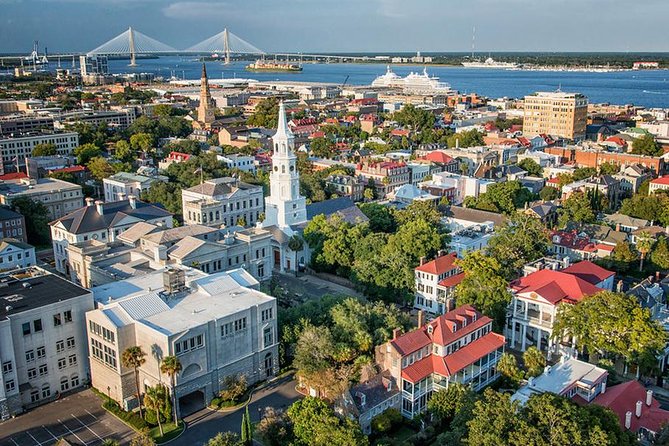
The tour starts at 108 Meeting St, Charleston, SC 29401, and it ends somewhere else in the downtown area. That matters because you should plan a simple next step after the walk, like lunch nearby or a museum stop you can reach on foot or by public transit.
This is built for an easy walking day. Charleston’s historic peninsula is not loaded with big hills, and the route is designed to be manageable for active travelers. You are looking at roughly 13 stops in about 2 hours, so it is fast in the best way: you get orientation and details without spending half the day in lineups.
One practical plus is the mobile ticket. It helps you keep things simple at the start and at points along the way. And because the tour includes local guide time plus “all taxes, fees and handling charges,” you do not have to do extra math in your head.
More Walking Tours in Charleston
- Historic Charleston Guided Sightseeing Walking Tour
★ 5.0 · 6,216 reviews - Ghosts of Charleston Night-Time Walking Tour with Unitarian Church Graveyard
★ 4.5 · 2,835 reviews - Hidden Alleyways and Historic Sites Small-Group Walking Tour
★ 5.0 · 2,335 reviews
The Value Trick: Free Entry Points, Paid Expertise
Here is where this tour can feel like a smart use of time. Every major stop on the route is listed with admission ticket free, including churches, the Powder Magazine, and key museum stops. So you are not paying again to walk through doors, read plaques, or look around.
Instead, you are paying for something harder to build on your own: a guide who ties the architecture, the religious communities, and the political events into one story you can keep straight. I especially like this because Charleston can be confusing at first. The buildings are gorgeous, but the meaning is not always obvious.
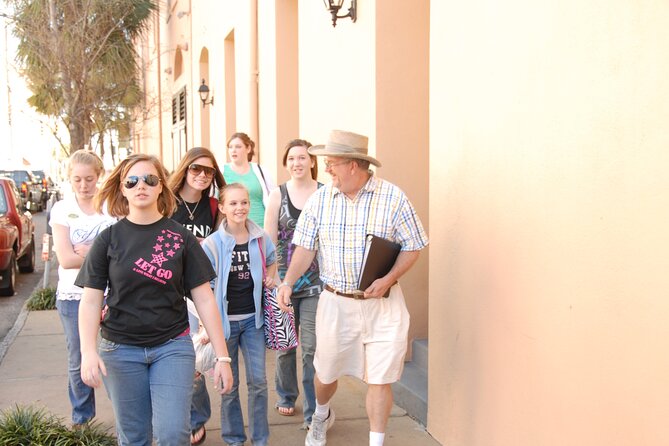
You also get a tight group size, max 15 travelers. That usually means more back-and-forth and fewer moments where you feel stuck watching the guide while everyone else blocks your view. In the better days I saw described, guides like Al and Bruce keep the pace friendly and answer questions as you walk.
The main downside to consider is that speaking styles can differ. Some people reported the guide spoke too quickly or was hard to understand. If you have hearing sensitivity or you want a slower flow, arrive early, sit where you can hear, and do not be afraid to ask for clarification.
Circular Congregational Church and the Slate Tombstone Story
Your first big stop is the Circular Congregational Church area. This congregation has worshipped on site since 1681, which immediately puts you into the deep end of Charleston time.
The most memorable part here is the graveyard narration and the slate tombstones from the eighteenth century. They are described as clearly legible, which is a rare treat on tours, because you often see headstones that are too faded to read. Having a guide walk you through what to look for turns the cemetery from a quiet backdrop into a primary source you can actually interpret.
Time here is about 20 minutes, so it is not just a quick photo break. You can pause, look closely, and let the context land. Practical note: churchyards can be uneven and slippery after rain, so take a careful step, even if you are just there to listen.
St. Philip’s Church, Early Charleston Power, and a Graveyard Reset

Next comes St. Philip’s Church, tied to one of the oldest congregations in the Carolinas, founded in 1680. The tour frames it as the Church of Planters and Politicians, which makes sense when you see how Charleston’s civic and religious life grew up together.
What you get at this stop is graveyard narration plus the names of national figures. The description notes that signers of the Declaration and Constitution are at rest here. That is the kind of connection that makes a place feel more than scenic. It also gives you a mental map for later stops, where politics and war show up in buildings and street corners.
This stop is around 10 minutes. Because it is shorter, it works best if you come ready to absorb a few key names and themes, then carry those ideas forward to the Revolutionary and Civil War sites later on.
Other Charleston outings to compare
- Highlights of Charleston Guided Walking Tour
★ 5.0 · 2,206 reviews - Charleston Haunted Booze and Boos Ghost Walking Tour
★ 5.0 · 1,569 reviews - Charleston’s Pleasing Terrors Night-Time Walking Ghost Tour
★ 5.0 · 1,345 reviews - Charleston historical walking tour with a Professor of History at The Citadel
★ 5.0 · 1,284 reviews
Powder Magazine: Charleston’s Siege-Era Engineering
After the churches, the tour shifts to military survival with the Powder Magazine. It was built as gunpowder storage by 1713, and the tour description emphasizes it was built in a city under constant threat.
One fact I think is easy to miss on your own: it is described as the oldest surviving public structure between St Augustine and Williamsburg. Even if you are not a “history nerd,” that kind of geographic detail gives you something solid to anchor the story.
You get sidewalk narration here and only about 5 minutes, so do not expect a long, inside look. Instead, treat it as a quick “how did they keep the city alive?” stop that helps the bigger conflict stories make sense later.
French Huguenot Church and the Gothic-Reach of 1706
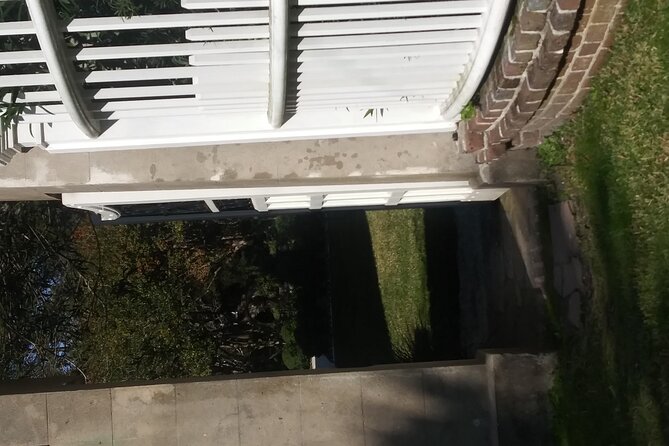
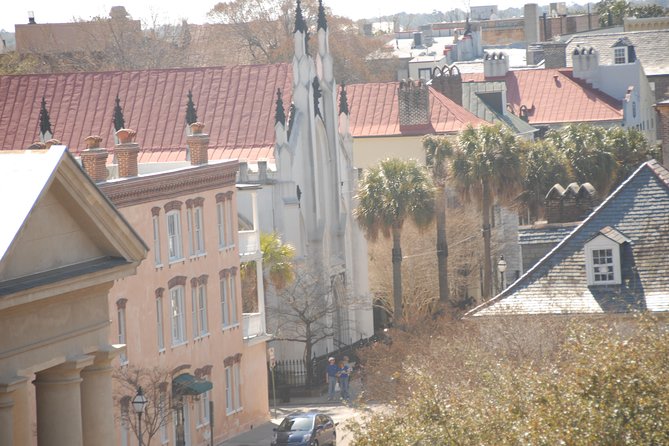
Then you get a change of tone with the French Huguenot Church, a Gothic Revival church connected to the only active French Calvinist congregation in North America. It has worshiped on site since 1706, which helps you understand why Charleston drew diverse communities even before the city became a major stage for later national events.
This stop is about 5 minutes, and it is primarily narration at and around the church. The practical value is that it adds texture. The tour is not only about war and politics. It also shows how different cultural groups left their fingerprints on the city’s spiritual architecture.
If you care about religious architecture and migration stories, this is one of the cleaner “aha” moments on the walk.
Dock Street Theater and a WPA Built on Playhouse Ground

Next is Dock Street Theater, an 18th century style playhouse built as a WPA project in 1937. It sits on the site of the first playhouse built in British North America in 1736.
This is one of those stops where the building’s layers matter. Even though the theater’s current form dates to the WPA era, the tour helps you see continuity in Charleston’s arts scene. It is also a reminder that historic cities are not frozen museums. They rebuild and reuse prime locations, generation after generation.
Expect about 5 minutes and mostly sidewalk-level narration.
Four Corners of Law: Where Rules Intersected
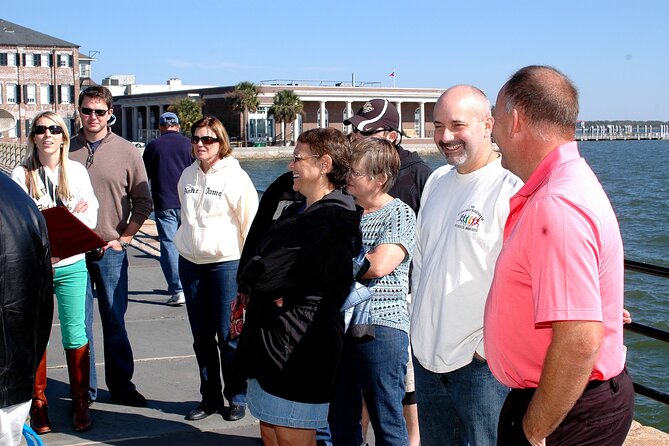
At Four Corners of Law, you get a quirky but useful street-level story. The intersection has been dedicated to public use since 1680. The tour also references Ripley’s Believe It or Not! saying it is the only intersection worldwide where the four governing laws of mankind intersect.
Even if you treat that claim as playful rather than literal proof, it still does what good guiding should do: it makes you look up at street planning and legal order, not just architecture.
This is another short stop (about 5 minutes), so let it be a mental palate cleanser between bigger, darker themes.
Old Slave Mart Museum and the Revolutionary-Era Edge
Then comes one of the heaviest stops: the Old Slave Mart Museum. The tour describes it as the only surviving Charleston structure used as a showroom for slave sales, and it notes the museum chronicles the history of slavery in the South Carolina Lowcountry.
This is about 5 minutes on the walk, which means you should treat it as an orientation stop, not a full museum visit. If you want to linger, you will likely want to return later on your own time with more space to read and process.
It is also a stop that changes how you read the rest of the downtown. Once you have this context, the political and military stories feel less abstract. You see that “important national events” had local roots and local harm.
Right after that, you step into another key site: the Old Exchange & Provost Dungeon. This is described as a Revolutionary War museum site tied to events that founded the nation. President Washington was entertained there four times in 1791, which is the kind of detail that makes the building feel like a living machine of power.
This stop is around 7 minutes, and it is sidewalk narration, so again, you are absorbing a guided snapshot.
St. Michael’s Church: Surviving Siege and Two Constitution Signers
Next, you reach St. Michael’s Church, described as the oldest surviving church (as listed) from 1761. The tour highlights that it was targeted during the British siege in 1780 and the Federal siege from 1863 to 1865.
That timeframe is not just a date list. It helps you understand how the same city infrastructure lived through multiple wars and political orders. Charleston was not one-event historic. It was repeatedly contested.
The stop includes narration tied to the graveyard, including that two signers of the Constitution are at rest there.
This stop runs about 7 minutes. If you are a slower walker or you want to read more, take an extra moment and keep your group in sight so the timing still works.
Rainbow Row Pastels and Caribbean Connections
Then you hit one of Charleston’s most photogenic stretches: Rainbow Row. The tour describes these as a grouping of eighteenth century commercial buildings painted in lovely pastels that point to the city’s early connections to Barbados, Antigua, and Nevis.
What I like here is how the color palette becomes a clue. Charleston’s look is not only about taste. It reflects commerce routes and the economy that fed the city.
This stop is about 5 minutes with sidewalk narration, so it is more about the meaning behind the scenes than a long walk-through.
Practical tip: if you are trying to get photos without blocking others, stand slightly to the side, let the guide finish the story, then move into your shot.
The Battery: Waterfront Mansions and the Fire at Fort Sumter Trigger
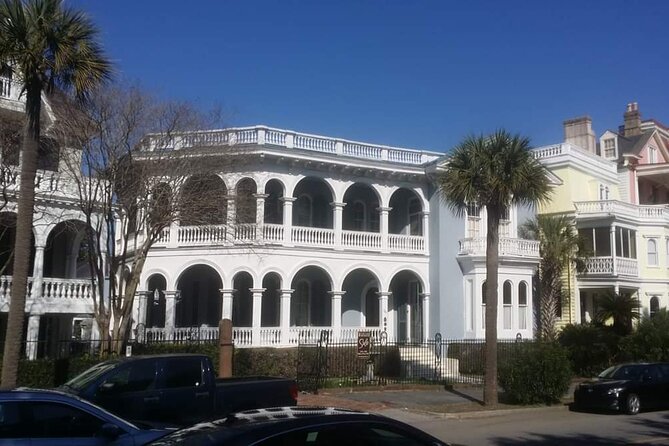
After the pastel buildings, the route brings you to The Battery. The tour frames it with “grand waterfront mansions,” many built in the first half of the nineteenth century as party palaces for the winter season.
Then it lands on the Civil War. The description says that from one of these houses, General Pierre Beauregard gave orders to Fire at Fort Sumter, starting the first battle of the Civil War.
This is one of the moments where Charleston’s “pretty front porch” look flips into war drama. The water is calm. The story is not.
Expect about 10 minutes, mostly sidewalk narration. If you are visiting in hot weather, this is where you will feel the sun. Plan to pace yourself and drink water on your own time.
Fort Sumter National Monument: Seeing the Siege Story From the High Battery
The penultimate stop is Fort Sumter National Monument, with a view from the High Battery seawall. The tour narration focuses on the siege and bombardment of Fort Sumter and Charleston’s civilian population, plus the dramatic fall of the city after 587 days.
This is the kind of stop that works even if you do not already know the details. The guide sets the scene, then you watch the view and connect it to the story. It is much easier than reading a wall of text later.
Time is around 8 minutes. Quick advice: hold onto your questions for later, because the story ends fast here, and everyone wants one last photo.
Nathaniel Russell House Garden and the Joggling Board Moment
The final stop is the Nathaniel Russell House garden area, built in 1808. The tour does not include entry into the house. Instead, you get garden narration and talk about horticulture and garden design.
This part of the tour runs about 10 minutes, and it includes discussion of the layout of an eighteenth century Charleston property. It also points out the story of the joggling board, which is the kind of quirky detail that makes the city feel lived in.
Why this ending works: after cemeteries, military sites, and political buildings, the garden gives you a breather. You can still carry context with you, but your feet get a short rest while your brain gets a break.
Who This Tour Fits Best
This walking tour is a strong match if you are:
- A first-time visitor who wants orientation fast
- Interested in church architecture, early congregations, and graveyard symbolism
- Curious about Charleston’s role in the Revolutionary War and the lead-up to the Civil War
- Willing to walk and read the city at street level, not just inside museums
It may not be your best choice if you:
- Need a super slow pace or very quiet groups (timing between stops is short)
- Have trouble hearing guides with faster speaking styles (a few people reported this)
- Want a deep, self-paced museum visit at any one location, because several stops are brief by design
Should You Book This Charleston Old Walled City Tour?
If you want a tight, high-impact day in downtown Charleston, I think this is a smart booking. The combination of 13 focused stops, free entry at major sites, and a small group size is good value if you care about both architecture and the stories behind it.
I would book it especially if you are the kind of traveler who likes to understand why a city looks the way it does. You will come away with a clearer mental map of the peninsula, and you will connect Rainbow Row and The Battery to the heavier events that shaped the city.
One final decision tip: if you are picky about hearing and pacing, consider going in with patience. A different guide style can change the experience, so show up with comfortable shoes, keep your expectations realistic for a two-hour loop, and you will get a lot for your time.
FAQ
How long is the Charleston Old Walled City Historical Walking Tour?
It runs about 2 hours.
Is the tour conducted in English?
Yes. The tour is offered in English.
Do I need to pay admission at the stops?
The stops listed on the route show admission ticket free for each location. The tour also includes all taxes, fees, and handling charges.
Where do I meet, and where does it end?
You start at 108 Meeting St, Charleston, SC 29401, and the activity ends in a different location.
Is this tour wheelchair accessible or indoors-heavy?
The provided details say most travelers can participate and recommend comfortable walking shoes. No specific accessibility details are provided beyond that.
Does the tour run in bad weather?
Yes. It operates in all weather conditions, so you should dress appropriately.
What are the group size and cancellation rules?
The tour has a maximum of 15 travelers. You can cancel for a full refund up to 24 hours in advance.
More Historical Tours in Charleston
- Charleston’s Old South Carriage Historic Horse & Carriage Tour
★ 5.0 · 10,023 reviews - Charleston Horse-Drawn Carriage Tour: Explore Historic Charleston
★ 5.0 · 3,561 reviews - Charleston Harbor History Day-Time or Sunset Boat Cruise
★ 4.5 · 2,788 reviews - Charleston: Daytime or Sunset Historic Harbor Cruise
★ 4.5 · 1,352 reviews
Newest Charleston reviews on the site
- Middleton Place Admission with Self Guided Tour and Lunch★ 4.5 · 326 reviews
- Charleston Ghosts of Liberty Guided Walking Tour★ 4.5 · 473 reviews
- Charleston’s Best Highlights: History, Culture & Architecture★ 5.0 · 422 reviews
- Charleston Chicora 2 Hours Walking Tour★ 5.0 · 264 reviews
- 2-Hour Guided Kayak Eco Tour in Charleston★ 5.0 · 954 reviews
- Sip History in The Sun Cabana Covered Cocktail Class★ 5.0 · 332 reviews
- Private Luxury Yacht Charters, BYOB & Dolphins★ 5.0 · 395 reviews
- Afternoon Schooner Sightseeing Dolphin Cruise on Charleston Harbor★ 4.5 · 620 reviews
Walking Tours, compared.
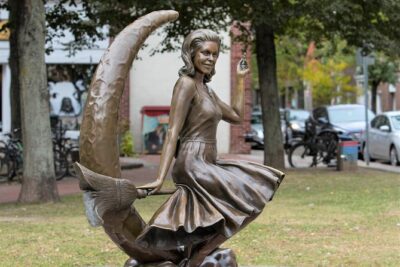
History and Hauntings of Salem Guided Walking Tour
Read our review →
New Orleans Premier Ghost, Voodoo and Vampire Walking Tour
Read our review →

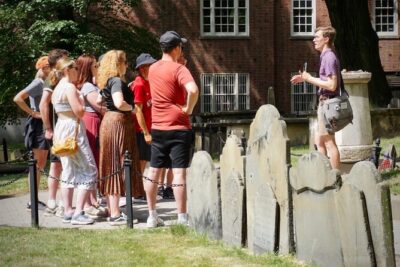
Freedom Trail History Small Group Walking Tour
Read our review →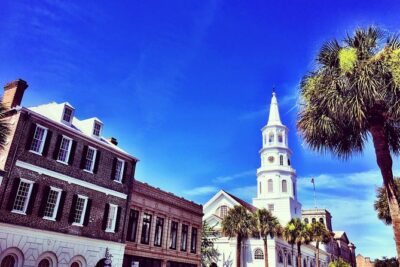
Historic Charleston Guided Sightseeing Walking Tour
Read our review →
New Orleans Food Walking Tour of the French Quarter with Small-Group Option
Read our review →
St. Louis Cemetery No. 1 Official Walking Tour
Read our review →Browse the lists this tour appears in