
Reviewed · FREEDOM TRAIL WALKING TOURS
Boston: Freedom Trail History Small Group Walking Tour
A 2.5-hour walk through the Revolution. This Boston Freedom Trail tour is guided by a historian who keeps the story tight on 1760 to 1775, then threads it through the 16 official landmarks along the route. You get to ask questions as you go, which turns the usual marker-and-photo routine into a real timeline of change.
I especially like two things. First, the 16 guests max small-group size makes it easier to hear your guide and jump in with questions. Second, the chronological storytelling approach helps the stops connect, so Boston’s events start to feel like cause and effect, not random points on a map.
One drawback to plan for: you mostly experience the Trail from the sidewalk. Admission inside museums and buildings is not included, so if you love going inside churches and historic interiors, you may want to add those later on your own time.
In This Review
- Key Highlights Worth Booking For
- Freedom Trail Basics: 1760 to 1775, Not Just Random Markers
- Price and What $35.10 Really Buys You
- Meeting at Boston Common and Finishing at Copps Hill Terrace
- Boston Common Start: Boston Foundation Monument, the Common, and Granary Burying Ground
- Franklin to the Boston Massacre Site: How Politics Became Public Protest
- Faneuil Hall to North Square Park: Cradle of Liberty Energy, Then North End Roots
- Paul Revere Statue, Old North Signal Lanterns, and the North End Story Arc
- Copps Hill Terrace Finish: Big Views and Revolutionary Geography Across the Water
- Who This Tour Fits Best, and Who Might Want a Different Format
- Booking Tips for a Smoother, Better Day on the Freedom Trail
- Should You Book This Freedom Trail Tour?
- FAQ
- How long is the Boston Freedom Trail History small-group walking tour?
- What is the price per person?
- How many people are in the small group?
- Where does the tour start and end?
- What does the tour include?
- Is admission to museums or inside buildings included?
- Is the tour wheelchair and stroller accessible?
- Are service animals allowed?
- What is the cancellation policy?
- Is the tour suitable if I have trouble standing for long periods?
Key Highlights Worth Booking For
- Small-group format (16 max) for better Q&A
- Focus on the Revolution years 1760 to 1775
- All 16 official Freedom Trail landmarks covered
- Start at Boston Common, finish with big harbor-and-river views
- Stroller and wheelchair accessible
- Historian guide plus mobile ticket for smoother check-in
Freedom Trail Basics: 1760 to 1775, Not Just Random Markers
The Freedom Trail is famous for a reason, but this tour gives it a sharper purpose. Your guide stays anchored in the years leading up to American independence, roughly 1760 through 1775, when tensions in Boston were building fast and then breaking open.
What makes this approach practical is that the stops stop feeling separate. You’ll see how politics, protest, and everyday life connect, from public meetings to flashpoints like the Boston Massacre site. By the time you reach the North End, you’re not just seeing famous names, you understand why they mattered at that moment.
This also works well for first-time Boston visitors. Instead of trying to read the city cold, you get a narrative path through the middle of it, with your guide acting like a human study guide.
More Walking Tours in Boston
- Harvard University Campus Guided Walking Tour
★ 4.5 · 3,632 reviews - Boston Freedom Trail Walking Tour with Costumed Guide
★ 4.5 · 2,531 reviews - The Full Revolutionary Story Epic Small Group Boston Walking Tour
★ 5.0 · 2,356 reviews
Price and What $35.10 Really Buys You
At about $35.10 per person for roughly 2.5 hours, the value is in what is included rather than what is excluded. You’re paying for a historian-led walk that covers the full Freedom Trail lineup of all 16 official landmarks, plus small-group attention.
Importantly, this is not a museum-hopping ticket. Museum admissions inside stops are not included, and the tour time is focused on outdoor viewing and explanation. So the best match is you if you like learning on the move, taking photos, and then following up later if a building catches your eye.
If you’re comparing costs, think about it this way: you’re getting guided interpretation of multiple landmarks in one shot, without paying for separate entries along the way. Then you can decide what deserves your money later.
One more plus for logistics: this tour uses a mobile ticket, which makes your check-in easier when you’re juggling a new city.
Meeting at Boston Common and Finishing at Copps Hill Terrace
You meet at the Boston Foundation Monument in Boston Common, on the northern boundary of the park, opposite 50 Beacon Street. It’s a strong starting point because you’re literally in the communal heart of early Boston before the walk stretches outward.
The tour ends at Copps Hill Terrace, in the North End area, with views across toward the Charles River. From there, you can look toward two major Freedom Trail landmarks across the water, including the U.S.S. Constitution and the Bunker Hill Monument area. It’s a satisfying ending because it lifts you from street-level detail into a wider Revolutionary geography.
In a city that can be spread out, that end point is also practical. You’ll be steps from Hanover Street, where it’s easy to grab a pastry, pizza, or an Italian meal right after your walk.
Boston Common Start: Boston Foundation Monument, the Common, and Granary Burying Ground
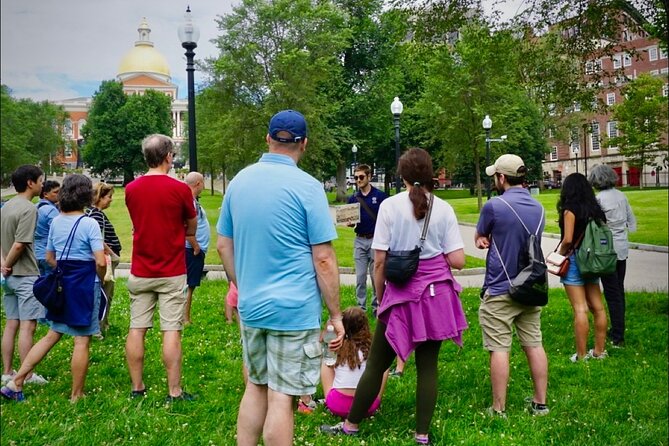
Your first stop is the Boston Foundation Monument, a granite memorial with a bronze relief showing two men shaking hands when the Puritans arrived in 1630. This is a good warm-up because it sets a tone for the whole Trail: Boston is being shaped by people who came with purpose, not just people who happened to settle there.
From there, the walk pulls you into the oldest public spaces and civic landmarks. You’ll spend time at Boston Common, described as the oldest public land in the Americas, and as Boston’s communal grazing pasture back in the day. Even if you only know it as a park, standing there with a guide adds context fast.
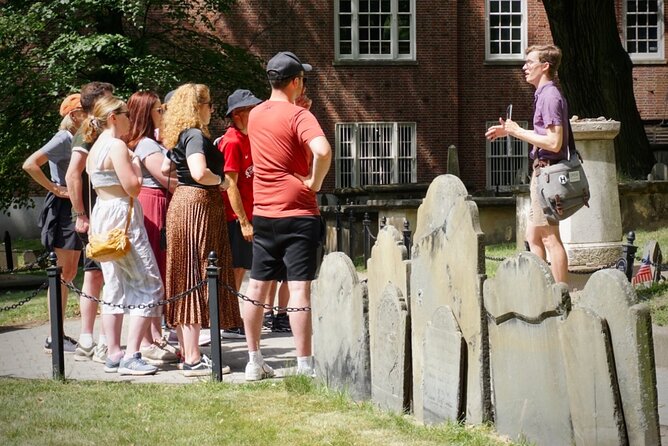
Then you hit Granary Burying Ground, one of the places where Boston’s Revolutionary story becomes personal. You’ll also hear how this is a final resting place for Revolutionary figures connected to Boston, and why burial grounds matter when you’re talking about public memory.
One of the practical reasons Granary works on a walking tour: it gives you a “quiet pause” in the middle of the urban movement. You get to slow down, listen, and connect names to a physical place.
Other Boston outings to compare
- Boston Food & History: Pizza, North End & Freedom Trail
★ 5.0 · 1,772 reviews - Boston’s Freedom Trail: A Revolutionary Walking Tour
★ 4.9 · 1,748 reviews - Boston: Freedom Trail History Small Group Walking Tour
★ 4.9 · 1,590 reviews - Boston’s Freedom Trail: A Revolutionary Walking Tour
★ 5.0 · 1,343 reviews
Franklin to the Boston Massacre Site: How Politics Became Public Protest
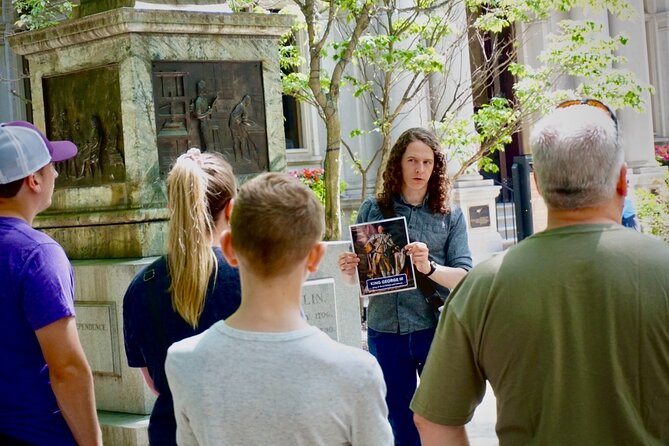
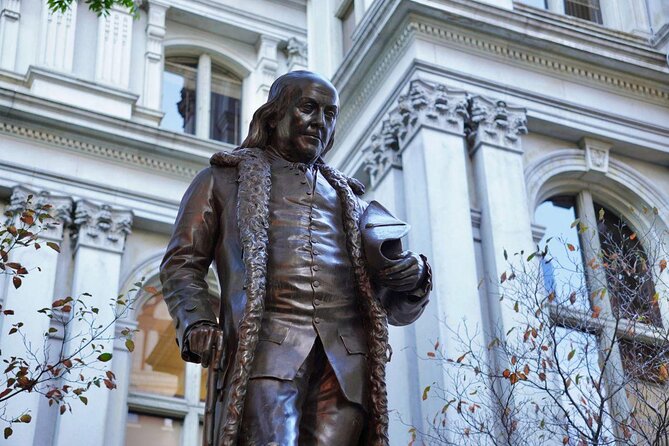
A key stop is the Statue of Benjamin Franklin, and the guide uses it to connect the dots to education and civic life, including the Boston Latin School site. Franklin is a good anchor figure for this segment because it’s easy for a guide to connect ideas to institutions.
As the route continues, you’ll pass through areas tied to Boston politics and publishing. One highlight is the area associated with Ticknor and Fields, a publishing house tied to early American print culture. That’s not just trivia. In the Revolution era, print mattered because it helped ideas travel.
Then comes the Boston Massacre Site, a moment that always sharpens the Revolutionary timeline. You’ll hear how British soldiers killed five Bostonians in 1770, and why that event mattered beyond the immediate tragedy. Your guide also ties it into the broader story of resistance and political organization in the city.
If you like history that feels grounded in real conflict, this part is often the payoff. You see how tensions turned into headlines and then into action.
Faneuil Hall to North Square Park: Cradle of Liberty Energy, Then North End Roots
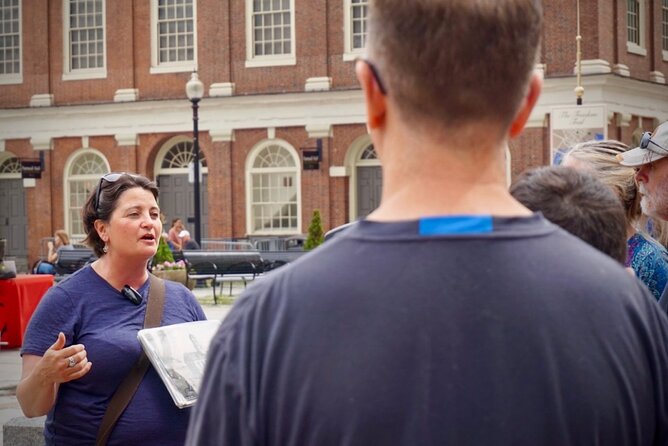
Next up is Faneuil Hall Marketplace, closely linked to the reputation of the space as the Cradle of Liberty. This stop is especially useful if you want to understand the mechanics of protest, not just the dramatic moments. Boston town meetings and public debate weren’t side notes. They were part of how arguments became action.
The route also threads through North Square Park, a historic square in the North End. This area helps you connect the civic Revolution story to the neighborhood fabric of Boston. It makes the walk feel less like a checklist and more like moving through living history.
Then you roll into the Paul Revere area. Even if you know the Midnight Ride story already, this portion is where the guide makes the details click in sequence, so the route feels like a plan and not just a legend.
Paul Revere Statue, Old North Signal Lanterns, and the North End Story Arc
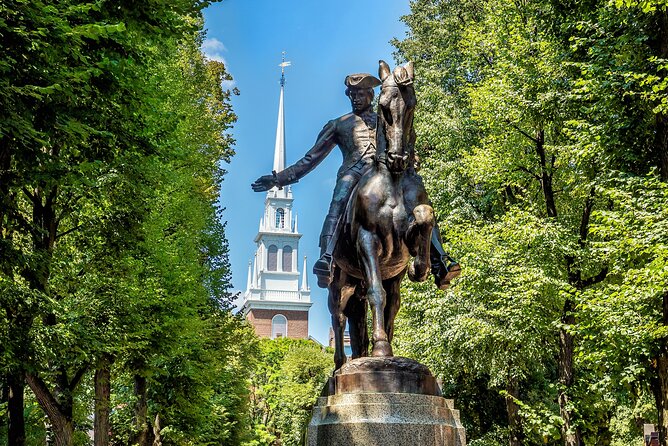
The Paul Revere Statue stop is in a pedestrian-only space, which helps the moment feel focused. Your guide uses the statue area to frame the Midnight Ride of 1775, and then you’ll see why this is linked to signals and communications in Revolutionary Boston.
Another stop emphasizes the role of churches holding lantern signals during the Midnight Ride period, including the church associated with the lanterns in 1723. This is a small detail that makes a huge difference in understanding how messages moved. In an era without instant communication, signals mattered.
You’ll also hear about Paul Revere’s home nearby, plus the age and presence of nearby structures in Downtown Boston. The goal here is to connect the famous name to actual local geography, so the story feels anchored where it happened.
Copps Hill Terrace Finish: Big Views and Revolutionary Geography Across the Water
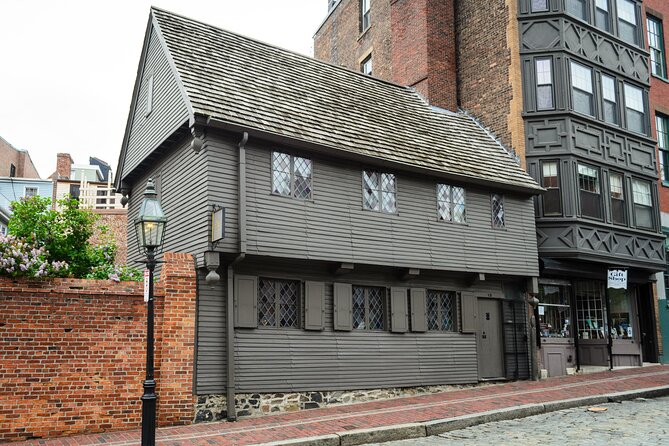
Your tour concludes at Copps Hill Terrace, overlooking the Charles River. This ending is more than a scenic reward. It’s where your guide can pull the timeline outward and help you see the Revolutionary story as a map, not a list.
From this vantage point, you get views toward the U.S.S. Constitution and toward the Bunker Hill Monument area. Even if you do not enter anything at the end, standing there helps you understand why these locations mattered in 1775, and why Boston’s waterfront geography still feels central.
If you plan your dinner right after, you’ll have an easy time doing it. The terrace is steps from Hanover Street, where you can keep the energy going without a long transit gap.
Who This Tour Fits Best, and Who Might Want a Different Format
This is a great match for history buffs and first-time Boston visitors who want structure. The historian guide makes the Revolution timeline feel coherent, and the small-group size helps you stay engaged without getting lost in the crowd.
It also tends to work well if you like walking routes that still feel urban and alive. You’re moving through downtown and into the North End, so you get city context, not only “historic site bubbles.”
The tour is wheelchair and stroller accessible, and service animals are allowed. At the same time, there’s a key practical note: the experience is not recommended if you have difficulty standing for extended periods. This is a walking tour, and even with smart pacing, you should assume you’ll be on your feet for most of the time.
Booking Tips for a Smoother, Better Day on the Freedom Trail
A few small moves will make your tour feel easier.
First, wear shoes you trust. This is a long enough walk that comfort matters, even if the terrain is mostly manageable. Second, keep your questions ready. The Q&A style is a big part of what makes the tour worth it, especially when your guide connects causes and consequences across the stops.
If you’re traveling in winter, dress for wind. Some guided experiences on the Trail use short warm-up moments when possible, and cold weather makes layers a real travel skill. You will be outside enough that being prepared matters.
Timing can also matter. This tour is commonly booked about 22 days in advance on average, so if you want a specific time window, booking ahead helps.
Should You Book This Freedom Trail Tour?
Yes, if you want a guided, story-driven way to experience Boston’s Revolution-era landmarks without juggling tickets and multiple destinations. The big strengths are the small group size, the historian-led timeline focus on 1760 to 1775, and the fact that you’ll cover all 16 official Freedom Trail landmarks in a single 2.5-hour walk.
I would skip it or supplement it if your priority is going inside lots of historic interiors, since museum admission inside stops is not included and your time at each stop is limited. In that case, you’ll likely use this as your orientation, then come back later for the places that call you back.
If your goal is clarity, context, and a walk you can talk about afterward, this one is a strong bet.
FAQ
How long is the Boston Freedom Trail History small-group walking tour?
The tour is approximately 2 hours 30 minutes.
What is the price per person?
The price is $35.10 per person.
How many people are in the small group?
The tour has a maximum of 16 travelers.
Where does the tour start and end?
It starts at the Boston Foundation Monument at 49 Beacon St, Boston, MA 02108, and ends at Copp’s Hill Terrace at 520 Commercial St, Boston, MA 02109.
What does the tour include?
It includes the Freedom Trail with all 16 official landmarks, a small group experience, and coverage of downtown Boston and the North End.
Is admission to museums or inside buildings included?
No, admission inside museums is not included.
Is the tour wheelchair and stroller accessible?
Yes, the experience is wheelchair and stroller accessible.
Are service animals allowed?
Yes, service animals are allowed.
What is the cancellation policy?
You can cancel for a full refund up to 24 hours in advance. The experience may also be canceled due to poor weather, in which case you will be offered a different date or a full refund.
Is the tour suitable if I have trouble standing for long periods?
The tour requires moderate physical fitness and is not recommended if you have difficulty standing for extended periods.
More Historical Tours in Boston
- Tour of Historic Fenway Park, America’s Most Beloved Ballpark
★ 4.5 · 3,013 reviews - Boston: City Cruises Historical Sightseeing Cruise
★ 4.6 · 1,771 reviews - City Cruises Boston Historic Sightseeing Harbor Cruise
★ 4.5 · 1,388 reviews - Boston’s North End Food Tour: Italian Flavors & Heritage Walk
★ 5.0 · 1,322 reviews
Newest Boston reviews on the site
- View Boston Observation Deck Admission Tickets★ 4.5 · 314 reviews
- Delicious Donuts of Boston: A Sweet History Walking Tour★ 5.0 · 1,038 reviews
- Boston’s Freedom Trail: A Revolutionary Walking Tour★ 5.0 · 1,343 reviews
- Self Guided Classic Freedom Trail Location Aware (GPS) Walking Audio Tour★ 4.5 · 258 reviews
- Freedom Trail Walking Tour 250★ 4.5 · 1,118 reviews
- Boston’s North End Food Tour: Italian Flavors & Heritage Walk★ 5.0 · 1,322 reviews
- Sunset Sailing Cruise on a Tall Ship in Boston Harbor★ 4.5 · 414 reviews
- Narrated Sunset Cruise of Boston Harbor★ 4.0 · 532 reviews
Freedom Trail Walking Tours, compared.
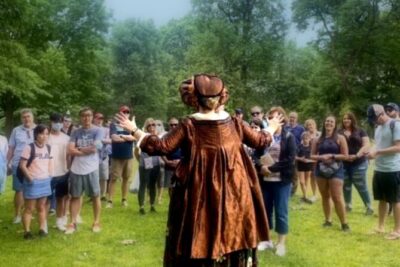
Boston Freedom Trail Walking Tour with Costumed Guide
Read our review →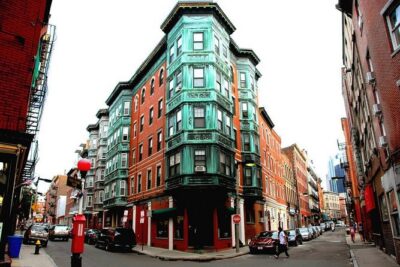
Boston Food & History: Pizza, North End & Freedom Trail
Read our review →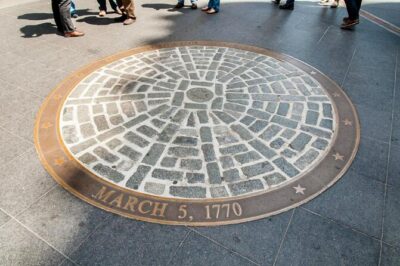
Boston’s Freedom Trail: A Revolutionary Walking Tour
Read our review →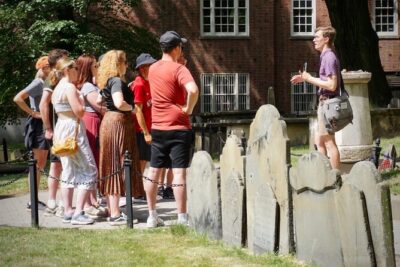
Freedom Trail History Small Group Walking Tour
Read our review →Boston’s Freedom Trail: A Revolutionary Walking Tour
Read our review →

Boston Freedom Trail History Pub Crawl Small-Group Tour
Read our review →
Browse the lists this tour appears in