
Reviewed · WALKING TOURS
The Full Revolutionary Story Epic Small Group Boston Walking Tour
Boston’s Revolution, told in walking chapters. This small-group walk follows the Revolution’s sequence and connects it to today’s Boston.
You’ll get a story-first route that keeps you moving through downtown, then into the North End, with the waterfront as the payoff.
I love the chronological approach. Instead of just marching along the Freedom Trail in a straight line, the route weaves around town so the story lands in the right order. I also like the guide style, with hands-on visual aids and props that help names and events stick fast.
One possible drawback: expect a lot of walking outdoors. If you have mobility limits or the weather turns, plan ahead for layers and slow down your pace.
In This Review
- What makes this Revolutionary story tour work so well
- Meeting at City Hall Plaza, then snapping in right away
- Boston City Hall: the architecture break that sets the mood
- King’s Chapel Burying Ground: where the Revolution starts long before 1775
- The Freedom Trail, but told like a timeline, not a scavenger hunt
- Brimstone Corner and the First Anglican Church: Boston’s debates get louder
- Granary Burying Ground: the Sons of Liberty story goes beyond the slogans
- Old City Hall and Old State House: democracy versus British authority
- Boston Massacre and Old South Meeting House: tension to action
- Post Office Square, the Financial District, and Faneuil Hall: the Revolution inside modern streets
- Quincy Market and Rose Kennedy Greenway: where you regroup and reset your feet
- Paul Revere House, North Square Park, and Old North Church: the story tightens
- Charlestown views, then Bunker Hill: the fight gets real
- Old Ironsides and the walk toward Boston Harbor: ending with a cityscape
- North End finale at Lewis Wharf: where you can turn history into dinner
- Price, walking time, and what you get for $55
- Should you book this Boston Revolutionary story tour?
- FAQ
- How long is the Revolutionary Story Epic small group walking tour?
- Where does the tour start and end?
- What is the price per person?
- Is this tour offered in English?
- How big is the group?
- Is museum entry included?
- Is the tour appropriate for children?
- What if weather is bad?
- What is the cancellation window?
What makes this Revolutionary story tour work so well
- Freedom Trail in timeline order, plus well-chosen detours off the bricks
- Story props and visuals that turn famous moments into something you can picture
- Early Boston people get equal time, not just the usual founding-figure hits
- Modern Boston stops keep the Revolution connected to what you see today
- Small group size (max 15) makes questions and interaction feel normal
- Ending in North End and on the harbor, so you finish with views and meal options nearby
Meeting at City Hall Plaza, then snapping in right away
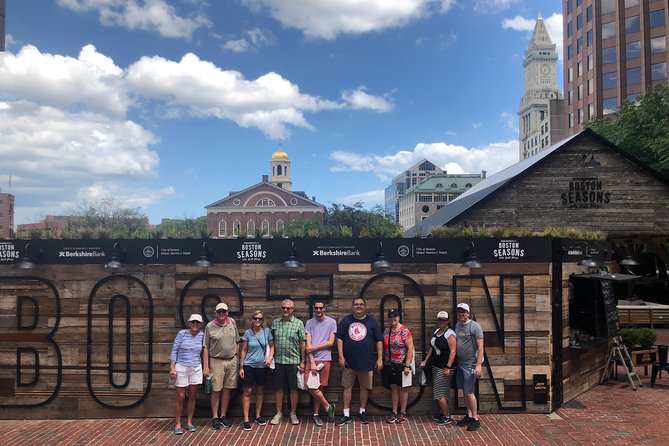
The tour starts at City Hall Plaza, in a super central spot across from and overlooking Faneuil Hall. You’ll meet near Five Iron Golf, with your guide positioned by a large Boston sign, and you can also start with a quick photo near the Bill Russell statue by the plaza.
This opening matters more than it sounds. When you begin in the civic center, you immediately understand how Boston’s public spaces were built for debate, crowds, and speeches. Then the guide pulls you into the earliest chapter, so you’re not just sightseeing, you’re tracking a cause-and-effect story.
Also, the tour uses a mobile ticket, so you just show up and focus on the walking and the learning instead of juggling paperwork.
More Walking Tours in Boston
- Boston: Freedom Trail History Small Group Walking Tour
★ 5.0 · 6,450 reviews - Harvard University Campus Guided Walking Tour
★ 4.5 · 3,632 reviews - Boston Freedom Trail Walking Tour with Costumed Guide
★ 4.5 · 2,531 reviews
Boston City Hall: the architecture break that sets the mood
Right after the plaza, you pass Boston City Hall. It’s one of those buildings that can feel surprising if you expect only colonial architecture on a Revolution tour.
This stop is basically your mental warm-up. The guide uses the setting to remind you that Boston’s political life did not start in 1775. You’re looking at how power, civic design, and public debate show up in different eras, which makes the later Revolutionary-era politics feel more grounded.
Even if you do not love architecture, this short break gives your legs a quick reset before the tour steps into the burying grounds.
King’s Chapel Burying Ground: where the Revolution starts long before 1775
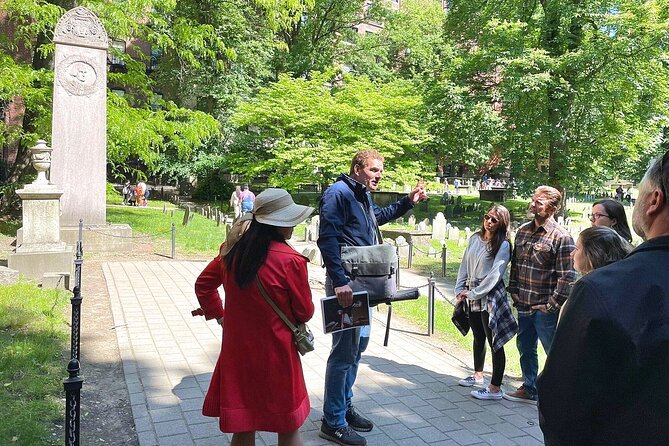
At King’s Chapel Burying Ground, you shift from politics-as-a-building to politics-as-a community. This is where the tour introduces the people who first settled Massachusetts Bay, and the guide leans into the idea that the Puritans were more complicated, and more influential, than most visitors expect.
I like this stop because it slows the story down. You’re not racing to the famous names. You’re learning what life and belief looked like early on, and why later conflicts were not random. If you’ve ever thought the Revolution came out of nowhere, this stop helps you see the earlier logic.
You also get a chance to look at the burial ground setting itself. It gives the tour a real sense of place, not just a lecture that floats above the sidewalk.
The Freedom Trail, but told like a timeline, not a scavenger hunt
Yes, you’ll walk the Freedom Trail. But you’ll do it in a way that makes the story easier to follow.
Most walking tours treat the trail like a geographic route: step A, step B, then back out. This one keeps pushing the idea that events happened in order, so you see the Revolution as a chain reaction. You still get key landmarks on the Freedom Trail, but the guide also weaves around Boston to hit the right moments at the right time.
That timeline approach is a big reason this tour gets such high marks in the reviews. It feels like the guide is teaching you how to think historically, not just how to recognize a landmark.
Other Boston outings to compare
- Boston’s Freedom Trail: A Revolutionary Walking Tour
★ 4.9 · 1,748 reviews - Boston: Freedom Trail History Small Group Walking Tour
★ 4.9 · 1,590 reviews - Boston’s Freedom Trail: A Revolutionary Walking Tour
★ 5.0 · 1,343 reviews - Boston’s North End Food Tour: Italian Flavors & Heritage Walk
★ 5.0 · 1,322 reviews
Brimstone Corner and the First Anglican Church: Boston’s debates get louder
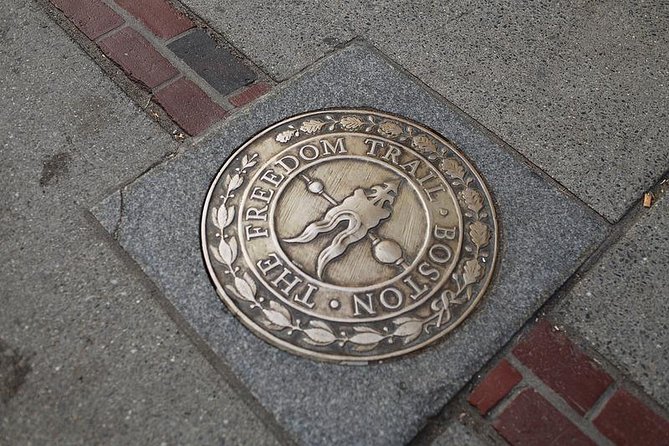
After the Freedom Trail segment, the tour continues through additional historical context, including the First Anglican Church in Boston and Brimstone Corner.
Brimstone Corner is highlighted for its fiery sermons, and the guide ties it to public anti-slavery activism, including William Lloyd Garrison’s first public address against slavery on July 4, 1829. That detail adds a later layer to the story, showing how Boston kept arguing about freedom long after the Revolutionary era.
The Anglican Church stop helps too. It widens the focus beyond one religious group, which matters because political alliances in early America were often tangled with faith and community identity.
Granary Burying Ground: the Sons of Liberty story goes beyond the slogans

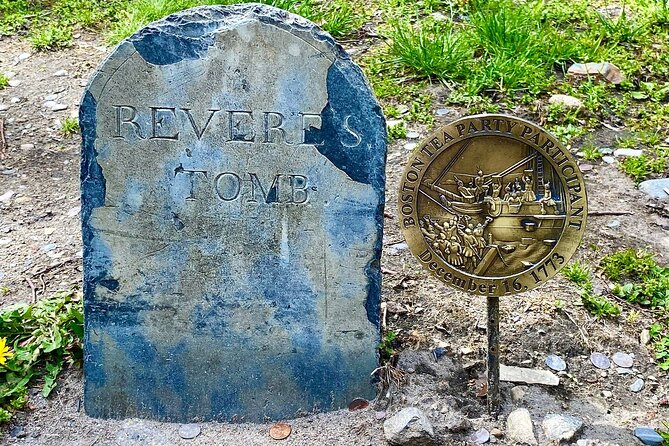
At Granary Burying Ground, the tour takes on the question behind the phrase Sons of Liberty. You’ll visit tombs of Paul Revere, John Hancock, and Sam Adams.
This is a strong stop for two reasons. First, it gives you a physical place to attach the names. Second, the guide connects these figures to roles and tensions, so the group idea feels less like a label and more like a network of people responding to pressures.
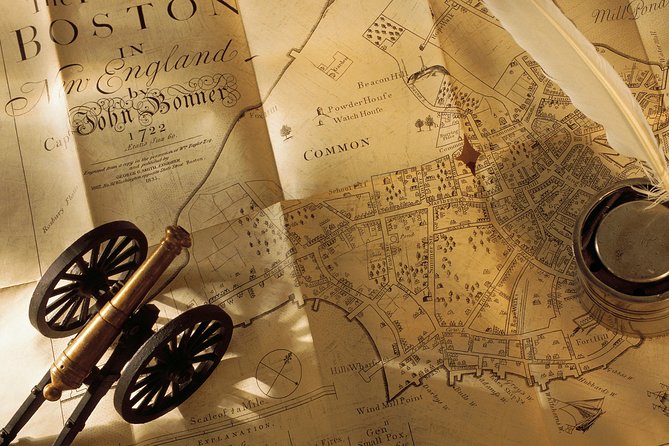
This is also where you may start noticing how the guides teach with visuals. In recent tours, guides have used props like a map and other visual aids to show where events fit into the broader urban story. That can make a big difference for the first-time Boston visitor who wants more than dates.
Old City Hall and Old State House: democracy versus British authority
The route then passes Old City Hall, with a discussion built around obstacles to democracy and the tensions of governing. Even on a short stop, this is one of those moments where the guide helps you understand that the Revolution was not only about taxes. It was about power and legitimacy, and how people argued about what government should do.
Then comes Old State House, described as the oldest public building in the country and the nerve center of Massachusetts politics. This is where the tour turns the volume up on conflict between British authority and American rights.
If you like when a tour explains the why, this is the section. You’re learning how the political argument hardened into something people could not easily back away from.
Boston Massacre and Old South Meeting House: tension to action
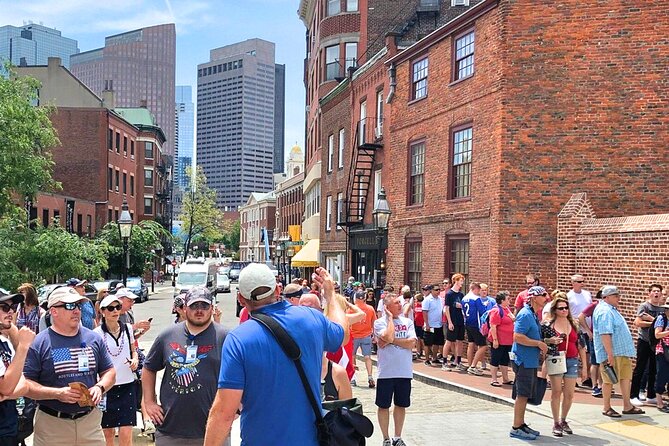
Next, you reach the Boston Massacre site. The guide explains the web of roles pulled into the explosion of tensions, including soldiers, citizens, loyalists, and patriot leaders. You get the sense that violence did not happen in a vacuum, it grew out of fear and daily friction.
Soon after, you visit Old South Meeting House. This is tied directly to the Boston Tea Party, and the tour frames it as the point of no return once people commit to organized resistance.
This pairing works well. The Massacre scene makes you feel how dangerous misunderstandings can become. Old South then shows you how the city turned anger into coordinated action.
Post Office Square, the Financial District, and Faneuil Hall: the Revolution inside modern streets
You head into Post Office Square, described as a place where the road to revolution runs through downtown, right in the heart of the city. Then you move into the Financial District, with stop notes about education, healthcare, and finance.
This modern-city layer is not filler. It helps you read Boston like a living document, where old power structures and new ones share the same streets.
Faneuil Hall Marketplace follows, tied to the Cradle of Liberty idea, and framed as a place where protest turned into revolution. Even if you’ve seen photos of Faneuil Hall before, the guide’s timeline framing makes it feel more like a stage than a monument.
Quincy Market and Rose Kennedy Greenway: where you regroup and reset your feet
The tour makes time for a built-in break for entrances at Quincy Market. There’s also a gentle reality check: tourist traps can happen here, but the stop is useful because it gives you a breather in the middle of a long walking story.
Right after, you pass the Rose Fitzgerald Kennedy Greenway. It’s one of those public spaces that makes Boston feel like it’s always moving forward. That contrast helps the Revolution story land with less heaviness. You’re seeing how the city reshaped itself after the arguments cooled down.
Paul Revere House, North Square Park, and Old North Church: the story tightens
You move into the Paul Revere House area, then stop near North Square Park, described as the oldest residential square in America. These stops shift the emotional tone. Instead of big government and crowds, you’re thinking about homes, neighborhoods, and everyday life that got pulled into huge events.
There’s also a Paul Revere statue photo opportunity, which is the kind of pause your body appreciates, even if your mind wants to keep running.
Then comes Old North Church and Historic Site. Here, the guide walks you through Paul Revere’s legendary midnight ride and the famous warning message, one if by land, two if by sea. You end this section with the shot heard round the world and chaos reaching Lexington and Concord.
I love how this part connects the dramatic moment to the built environment. The skyline and church setting do half the work for you, and the guide handles the rest.
Charlestown views, then Bunker Hill: the fight gets real
After Old North, the tour includes an exterior look at a second oldest burial ground in Boston, with a terrace across the street that gives spectacular views of Charlestown and Boston Harbor. Even if you do not go inside, the city view can feel like a history lesson in itself, because you understand the geography that shaped the battles.
Then you visit Bunker Hill Monument. The tour frames it as a complete recreation of the battle of Bunker Hill, including the idea that it was the biggest battle of the American Revolution.
One review mentioned a guide using Lego soldier visuals to explain the battle. That kind of simple, graphic teaching can be surprisingly effective when you are standing where the action is remembered.
Old Ironsides and the walk toward Boston Harbor: ending with a cityscape
Next, you get a look at Old Ironsides, described as the oldest commissioned naval vessel in the world. The tour notes that it was not part of the American Revolution, but it gives an overview of its history and offers tips on how best to experience it from the harbor side.
This stop is smart because it changes the story from 1770s Boston to Boston as an enduring maritime power. Then you shift toward the waterfront, with a stroll along Boston Harbor and the Harborwalk.
The finish keeps you in view of the city, plus you get ocean breezes and classic Boston harbor scenes. It’s a satisfying way to close a tour about pushing British authority out, because the water becomes part of the atmosphere, not just scenery.
North End finale at Lewis Wharf: where you can turn history into dinner
You end in the heart of the North End at Lewis Wharf. The tour’s timing works well here because it’s the kind of finish where you can keep going with food and a relaxed walk.
North End is described as the oldest residential neighborhood in America, and the tour talks about Italian, seafood, pizza, and cannoli, all tied to the neighborhood’s culture. Lewis Wharf also gives you practical perks: public restrooms, parking nearby, and close proximity to the Aquarium T stop. The walk back to the original meeting point is also described as under ten minutes.
If you want a smooth travel day, this kind of ending is hard to beat. You finish your history lessons, then you can immediately cash them in with a meal and people-watching.
Price, walking time, and what you get for $55
The price is $55 per person for a tour that runs about 3 hours to 3 hours 30 minutes. That’s not a quick hit. But for that time, you get a small group experience with a maximum of 15 people, plus a story-first Freedom Trail masterclass style approach with an expert guide.
Value comes from the combination: 14 official landmarks with built-in breaks, free entrance tickets noted for stops, and a route that does not limit itself to the Freedom Trail. You also get a modern Boston layer, so the tour feels like an explanation of the city, not just an American history worksheet.
One more practical point: most stops are outdoors or at public sites, and museum entry is not included except for breaks for Faneuil Hall and Quincy Market. That helps you avoid surprise ticket costs mid-walk.
Should you book this Boston Revolutionary story tour?
Book it if you want Boston history told like a connected story with real sequence. You’ll enjoy the tour most if you like learning names, motives, and how events build on each other, because the Freedom Trail timeline approach does that job well.
Skip it or be cautious if your mobility is limited or if you know weather destroys your patience. This is a long walking tour, and it’s mainly outdoors, so layers and good walking shoes are not optional.
If you do book, go in hungry for context, not just photos. Then at the end, use the North End finish at Lewis Wharf to reward your legs and your brain with dinner.
FAQ
How long is the Revolutionary Story Epic small group walking tour?
It runs about 3 hours to 3 hours 30 minutes.
Where does the tour start and end?
It starts at City Hall Plaza (City Hall Square, Boston, MA 02203) and ends at Lewis Wharf (Boston, MA 02110).
What is the price per person?
The tour costs $55.00 per person.
Is this tour offered in English?
Yes, it is offered in English.
How big is the group?
The tour has a maximum of 15 travelers.
Is museum entry included?
Museum entry is not included, other than breaks for entrance into Faneuil Hall and Quincy Market.
Is the tour appropriate for children?
Children must be accompanied by an adult. It is appropriate for all ages, but it is not a kids version of the events.
What if weather is bad?
The tour requires good weather. If it’s canceled due to poor weather, you’ll be offered a different date or a full refund.
What is the cancellation window?
You can cancel up to 24 hours in advance for a full refund. If you cancel less than 24 hours before the start time, the amount you paid will not be refunded.
Newest Boston reviews on the site
- View Boston Observation Deck Admission Tickets★ 4.5 · 314 reviews
- Delicious Donuts of Boston: A Sweet History Walking Tour★ 5.0 · 1,038 reviews
- Boston’s Freedom Trail: A Revolutionary Walking Tour★ 5.0 · 1,343 reviews
- Freedom Trail Walking Tour 250★ 4.5 · 1,118 reviews
- Self Guided Classic Freedom Trail Location Aware (GPS) Walking Audio Tour★ 4.5 · 258 reviews
- Boston’s North End Food Tour: Italian Flavors & Heritage Walk★ 5.0 · 1,322 reviews
- Sunset Sailing Cruise on a Tall Ship in Boston Harbor★ 4.5 · 414 reviews
- Narrated Sunset Cruise of Boston Harbor★ 4.0 · 532 reviews
Walking Tours, compared.

History and Hauntings of Salem Guided Walking Tour
Read our review →
New Orleans Premier Ghost, Voodoo and Vampire Walking Tour
Read our review →

Freedom Trail History Small Group Walking Tour
Read our review →
Historic Charleston Guided Sightseeing Walking Tour
Read our review →
New Orleans Food Walking Tour of the French Quarter with Small-Group Option
Read our review →
St. Louis Cemetery No. 1 Official Walking Tour
Read our review →Browse the lists this tour appears in