
Reviewed · FREEDOM TRAIL WALKING TOURS
Boston’s Freedom Trail: A Revolutionary Walking Tour
Boston turns into a timeline you can walk.
This guided Freedom Trail tour strings together famous names and tense moments, from Redcoats and smugglers to riots and midnight riders, while you move site to site through the American Revolution. You also get context on how Boston shaped abolition, women’s rights, education, and immigration across 400 years. The format is simple: an English-speaking guide, a mobile ticket, and a planned route built to cover the 16 official stops in about 2 hours 30 minutes.
I especially like the way the guide connects big events to street-level detail, not just dates on a page. Two standouts for me are the storytelling that brings both well-known figures like Paul Revere and John Hancock, and lesser-known patriots into the same narrative, and the fact you can check off a lot of Boston without hopping between tours. In many walks, you end up chasing facts. Here, you get a guided thread that helps it all stick.
One thing to plan for: it’s a lot of walking in a short window. Some folks found the pace brisk enough that they had trouble keeping up, especially around cemetery time. If you move slowly, use a walking stick, or just need a slower rhythm, wear comfortable shoes and be ready to keep moving.
In This Review
- Key things you will notice on this Freedom Trail walk
- Freedom Trail, mapped for your feet: 2.5 hours with a real route
- What the guide actually adds, beyond the plaques
- Stop by stop: the Freedom Trail in chapters you can follow
- The Embrace and Massachusetts State House: starting with moral memory and power
- Abolition and patriot graves: Tremont Temple and Granary Burying Ground
- King’s Chapel and Old South Meeting House: religion as a political engine
- The Old Corner Book Store era: publishing and public ideas
- Old State House, the Bloody Massacre site, and Faneuil Hall: the friction that tipped the balance
- Paul Revere House and Old North Church: the midnight signal night
- Copp’s Hill Burying Ground, Bunker Hill Monument, and the USS Constitution view payoff
- Price and value: why $31 makes sense for 16 sites
- Who this Freedom Trail tour is best for, and who should think twice
- Small practical tips before you go
- Should you book Boston’s Freedom Trail walking tour?
- FAQ
- How long is the Freedom Trail walking tour?
- What does the tour cost?
- Where does the tour start and where does it end?
- What language is the tour offered in?
- Does the tour cover the full Freedom Trail route?
- About how many people are in the group?
- Are service animals allowed?
- What happens if the tour is canceled due to weather?
- Can I get a full refund if I cancel?
Key things you will notice on this Freedom Trail walk
- All 16 official sites in one organized, guided route, so you do not have to plan stop by stop
- A clear start and finish near Boston Common and at Copp’s Hill Terrace, with big views toward Bunker Hill and USS Constitution
- Guide-led stories that connect people and causes, not only monuments and plaques
- A small group size (max 25), which usually makes questions and hearing the guide easier
- Brisk pacing that fits history lovers, but can feel fast in burial grounds
Freedom Trail, mapped for your feet: 2.5 hours with a real route
This tour is priced at $31 per person and runs about 2 hours 30 minutes. For that time, you are covering downtown Boston in a way most first-time visitors struggle to do on their own. The math is basically simple: you are paying for someone to do the sequencing, explain the stakes, and keep you from wandering between unrelated sights.
The route starts at The Embrace, next to the Boston Common Visitor Information Center at 139 Tremont Street. You then work your way through the major Revolution-era sites and finish at Copp’s Hill Terrace in Boston’s North End area, with a view line toward Bunker Hill Monument and USS Constitution. The tour is offered in English, uses a mobile ticket, and is capped at 25 travelers, which matters when you want the guide to actually be audible and your group to stay together.
Also, plan on some physical movement. The tour lists a moderate physical fitness requirement. That does not mean you need to be an athlete, but it does mean you should expect steady walking for hours, plus stop time where the guide talks.
If you are booking ahead, you will want to move quickly. This one is typically booked about 12 days in advance, so last-minute planning can get tight.
More Walking Tours in Boston
- Boston: Freedom Trail History Small Group Walking Tour
★ 5.0 · 6,450 reviews - Harvard University Campus Guided Walking Tour
★ 4.5 · 3,632 reviews - Boston Freedom Trail Walking Tour with Costumed Guide
★ 4.5 · 2,531 reviews
What the guide actually adds, beyond the plaques
A lot of historical walking tours stop at, Here is what the marker says. This one is built around the guide doing the storytelling work, using vivid details to connect the sites into one Revolution arc.
From the names you might hear out on the route, the guiding style shows up in the reviews. People singled out guides such as Noah, Kenny, Sam, Alfred, Jim, Alissa, Julia, Eliot, Stewart, Charles R., Rob Crean, Kathy, and Kenneth for keeping attention, answering questions, and making the background feel usable. You can also see a pattern in what works: clear speaking, humor in the mix, and enough pacing control that the walk still lands as a coherent story.
Even better, the tour does not treat the Freedom Trail like a list of stops for history buffs only. It’s structured for first-time visitors too, with an emphasis on leadership and change over a long timeline. The guide is set up to explain why Boston mattered, not just what happened on a given night.
One practical tip from how this tour tends to run: if you care about hearing every detail, position yourself where the guide can face you. One review noted that sound can be hard if you are not in the guide’s direct line. That is easy to prevent. Aim for a front or side spot where you can see the guide clearly.
Stop by stop: the Freedom Trail in chapters you can follow
The Freedom Trail can feel confusing when you walk it alone. This tour helps by keeping the route moving in a way that builds from colonial life into confrontation, and then toward the climax at Bunker Hill and beyond.
The Embrace and Massachusetts State House: starting with moral memory and power
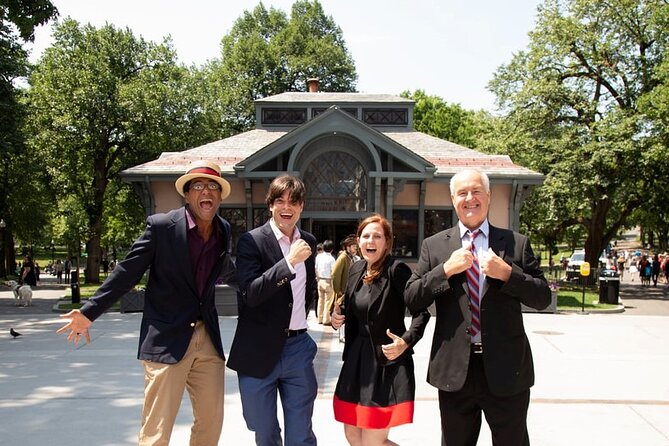
You begin at The Embrace, a statue commemorating Martin Luther King Jr. and Coretta Scott King, right by the Boston Common Visitor Information Center. It is a quick opening stop, about 10 minutes, and it is described as ticket free. Starting here is a good “why Boston” cue. It reminds you that the same city that fought for independence also wrestled with civil rights and moral leadership later.
Next is the Massachusetts State House. You get the golden dome, plus the origin story: Samuel Adams laying the cornerstone in 1795. This matters because it frames the Revolution as more than battlefield drama. It was also about governance, legitimacy, and who gets to speak for the colony.
Other Boston outings to compare
- Boston Food & History: Pizza, North End & Freedom Trail
★ 5.0 · 1,772 reviews - Boston’s Freedom Trail: A Revolutionary Walking Tour
★ 4.9 · 1,748 reviews - Boston: Freedom Trail History Small Group Walking Tour
★ 4.9 · 1,590 reviews - Freedom Trail Walking Tour 250
★ 4.5 · 1,118 reviews
Abolition and patriot graves: Tremont Temple and Granary Burying Ground
The tour then moves into abolition territory at a red brick church built in 1809, tied to an abolitionist congregation. The guide shares about anti-slavery speeches delivered there, described as some of the earliest given in America. That is not just an add-on. It helps you understand how Revolution-era values kept echoing after independence.
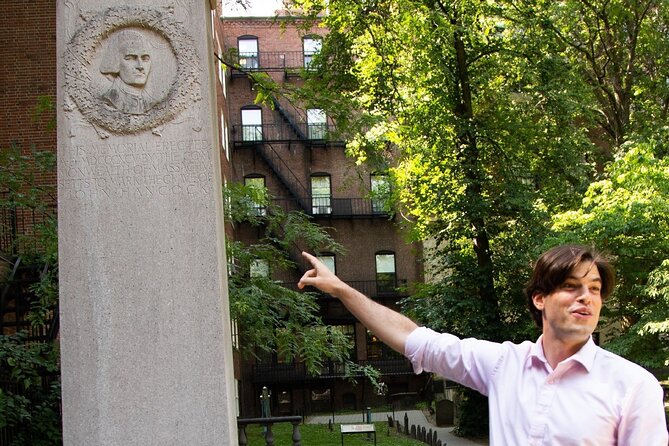
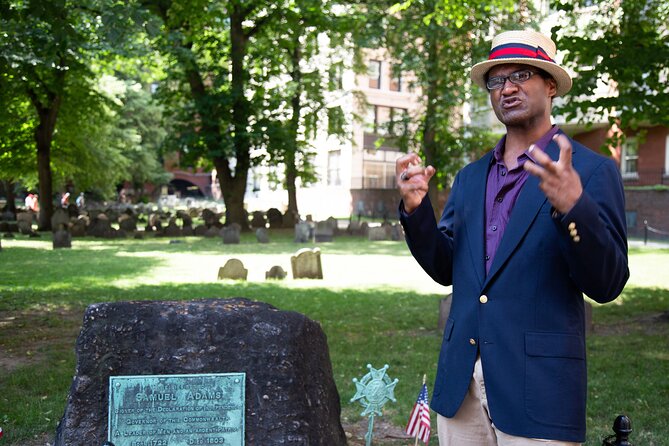
After that comes Granary Burying Ground, dating to 1660. This is where you slow down and connect names to ground. The route description calls out John Hancock, Paul Revere, and Samuel Adams as key graves the guide will point you toward, along with their stories. If you like real human anchors, this stop is one of the most satisfying parts of the walk.
One consideration here: this is where the pace can feel tight for some people. One review specifically flagged the cemetery portion as rushed. If you know you get overwhelmed in long walking lines, take a moment before you arrive and decide where you will pause if you need to reset.
King’s Chapel and Old South Meeting House: religion as a political engine
You visit a stone church built in 1754, described as the first Anglican church in Boston. The tour notes what the guide will cover: construction stories, the burying ground next to it, and the crypts beneath. This is a good bridge stop because it shows how institutions shaped public life, even when people disagreed on politics.
Then you head to a Puritan meeting house built in 1729, identified as the place where the Boston Tea Party began. The guide’s job here is to turn a famous event into an origin story. You learn how one of the most talked-about acts of civil disobedience in history got started, with enough context that it does not feel like a disconnected legend.
The Old Corner Book Store era: publishing and public ideas
The route includes a brick building from 1718, which began as a colonial apothecary and later housed the publishing house Ticknor and Fields. The tour description says the guide will bring up the literary giants published there. Even without specific names given in the route notes, the concept is clear: this was a city where ideas traveled, got printed, and shaped how people argued about power.
For many people, the Freedom Trail is mostly about confrontation. This stop reminds you that words and publishing also mattered. The guide helps you see Boston as an ideas engine, not only a protest stage.
Old State House, the Bloody Massacre site, and Faneuil Hall: the friction that tipped the balance
Next is the Old State House, constructed in 1713 and described as adorned with the symbols of Great Britain, a Lion and Unicorn. It is framed as the center of British government in Massachusetts, and the tour promises stories about fiery speeches and pitched confrontations inside.
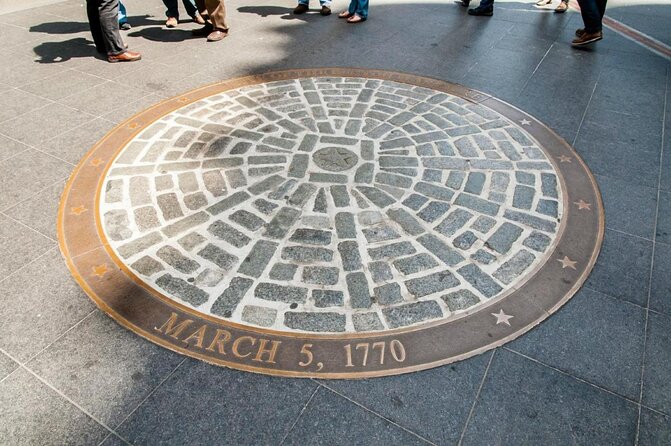
Right after that, you reach the site marked by a circle of stones for the Bloody Massacre of 1770. Here, the tour description calls for a moment-by-moment account of the night when redcoat musket fire left five colonists dead. This stop is heavy, and it is also where a good guide matters most. It is easy to reduce tragedies to a quick phrase. The guided pacing is designed to make it feel like a sequence of choices and consequences.
Then comes Faneuil Hall, built as a common marketplace in 1743, later becoming the meeting hall where the second-floor speeches earned it the nickname Cradle of Liberty. The tour focuses on incendiary speeches delivered from within. This is the Revolution as public persuasion, not just weapons.
If you want a tour that helps you understand how protest and debate escalated toward open conflict, this cluster of stops is the core.
Paul Revere House and Old North Church: the midnight signal night
The walk moves into the legend zone with Paul Revere House, a wooden house dating to 1680, described as the oldest building in Boston and once home to the Revere family. The tour tells you what to expect: how Paul Revere lived there and how he set out from those doors to take part in major American history events.
Then you reach Old North Church, built in 1723, famous here for two lanterns. The tour gives the key moment: on April 18, 1775, one lantern by land and two by sea, with the signal arranged by Paul Revere. The guide’s stories are supposed to make the importance of the eve of Revolution feel immediate, not textbook distant.
These stops are great for couples and families because the story is cinematic. The guide adds practical context so you understand why the message system mattered that night, not just that it happened.
Copp’s Hill Burying Ground, Bunker Hill Monument, and the USS Constitution view payoff
Finally, you reach the Bunker Hill end of the trail. The route includes Copp’s Hill Burying Ground, dated to 1660, described as the site of British cannon emplacements during the Battle of Bunker Hill. The tour also notes that notable Bostonians are interred here. It is another burial ground moment, so again, if you need time, plan to slow your breathing and absorb.
You then view the 221-foot obelisk of Bunker Hill Monument from Copp’s Hill Terrace. The tour description says it marks the spot where colonial militia defended hastily made earthworks and repelled two redcoat charges before retreating. That last line matters. It helps you understand the battle as a turning point, not a simple victory story.
The tour’s finish is designed as a visual reward: from Copp’s Hill Terrace, you can see the masts and rigging of USS Constitution, described as victor in pitched battles in the War of 1812 and as the oldest warship afloat anywhere in the world. Even if you do not go aboard during this specific walk, that view gives you a satisfying sense of the timeline continuing past the Revolution.
Price and value: why $31 makes sense for 16 sites
At $31 per person, this tour is positioned as a value buy because you are buying three things at once:
1) Route efficiency: You cover all 16 official sites in one planned walk instead of piecing together your own day.
2) Interpretation: You get the guide to explain what each site means, including the Boston Tea Party origin, the British government friction, and the Bloody Massacre account.
3) Time coaching: In 2.5 hours, a lot is covered, and the guide keeps the flow moving so you are not guessing where the story goes next.
Is it a perfect fit for everyone? Not automatically. If you prefer quiet museum time over walking and listening, you might feel rushed. That said, multiple guides are praised for pacing that works across ages, including teenage kids. Guides like Noah and Kenny were specifically praised for keeping attention, and that is often the make-or-break difference in history tours.
To get the value, treat this as an active tour. Bring comfortable shoes, show up ready to walk, and let the guide do the heavy lifting.
Who this Freedom Trail tour is best for, and who should think twice
This is a strong match if you:
- want a first-time orientation to Boston’s Revolution-era sites
- like guided storytelling that connects famous people with lesser-known patriots
- enjoy packing in lots of stops without planning every step yourself
- travel with people who learn well from spoken context (families often do)
Think twice if you:
- struggle with steady walking for 2.5 hours, including cemetery segments
- strongly prefer a slower, sit-down pace with more time at fewer stops
- know hearing is a challenge in group settings, because you may need to position yourself closer to the guide
If you do fall in that second group, you might still enjoy the tour if you go in with expectations. Choose a spot with a clear view of the guide, take brief pauses during stops, and be kind to yourself if some details blur.
Small practical tips before you go

A few things help this tour feel smooth rather than chaotic:
- Wear comfortable walking shoes. Multiple guides and reviews stress that this is a walk, not a tram ride.
- Expect a brisk pace. Even when the tour feels well paced, you are still moving from stop to stop through downtown and hillier terrain near the end.
- If you care about sound, stay where the guide can see you. One review flagged hearing issues when the guide was not directly facing the group.
- If weather threatens your plans, pay attention to the tour’s weather requirement. The experience is stated as requiring good weather, and if it is canceled for poor weather you will be offered a different date or a full refund.
Should you book Boston’s Freedom Trail walking tour?
Yes, if you want the Freedom Trail version that feels like a story you can follow. For $31, you get a guided walkthrough built to cover 16 official sites in about 2.5 hours, with a guide who can connect Redcoat-era conflict to Boston’s longer record of change. It also ends with a strong payoff at Copp’s Hill Terrace, where you can see USS Constitution and the Bunker Hill area from a single vantage point.
I would skip or switch to a slower option if you know you will not do well with a brisk walking pace or if cemetery time needs to be slower for your comfort. If you can manage steady walking and you like hearing history explained out loud, this tour is one of the best ways to get your bearings fast and understand why these sites still matter.
FAQ
How long is the Freedom Trail walking tour?
The tour lasts about 2 hours 30 minutes.
What does the tour cost?
The price is $31.00 per person.
Where does the tour start and where does it end?
It starts at The Embrace, 139 Tremont Street, Boston. It ends at Copp’s Hill Terrace in the North End area, with the endpoint listed as 520 Commercial St, and also referenced with a street address of 7 Jackson Ave, Boston.
What language is the tour offered in?
The tour is offered in English.
Does the tour cover the full Freedom Trail route?
Yes, it covers all 16 official sites of Boston’s Freedom Trail in one walking tour.
About how many people are in the group?
The tour has a maximum of 25 travelers.
Are service animals allowed?
Yes, service animals are allowed.
What happens if the tour is canceled due to weather?
If it is canceled due to poor weather, you will be offered a different date or a full refund.
Can I get a full refund if I cancel?
Free cancellation is available. For a full refund, you must cancel at least 24 hours in advance of the experience start time.
Newest Boston reviews on the site
- View Boston Observation Deck Admission Tickets★ 4.5 · 314 reviews
- Delicious Donuts of Boston: A Sweet History Walking Tour★ 5.0 · 1,038 reviews
- Freedom Trail Walking Tour 250★ 4.5 · 1,118 reviews
- Self Guided Classic Freedom Trail Location Aware (GPS) Walking Audio Tour★ 4.5 · 258 reviews
- Boston’s North End Food Tour: Italian Flavors & Heritage Walk★ 5.0 · 1,322 reviews
- Sunset Sailing Cruise on a Tall Ship in Boston Harbor★ 4.5 · 414 reviews
- Narrated Sunset Cruise of Boston Harbor★ 4.0 · 532 reviews
- Boston North End Food Tour of 6+ Tastings, Cannoli, Lobster Roll★ 5.0 · 1,404 reviews
Freedom Trail Walking Tours, compared.
Freedom Trail History Small Group Walking Tour
Read our review →
Boston Freedom Trail Walking Tour with Costumed Guide
Read our review →
Boston Food & History: Pizza, North End & Freedom Trail
Read our review →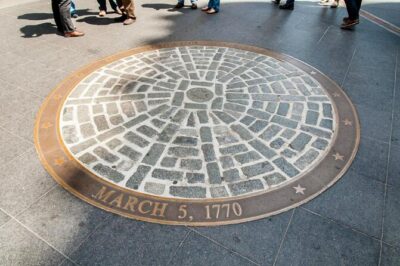
Boston’s Freedom Trail: A Revolutionary Walking Tour
Read our review →Freedom Trail History Small Group Walking Tour
Read our review →

Boston Freedom Trail History Pub Crawl Small-Group Tour
Read our review →
Browse the lists this tour appears in