
Reviewed · FREEDOM TRAIL WALKING TOURS
Boston: Freedom Trail History Small Group Walking Tour
Follow the red line through old Boston. This small-group tour turns the Freedom Trail into a story you can walk through, with 16 official landmarks and a clear line from colonial friction to Revolution. You’ll cover the key sites on foot, then finish in the North End with big sightlines over to Charlestown.
I especially love the small-group size. Fewer people means you can actually hear the guide at busy corners, and the pace feels controlled instead of frantic. I also like the way major stops connect to real people, including the graves and final resting places of Paul Revere and Samuel Adams, not just famous buildings.
One possible drawback: it’s still a walk. The accessible route is about 2 miles (3.2 km), and the tour is not a good fit for kids under 6 or for low fitness and mobility needs, so plan for weather and comfortable shoes.
In This Review
- Key things I’d plan around
- A Freedom Trail tour that doesn’t feel like a stampede
- Meeting at Boston Common, with the story already started
- Boston Common to the Massachusetts State House, politics and belief in the same breath
- Granary Burying Ground, where the past has a name and a lifespan
- King’s Chapel, Boston Latin School, and Franklin: institutions that shaped civic muscle
- Old City Hall and Old Corner Book Store: everyday Boston in Revolutionary clothes
- Old South Meeting House to Old State House: the path from outrage to action
- Boston Massacre Site and the guide’s balancing act
- Faneuil Hall to Quincy Market: a short sprint, then a breather
- Paul Revere House and Hanover Street: the story turns personal
- Old North Church to Copps Hill Burying Ground: the view gets quieter
- USS Constitution and Bunker Hill views, then Copp’s Hill Terrace to finish
- Price and value: what $35 buys you on this route
- Who should book, and who should skip this Freedom Trail walk
- Helpful planning tips so you enjoy every stop
- Should you book the Boston Freedom Trail History Small Group tour?
- FAQ
- How long is the walking tour?
- Where do I meet the guide?
- How many landmarks are included?
- What is the walking distance?
- Is there a break during the tour?
- What time of day does it run?
- Is the tour wheelchair accessible?
- What should I bring and wear?
- What is not allowed?
- Who might enjoy this tour most?
Key things I’d plan around
- A 15-guest max small group so you can hear stories without fighting for space
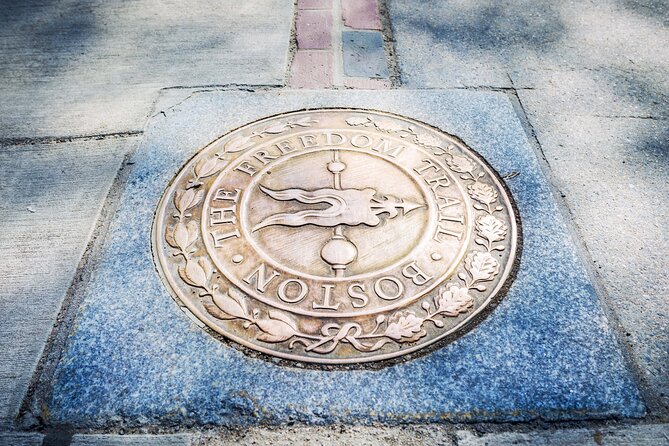
- All 16 official Freedom Trail landmarks covered in about 150 minutes
- Granary Burying Ground time built in, with a longer stop where you’ll slow down and look around
- A mid-tour break at Quincy Market for bathroom and a quick drink
- North End finale at Copp’s Hill Terrace right by Old North Church and with views toward Charlestown
- Guides who add context and correct common myths, not just dates and signs
A Freedom Trail tour that doesn’t feel like a stampede
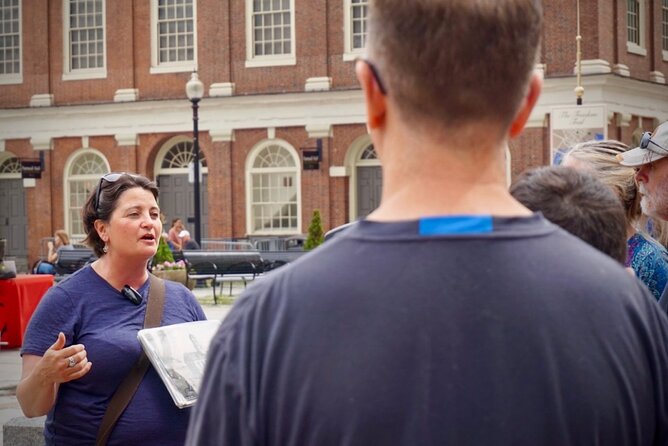
Boston’s Freedom Trail is popular for a reason, but that popularity can work against you. Big groups spread out, guides get buried, and you end up doing the walk more than understanding it. This tour keeps group size small, up to 15 guests, which makes a real difference when you hit tight streets around the Old State House, Faneuil Hall, and the North End.
You’re also getting a focused time window. At about 150 minutes (roughly 2.5 hours), you can pack in a lot without losing the thread. You’ll move through downtown Boston and end in the North End, so it works well as a first “get your bearings” activity.
More Walking Tours in Boston
- Boston: Freedom Trail History Small Group Walking Tour
★ 5.0 · 6,450 reviews - Harvard University Campus Guided Walking Tour
★ 4.5 · 3,632 reviews - Boston Freedom Trail Walking Tour with Costumed Guide
★ 4.5 · 2,531 reviews
Meeting at Boston Common, with the story already started
The tour begins at the Boston Common, inside the park at the Boston Foundation Monument. The meeting point is on the northern boundary of the park, opposite 50 Beacon Street, and the granite memorial includes a bronze relief of two men shaking hands when the Puritans arrived in 1630.
That’s a smart opener because it frames what you’re about to walk: loyalty, identity, and power, not just rebellion as a single moment. From there, you step into Boston Common for a guided start before you work your way toward the political and religious sites that helped shape colonial decisions.
If you’re the type who likes to understand the “why” before the “what,” you’ll appreciate how early the guide connects the dots. The Massachusetts State House, Park Street Church, and nearby landmarks aren’t just stops on a line, they’re parts of the same argument the colonies were having with themselves.
Boston Common to the Massachusetts State House, politics and belief in the same breath
After Boston Common, you head toward the Massachusetts State House. This area matters because in Revolutionary-era Boston, government and public life were never far apart. A lot of the tension leading up to the Revolution came from people arguing about rights, authority, taxes, and who counted as legitimate power.
From there, the route includes Park Street Church. Even if you’re not a church-history person, you’ll likely see how religious life and civic life overlapped in colonial New England. That overlap is one of the keys to making the Revolution feel less like a textbook chapter and more like real choices people made.
Granary Burying Ground, where the past has a name and a lifespan
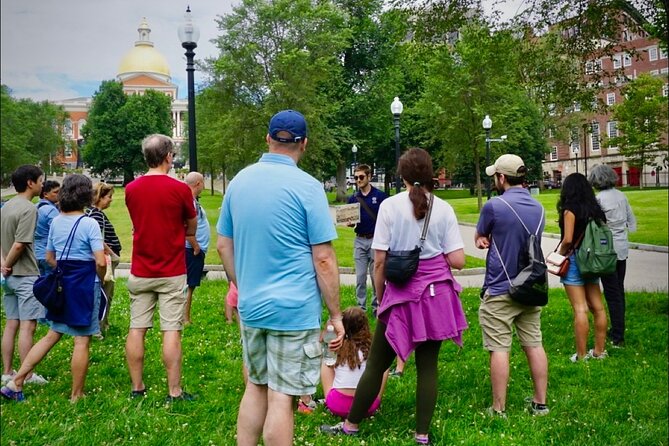
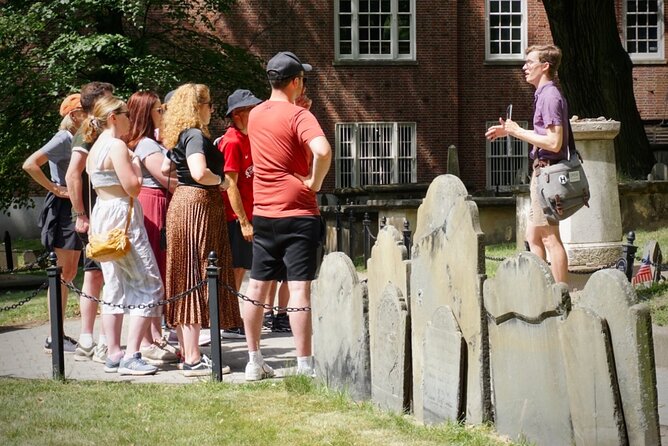
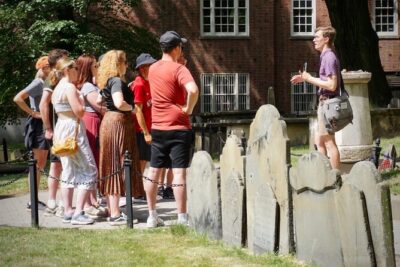
One of the longest stops is Granary Burying Ground, with about 25 minutes set aside. This is where the tour slows down, and that matters. In a walking tour, you usually rush past cemeteries. Here, you get time to look closely and understand who is buried there and why that still matters to Boston’s story.
This is also where the “people-first” side of the tour really lands. You’re not only seeing sites tied to famous events, you’re visiting final resting places connected to major Revolutionary figures such as Paul Revere and Samuel Adams. That changes the emotional feel of the tour, because you’re standing in a place that outlasted the arguments that once surrounded it.
If you tend to remember what you can picture, this stop is your anchor. I like that it gives you a break from constant moving and lets the guide connect multiple threads at once.
Other Boston outings to compare
- Boston Food & History: Pizza, North End & Freedom Trail
★ 5.0 · 1,772 reviews - Boston’s Freedom Trail: A Revolutionary Walking Tour
★ 4.9 · 1,748 reviews - Boston’s Freedom Trail: A Revolutionary Walking Tour
★ 5.0 · 1,343 reviews - Freedom Trail Walking Tour 250
★ 4.5 · 1,118 reviews
King’s Chapel, Boston Latin School, and Franklin: institutions that shaped civic muscle
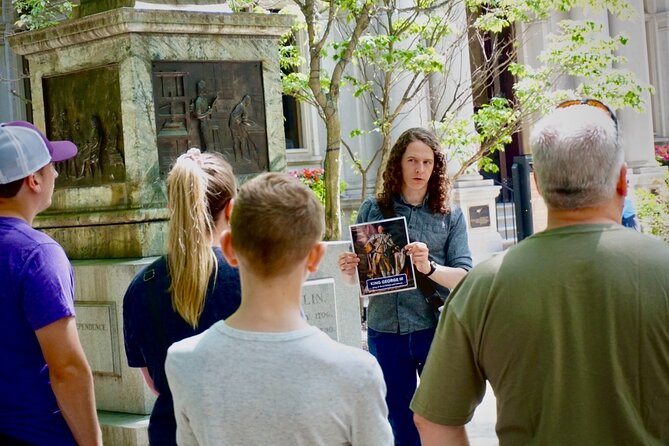
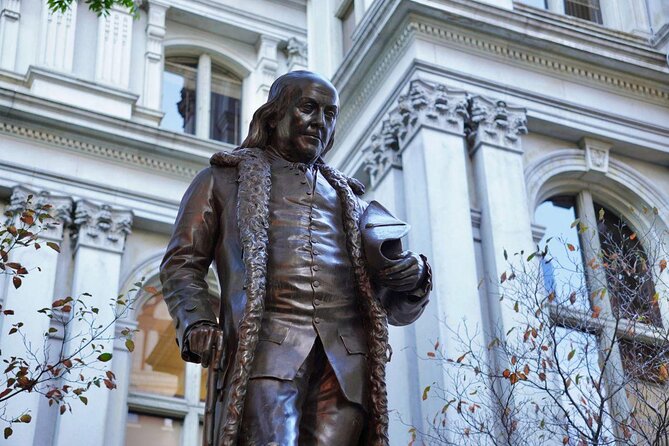
Next you’ll pass through King’s Chapel and then on to Boston Latin School and the Benjamin Franklin statue. These stops help you see how education, public service, and ideas traveled through Boston.
Boston Latin School is one of those landmarks that helps you understand why Boston produced thinkers and organizers, not only fighters. Benjamin Franklin’s presence on the route adds a practical angle too: the Revolution wasn’t only about standing up, it was about building systems, networks, and communication.
The payoff here is perspective. If you walk away thinking the Revolution was a single explosive event, you miss how many smaller institutional forces were already at work.
Old City Hall and Old Corner Book Store: everyday Boston in Revolutionary clothes
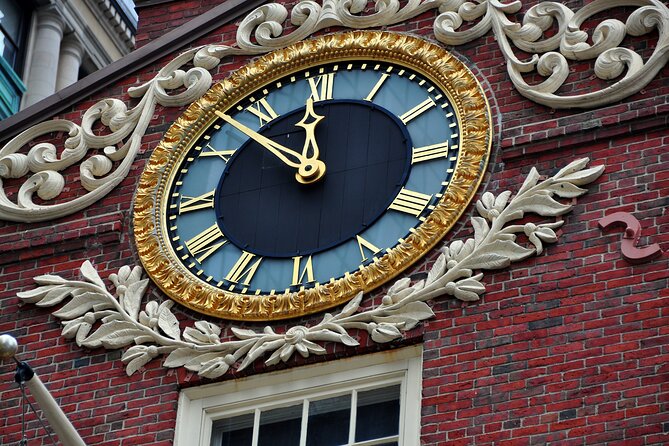
The Old City Hall and Old Corner Book Store stops give you a different tempo. These aren’t giant monuments. They’re the kind of places that help you picture daily life, the spaces where ideas circulated, and the public face of commerce and governance.
This portion of the walk can be a highlight if you like context. A good guide will connect what you see now with what would have mattered then, including how public meetings, print culture, and political debate played off one another. If you’re more into big moments, these stops still help, because they show the setup for those moments.
Practical tip: take a photo at each major stop even if you think you’ll remember. One review mentioned it’s easy to get lost in the details, and that’s fair. A quick photo list becomes your personal hit list later.
Old South Meeting House to Old State House: the path from outrage to action
You’ll reach the Old South Meeting House and then continue to the Old State House. These are core Revolutionary landmarks, and they’re also emotionally charged. The guide’s job is to keep you grounded in what happened and why people reacted the way they did.
The Old South Meeting House is tied to public assembly and political pressure. It’s not just a building you stand next to, it’s a reminder that people organized in shared spaces. From there, the Old State House becomes your bridge into the atmosphere of conflict.
A stop on the Boston Massacre Site is included right here too, with about 15 minutes guided. This is one of the places where context matters most. You’ll likely hear a more nuanced framing of the event than what most people recall from school, including how you can understand it as escalating violence rather than a clean story of simple sides.
Boston Massacre Site and the guide’s balancing act
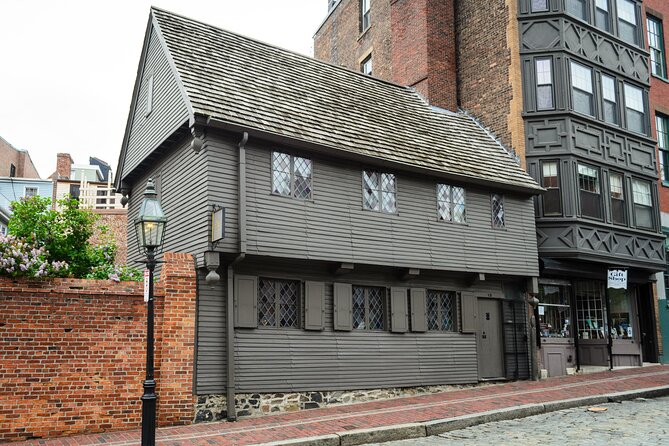
This is where I expect the tour to do its best work for you, if you care about accuracy. The best guides on this route tend to avoid over-simplified messaging and instead explain how the situation unfolded, who was involved, and what the crowd dynamics were.
In practical terms, this means you’ll spend less time memorizing dates and more time making sense of the sequence. If you’re visiting with someone who likes debate, this stop is gold because it encourages thinking instead of repeating.
Faneuil Hall to Quincy Market: a short sprint, then a breather
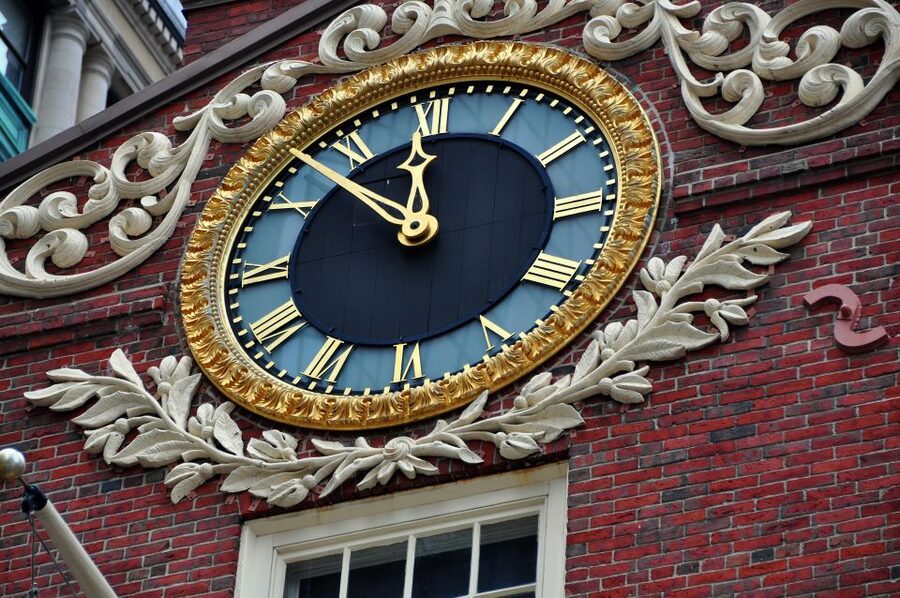
Faneuil Hall is on the route with a short guided stop, around 5 minutes. That brevity is typical for central landmarks in dense areas. The guide still gives you the meaning, but you won’t have long to linger in this stretch.
Right after that, you get a break at Quincy Market for about 10 minutes. This is the built-in moment to use the bathroom and grab a drink if you need it. It also helps you reset your energy before the North End segment, which is where you’ll walk tighter streets and finish with scenic viewpoints.
If you’re going in colder months, this break matters even more. Stopping briefly keeps the tour from turning into constant endurance, and you’ll be able to enjoy the later walking instead of just surviving it.
Paul Revere House and Hanover Street: the story turns personal
The tour includes the Paul Revere House with about 15 minutes guided. This stop is different from the public-political landmarks earlier in the walk. Here, the Revolution becomes personal, tied to one of Boston’s most famous figures and the networks around him.
Then you’ll walk along Hanover Street with a guided stop. It’s a useful transition because Hanover Street is lively even today, and it helps you feel the continuity of city life. A historical narrative hits harder when you can sense that the city didn’t stop moving after 1775.
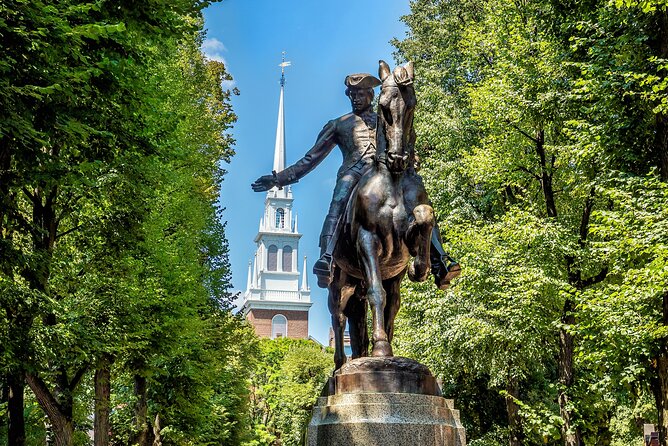
You’ll also see the Paul Revere Statue and then move toward Old North Church. The guide’s storytelling here is often what people remember most, because the Revolution starts to feel like a chain of choices with consequences, not a distant parade of heroes.
Old North Church to Copps Hill Burying Ground: the view gets quieter
Old North Church is included with about 10 minutes guided. After that comes Copps Hill Burying Ground, also guided, where you’ll get time to slow down again.
This stretch tends to be emotionally powerful because it shifts the tone. You’re no longer only looking at gathering places and government. You’re standing near final resting places and thinking about what people lost, survived, and carried forward.
If you like tours that connect places to the human cost, you’ll likely feel this one.
USS Constitution and Bunker Hill views, then Copp’s Hill Terrace to finish
On the way to the end, you’ll get scenic views toward the USS Constitution and the Bunker Hill Monument in Charlestown. You’re not doing a full Charlestown neighborhood visit, but you do get strong sightlines that help you understand how far the Revolution’s story reached from these Boston streets.
The tour finishes at Copp’s Hill Terrace, about 10 minutes guided. It’s right by Old North Church and close to Italian restaurants in the North End, which makes the ending practical. You’ll see the U.S.S. Constitution and Bunker Hill Monument over in Charlestown, which gives the tour a satisfying “wide angle” before you head to dinner.
Price and value: what $35 buys you on this route
At $35 per person for about 150 minutes, the value is mostly about focus. You’re paying for a guided narrative that connects major landmarks into one storyline and covers all 16 official Freedom Trail stops within a half-day window.
You also get small-group handling and practical pacing. A large self-guided walk might cost less, but it can also cost you time and context. Here, you’re less likely to wander into confusion, because the guide keeps you moving and explains why each site matters.
And you’re getting more than “what happened.” The guide style matters. In the feedback I saw reflected in this tour, guides like Mark, Toby, Amir, Eric, Alejandro, Nick, Candace, Maura, Zoe, and Alejandro are frequently described as energetic, clear, and story-driven. That matters for value because you’ll remember the story, not just the address.
So is it worth it? If you want the Revolution explained in a way that helps you connect the places, $35 feels fair for what you cover and how the tour is paced.
Who should book, and who should skip this Freedom Trail walk
This is a strong choice if you want:
- a structured walk through the Freedom Trail with all 16 official landmarks
- a small-group experience that avoids the worst crowd crush
- story-led history that helps you make sense of the lead-up to the Revolution
- a finish in the North End, ready for dinner
It’s likely not the best fit if:
- you struggle with walking about 2 miles in city conditions
- you have low fitness or mobility limitations, since it’s still a street walk even if a route is listed as wheelchair accessible
- you’re traveling with children under 6
- you don’t want cold or weather exposure, since Boston weather is real and the tour is outdoors
Helpful planning tips so you enjoy every stop
Come with comfortable shoes. This is not a sit-down museum tour, and the city terrain adds up. Dress for weather too, especially in winter or during snow and rain, since the tour runs on foot.
Also note the rules: no luggage or large bags, and no video recording. Keep your hands free, and use your phone for photos rather than constant filming.
If you’re the kind of person who wants a checklist, bring a quick note app list before you start. One common issue on this route is that there’s so much to see that landmarks can blur together later.
Should you book the Boston Freedom Trail History Small Group tour?
Yes, if you want a smart, story-led walk that covers the Freedom Trail efficiently and keeps the group small enough to hear what matters. This is the right kind of tour for first-time visitors who want context, plus anyone who wants to see where major Revolutionary figures are tied into Boston’s geography.
Skip it if you can’t comfortably handle a 2-mile walk, or if your travel style is more “wander at your own pace” than “follow a guided storyline.”
FAQ
How long is the walking tour?
The tour duration is 150 minutes (about 2.5 hours), and it will not be more than 3 hours.
Where do I meet the guide?
Meet your guide inside Boston Common at the Boston Foundation Monument on the northern boundary of the park, opposite 50 Beacon Street (02108).
How many landmarks are included?
The tour includes all 16 official Freedom Trail landmarks, spanning downtown Boston and ending in the North End.
What is the walking distance?
The accessible route travels approximately 2.0 miles (3.2 km).
Is there a break during the tour?
Yes. There’s a break at Quincy Market for about 10 minutes.
What time of day does it run?
The duration is fixed at about 150 minutes, and starting times vary. You’d check availability for the specific start you want.
Is the tour wheelchair accessible?
A wheelchair-accessible route is listed. However, the tour is also noted as not suitable for people with mobility impairments, so it’s smart to consider your specific needs before booking.
What should I bring and wear?
Wear comfortable shoes and dress for the weather.
What is not allowed?
Luggage or large bags are not allowed, and video recording is not allowed.
Who might enjoy this tour most?
It’s best for people who want to walk through key Revolutionary-era sites and hear the stories behind them. It’s not suitable for children under 6 years and is not a fit for low fitness.
More Historical Tours in Boston
- Tour of Historic Fenway Park, America’s Most Beloved Ballpark
★ 4.5 · 3,013 reviews - Boston: City Cruises Historical Sightseeing Cruise
★ 4.6 · 1,771 reviews - City Cruises Boston Historic Sightseeing Harbor Cruise
★ 4.5 · 1,388 reviews - Boston’s North End Food Tour: Italian Flavors & Heritage Walk
★ 5.0 · 1,322 reviews
Newest Boston reviews on the site
- View Boston Observation Deck Admission Tickets★ 4.5 · 314 reviews
- Delicious Donuts of Boston: A Sweet History Walking Tour★ 5.0 · 1,038 reviews
- Boston’s Freedom Trail: A Revolutionary Walking Tour★ 5.0 · 1,343 reviews
- Freedom Trail Walking Tour 250★ 4.5 · 1,118 reviews
- Self Guided Classic Freedom Trail Location Aware (GPS) Walking Audio Tour★ 4.5 · 258 reviews
- Sunset Sailing Cruise on a Tall Ship in Boston Harbor★ 4.5 · 414 reviews
- Narrated Sunset Cruise of Boston Harbor★ 4.0 · 532 reviews
- Boston’s North End Food Tour: Italian Flavors & Heritage Walk★ 5.0 · 1,322 reviews
Freedom Trail Walking Tours, compared.
Freedom Trail History Small Group Walking Tour
Read our review →
Boston Freedom Trail Walking Tour with Costumed Guide
Read our review →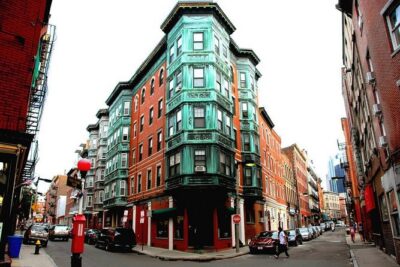
Boston Food & History: Pizza, North End & Freedom Trail
Read our review →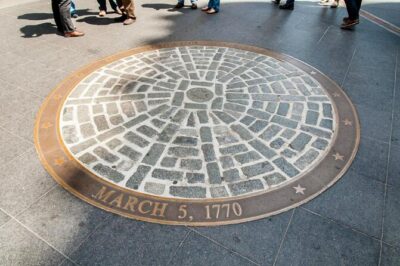
Boston’s Freedom Trail: A Revolutionary Walking Tour
Read our review →Boston’s Freedom Trail: A Revolutionary Walking Tour
Read our review →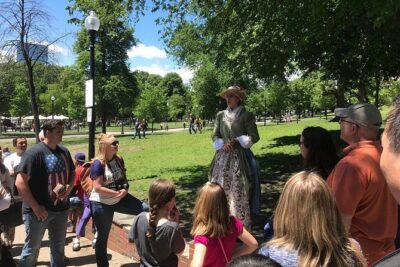

Boston Freedom Trail History Pub Crawl Small-Group Tour
Read our review →
Browse the lists this tour appears in