
Reviewed · WALKING TOURS
Walking History Tour of St. Augustine’s Historic District
Old streets, big stories, tight pacing.
This Walking History Tour of St. Augustine’s Historic District is a great way to connect the dots across centuries, from early settlement-era sites to the Gilded Age. I like that the tour is led by a local professional who can keep things fun, with Kevin Rose frequently praised for humor and sharp storytelling.
What I really like is the mix of stops: you pass through major landmarks while also hitting places that most people skip. I also like the practical feel, a small group, about 1.5 miles of walking, and a route that covers everything from cemeteries to fortifications.
One consideration is the time math. It’s listed at about 1 hour 30 minutes, but plan for it to run longer when questions keep coming and the guide’s stories take over.
In This Review
- Key takeaways before you lace up
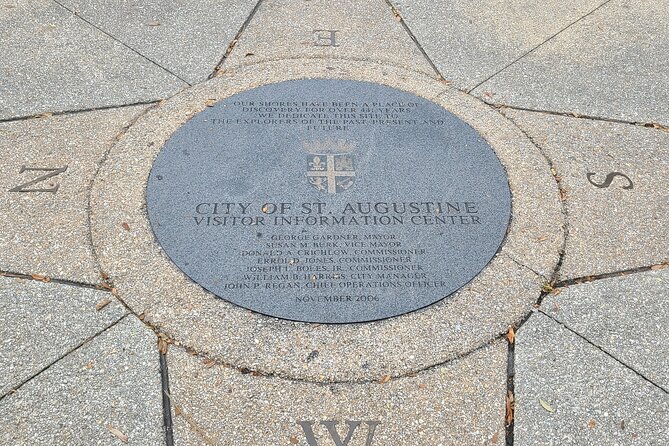
- Getting oriented in St. Augustine, starting at the Visitor Center
- Tolomato Cemetery and the Love Tree stop for the earliest echoes
- Flagler-Era churches: Grace United Methodist and Memorial Presbyterian
- Flagler College and the former Ponce de Leon hotel story
- Plaza de la Constitucion and the Government House era, plus WPA recreation
- Castillo de San Marcos: what you learn from the fort exterior
- City Gate Spirits and the traditional entrance that survived
- How long it really takes, and how to dress for it
- Small-group value: why $25 can be a smart use of your time
- Who should book this walking history tour
- Should you book it or skip it?
- FAQ
- How long is the walking history tour?
- How much walking is involved?
- Where does the tour start?
- Where does the tour end?
- What does it cost?
- Is the tour in English?
- Are tickets to the stops included?
- What should I bring?
- How many people are in the group?
- What is the cancellation policy?
Key takeaways before you lace up
- Small-group size (max 15) means you can actually ask questions and hear answers.
- Kevin Rose’s delivery is often described as funny, engaging, and full of detail without feeling like a lecture.
- Nearly 2 miles of walking through the historic core, so wear comfortable shoes and bring water.
- You get a sweep of eras, from earliest Spanish-era history up through the early 1900s and the Flagler period.
- Some major sites may not be fully ticketed, while other stops are free to view from the public area.
Getting oriented in St. Augustine, starting at the Visitor Center
Most history tours either sound good or feel good. This one aims for both. You meet at the St. Augustine and St. Johns County Visitor Information Center at 10 S Castillo Dr, and you start in the heart of the action where it’s easy to picture how the city grew.
You’ll want to treat the tour as your first good map lesson. St. Augustine’s downtown can feel like one long maze of old streets, plazas, and fort walls, but a guided walk helps you understand why each piece exists and who pushed the city in which direction. I like that the tour uses a mobile ticket, so you are not scrambling for paper.
Because the group is capped at 15 travelers, it tends to stay conversational instead of becoming a line of people listening to someone shout over the crowd. That matters in St. Augustine, where you can easily lose the thread if you are just following a big bus-size group.
Also, this is not a sit-down tour. You will do a moderate walking pace through the historic district, so it fits best when you can tolerate pavement and a steady stroll rather than long museum-style breaks.
Other St Augustine outings to compare
- Feast of Saint Augustine Historical Walking Food Tour
★ 5.0 · 347 reviews - History Walking Tour in St. Augustine
★ 5.0 · 299 reviews - St. Augustine’s Sweets & History Walking Tour
★ 5.0 · 277 reviews
Tolomato Cemetery and the Love Tree stop for the earliest echoes

One of the most memorable parts is the opening cemetery stop at Tolomato Cemetery. The big hook here is age. You get to see the oldest cemetery in the city, and the tour frames it as older than the Spanish arrival in 1562.
Even if you have seen old cemeteries before, Tolomato feels different because it connects the city to its earliest layers. It’s the kind of place that makes you slow down and listen, and that is exactly what a good early stop should do on a history walk. Cemeteries also give the guide a chance to explain how communities formed, what they valued, and how faith and daily life show up on the ground long after the people are gone.
There is also the Love Tree you might hear about during this stop. The tour notes that it is something to see, but you should take the warning seriously and keep yourself on the safe side of whatever boundary rules are posted at the site.
Practical note: admission is not included for this stop. So if you want more than just a look from the public areas, budget for possible entry costs and plan your time accordingly.
Flagler-Era churches: Grace United Methodist and Memorial Presbyterian
After the cemetery, the tour leans into architecture and the way wealth, faith, and civic pride shaped St. Augustine in the late 1800s.
Grace United Methodist Church is presented as one of the Flagler Era churches, with a connection to Henry Flagler’s efforts to revitalize the city. This matters because Flagler’s influence shows up all over St. Augustine, but it can feel like random landmarks unless someone ties it together. A church stop does that well, since it connects big-name development to real institutions people used.
Then you hit Memorial Presbyterian Church, highlighted as one of the most beautiful buildings in the city, paired with a heartbreaking story about how it came to be. That combination is the sweet spot for a walking history tour. You get the visual payoff first, then you learn why the building exists in the first place, and how tragedy and community memory can shape a city’s identity.
These stops also serve a useful purpose for your day. Churches and historic structures are easy to understand from the sidewalk, so even if you are not trying to enter every building, you still get value. You are learning how St. Augustine used style and institutions to signal stability, status, and spiritual life.
If you are sensitive to emotionally heavy stories, this is still worth it. The tour gives you context, and you will likely appreciate how the guide keeps the tone respectful while still making it understandable.
Flagler College and the former Ponce de Leon hotel story
Next comes the Flagler College area, introduced through the historic tours connected to the campus. Here, the big idea is the transformation from the former Ponce de Leon hotel into the college.
This stop is powerful because it shows the Gilded Age as a real place, not just a textbook phrase. The Ponce de Leon Hotel set a standard for opulence in its time, and St. Augustine’s later identity is tangled up with what visitors and investors were trying to do in those years. You are walking in the shadow of grand ambition.
If you like history that connects to present-day spaces, this is one of your best moments. The building is still active, still part of the city, and you can picture daily life in a completely different time period. A guide also helps you notice details you might otherwise ignore, like how the building’s purpose and prestige influenced the surrounding area.
Time is short here, about a few minutes on the walk, so treat it as a viewpoint and context stop. If you want deeper access, you may need to plan a return trip for extra tours or visits that are not included in this walk.
Same corner of the map, another day out:
- St. Augustine Hop-On Hop-Off Trolley Tour
★ 4.5 · 3,799 reviews - St. Augustine Ghost Tour: A Ghostly Encounter
★ 4.5 · 2,404 reviews - Medieval Torture Museum with Ghost Hunting and Tiny Art Gallery
★ 5.0 · 2,011 reviews - Take a Scenic Boat Ride in St. Augustine
★ 4.5 · 1,399 reviews
Plaza de la Constitucion and the Government House era, plus WPA recreation
Then you step into Plaza de la Constitucion, a public square with serious roots. The tour frames it as being founded by Royal Decree in 1599, and that date is a reminder that St. Augustine’s downtown has been doing this civic work for a long time.
From there, the guide ties the plaza to the Government House, described as the seat of power in Florida for nearly 250 years. That is a huge time span, and it’s easy to miss how much political change and colonial control can pass through one small area when you are not given the timeline.
This stop also gets a modern twist. The guide explains how it was recreated in 1933 as part of the WPA projects, which helps you understand why parts of what you see today look the way they do. Sometimes historic districts can feel like a theme park. Here, the WPA angle adds a legitimate reason for the details, and it turns the square into a story about preservation and reinvention.
This stop is free to visit, at least for what you can see from the plaza itself, so it is a good payoff without extra ticket costs. If you need a mental breath during the walk, this is where you can pause, regroup, and let the scale of the setting sink in.
Castillo de San Marcos: what you learn from the fort exterior
No St. Augustine history walk is complete without Castillo de San Marcos. This tour gives you a fort lesson through the exterior, with a licensed fort guide adding the kind of detail that makes stone walls feel like living history.
The key value here is construction and importance. You get the story of how the fort fits into the city’s survival and into broader national history. Even if you are not going inside on this day, a fort exterior visit can still be meaningful because the guide helps you interpret what you are seeing: the layout, the logic, and why it mattered.
This is also one of the stops where you might spend the most time, around fifteen minutes. That extra time matters because you can actually absorb the explanation rather than treating it like a quick photo stop.
Admission is not included for this monument as noted for the tour stop. So if you want full interior access, plan for separate entry. Still, the exterior portion can be a great starter, especially if you are trying to fit a lot into a short vacation.
If rain is a factor during your trip, forts and plazas can be tricky because weather changes the walk more than you expect. Having a timed guided stop here helps keep your day structured.
City Gate Spirits and the traditional entrance that survived
Toward the end, you pass the City Gate Spirits area, described as a traditional entrance to St. Augustine since 1762. This stop is short, only about five minutes, but it carries a strong theme: the effort it took to save the gate from demolition.
That is an important kind of historical learning. It’s not only about what happened in the past, it’s also about how a city chooses what to keep. A gate is practical, but it’s also symbolic. It’s the boundary between outside and inside, between trade routes and the life of the town.
Also, it’s a useful way to land the walk. After centuries of Spanish-era framing, Flagler-era transformation, and fort survival, you end with a reminder that modern St. Augustine is partly the result of preservation decisions made much later.
This stop is listed as free, so you should feel no extra financial pressure to enjoy it. It’s the kind of ending that leaves you with a clear mental image of the city’s entrance, not just a blur of buildings.
How long it really takes, and how to dress for it
The tour is scheduled at about 1 hour 30 minutes, but you should plan for more time. A common theme in feedback is that the walk often runs longer, sometimes into the two-hour range. That usually happens for a good reason: you are allowed to ask questions, and the guide does not rush through answers.
That means you should treat the tour as your anchor, then schedule the rest of your day with breathing room. If you have a tight dinner reservation or a separate timed ticket for the fort, build in buffer time so you do not end up sprinting across downtown.
Walking distance is given as nearly two miles. It’s not extreme, but cobblestones, uneven sidewalks, and the Florida heat can make it feel longer. Bring bottled water, wear comfortable shoes, and keep a light layer if weather shifts.
Physical fitness level is described as moderate. So if you can handle a steady walk with short stops, you are likely fine. If you have a mobility limitation, consider whether you can handle two miles at an easy pace with minimal breaks.
One more practical note: the tour depends on good weather. If it’s rainy, it can be canceled and rescheduled. If your trip is tight, it’s smart to have a flexible day when you book.
Small-group value: why $25 can be a smart use of your time
At $25 per person, this tour is priced like a budget-friendly add-on, but it plays more like a guide-led orientation to the city. The value is not just the sites. It’s how the guide stitches them together so you leave with a working timeline, not just random facts.
A big reason it feels worth it is the group size. With a max of fifteen people, the tour tends to be interactive instead of passive. That is where you get real value at this price point, because you can ask about the exact things you care about, and the guide can answer in plain terms.
This is also a good deal if you are the kind of person who likes to connect architecture to history. You pass churches, civic spaces, a college that came from a grand hotel, and a national monument fort. That range usually costs more when you do it by buying multiple timed tickets and separate tours.
The only place you might feel the cost pinch is if you want to go inside the spots where admission is not included. Some stops are free to view from where the walk takes you, like the plaza and city gate area, while others may require separate entry if you want deeper access.
Still, even with possible extra admissions, this walking format often saves time. It helps you decide what is worth a second trip later, instead of guessing at random.
Who should book this walking history tour
This one is ideal if you want a guided history sweep without spending your day in a car. It fits well for:
- Couples and small groups who want context fast
- Anyone who likes asking questions and getting clear answers
- First-time visitors who want to understand St. Augustine’s Spanish-era to early 1900s arc, including the Flagler period
- Families with kids who can handle a steady walk and short explanations
If you are the type who hates walking, this may not be your best option. It’s not a stroller-free event, but it does require moderate walking and nearly two miles of ground.
It’s also a good pick if you want a guide who treats St. Augustine like more than a list of photos. Kevin Rose is repeatedly described as funny, engaging, and proud of his city, and that energy helps the tour feel like a story you can actually follow.
Should you book it or skip it?
I would book this tour if you want a cost-effective way to understand St. Augustine in one focused afternoon block. For $25, you get a guided walk through a concentrated historic district with a strong emphasis on storytelling, and the small group size makes it easy to participate.
Book it especially if you want your history lesson to feel human, with room for questions and humor. The tradeoff is timing. It can run longer than the scheduled window, so keep your plans flexible, wear good shoes, and have water ready.
If you already plan to spend the whole day inside major attractions and prefer self-guided pace, you might skip this. But for most visitors, this is one of the easiest ways to start your St. Augustine day on the right foot.
FAQ
How long is the walking history tour?
The tour is listed at about 1 hour 30 minutes.
How much walking is involved?
It covers nearly two miles of ground.
Where does the tour start?
The meeting point is the St. Augustine and St. Johns County Visitor Information Center at 10 S Castillo Dr, St. Augustine, FL 32084.
Where does the tour end?
It ends back at the meeting point.
What does it cost?
The price is $25.00 per person.
Is the tour in English?
Yes, it is offered in English.
Are tickets to the stops included?
Not all stops include admission. Some stops are listed as free (Plaza de la Constitucion, City Gate Spirits), while others are listed as admission ticket not included.
What should I bring?
Bring comfortable shoes and bottled water, and come with a thirst for knowledge.
How many people are in the group?
The tour has a maximum of 15 travelers.
What is the cancellation policy?
Free cancellation is available up to 24 hours in advance for a full refund. If you cancel less than 24 hours before the experience starts, the amount paid is not refunded.
Newest St Augustine reviews on the site
- Wine & Dine Tour (St. Augustine)★ 5.0 · 254 reviews
- The Original Haunted Pub Tour★ 4.5 · 382 reviews
- St. Augustine’s Wine, Cocktail and Food Experience★ 5.0 · 1,251 reviews
- Sunset Cruise – #1 Party Boat in St. Augustine, FL★ 4.5 · 252 reviews
- Adventure Boat Tours – Sunset Water Tour in St. Augustine★ 5.0 · 275 reviews
- Old Jail Museum Tour in St. Augustine★ 5.0 · 717 reviews
- History Walking Tour in St. Augustine★ 5.0 · 299 reviews
- : Step back in time with pastime private historical tours★ 5.0 · 289 reviews
Walking Tours, compared.

History and Hauntings of Salem Guided Walking Tour
Read our review →
New Orleans Premier Ghost, Voodoo and Vampire Walking Tour
Read our review →

Freedom Trail History Small Group Walking Tour
Read our review →
Historic Charleston Guided Sightseeing Walking Tour
Read our review →
New Orleans Food Walking Tour of the French Quarter with Small-Group Option
Read our review →
St. Louis Cemetery No. 1 Official Walking Tour
Read our review →Browse the lists this tour appears in