
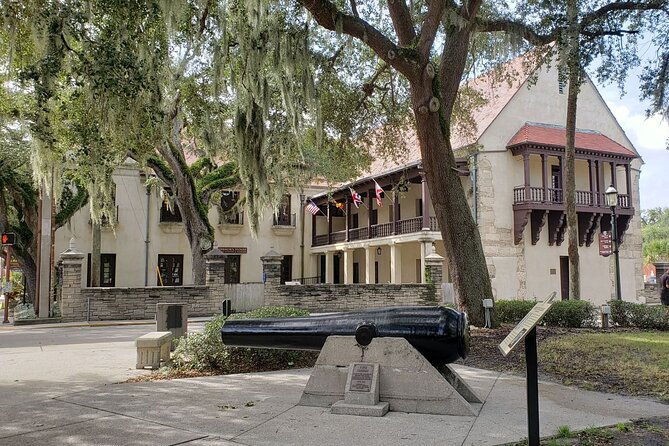
Reviewed · WALKING TOURS
History Walking Tour in St. Augustine
90 minutes can change how you see St. Augustine. This walk gives Spanish colonial street-level context fast, using landmarks you can actually point to as you learn. It’s a tight route through major squares and old corridors, with a guide who helps you connect the dots from fort to church to hotel-era architecture.
I especially like how you get oriented without feeling rushed, plus the tour leans into practical tips for where to go next. Guides such as Russ (including Russ Saunders), Amy, Alex, and Luc have a talent for clear storytelling and light humor, and many wrap up with direct suggestions for what to eat and what to explore on your own.
One thing to plan for: a couple of the bigger stops may require separate admission, so your final cost depends on whether you want to go inside. Also, it’s best with good weather since you’re walking most of the time.
In This Review
- Key highlights you’ll feel right away
- Getting oriented on Aviles Street and the old-city core
- Plaza de la Constitución: where the city’s power sits in plain sight
- The waterfront story at Castillo de San Marcos National Monument
- Old City Gates: 1808 craftsmanship with earlier conflict behind it
- St. George Street: the pedestrian backbone, restaurants included
- Saint Photios Greek Orthodox National Shrine: an immigrant story you can trace
- Flagler College: from Ponce de Leon Hotel to a working landmark
- Why the small-group format makes the whole walk better
- What to expect on the ground, stop by stop
- Walking stamina and your best planning moves
- Who this tour is best for
- Should you book the St. Augustine history walking tour?
- FAQ
- How long is the St. Augustine history walking tour?
- How much does it cost?
- Is the tour ticket mobile?
- Are admission fees included for all stops?
- Where does the tour start and end?
- What is the cancellation policy if weather is bad or plans change?
Key highlights you’ll feel right away

A small group of up to 10 keeps the pace friendly and questions welcome.
Aviles Street to the Plaza gives you a quick “map in your head” for historic St. Augustine.
Fort views along the waterfront help you understand why the city was fought over.
St. George Street in pedestrian-only form shows how the historic core works today.
Two entry stops not included (Castillo de San Marcos and Flagler College) let you decide what you want to pay for.
Getting oriented on Aviles Street and the old-city core
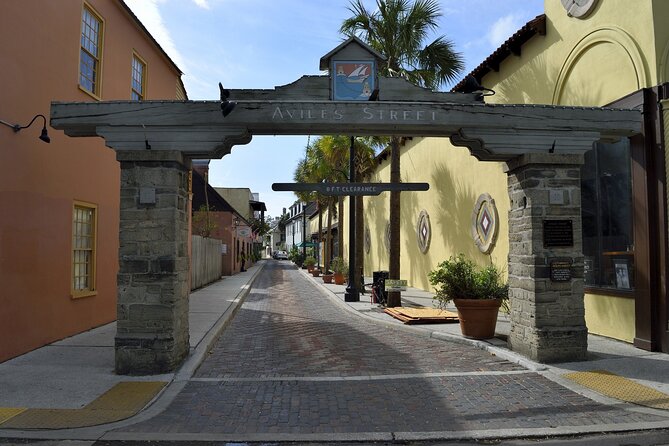
The tour starts at 11d Aviles St, in the oldest-street zone that instantly tells you you’re in the real historic center. Aviles Street is an excellent first stop because it frames how St. Augustine developed, not just what it looks like. In about the first 20 minutes, you’ll get a timeline overview that makes the rest of the walk make sense, even if you haven’t studied the city before.
Price is $33 per person for about 1 hour 30 minutes. For me, that hits a good value point because you’re paying for guidance, not just motion. You’ll walk from one key landmark to another, but the payoff is having someone connect the stories and point out what matters, plus the route is short enough that it fits a first full day.
One practical note: the tour uses a mobile ticket, and it’s listed as English. That matters if you hate paper tickets and want an easy check-in.
Other St Augustine outings to compare
- Walking History Tour of St. Augustine’s Historic District
★ 5.0 · 1,152 reviews - Feast of Saint Augustine Historical Walking Food Tour
★ 5.0 · 347 reviews - St. Augustine’s Sweets & History Walking Tour
★ 5.0 · 277 reviews
Plaza de la Constitución: where the city’s power sits in plain sight
Next you move into Plaza de la Constitución, the historic heart of the downtown core. This plaza works like a hub: you’re surrounded by major institutions that still shape the city’s look and feel, including the Cathedral Basilica of St. Augustine, Trinity Episcopal, and Government House.
You’ll also learn how the plaza connects to the bigger visual icons of the area. With the Bridge of Lions in view, you can start to picture how visitors and locals move through town, not only how it looked centuries ago.
This stop is only around 20 minutes, so it’s not the time for long museum-style reading. Instead, it’s the kind of pause that helps you “see” the city’s layout while you’re still fresh from Aviles Street.
The waterfront story at Castillo de San Marcos National Monument
From the plaza area, the walk shifts you toward the waterfront and the setting that defined the city’s survival. The highlight here is Castillo de San Marcos National Monument, often described as the oldest standing fort in the continental United States. The guide’s job is to make the fort more than a photo stop, and you’ll get that context while you’re walking and looking at the surrounding area.
This is the first place where you need to think about entry cost. Admission for the fort is not included, so if you want to go inside and see the exhibits, you’ll pay separately. If you’re on a tight budget, you can still appreciate the overview from outside, but you’ll get the most value if you’re willing to add that ticket.
Why this stop matters: forts explain geography and conflict at the same time. Even in a short walk, understanding the waterfront setting helps you make sense of why so many layers of culture landed here, then fought to stay.
Old City Gates: 1808 craftsmanship with earlier conflict behind it
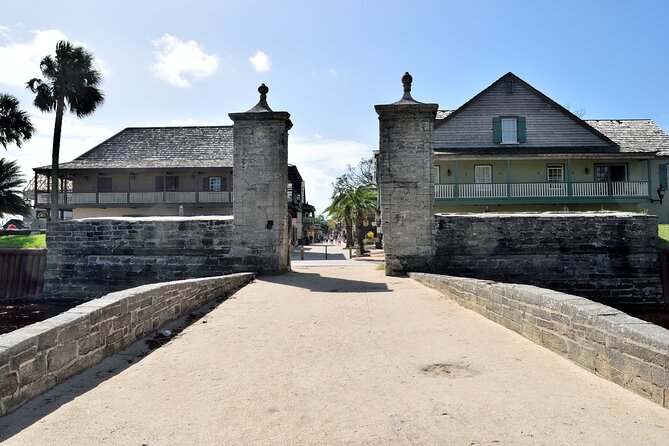
The route then brings you to the Old City Gates, a spot that’s easy to overlook if you’re just scanning for big tourist signage. The gates were constructed in 1808, but their story stretches earlier, tied to St. Augustine’s attack history involving Carolinian Governor James Moore and his troops.
This is a quick stop, about 5 minutes, which sounds short until you realize the point. You’re not going deep into archives here. You’re getting a crucial detail that changes how you read the city streets, because you start spotting where defense shaped movement.
If you like photography, this is also a good area to slow down. The gates and their surrounding street lines help you understand the “edges” of historic St. Augustine.
Same corner of the map, another day out:
- St. Augustine Hop-On Hop-Off Trolley Tour
★ 4.5 · 3,799 reviews - St. Augustine Ghost Tour: A Ghostly Encounter
★ 4.5 · 2,404 reviews - Medieval Torture Museum with Ghost Hunting and Tiny Art Gallery
★ 5.0 · 2,011 reviews - Take a Scenic Boat Ride in St. Augustine
★ 4.5 · 1,399 reviews
St. George Street: the pedestrian backbone, restaurants included
Then you hit St. George Street, the main pedestrian corridor that feels like the city’s daily stage. Here, the history lesson has a modern counterpart. You’re walking past shops and restaurants, so the city’s past isn’t locked behind walls. It’s part of how people spend an afternoon right now.
This stop is around 10 minutes, and it’s perfect for a reset. You can take in the scale of the street and start planning your next block on your own. Even without extra time, the guide’s framing helps you understand why this corridor became the backbone, not just a convenient strip of storefronts.
Practical tip: wear good walking shoes. St. George Street is scenic, but it’s still street-level walking for a full hour and a half route.
Saint Photios Greek Orthodox National Shrine: an immigrant story you can trace
A standout stop for context is Saint Photios Greek Orthodox National Shrine. This is dedicated to the first colony of Greek, Italian, and Minorcan peoples who came to Florida, linked to the New Smyrna chapter in 1768. The shrine connects that migration story to the group’s arrival to St. Augustine in 1777.
This stop is short, about 5 minutes, so you’ll want to listen closely and catch the key points. What makes it valuable is that it broadens the story beyond Spanish power and military architecture. St. Augustine’s identity is shaped by multiple waves, and this shrine helps you notice that shift immediately.
If you’re curious about how cultures settle and build community spaces, this is one of the most human-feeling stops on the walk.
Flagler College: from Ponce de Leon Hotel to a working landmark
The final major landmark stop is Flagler College. You’ll talk about the former Ponce de Leon Hotel, a luxury property built by developer and Standard Oil co-founder Henry M. Flagler, completed in 1888. The building was designed in the Spanish Renaissance style by the New York architecture firm Carrère & Hastings.
This is around 10 minutes, and admission for this site is not included. The value here is the explanation, because the building’s details start to read differently once you know what it was meant to communicate, a grand Florida destination tied to a specific era of wealth and ambition.
Why I like this stop for first-time visitors: it shows how the city keeps reusing its visual language. Spanish-influenced design appears again and again, even when the “purpose” of the buildings changes over time.
Why the small-group format makes the whole walk better
This tour tops out at 10 travelers, and that size changes everything. You’re not competing with a big crowd for the guide’s attention. You can ask a question without it derailing the entire group, and you’re more likely to catch those clarifying details that turn random facts into a real understanding.
Humor and personality also matter here. Multiple guides have been described as lively, with one guide known for plenty of jokes, including dad-style humor. Even if you’re not a big “jokes person,” that kind of delivery helps keep a history walk from turning into a lecture.
One more practical upside: at the end, many guides provide direct follow-up recommendations for what to do next. Some send those ideas by text, including dining suggestions and more history stops. That’s useful because St. Augustine can overwhelm you with choices, and you don’t want to wander around hungry and directionless.
What to expect on the ground, stop by stop
Here’s how the route tends to feel as you move through it:
- First 20 minutes on Aviles Street: timeline overview, you learn what to watch for later.
- Next 20 minutes at Plaza de la Constitución: you connect church, government, and the public square into one mental picture.
- Next about 20 minutes toward the waterfront and Castillo: you understand why the fort matters, then decide about admission if you want to go further.
- Then a short 5 minutes at the Old City Gates: you pick up one key fact that changes how you read the city’s boundaries.
- A 10-minute walk on St. George Street: you get your modern bearings for food and shops while keeping a history lens.
- A 5-minute cultural stop at Saint Photios: you broaden the story beyond Spanish rule into migration and community life.
- Final 10 minutes at Flagler College: you end on architecture tied to Henry Flagler and the Ponce de Leon Hotel era.
Even with the guided time at each stop, you’ll still be walking continuously between locations. Expect a steady pace, not a sit-down museum rhythm.
Walking stamina and your best planning moves
Because it’s a history walk, you’ll be on foot for most of the experience. A review note highlighted there are no built-in restroom breaks, so plan ahead. If you’re traveling with kids or you have mobility limits, keep that in mind and consider whether you want a route with longer pauses.
Weather matters too. This tour requires good weather. If conditions are poor, the experience may be canceled and you’ll either get a different date or a full refund.
What to bring:
- Comfortable shoes for old streets and lots of short transitions
- A light layer, since coastal weather can shift
- A charged phone for your mobile ticket
Service animals are allowed, which is good to know for travelers who need that support.
Who this tour is best for
This is a strong choice if you’re:
- In St. Augustine for only a short time and want a fast mental map
- Traveling with someone who likes clear stories and a bit of humor
- Interested in how power, religion, migration, and architecture all overlap in one compact area
- Looking for local pointers for where to eat and what to see next, after the walk ends
It’s also a good fit for first-time visitors because you hit the big visual anchor points quickly: plazas, gates, a fort area, the main pedestrian street, a major shrine, and Flagler-era architecture.
Should you book the St. Augustine history walking tour?
I think this is a yes for many visitors, especially if you want to understand St. Augustine in about 90 minutes without getting stuck in information overload. The price is fair for a short, guided orientation, and the small group size improves the experience by keeping it interactive.
The only reason I’d hesitate is if you’re hoping for a walk with no additional site fees. Since Castillo de San Marcos and Flagler College have admission that’s not included, you might end up paying more than the base price if you want full access inside.
If you’re okay with adding those optional entries and you’re ready to walk the historic core, this is one of the best ways to start your trip.
FAQ
How long is the St. Augustine history walking tour?
It runs about 1 hour 30 minutes.
How much does it cost?
The price is $33.00 per person.
Is the tour ticket mobile?
Yes, it uses a mobile ticket.
Are admission fees included for all stops?
No. Castillo de San Marcos National Monument and Flagler College list admission as not included. The other listed stops show admission as free.
Where does the tour start and end?
It starts at 11d Aviles St, St. Augustine, FL 32084 and ends back in the center of town at/near Plaza de la Constitución, very near 170 St George St.
What is the cancellation policy if weather is bad or plans change?
You can cancel for free up to 24 hours in advance for a full refund. If it’s canceled due to poor weather, you’ll be offered a different date or a full refund. If you cancel less than 24 hours before the start time, the amount paid is not refunded.
More Historical Tours in St Augustine
- Private Guided Historic Electric Cart Tour of St. Augustine
★ 5.0 · 1,194 reviews - Guided Historical Tour of St. Augustine Per Person
★ 5.0 · 470 reviews - Ghost Tour of St. Augustine: The Original Haunted History Tour
★ 5.0 · 386 reviews - : Step back in time with pastime private historical tours
★ 5.0 · 289 reviews
Newest St Augustine reviews on the site
- Walking History Tour of St. Augustine’s Historic District★ 5.0 · 1,152 reviews
- Wine & Dine Tour (St. Augustine)★ 5.0 · 254 reviews
- The Original Haunted Pub Tour★ 4.5 · 382 reviews
- St. Augustine’s Wine, Cocktail and Food Experience★ 5.0 · 1,251 reviews
- Sunset Cruise – #1 Party Boat in St. Augustine, FL★ 4.5 · 252 reviews
- Adventure Boat Tours – Sunset Water Tour in St. Augustine★ 5.0 · 275 reviews
- Old Jail Museum Tour in St. Augustine★ 5.0 · 717 reviews
- : Step back in time with pastime private historical tours★ 5.0 · 289 reviews
Walking Tours, compared.

History and Hauntings of Salem Guided Walking Tour
Read our review →
New Orleans Premier Ghost, Voodoo and Vampire Walking Tour
Read our review →

Freedom Trail History Small Group Walking Tour
Read our review →
Historic Charleston Guided Sightseeing Walking Tour
Read our review →
New Orleans Food Walking Tour of the French Quarter with Small-Group Option
Read our review →
St. Louis Cemetery No. 1 Official Walking Tour
Read our review →Browse the lists this tour appears in