

Reviewed · MUSEUMS
Plimoth Patuxet Museums
Plymouth feels like 1620 and 1690 at once. This day mixes living history at Plimoth Patuxet with optional stops like Mayflower II and the Plimoth Grist Mill, so you can shape your visit around what you care about most. It is designed for people who like their history hands-on, not just read from a sign.
Two things I like a lot are the way the interpreters and period actors talk through real daily life, and the fact that you see more than one perspective, including Wampanoag heritage at the Historic Patuxet Homesite alongside the 17th-century English village. Second, the setup is flexible, so you can keep it to Plimoth Patuxet or add the working mill and the ship crossing experience without turning your trip into a logistics headache.
One consideration: the site includes older paths and outdoors walking, so if you are sensitive to uneven ground, plan for slower pacing or use the free golf cart help at Plimoth Patuxet. Also, if you visit during peak school field trip times, the open-air setting can feel loud and busy.
In This Review
- Key highlights at a glance
- Entering The Living History World At Plimoth Patuxet
- Historic Patuxet Homesite And The 17th-Century English Village
- The Mayflower Compact Thread: Revolutionary Ideas Started Here
- The Cafe, Retail Shops, And A Real Break From Walking
- Adding Plimoth Grist Mill In Historic Downtown Plymouth
- What you can expect at the mill
- Mayflower II: Board The Replica, Then Listen Closely
- Time Management That Keeps Your Day Enjoyable
- Best timing ideas
- Getting There Without Stress
- Price And Value: What You Really Get For Around $35
- Who This Works Best For (And Who Might Not)
- Should You Book Plimoth Patuxet With Optional Mayflower II And Grist Mill?
- FAQ
- How long is the Plimoth Patuxet Museum visit?
- Is admission to Plimoth Patuxet included in the price?
- How long is the Plimoth Grist Mill stop?
- How long is the Mayflower II stop?
- Do I need a car for Mayflower II?
- Can I visit the Grist Mill on the same day as Plimoth Patuxet?
- What’s included with food, or is food extra?
- Where do I redeem my ticket?
- Does the museum run in bad weather?
- Are service animals allowed?
- Is free cancellation available?
Key highlights at a glance

- Living history across two worlds: English village life and Indigenous Patuxet heritage are both central
- The Mayflower Compact theme ties the 17th century to later ideas about self-government
- Optional add-ons let you pair Plimoth Patuxet with Mayflower II and/or the working Grist Mill
- On-site extras: a cafe in the visitor center and multiple retail shops for New England goods
- Real working mill details at Plimoth Grist Mill, including water power and hands-on milling during certain periods
- Free golf carts for mobility at Plimoth Patuxet to reduce long walking distances
Entering The Living History World At Plimoth Patuxet

Plimoth Patuxet is one of those places where you quickly stop treating it like a museum and start treating it like a time portal. The whole point is to recreate the early English Pilgrim settlement, but it does not ignore the Indigenous story of the region. You are walking through a 17th-century English village experience while also learning about the Wampanoag heritage connected to Patuxet, interpreted by contemporary voices.
The biggest value here is pacing. You can wander at your own speed through homesites, paths, and craft spaces, and then ask questions when someone in character is available. That small change, from passively watching to actually talking, is what makes the experience feel memorable.
Even the opening setup helps you get your bearings fast. Many visitors come away saying the start film and orientation makes the day easier to navigate, because you know what you are trying to notice before you step onto the grounds.
Other America outings to compare
- NYC: 9/11 Memorial & Museum Timed-Entry Ticket
★ 4.8 · 31,428 reviews - NYC: Empire State Building Tickets – Observatory & Museum
★ 4.7 · 25,757 reviews - New York City: American Museum of Natural History Ticket
★ 4.5 · 15,447 reviews
Historic Patuxet Homesite And The 17th-Century English Village
Plimoth Patuxet includes the Historic Patuxet Homesite, the 17th-century English Village, and the Craft Center. That matters because it avoids the typical museum problem where one story becomes the whole story. Here, you get a two-track experience. One track focuses on what the area meant long before the Pilgrims arrived, using interpreters who reflect lived heritage in the Northeast over thousands of years. The other track focuses on English settlement life, including structures, gardens, and everyday tasks you can watch as you move along the paths.
A detail I think is worth your attention: real crops and garden elements. Seeing plants growing in a recreated setting makes the place feel less like a stage set. It also helps you understand why food, season, and daily labor were so tightly linked.
That said, there is also a trade-off. Some visitors feel the village experience leans more toward interaction than toward fact-dense interpretation you can read in detail. If you like lots of names, dates, and deep explanations laid out for you on the spot, you might want to go in with a curiosity mindset and come ready with questions.
The Mayflower Compact Thread: Revolutionary Ideas Started Here
Plimoth Patuxet also leans into a theme tied to the ideas that later show up in American history. During the 250th Anniversary period, the museum experience connects the late 18th century back to earlier foundations, including the concept of self-government found in the Mayflower Compact.
What this means for you in practical terms is that the site is not only about survival and daily chores. It is also asking you to notice how community decisions formed. When you later visit the ship museum, you are already primed to think about what kind of people created rules, and why.
If you are a history lover, this is a good pairing strategy. Start at Plimoth Patuxet, absorb how people organized their lives, and then carry that question forward when you step onto Mayflower II.
The Cafe, Retail Shops, And A Real Break From Walking
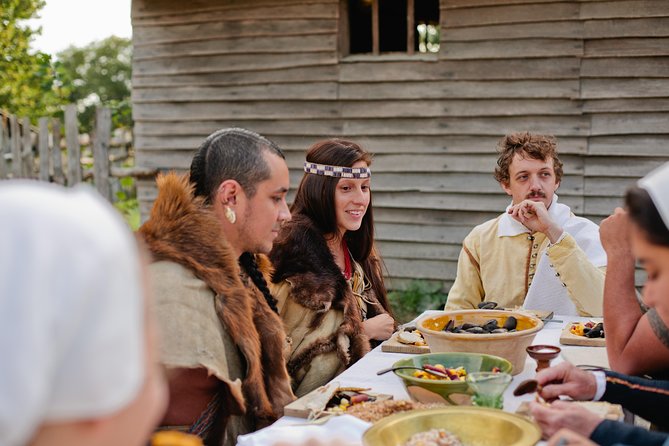
You will have a cafe at the visitor center serving both 17th-century style favorites and modern choices. This is not just a place to refuel. It is a practical reset button, especially because outdoor walking and weather can change how long you spend at each stop.
There are also multiple retail shops, so it is easy to grab small New England gifts without turning it into a separate errand. Visitors often call out the food experience positively, with specific favorites like succotash soup mentioned after a walk through the village.
If you care about healthy meal options, keep your expectations flexible. Some feedback says the menu could expand, particularly for people wanting more healthy choices. Plan to eat, but do not plan your diet around this cafe alone.
Same corner of the map, another day out:
- NYC: SUMMIT One Vanderbilt Tickets
★ 4.7 · 51,195 reviews - NYC: Empire State Building Observation Deck Tickets
★ 4.7 · 22,072 reviews - NYC: Edge Observation Deck Admission Ticket
★ 4.6 · 20,918 reviews - Grand Canyon West, Hoover Dam Stop and Optional Lunch and Skywalk
★ 5.0 · 19,535 reviews
Adding Plimoth Grist Mill In Historic Downtown Plymouth
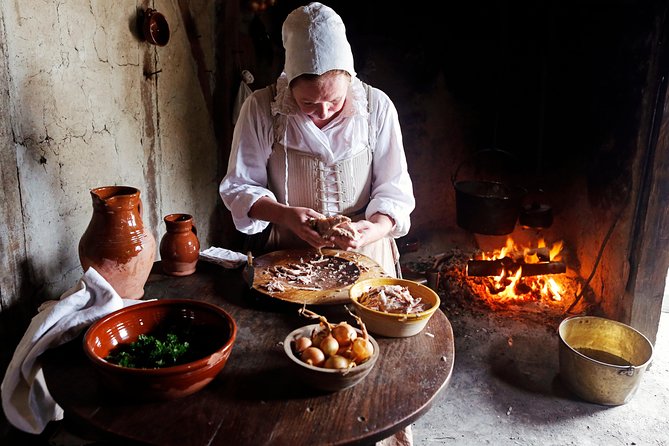
If Plimoth Patuxet is the people-and-living story, Plimoth Grist Mill is the how-things-work story. The mill sits in historic downtown Plymouth, a short walk from the waterfront through Brewster Gardens. It is a working reproduction of the mill built by Pilgrim John Jenney, in the original location along Town Brook.
The big value is the focus on water power and the surrounding ecology of Town Brook. You are not just seeing a building. You are learning how a waterfed mill functioned and how the natural environment mattered to milling.
Time-wise, plan on about 30 minutes for the mill visit. For a lot of people, that feels right, because you get the key sights and demonstrations without it dragging into a long detour.
What you can expect at the mill
- The mill is operational on Saturday afternoons
- On other days, millers prepare the cornmeal by sifting, willowing, and preparing the stones for the next run
- You can try milling with immersive exhibits in the lower exhibit area
There is also a retail store tied to the experience. You can pick up freshly stone-ground cornmeal and Sampe, which are grits. If you like bringing home something edible that is tied to place, this is one of the best souvenir options you will see all day.
One more practical note: construction and temporary changes can affect walking paths. If you plan to connect the mill with the Mayflower stop the same day, give yourself extra time and be ready to reroute.
Mayflower II: Board The Replica, Then Listen Closely
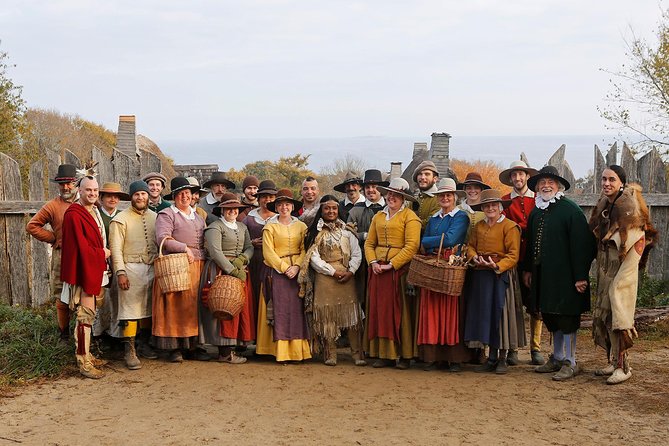
Mayflower II is docked at Plymouth Harbor and is a floating museum. This stop is all about the 1620 crossing experience, presented through modern-day guides who share stories from the ship and its historical context.
You should think of this as a shorter, focused visit compared with Plimoth Patuxet. Many people describe the Mayflower portion as self-guided and brief, but that can be a plus if you do not want to spend your whole day in long indoor exhibits.
Still, do not treat it as a quick photo stop only. The guide-led storytelling is part of why it works, and the ship environment makes it easy to picture cramped quarters and how the crossing might have felt.
One practical reality: Mayflower II is about 3 miles north of Plimoth Patuxet, and the add-on requires a car. That matters for planning. If you do not have a rental or rides lined up, you may decide to pair Mayflower II with another Plymouth Harbor plan instead of stacking it immediately after Plimoth Patuxet.
Time Management That Keeps Your Day Enjoyable

The typical rhythm looks like this: Plimoth Patuxet is about 2 hours 30 minutes with admission included. Then you can add the Grist Mill for about 30 minutes, and Mayflower II for about 30 minutes. On paper that is a half-day to just-over-half-day experience.
In real life, the day stretches based on crowds, weather, and how long you linger for conversations with people in character. Some visitors mention running out of time even when traffic was not a factor, which tells me this place rewards slow walking.
Best timing ideas
If you can choose your time window, avoid the middle of the day during peak school field trip periods. The open-air layout makes it harder to control noise when groups pour in. If you want the calm version of the experience, consider an afternoon visit instead, when the mix of visitors can feel different.
Also, check weather before you go. The museum runs in all weather conditions, so dress for that reality. Comfortable shoes matter, because you are walking outdoors over older surfaces.
Getting There Without Stress
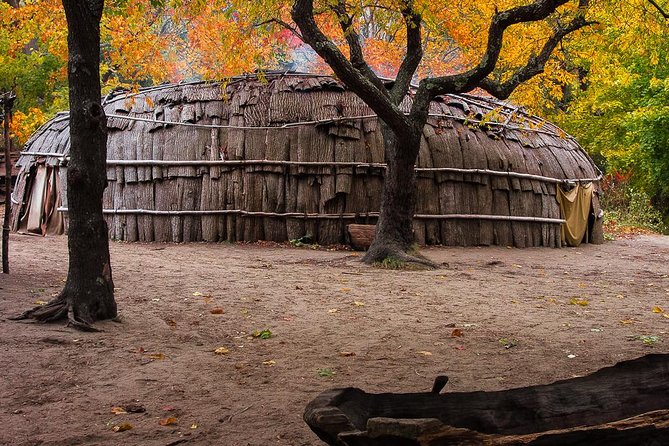
Your ticket redemption point is 137 Warren Ave, Plymouth, MA 02360. Getting to that point is the first key move.
Plimoth is also reachable by public transportation. The Amtrak Kingston/Plymouth line connects from South Station. There are also buses from South Station, including Plymouth & Brockton. If you are relying on public transit, plan your local transportation ahead of time, since the Mayflower II add-on requires a car.
If you like having a backup plan, you can use seeplymouth and the Ridecircuit app for free livery service. Check the schedule so your timing does not get messy.
Price And Value: What You Really Get For Around $35
The base price is listed at $35 per person. For that price, you are covering admission to Plimoth Patuxet, including the Historic Patuxet Homesite, the 17th-century English Village, and the Craft Center, plus an exhibit called We Gather Together, Thanksgiving, the Making of an American Holiday.
That is where the value lands. Plimoth Patuxet alone can be a meaningful experience, and it is not just passive viewing. It is a walking, talking museum experience.
Where value increases is in how you choose your add-ons. Mayflower II and Plimoth Grist Mill are separate pieces that can transform your understanding of the Pilgrim story. If you add them, you are turning a history visit into a full Plymouth context day.
If you only add one option, pick based on your interests:
- If you like everyday systems and hands-on operations, go Grist Mill
- If you want the crossing experience story, go Mayflower II
The only cost risk to watch is transport. Mayflower II requires a car for the add-on, so the total day cost can rise if you need rideshares or a rental.
Who This Works Best For (And Who Might Not)
This is a strong fit if you like:
- Living history where you can ask questions
- A day that mixes Indigenous heritage perspective with English village life
- History with a practical, everyday lens, like how food gets made and how people organized community decisions
- Families, because the mill is positioned as a STEM and history program for all ages
It might feel less ideal if you:
- Want lots of written information and detailed explanations without having to talk to interpreters
- Prefer strictly quiet museums where you can slow down without noise
- Get frustrated by uneven outdoor walking surfaces
If you are traveling with mobility concerns, remember that Plimoth Patuxet offers free golf cart service operated by staff. Inquire when you arrive.
Should You Book Plimoth Patuxet With Optional Mayflower II And Grist Mill?
Book this if you want a history-focused day in Plymouth that feels more like conversation and walking than a lecture. The best reason is simple: Plimoth Patuxet gives you the foundation, and the Mayflower II and Grist Mill add-ons let you see both the human side and the everyday technology side of the story.
Do not book it thinking you will get maximum detail on every historical topic through signage alone. If you like to learn by asking questions, you will have a better day. If you are sensitive to crowds, choose your time window wisely and wear shoes you can trust on uneven ground.
If you match your plan to your preferences, this is one of the most satisfying ways to connect Plymouth’s early story to later American ideas in a single day.
FAQ
How long is the Plimoth Patuxet Museum visit?
Plimoth Patuxet is scheduled for about 2 hours 30 minutes, with admission included.
Is admission to Plimoth Patuxet included in the price?
Yes. The Plimoth Patuxet ticket includes the Historic Patuxet Homesite, the 17th-century English Village, and the Craft Center, plus the exhibit We Gather Together, Thanksgiving, the Making of an American Holiday.
How long is the Plimoth Grist Mill stop?
The Grist Mill visit is about 30 minutes, with admission included.
How long is the Mayflower II stop?
The Mayflower II stop is about 30 minutes.
Do I need a car for Mayflower II?
Yes. The Mayflower II add-on is about 3 miles north of Plimoth Patuxet and requires a car.
Can I visit the Grist Mill on the same day as Plimoth Patuxet?
Yes. You can select to visit the Grist Mill on the same day as Plimoth Patuxet or on a different day during the 2025 season.
What’s included with food, or is food extra?
Food and drinks are not included.
Where do I redeem my ticket?
Tickets are redeemed at 137 Warren Ave, Plymouth, MA 02360.
Does the museum run in bad weather?
Yes. The museum is open in all weather conditions, so dress appropriately and wear comfortable shoes.
Are service animals allowed?
Yes. Service animals are allowed.
Is free cancellation available?
Yes. You can cancel up to 24 hours in advance for a full refund.
Newest America reviews on the site
- Yosemite: Full-Day Tour with Lunch and Hotel Pick-up★ 4.7 · 216 reviews
- Zoo Miami: General Admission Ticket★ 4.5 · 868 reviews
- Yellowstone: Old Faithful, Waterfalls, and Wildlife Day Tour★ 4.9 · 227 reviews
- San Francisco: Day Trip to Yosemite with Giant Sequoias Hike★ 4.4 · 290 reviews
- Atlanta: Zoo Atlanta General Admission Ticket★ 4.5 · 712 reviews
- Wynwood Art District 1-Hour Street Art Tour by Golf Cart★ 4.9 · 492 reviews
- Wynwood Art District 1-Hour Wynwood Buggies Street Art Tour★ 4.9 · 289 reviews
- Willow Beach: Black Canyon Kayak Half Day Tour-No Shuttle★ 4.9 · 323 reviews
Museums, compared.

Empire State Building Tickets – Observatory & Museum
Read our review →


9/11 Memorial, Ground Zero Tour with Optional 9/11 Museum Ticket
Read our review →

All-Access 9/11: Ground Zero Tour, Memorial and Museum, One World Observatory
Read our review →
Browse the lists this tour appears in