
Reviewed · MUSEUMS
New York City: American Museum of Natural History Ticket
A huge museum in one easy ticket, plus modern science. I like how AMNH gives you 40+ permanent halls in a single day, and I love the focus on real wow moments like the Tyrannosaurus Rex and the new Gilder Center. One thing to weigh: general admission does not automatically include every special exhibition, so pick your add-ons before you arrive.
You get timed entry for ticketed exhibitions (if you choose them), and the museum encourages you to plan. My main caution is simple, if you want the big-screen show, butterfly vivarium, or the space content, you’ll need the right option, otherwise you can end up staring at signs you didn’t realize were ticketed.
In This Review
- Key highlights I’d build my day around
- Why the American Museum of Natural History is a one-day must
- Price and what you really get for $37
- Getting in and mapping your day: timed entry, Wi-Fi, and lockers
- Rose Center for Earth and Space: a smart anchor for your visit
- The Richard Gilder Center: modern science, planetarium time, and hands-on energy
- The dinosaur hall moments: where T. rex becomes the whole day
- Ocean life and biodiversity: big creatures, real context
- Culture exhibits and interactive learning: the museum isn’t only about fossils
- Ticketed exhibitions that can turn your day into a full program
- Impact: The End of the Age of Dinosaurs
- Invisible Worlds (360-degree immersive theater)
- Encounters in the Milky Way (narrated by Pedro Pascal)
- Life at the Limits: Nature’s Superheroes
- Giant-Screen Film at LeFrak Theater
- Davis Family Butterfly Vivarium
- Where to start, how long to plan, and how to avoid decision fatigue
- Best for families, science lovers, and anyone who likes real-world scale
- Should you book this AMNH ticket?
- FAQ
- What does the ticket include?
- Does general admission include special exhibitions?
- How long is the ticket valid?
- Is there an app to help you navigate?
- Is the museum wheelchair accessible?
- Are bags allowed inside?
Key highlights I’d build my day around
- All-day access to 40+ museum halls plus the Rose Center for Earth and Space
- The new Richard Gilder Center with planetarium and science galleries made for all ages
- Tyrannosaurus Rex skeleton and an Easter Island head connection to Night at the Museum
- Optional ticketed exhibitions that add major time, like 360-degree Invisible Worlds and a giant-screen film
- Explorer App with turn-by-turn navigation, behind-the-scenes stories, quizzes, and self-guided routes
- Davis Family Butterfly Vivarium with up to 1,000 free-flying butterflies (when you choose that option)
Why the American Museum of Natural History is a one-day must
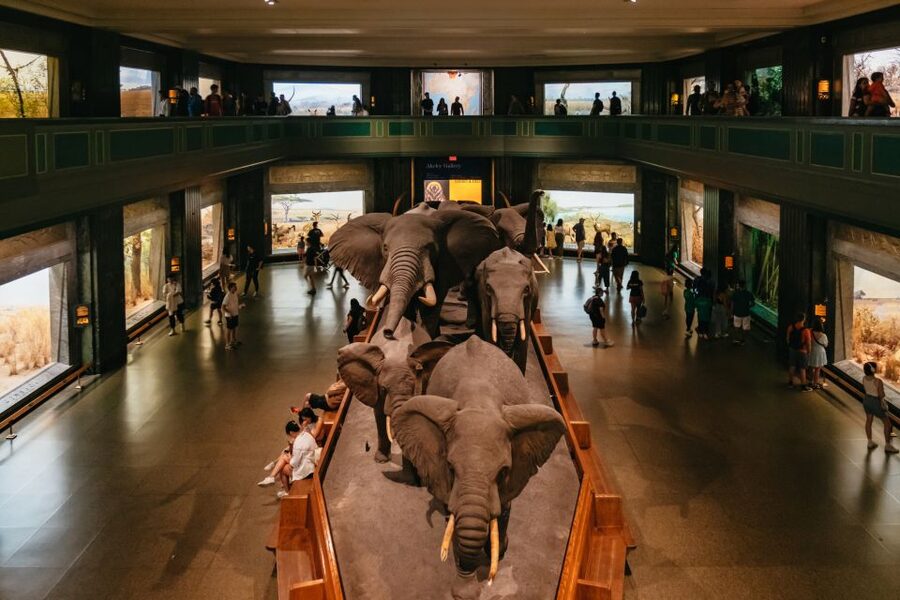
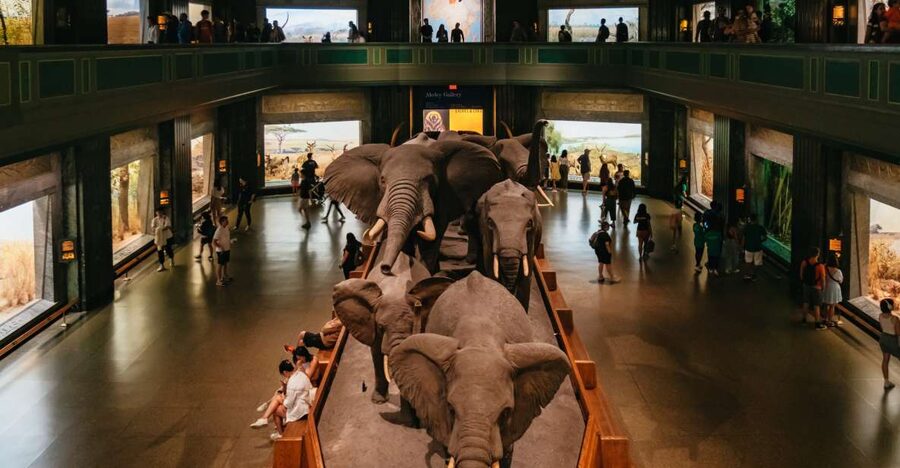
If you only have one day in New York and the weather is questionable, this is the kind of plan that saves your trip. The American Museum of Natural History is huge, and it’s not the chaotic kind of huge. With the right ticket, you can hit a lot of the museum’s best permanent highlights in a single visit.
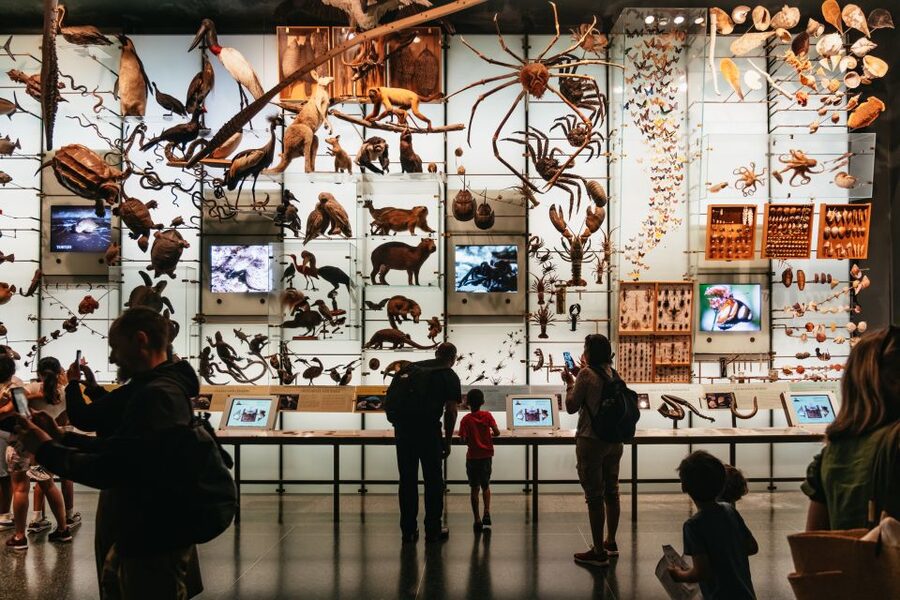
What makes this ticket especially smart is that it covers the core experience. You get entry to 40+ museum halls, plus access to the Rose Center for Earth and Space and the Richard Gilder Center. That means you are not just seeing dinosaurs. You are moving through Earth science, biology, ocean life, and global cultures in one continuous day.
The museum also leans family-friendly without feeling dumbed down. For kids, there are hands-on style learning moments and big visual attractions. For adults, there’s depth in the exhibits that makes it feel like you’re learning even while you’re being wowed.
Other New York City outings to compare
- NYC: 9/11 Memorial & Museum Timed-Entry Ticket
★ 4.8 · 31,428 reviews - NYC: Empire State Building Tickets – Observatory & Museum
★ 4.7 · 25,757 reviews - NYC: Museum of Modern Art (MoMA) Entry Ticket
★ 4.6 · 12,540 reviews
Price and what you really get for $37
At about $37 per person, this can be one of the better value plays in Midtown Manhattan, especially if you would otherwise pay individual museum entry fees. The key is understanding what that price includes and what it doesn’t.
This ticket includes:
- Permanent exhibitions across the museum
- Rose Center for Earth and Space
- Richard Gilder Center
- Access to Wi-Fi onsite and the Explorer app features
- All-day entry
It does not automatically include the ticketed, separately priced experiences. Depending on the option you select, you can add extras like the dinosaur-impact story, 360-degree theater experiences, the Milky Way show narrated by Pedro Pascal, the giant-screen film, and the butterfly vivarium.
That’s why this works best when you book with intention. If you know you want the big shows, choose the option that includes them. If you mainly want the museum halls and the science center, the permanent-ticket value is strong.
Getting in and mapping your day: timed entry, Wi-Fi, and lockers
AMNH runs on a flow system, and your day goes smoother when you treat it like a plan, not a wander. The museum gives you onsite Wi-Fi, and you can connect and download the Explorer App to your smartphone.
The app is one of the most practical perks on the ticket. It offers:
- Turn-by-turn navigation
- Behind-the-scenes stories about exhibits
- Quizzes
- Self-guided tours of popular collections
This matters because the museum is multi-floor and easy to get turned around in. A quick start with the app helps you avoid spending your best energy walking in circles.
You’ll also want to think about bags. Oversize luggage is not allowed, and large bags are not allowed. If you have luggage or bulky items, plan on leaving them somewhere else before you reach the entrance.
Lockers are available on-site for an additional charge. If you’re traveling light, you can skip the hassle and keep essentials with you. If you’re traveling with kids or shopping later, lockers can save you from constantly dragging bags through crowded galleries.
Rose Center for Earth and Space: a smart anchor for your visit
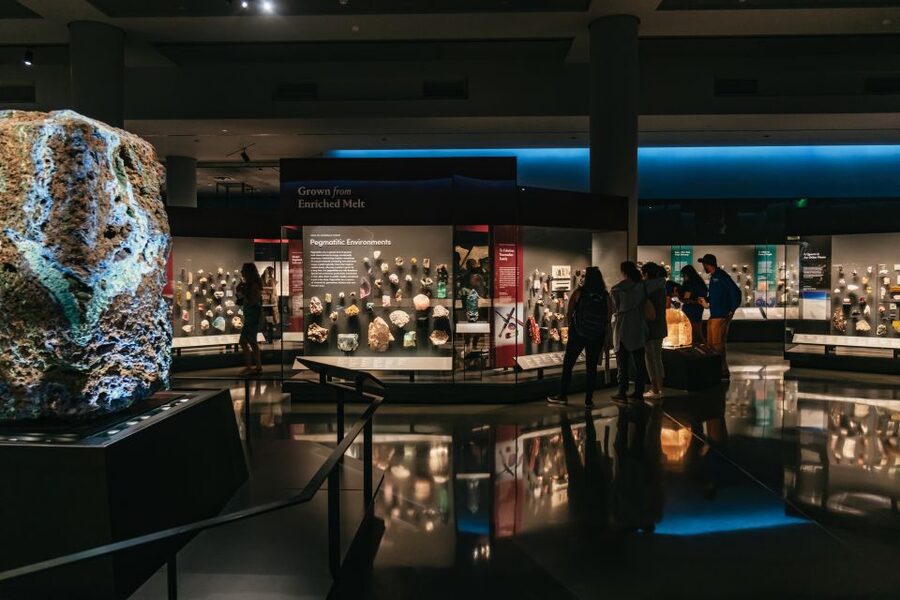
You’re visiting a museum that loves both scale and wonder, and the Rose Center is a good example. The ticket includes access to the Rose Center for Earth and Space, which gives you a strong science anchor without forcing you into only one type of exhibit.
Even if you are not planning to see the ticketed planetarium space show, you can still enjoy the Rose Center as part of your included time. It’s a great place to go early if you want something that feels like a breath of fresh air after the dense museum halls.
If your group includes kids, this is often a “calm before the chaos” stop. It’s visually striking and different from the animal and geology galleries in the main floors.
And since it’s included with this ticket, it’s an efficient way to get a major highlight without paying extra.
Same corner of the map, another day out:
- NYC: SUMMIT One Vanderbilt Tickets
★ 4.7 · 51,195 reviews - NYC: Empire State Building Observation Deck Tickets
★ 4.7 · 22,072 reviews - New York City: Statue of Liberty & Ellis Island with Ferry
★ 4.6 · 18,683 reviews - Statue of Liberty and Ellis Island Tour: All Options
★ 5.0 · 13,571 reviews
The Richard Gilder Center: modern science, planetarium time, and hands-on energy
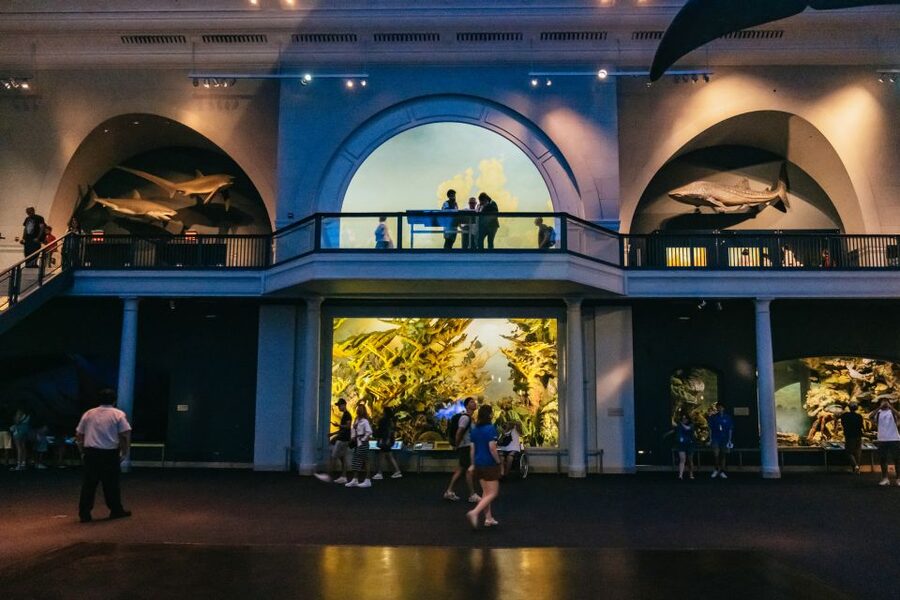
The Richard Gilder Center for Science, Education, and Innovation is the big modern add-on that makes AMNH feel current. Since it’s included with your ticket, you should treat it like part of the backbone of your day.
In the Gilder Center, you can explore science spaces designed for learning that works for all ages. The museum also specifically highlights:
- A planetarium experience space
- The Hall of Biodiversity
- Milstein Hall of Ocean Life, where you can get close to some of the world’s largest and most incredible creatures
This is where the museum stops feeling like a collection and starts feeling like a living education system. You go from Earth to ecosystems, and from ecosystems to species you can actually picture.
If you’re trying to keep everyone engaged, the Gilder Center is a strong mid-day reset. It breaks up the heavier dinosaur-and-geology areas and gives you a chance to switch topics without leaving the building.
The dinosaur hall moments: where T. rex becomes the whole day
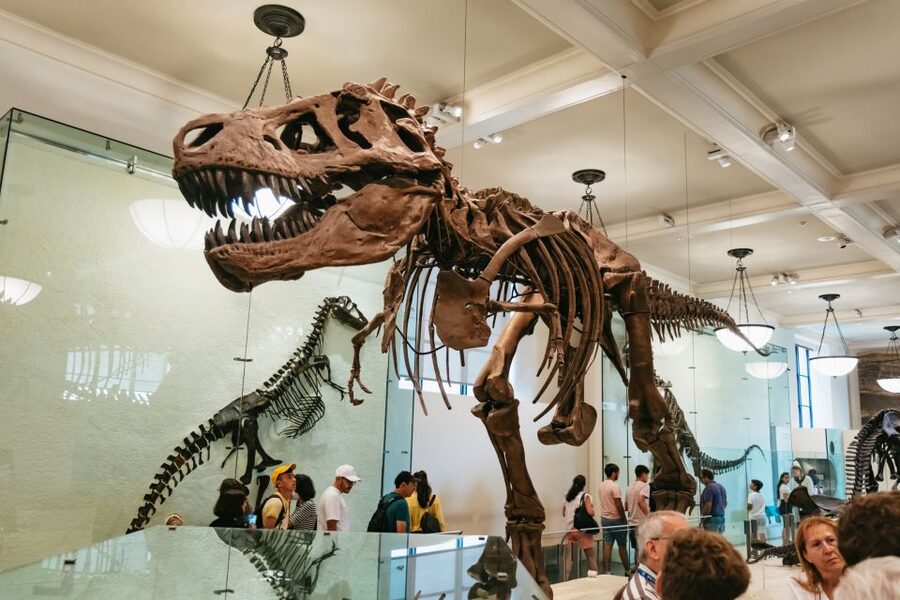
No museum visit here is really complete without the dinosaur impact. One of AMNH’s most iconic sights is the Tyrannosaurus Rex skeleton, and it’s not just for kids.
The T. rex presence sets expectations the moment you start moving through the halls. It also connects to pop culture in a way that keeps things fun, the museum’s Easter Island head inspired elements from Night at the Museum. Even if you’re not chasing movie trivia, that kind of reference helps kids look harder and older visitors relax and enjoy the story.
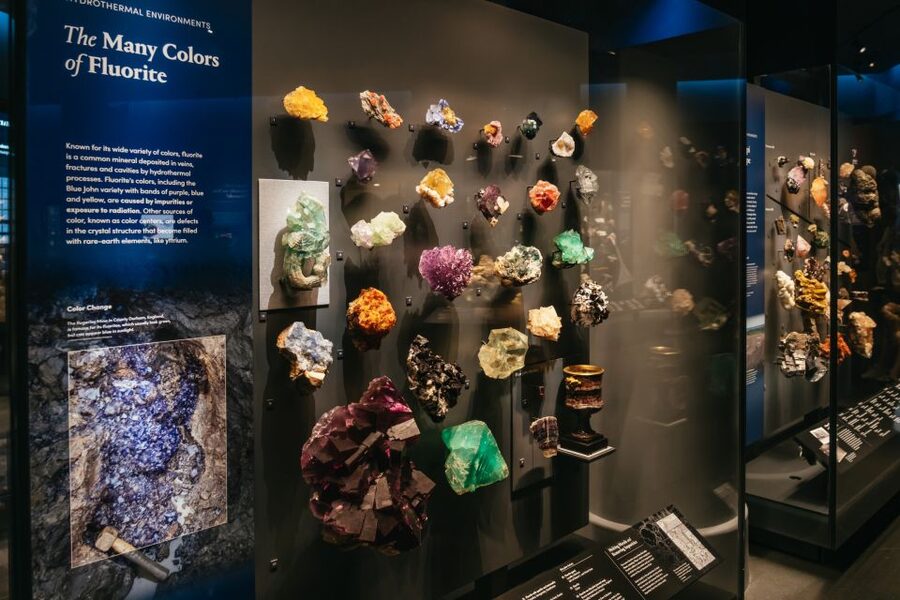
The dinosaur content also connects to the museum’s broader theme: time. You see how life changes, how environments shift, and how fossils act like evidence from deep time. That theme keeps returning elsewhere in the museum if you pay attention, especially around Earth science and biodiversity.
Practical tip for your route: if your group is dinosaur-focused, go for dinosaur galleries sooner rather than later. Energy fades. Curiosity tends to fade later. Start strong, then move outward into the other halls.
Ocean life and biodiversity: big creatures, real context
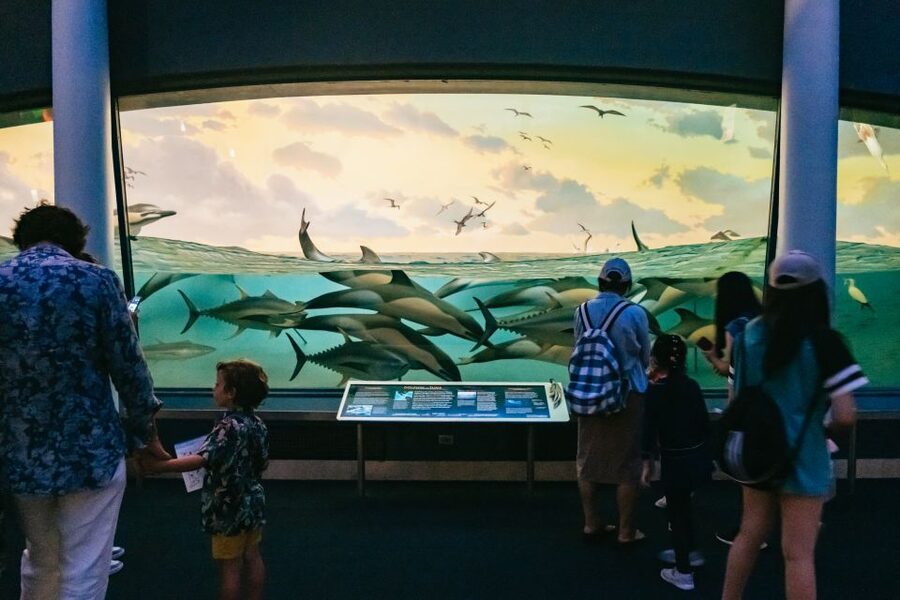
After the dinosaur anchor, I like building a route around life systems. The Gilder Center gives you a natural pathway into this, especially through the Milstein Hall of Ocean Life and the Hall of Biodiversity.
Ocean and biodiversity exhibits tend to work well for mixed-age families. Kids get big creatures and dramatic displays. Adults often get the satisfying feeling of understanding how biology connects to place, climate, and survival.
This is also a smart strategy if you want balance. You can spend one chunk of your day on Earth and deep time, another chunk on modern life, and still come out feeling like you saw the museum’s brain as well as its face.
If you’re short on time, don’t try to “finish” the museum. Pick life systems for one half of your day and let that be your storyline.
Culture exhibits and interactive learning: the museum isn’t only about fossils

AMNH isn’t trapped in natural history only. You can learn about cultures from around the globe through interactive exhibits, and that can be a welcome change of pace when everyone feels museum-saturated.
These galleries give you a different kind of curiosity trigger than bones and rocks. The museum’s global approach also helps families avoid the classic problem of kids feeling like every room is the same theme.
For adults, it’s a reminder that “natural history” in a museum sense can include human stories too, how societies live with nature, how artifacts reflect belief, and how people interpret the world.
If your group has a mix of interests, culture exhibits are often where you can find a middle ground. Someone is always interested, even if not everyone is obsessed with dinosaurs.
Ticketed exhibitions that can turn your day into a full program
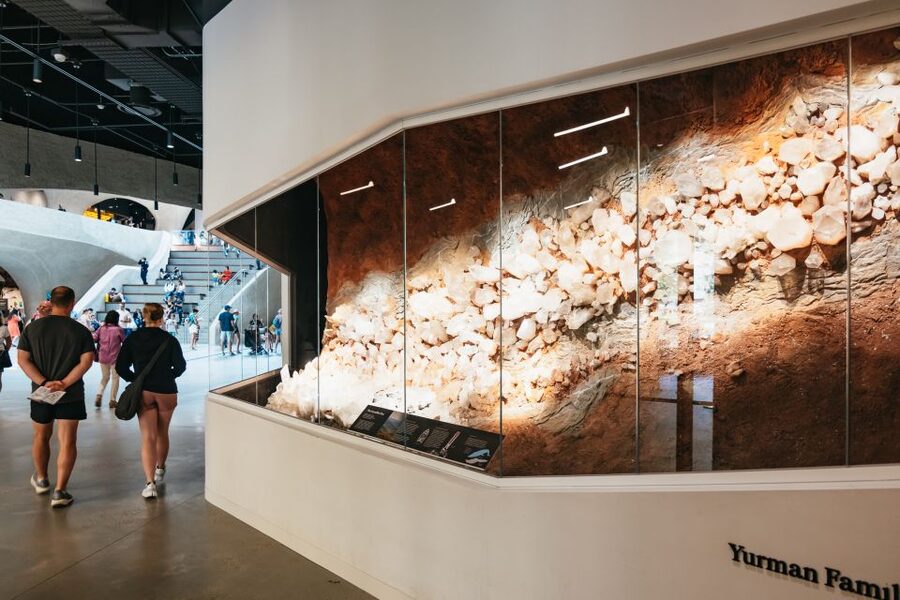
This is the part where planning pays off. General entry gives you the permanent halls and the core included centers. Ticketed exhibitions, like the ones below, are where your day can become a show schedule.
If you select them, you get timed entry for 1 or for all ticketed exhibitions, depending on the option you book. Here’s how I’d think about the choices:
Impact: The End of the Age of Dinosaurs
This experience focuses on the before-and-after story of the asteroid collision sixty-six million years ago. It’s built around a dramatic turning point, so it tends to land well with kids because it explains why the dinosaur era ended without leaving them behind.
Invisible Worlds (360-degree immersive theater)
This one plays with scale in a different way. You get hidden nature’s worlds, from ocean depths to DNA strands. If your group loves science explanations and visual theaters, this can be worth the time.
Encounters in the Milky Way (narrated by Pedro Pascal)
This new space show is narrated by Pedro Pascal and is described as a time-traveling journey about cosmic movements that shape our galactic neighborhood. It’s a great option if you want a narrative style show instead of only exhibit browsing.
Life at the Limits: Nature’s Superheroes
This experience highlights the “superpowers” some organisms evolve to survive and thrive under extreme conditions. If your group likes survival stories, this connects science to real-world intensity.
Giant-Screen Film at LeFrak Theater
The LeFrak Theater offers a 40-foot-high, 66-foot-wide screen with state-of-the-art digital sound. It’s designed for people who enjoy film as much as exhibits.
Davis Family Butterfly Vivarium
This is the feel-good wildcard. You can mingle with up to 1,000 free-flying butterflies, and you might even experience one landing on you. If you’re traveling with younger kids, this is often the kind of exhibit that becomes a core memory of the trip.
Big note for your planning: you don’t need to pick every ticketed show. In a one-day visit, it’s usually smarter to pick one “theater” experience plus one “hands-on” favorite, then let the rest of your time go into the permanent halls.
Where to start, how long to plan, and how to avoid decision fatigue
The museum is big enough that your time strategy matters as much as your ticket. A practical rule of thumb: plan on at least half a day, but be ready to stay longer if your group gets hooked.
One helpful rhythm is to start higher up and work down. A lot of people find it flows better that way, and I’d rather you spend energy moving forward than stopping constantly to re-check directions.
Also, this is the kind of museum where the real time cost is not walking. It’s choices. Dioramas, hall-to-hall transitions, and special exhibitions can all steal time quickly.
If you want a smoother day, do this:
- Start with your must-see anchor (often dinosaurs or the Gilder Center)
- Choose one or two ticketed exhibitions max
- Use the app to navigate between distant areas
- Leave room for a slower “favorite hall” loop near the end
Crowds can spike during busy weeks, so if your dates include major holidays, go early. Queue time and packed galleries can steal minutes you’ll want later.
If you’re staying a day trip style, I’d still treat this as a 4 to 5 hour minimum experience, and longer if you want to take breaks and revisit favorites.
Best for families, science lovers, and anyone who likes real-world scale
This visit is a great match for families because the museum balances big visuals with approachable learning. The ticket gives you permanent exhibits plus major science centers, so kids can keep changing interests without leaving the building.
It’s also a good pick for science-minded adults who enjoy museums that explain how the world works. You’ll have Earth science, biodiversity, and ocean life alongside global culture exhibits.
And if you’re the kind of person who likes variety, this ticket supports it. You can build a day around one theme, or you can pivot mid-way when the group’s mood changes.
If you hate crowds and constant decision-making, I’d still recommend you book ahead and choose your ticketed add-ons carefully. That way, you spend your time watching exhibits, not negotiating plans in line.
Should you book this AMNH ticket?
Book this ticket if you want a full, all-day museum experience with 40+ permanent halls, plus included access to the Rose Center and the Richard Gilder Center. It’s especially good value if you like learning across multiple topics and you’re traveling with kids who need variety.
Don’t overcommit if your goal is only a couple of highlights. Since general entry does not include ticketed exhibitions like Invisible Worlds, the butterfly vivarium, the giant-screen film, or the Hayden Planetarium space show, you should pick only the special experiences that your group will actually care about.
My bottom line: if you plan your one-day route around an anchor (dinosaurs or Gilder Center) and then choose one or two ticketed extras, this is a high-impact New York day.
FAQ
What does the ticket include?
It includes entry to the American Museum of Natural History with access to permanent exhibits, the Rose Center for Earth and Space, and the Richard Gilder Center. It also includes Wi-Fi onsite and timed entry for special exhibitions if you choose an option that includes them.
Does general admission include special exhibitions?
General entry only does not include special exhibitions. You need to select the option that includes the specific ticketed experiences you want.
How long is the ticket valid?
The ticket is valid for 1 day, with starting times based on availability.
Is there an app to help you navigate?
Yes. You can use the museum’s Explorer App, which offers turn-by-turn navigation, behind-the-scenes stories, quizzes, and self-guided tours. It is available in English, Spanish, French, and Portuguese.
Is the museum wheelchair accessible?
Yes, the activity is listed as wheelchair accessible.
Are bags allowed inside?
Oversize luggage and luggage or large bags are not allowed. Lockers are available onsite for an additional charge.
Newest New York City reviews on the site
- All Inclusive Airport Departure Transfer NYC/ Brooklyn/Queens★ 4.0 · 342 reviews
- The Escape Game Brooklyn: Epic 60-Minute Adventures in City Point★ 5.0 · 332 reviews
- New York Aquarium Admission★ 4.0 · 298 reviews
- Brooklyn Food Walking Tour: Local Eats & Family‑Run Shops★ 5.0 · 592 reviews
- Brooklyn Bridge & DUMBO Food Tour: Local Eats & Landmarks★ 5.0 · 478 reviews
- New York City: City Highlights Guided Bike or eBike Tour★ 4.5 · 229 reviews
- New York City: Superheroes of NYC Guided Walking Tour★ 4.5 · 271 reviews
- NYC: Sunset Sail Aboard Schooner Adirondack★ 4.9 · 283 reviews
Museums, compared.
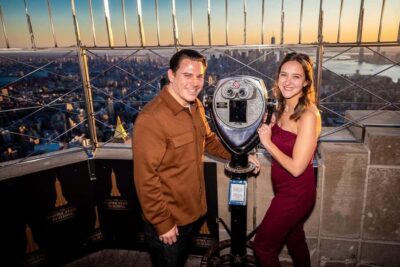
Empire State Building Tickets – Observatory & Museum
Read our review →

9/11 Memorial, Ground Zero Tour with Optional 9/11 Museum Ticket
Read our review →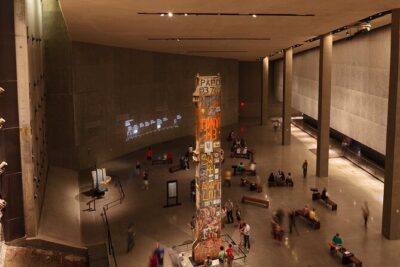

All-Access 9/11: Ground Zero Tour, Memorial and Museum, One World Observatory
Read our review →

Browse the lists this tour appears in