
Reviewed · WALKING TOURS
Philadelphia: History, Highlights & Revolution Walking Tour
History gets real fast in Old City Philadelphia.
This walking tour strings together the big names and the real places, with stops that lead you right up to Independence Hall and the Liberty Bell. What I like is how the story moves seat-by-seat through the revolution, from government decisions to street-level life.
My second big win is the Museum of the American Revolution portion, especially the live demonstration featuring George Washington’s tent. You also get discounted museum admission later, so you can keep going at your own pace. The main drawback to plan for is simple: it’s a 150-minute walk in a concentrated historic area, so bring comfy shoes and expect some time standing and outside.
In This Review
- Quick take: what makes this tour worth your time
- Why this 150-minute walking tour hits the right notes
- Start at Signer’s Garden, then get your bearings fast
- Independence Hall and Congress Hall: where declarations became institutions
- Liberty Bell and Carpenters’ Hall: the revolution in public view
- Museum of the American Revolution: the Washington tent live demo
- Elfreth’s Alley and Betsy Ross House: wartime life on real streets
- Benjamin Franklin’s grave and the recreated President’s House
- Finishing near North 6th Street and Market Street, ending in Old City
- Price and value: is $45 a good deal here?
- Who should book this tour, and who might not love it
- Practical tips I’d use before you go
- Should you book this Philadelphia Revolution walking tour?
- FAQ
- Where does the tour meet?
- How long is the tour?
- How much does it cost?
- What language is the tour guide?
- What is included at the Museum of the American Revolution?
- Which major sites are part of the route?
- Is the tour wheelchair accessible?
- Is cancellation free?
Quick take: what makes this tour worth your time
- Independence Hall and the Liberty Bell, explained in plain English
- George Washington’s tent demo at the Museum of the American Revolution
- A tighter “how the revolution worked” route, not just a list of famous buildings
- Elfreth’s Alley and Betsy Ross House, where you see daily life during wartime
- Photo stops built into the route, including Benjamin Franklin’s grave and the Liberty Bell area
- Local support built in, with a donation and ticket proceeds supporting a local historic site
Why this 150-minute walking tour hits the right notes
At $45 for 150 minutes, this is a value play if you want the core Philadelphia revolutionary story without spending your whole day inside museums. The route focuses on the essentials: the places where founding decisions were made, plus the surrounding sites that explain how ideas turned into institutions.
The tour also avoids the common problem of “history as trivia.” You’ll get story threads, like who lived where, who had influence, and how the fledgling United States tried to function with real constraints. That makes the landmarks easier to remember later, when you’re walking around on your own.
Other Philadelphia outings to compare
- Philadelphia Old City Historic Walking Tour with 10+ Top Sites
★ 5.0 · 2,020 reviews - History and Hauntings of Salem Guided Walking Tour
★ 5.0 · 14,564 reviews - New Orleans Premier Ghost, Voodoo and Vampire Walking Tour
★ 4.5 · 12,856 reviews
Start at Signer’s Garden, then get your bearings fast
You meet your guide at the Signer Statue in Signer’s Garden. It’s a smart start because you’re already in the Independence National Historical Park orbit, so you begin with context instead of wandering in cold open.
From there, you head through Independence Mall and into the broader area covered by Independence National Historical Park. Even before you reach the headline buildings, your guide sets up what you’re looking at: which buildings mattered, why the area became a political magnet, and how the revolutionary government took shape in the middle of a working city.
If you’re the kind of visitor who likes to ask questions, this is also a good moment to do it. You’ll get more out of the rest of the walk if you know the major players and what timeline you’re following.
Independence Hall and Congress Hall: where declarations became institutions
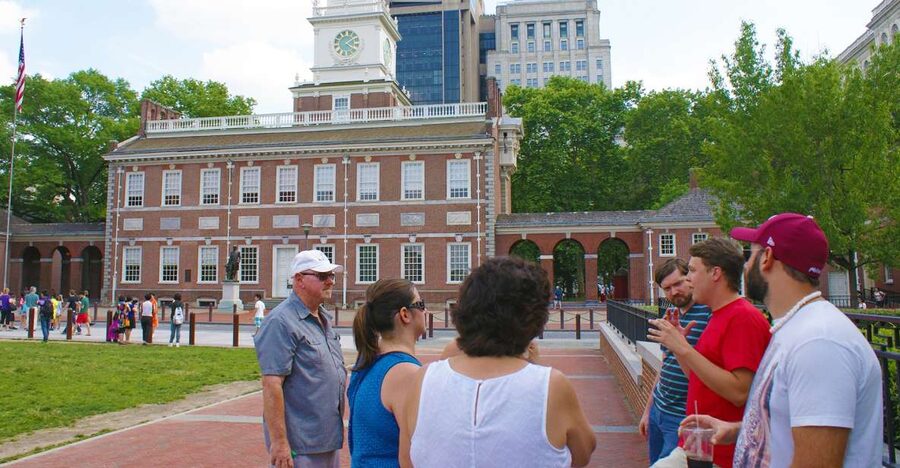
Independence Hall is the center of the story. You’ll pass by for guided sightseeing tied directly to why it matters: this is where the Declaration of Independence and the U.S. Constitution were created. That’s the headline, but the payoff is in the way your guide connects the writing to the people and the pressures around them.
Next comes Congress Hall, another key stop for understanding that independence wasn’t just a moment. It was a process. Congress Hall helps you see how the revolution’s ideas had to translate into governance, debates, and day-to-day political reality.
Practical note: these sites can draw crowds because they are world-famous. This tour keeps you moving with a guide who knows where the story lands, so you spend less time guessing and more time learning.
Liberty Bell and Carpenters’ Hall: the revolution in public view
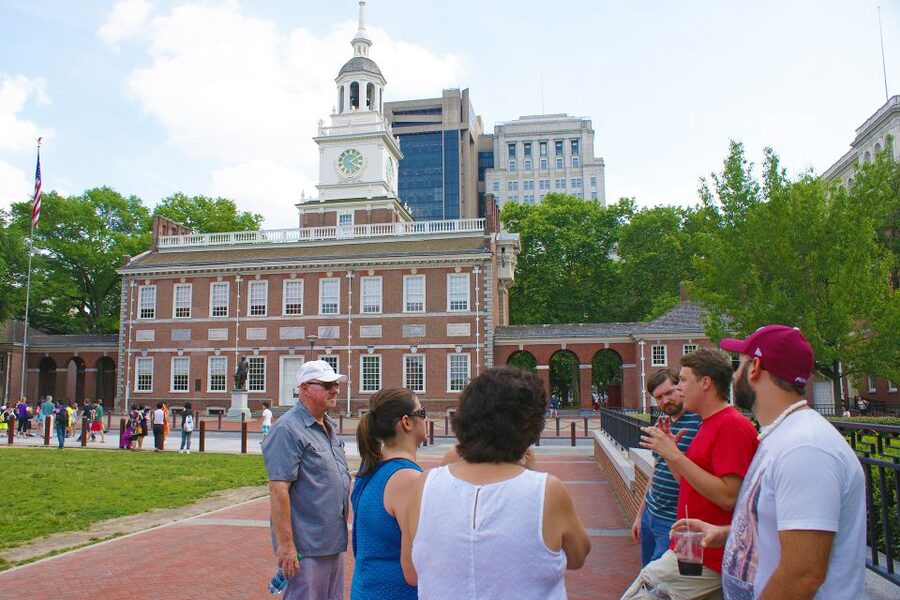
You’ll get a guided stop at the Liberty Bell area for photos, and it’s one of those moments where you can look at something iconic and finally understand why it became symbolic beyond its physical presence.
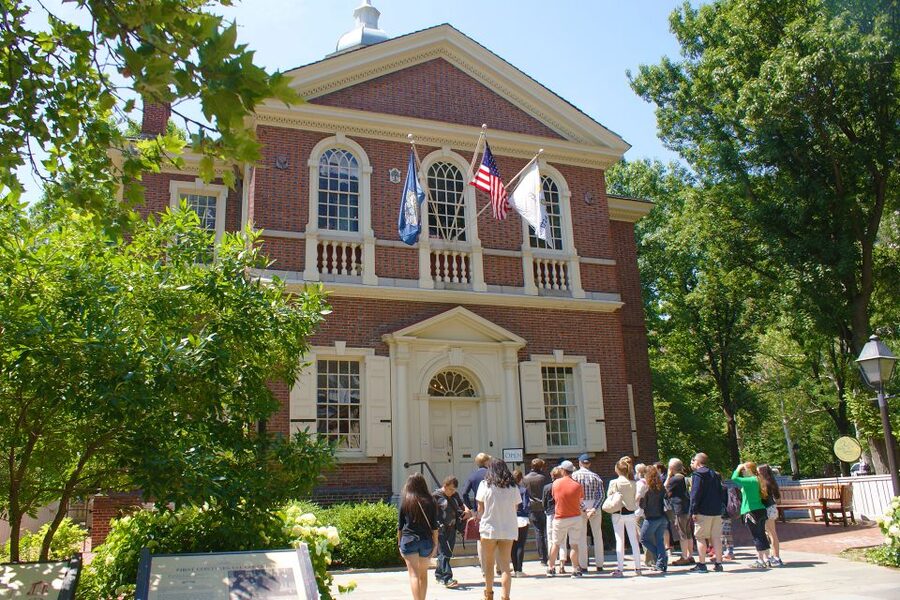
Then the tour connects you to Carpenters’ Hall. This is the kind of building that can get overlooked if you’re only chasing the top two or three posters. Carpenters’ Hall helps fill in the web around Independence Hall, showing you how civic life and revolutionary politics overlapped in the same city streets.
This is where the tour does something I appreciate: it doesn’t treat every stop like a separate chapter. Your guide builds links, so by the time you reach the museum later, you’ll understand what you’re seeing and why it matters.
Same corner of the map, another day out:
- Dark Philly Adult Night Tour
★ 5.0 · 4,241 reviews - Revolution and the Founders: History Tour of Philadelphia
★ 5.0 · 2,944 reviews - Philadelphia Hop-On Hop-Off City Tour
★ 4.0 · 2,347 reviews - Philadelphia: Double-Decker Hop-on Hop-off Sightseeing Tour
★ 4.4 · 868 reviews
Museum of the American Revolution: the Washington tent live demo
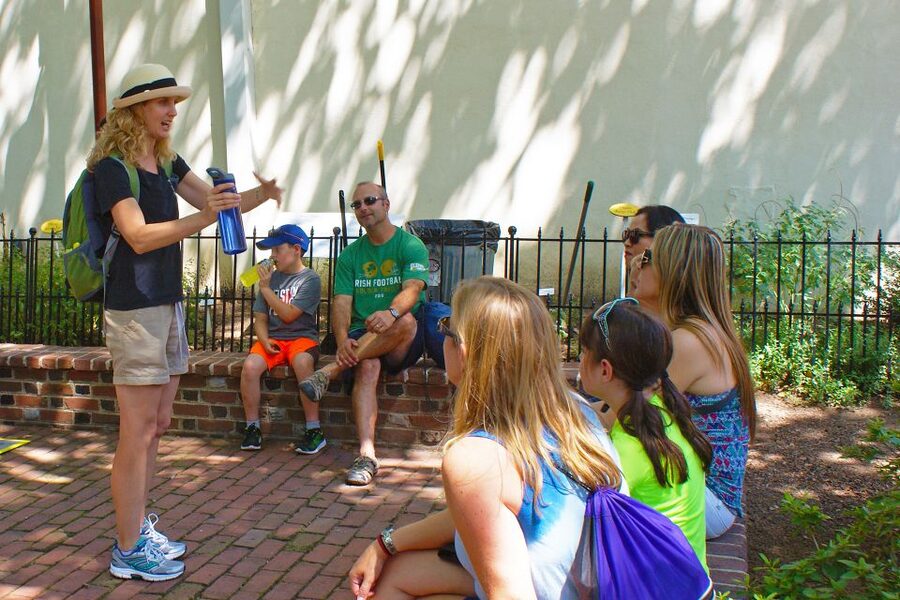
The Museum of the American Revolution stop is the tour’s indoor anchor, and it’s not just a walk-through. You enter the museum for a guided segment that includes a live demonstration featuring the tent that George Washington lived in during the war.
That detail is more than cool trivia. A tent like that puts you in the practical world of the Revolutionary War: movement, weather, planning, and the daily reality behind leadership myths. It’s also visual. When you can picture where someone slept or worked, dates and names stick better.
You’ll also receive discounted admission into the museum, redeemable after the tour. That’s a smart setup because it lets you do the museum twice in two different ways:
- once on the tour, with guided context and the demonstration
- later on your own, at a speed that works for you
If you like museums but don’t want to commit to a full day, this is one of the best “taste and then explore” arrangements you can make in Philadelphia.
Elfreth’s Alley and Betsy Ross House: wartime life on real streets
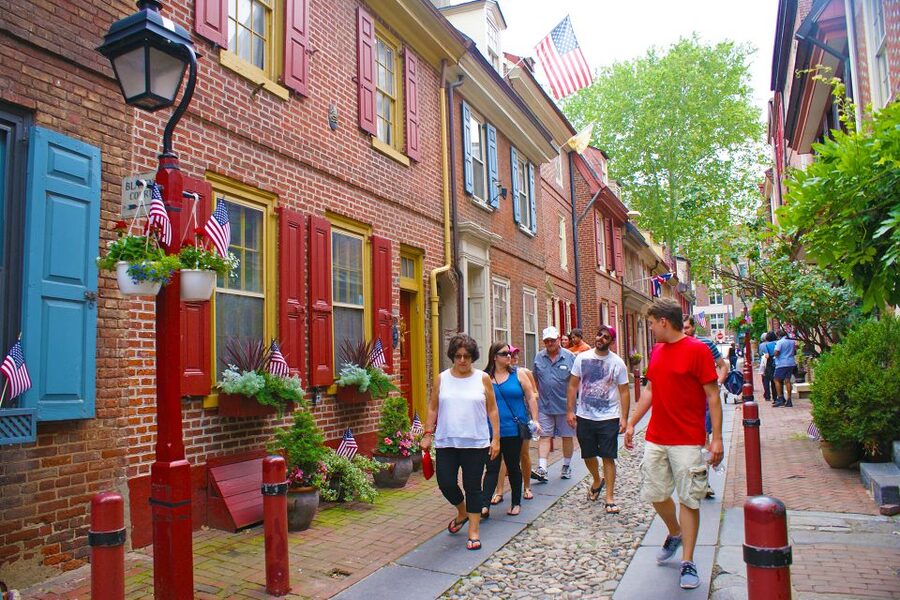
Elfreth’s Alley is next, and it’s exactly the kind of stop that makes a history tour feel like more than monuments. You’ll stroll down the nation’s oldest continuously inhabited residential street. That matters because the revolution wasn’t happening in a vacuum. People lived here. They worked here. They endured here.
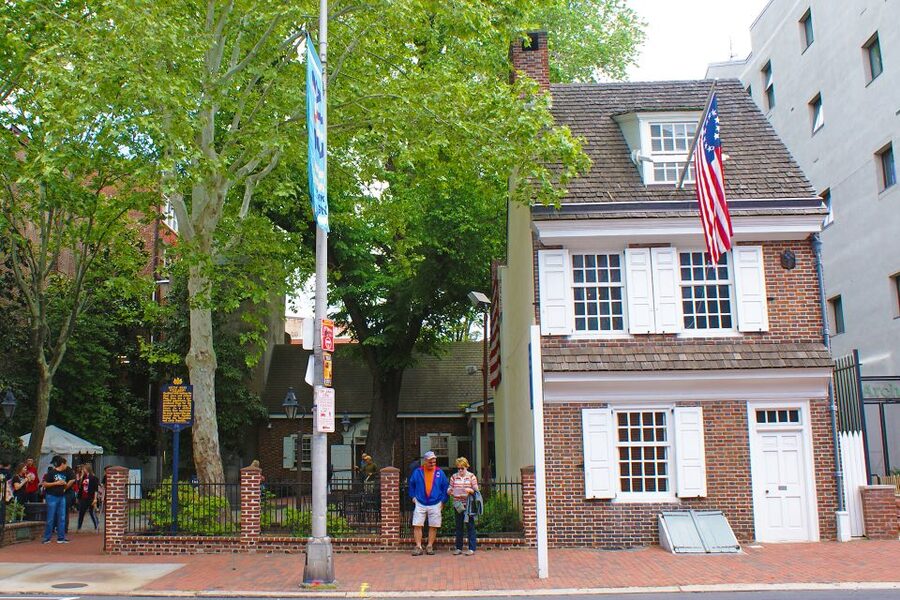
Then you’ll stop for a photo at the Betsy Ross House, connected to the legend and story of Betsy Ross, credited with creating the first American flag. This is one of those moments where your guide’s job is important: you want the story, but you also want grounding in what you’re actually looking at on the street.
I like pairing Elfreth’s Alley with the Betsy Ross House because one is about everyday continuity and the other is about symbolic beginnings. Together they show how revolution lived both in public signals and private homes.
Benjamin Franklin’s grave and the recreated President’s House
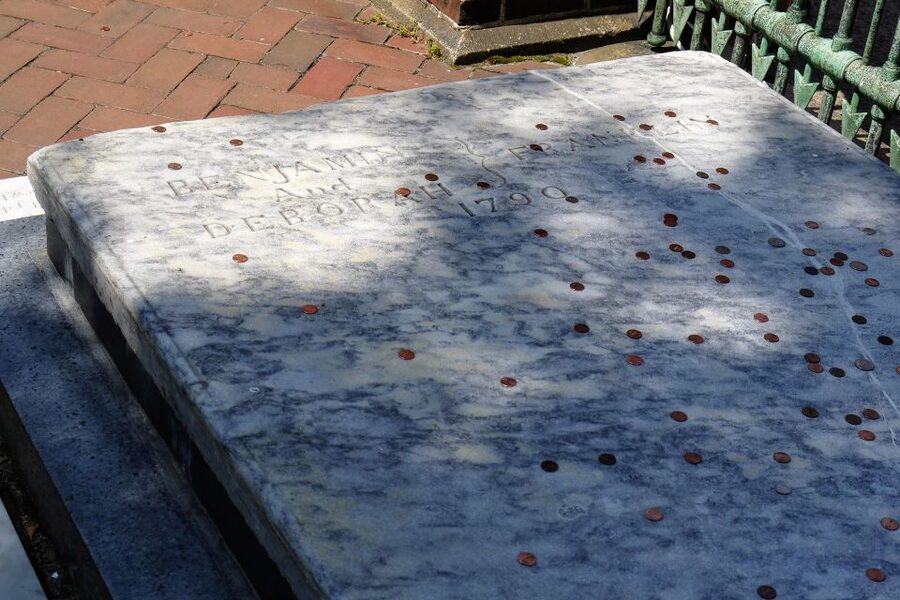
You’ll pass by Benjamin Franklin’s burial site with a photo stop. Franklin shows up in history books as a giant of ideas, but on a walking tour like this, he feels closer to the ground because you’re literally standing in the city where his life connected to the founding era.
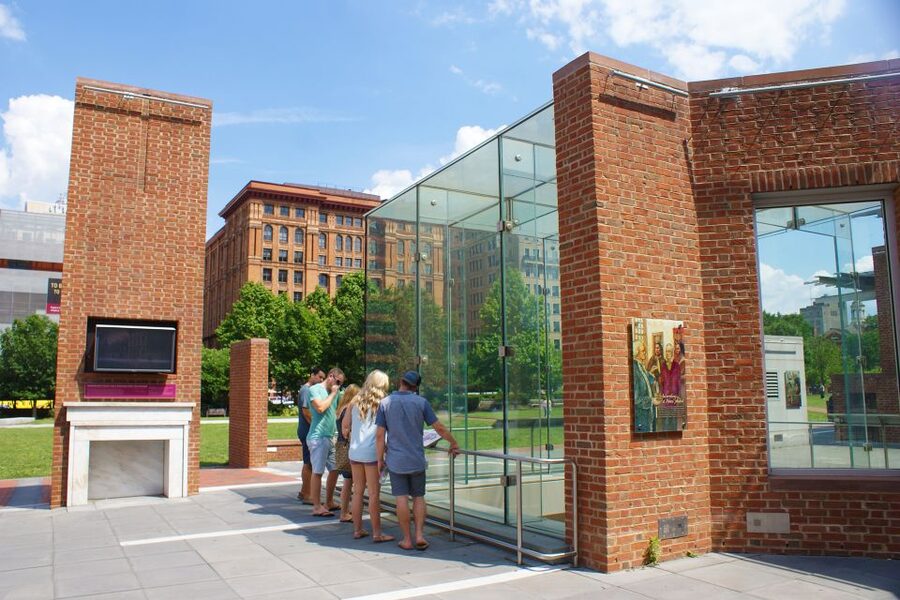
Another highlight is the President’s House recreation. The tour takes you up the steps and into the recreated site where the guide explains the lives of two leaders who lived here, plus often untold stories about individuals who played key roles in founding the nation.
That recreated space is valuable even if you’ve visited other historical sites, because the guide can highlight what official narratives often skip: the smaller contributors, the less famous organizers, and the human scale of political life.
Finishing near North 6th Street and Market Street, ending in Old City
As the tour wraps, you’ll move through the North 6th Street and Market Street area for guided sightseeing. This is the kind of ending that helps you transition from “guided stops” to “I can explore on my own.”
You finish in Old City, which is convenient because it’s where you’ll likely want to keep the day going, whether you’re hunting for a meal nearby or continuing to wander toward other museums and historic blocks.
Price and value: is $45 a good deal here?
For $45 per person, the biggest value comes from the mix:
- guided walking tour across the most important Independence National Historical Park landmarks
- entry into the Museum of the American Revolution for the live demonstration
- discounted museum admission you can redeem after the tour
- a national park service fee included
- a donation and ticket proceeds supporting a local historic site
If you only wanted one or two stops, you might think it’s pricey. But you’re buying a guided route with clear sequencing, plus the museum time that would otherwise cost you both money and planning.
Also, your guide matters here. A long list of visitors praised guides for strong storytelling and for making the time feel engaging, not like a lecture. Names that came up include John, Maria, Adam, Tom, Nina, Peter Coë, Brittney, Caroline, and others. When multiple different guides hit the same tone, that usually means the tour design is doing its job.
Who should book this tour, and who might not love it
This works best for:
- first-time Philly visitors who want the Independence-era core quickly
- American history novices who want the story connected to real locations
- anyone short on time who still wants more than a quick photo pass
It might not be ideal for:
- people who hate walking and standing, because the day is paced around a route of multiple stops
- travelers who only want deep museum time, because the museum portion is focused and part of a broader walk
Practical tips I’d use before you go
- Wear shoes you can walk in for 150 minutes without thinking about it.
- Bring layers. Old City can be windy, and you’ll spend time outdoors between major stops.
- If photos are a priority, look for the built-in photo moments like the Liberty Bell area and Benjamin Franklin’s grave.
- When you’re planning the museum revisit, give yourself enough time to wander after the tour. The discounted admission is most useful if you want to keep exploring.
Should you book this Philadelphia Revolution walking tour?
Yes, if you want the Independence-era story told in a way that sticks, with the biggest landmarks plus a genuinely useful museum stop. The live demonstration with George Washington’s tent is a standout because it turns leadership history into something you can picture. And the added discounted museum admission gives you a smart option to go deeper after the walk.
If you’re tight on time and want a route that makes Philadelphia’s founding sites feel connected rather than random, this is an easy “do it” choice.
FAQ
Where does the tour meet?
Meet your guide at the Signer Statue in Signer’s Garden.
How long is the tour?
The duration is listed as 150 minutes.
How much does it cost?
The price is $45 per person.
What language is the tour guide?
The tour is in English.
What is included at the Museum of the American Revolution?
You’ll enter the museum for a guided presentation that includes a live demonstration. The demonstration features the tent George Washington lived in during the war, and you also receive discounted admission you can redeem after the tour.
Which major sites are part of the route?
You’ll see and/or stop at Independence Hall and the Liberty Bell, plus stops that include Elfreth’s Alley, the Betsy Ross House, Benjamin Franklin’s grave (photo stop), Carpenters’ Hall, and you’ll also pass by Congress Hall. The highlights also list seeing the U.S. Mint.
Is the tour wheelchair accessible?
Yes, the tour is listed as wheelchair accessible.
Is cancellation free?
Free cancellation is available up to 24 hours in advance for a full refund.
Newest Philadelphia reviews on the site
- Philadelphia: Double-Decker Hop-on Hop-off Sightseeing Tour★ 4.4 · 868 reviews
- Philadelphia: Revolution and The Founders History Tour★ 4.6 · 450 reviews
- Philadelphia: Double-Decker Sightseeing Bus Tour★ 4.2 · 332 reviews
- Philadelphia: Museum of Illusions Timed Entrance Ticket★ 4.2 · 244 reviews
- Philadelphia: Grim, Dark, and Twisted History Tour★ 4.6 · 231 reviews
- Double Decker Hop-On Hop-Off City Sightseeing Philadelphia (1, 2, or 3-Day)★ 4.0 · 562 reviews
- Philadelphia Old City Historic Walking Tour with 10+ Top Sites★ 5.0 · 2,020 reviews
- Philadelphia Hop-On Hop-Off City Tour★ 4.0 · 2,347 reviews
Walking Tours, compared.

History and Hauntings of Salem Guided Walking Tour
Read our review →
New Orleans Premier Ghost, Voodoo and Vampire Walking Tour
Read our review →

Freedom Trail History Small Group Walking Tour
Read our review →
Historic Charleston Guided Sightseeing Walking Tour
Read our review →
New Orleans Food Walking Tour of the French Quarter with Small-Group Option
Read our review →
St. Louis Cemetery No. 1 Official Walking Tour
Read our review →Browse the lists this tour appears in