
Reviewed · GHOST & HAUNTED TOURS
Paranormal Investigation: YOU are the Ghost Hunter
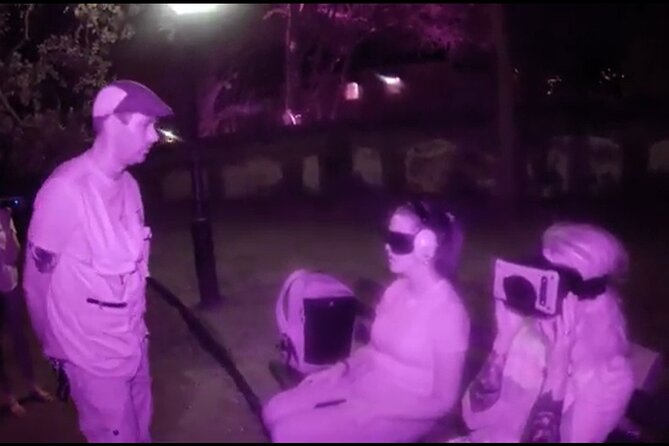
Ghost hunting starts at 9 pm in Charleston. This small-group night walk turns you into the investigator, with real equipment like a thermal imaging camera, plus a guide who teaches you how to use it.
On a typical booking, you’ll be out for about 2 to 2.5 hours, moving through historic hotspots with plenty of hands-on attention.
I love the interactive setup. You do not just listen, you use the tools, and you get access to all the recorded audio, video, imagery, and the guide’s very extensive notes afterward. I also like that the route includes major Charleston touchstones, not just one spooky street corner.
One consideration: it is an active, nighttime experience, so plan on real walking and bring what you need since bottled water and insect repellant are not included.
In This Review
- Key Things I’d Bet You’ll Care About Most
- Entering The Case at 255 E Bay St, Ending at 164 King St
- What Turns This Into a True Investigation, Not a Talk-Only Ghost Walk
- How the Route Really Works When the Lead Investigator Changes Plans
- Philadelphia Alley, Where Dueling Legends Meet a Short Investigation Window
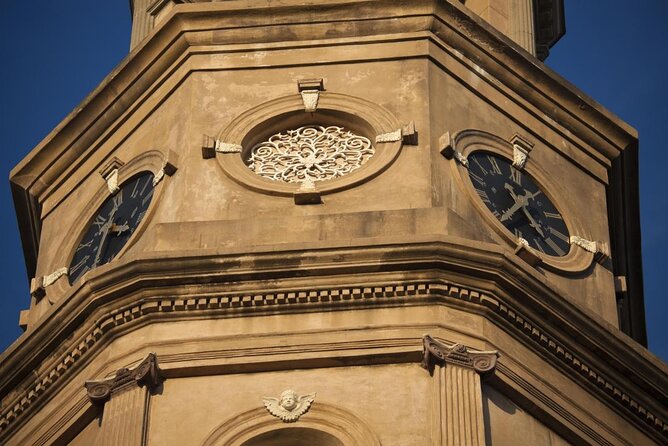
- St. Philip’s Church and Cemetery, Where the Atmosphere Does the Talking
- The Powder Magazine and Anne Bonny, Pirate Lore With Evidence-First Rules
- Washington Square and Henry Timrod, The Blood Book Mystery Stops the Scroll
- Lawrimore Park Quaker Graveyard, a Small Corner With Big Room for Focus
- 235 E Bay St and Eliza Lucas Pinckney, Plantation Roots Under Night Lights
- French Quarter and Lodge Alley, Belgian Blocks and Residual Spirits
- Evidence You Can Actually Review, and How to Think About It Later
- Timing, Walking, and What to Bring for Comfort at 9 pm
- Price and Value: Is $63.20 Worth It for a Tool-Based Hunt?
- Who Should Book This Charleston Ghost Hunter Tour, and Who Might Skip
- Should You Book It?
- FAQ
- How long is the Paranormal Investigation experience?
- What is the price per person?
- What equipment is included?
- Do I get the recordings and evidence?
- Is the tour family-friendly?
- Where do we meet, and where does the tour end?
- What time does the tour start?
- Are there any admission tickets required for the stops?
- What should I bring since water and bug spray are not included?
Key Things I’d Bet You’ll Care About Most
- Max 12 people means you are not lost in a crowd
- Thermal imaging camera training so you know what you are looking at, not just waving a device
- Estes session gear includes disposable earbuds and blindfolds during that portion
- Full evidence access includes audio, video, imagery, and very extensive notes
- All listed stops are ticket-free for admission
- Flexible routing based on what the lead investigator and devices detect
Entering The Case at 255 E Bay St, Ending at 164 King St
This tour is set up as a real night investigation, not a rapid-fire ghost story loop. You meet at 255 E Bay St, Charleston, SC 29401, with a listed start time of 9:00 pm and an end point at Charleston Library Society, 164 King St. A mobile ticket is used, and the group size tops out at 12 travelers, which helps keep the experience interactive.
You should also expect a “walk, work, walk” rhythm. Each stop is timed in tight windows, typically 10 to 20 minutes, and the tour overall runs about 2 to 2.5 hours (some nights may run longer, but the schedule is built for continuous movement). That means comfortable walking shoes matter. Charleston’s old streets can be uneven, and you will want your feet ready for a late start.
Good news for families: it is open to all ages and is described as family-friendly. Also, service animals are allowed, and it is near public transportation, which is a big help in a city center where parking can get annoying.
One practical tip: since bottled water is not included, bring a small bottle or plan to grab water before the meet time. And since insect repellant is not included either, pack it if you are sensitive to mosquitoes at night.
More Ghost Tours in Charleston
- Haunted Evening Horse and Carriage Tour of Charleston
★ 4.5 · 3,678 reviews - Ghosts of Charleston Night-Time Walking Tour with Unitarian Church Graveyard
★ 4.5 · 2,835 reviews - Charleston Haunted Booze and Boos Ghost Walking Tour
★ 5.0 · 1,569 reviews
What Turns This Into a True Investigation, Not a Talk-Only Ghost Walk
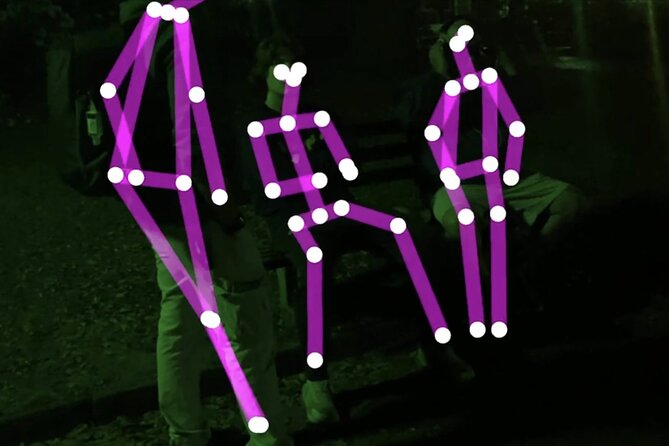
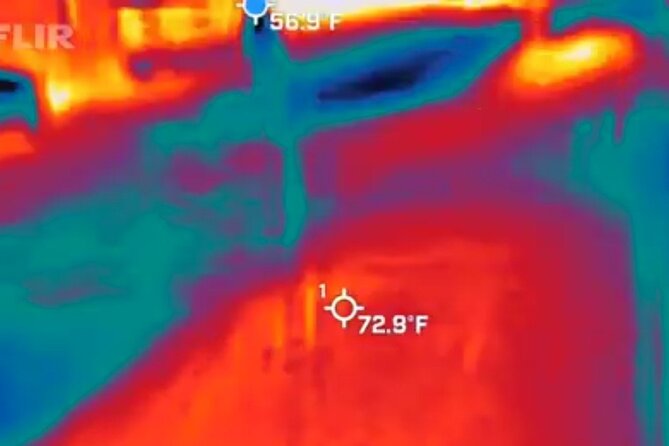
The big value here is that you play an active role. The experience includes ghost hunting equipment, and your guide gives tutorials on how to use each device. A thermal imaging camera is explicitly part of the kit, and the tour is built around using the tools at the stops, not just posing for photos.
What makes this especially appealing is the combination of gear time and learning time. You do not have to guess how to operate the equipment. You get instruction, then you get to use it while your guide manages the group and the investigation flow. In other words, you are not just the audience, you are part of the data collection.
At the same time, the tour is not only “equipment and silence.” You are taught local ghost stories and historical context tied to each stop. That matters because if you want your evidence to mean something, you need a frame for what you are observing. Lighting changes, ambient noise, and even how people react to a location can all show up in recordings, so history gives you a baseline for understanding what you are seeing and hearing.
You’ll also experience an Estes session portion. Disposable earbuds and blindfolds are provided during that session. That’s a key detail if you’re curious about the more focused, sensory style of investigation. It also tells you the tour is willing to slow down and do structured participation, not only roaming with cameras.
Finally, you get the evidence afterward. You receive access to all the media collected, including audio, video, and imagery, plus “very extensive notes.” Many people love the idea that the night is recorded and not just remembered. The tour also emphasizes that you receive the data after the investigation so you can review it with a calmer head.
How the Route Really Works When the Lead Investigator Changes Plans
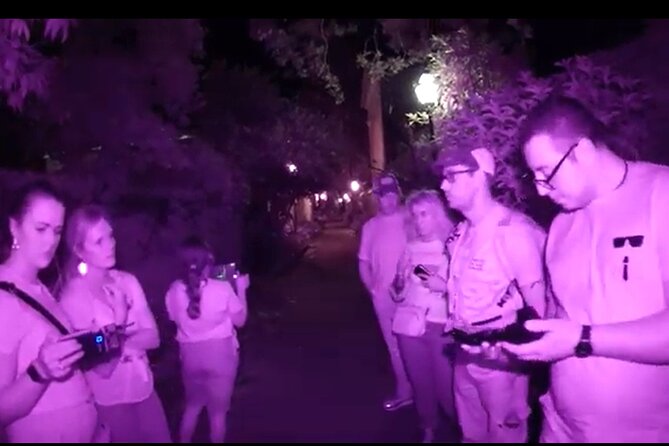
The tour is intentionally flexible. The listed stops act like anchor points, but the exact route and which places you fully investigate can change. The guidance is clear: all locations may or may not be part of your full investigation, depending on the lead investigator’s discretion and changing paranormal activity detected by the devices used.
For you, that means two things. First, do not treat the stop list like a strict script where every minute is guaranteed at every corner. Second, it can make the experience feel more like fieldwork. If your group hits a moment where the devices pick up something, the guide can shift where you spend your attention, which is a big part of why a hunt is more than a pre-planned walk.
This flexibility can also be useful if you’re sensitive to pacing. Some groups want more time on a cemetery-style stop, others want more time on alleys or a magazine site. Because the guide adapts, the tour can feel tailored to what’s happening that night.
One more thing to remember: because this depends on what the devices detect, your results may not look dramatic every time. That is not a flaw in the experience, it is the nature of investigation. The value comes from doing the method consistently, learning from the equipment process, and reviewing your evidence as a group afterward (or with your own thoughts when you’re back home).
Philadelphia Alley, Where Dueling Legends Meet a Short Investigation Window
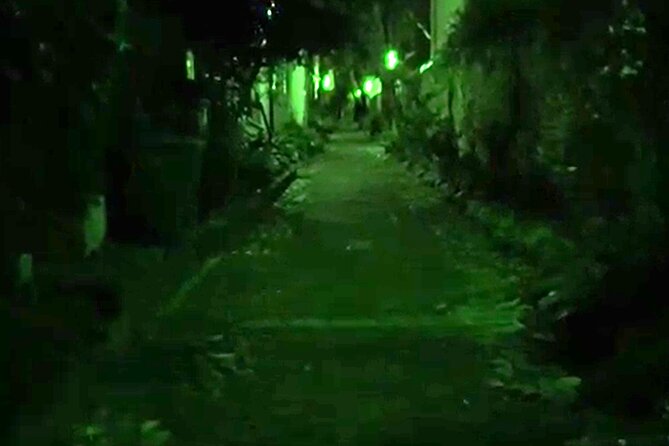
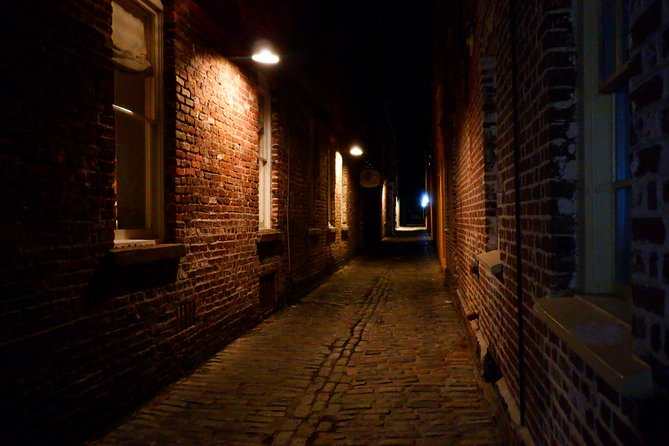
Stop 1 is Philadelphia Alley, tied to tales of the Whistling Doctor and his opponent Ralph Isaacs, a location known for its dueling history. You’ll typically spend about 15 minutes here.
What I like about starting in an alley is the immediate change in environment. Alleys tend to compress sound and create sharp visual contrasts with street lighting. That can make your recordings feel more “focused,” and it gives you a chance to test the equipment early in the night when you’re still fresh and learning.
A practical consideration at this stop: the time is short. You’ll want to be ready to listen closely, watch what the guide asks you to watch, and avoid falling behind. If you’re the kind of person who wants a long discussion at every location, this format may feel fast. But if you like motion and active participation, 15 minutes is just enough to collect something and move on.
Also, because the tour is flexible, you may not spend the same depth at every stop. Still, starting with a story tied to dueling sets the tone: this isn’t just spooky, it is tied to Charleston’s street-level past.
Same corner of the map, another day out:
- Charleston’s Old South Carriage Historic Horse & Carriage Tour
★ 5.0 · 10,023 reviews - Historic Charleston Guided Sightseeing Walking Tour
★ 5.0 · 6,216 reviews - Charleston Horse-Drawn Carriage Tour: Explore Historic Charleston
★ 5.0 · 3,561 reviews - Fort Sumter Admission and Self-Guided Tour with Roundtrip Ferry
★ 4.5 · 3,343 reviews
St. Philip’s Church and Cemetery, Where the Atmosphere Does the Talking
Stop 2 is St. Philip’s Church, including the area around the church and cemetery. You’ll typically have about 10 minutes here.
Cemeteries are the kind of place where you get a different “signal mix.” You may notice the quiet that makes you hear tiny background sounds more clearly. That matters because your audio recordings can catch everything from footsteps on stone to natural ambient noise. The guide’s instructions and your team’s discipline are important because a casual group can accidentally swamp the audio.
This stop also comes with a theme: plenty of spirits roaming the area. Whether or not you interpret that literally, the story gives you something to listen for and something to compare across stops. The real point for you is to use the equipment the same way at each site so your review later is meaningful.
Short window means you should stay engaged. Do not treat this stop like a photo break. If you want to get value from the evidence capture, pay attention to what the guide tells you to do during your device check-in.
The Powder Magazine and Anne Bonny, Pirate Lore With Evidence-First Rules
Stop 3 is The Powder Magazine, with stories focused on Anne Bonny, the famous female pirate. Expect about 15 minutes.
This is a smart mid-tour choice because it shifts the theme from street legend to maritime and out-in-history drama. A site tied to trade, conflict, and notoriety can feel intense even before you turn on any electronics. Then, when you add thermal imaging and audio or video capture, you get a stronger contrast between the location’s physical details and any unusual readings.
Also, the Powder Magazine can be a spot where light levels matter a lot. If you are walking in and out of shadows, the camera output can change quickly. For your notes afterward, it helps to remember what part of the site you were standing in and what the lighting looked like at the moment you made observations.
Again, time is limited. Use that to your advantage. If you get instructions on how to position or hold the equipment, follow them. If your hands are steady and you keep moving only when asked, your recorded evidence will be cleaner to interpret later.
Washington Square and Henry Timrod, The Blood Book Mystery Stops the Scroll
Stop 4 is Washington Square, with a focus on poet Henry Timrod and the infamous Blood Book. Expect 15 minutes here.
Poetry and rumored manuscripts can sound like “just story time,” but in a tool-based investigation, it’s more like setting an expectation. The guide gives you a narrative hook, then you work with equipment in the location while you hold that story in your head. That matters because it changes how you listen.
This stop is also a good place for you to notice your own mindset. If you are hoping for big events, you might tense up, and that affects recordings. If you stay calm and follow the guide’s method, you’re more likely to capture useful audio and cleaner signals on video and imagery devices.
The Blood Book angle also suggests the tour may prioritize places with written legend and local folklore. That makes Washington Square a good stop if you enjoy ghost hunting that blends with literature, not only battlefields and cemeteries.
Lawrimore Park Quaker Graveyard, a Small Corner With Big Room for Focus
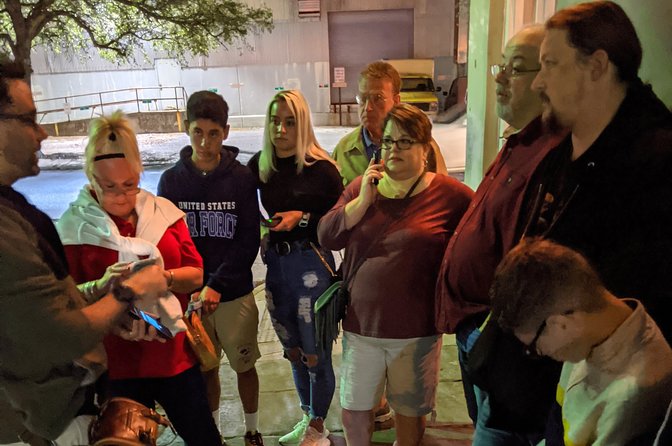
Stop 5 is Lawrimore Park, described as a Quaker graveyard tucked into a small part of Charleston. Expect about 15 minutes.
Quaker-associated sites often feel different from other haunted locations, even when you only approach them as a visitor. The quiet, the layout, and the sense of order can make it easier to stay disciplined during an investigation. For you, that discipline translates into better evidence.
At a graveyard stop, you can accidentally let curiosity turn into distraction. A group can get noisy, someone can whisper too loudly, or people can move around when they should be holding a position. Since your goal is to collect media, the best move is simple: follow the guide’s timing and keep your actions consistent.
You might also find this is where the tour feels most respectful. The history component usually matters at places like this, because you’re dealing with real, solemn grounds. Even if you’re skeptical, you still get value by watching how the guide keeps the group organized and serious while using the tools.
235 E Bay St and Eliza Lucas Pinckney, Plantation Roots Under Night Lights
Stop 6 is 235 E Bay St, linked to Eliza Lucas Pinckney, an indigo plantation owner, and described as the original home site. You’ll have about 20 minutes here.
This is a longer stop, and that extra time matters. An indigo plantation story gives you a wider historical context, including how Charleston’s economy and land use shaped the people who lived and worked there. When you pair that context with equipment, you’re not only hunting for “something weird.” You’re connecting your observations to a real location with a real past.
Night investigations also change how you perceive buildings. Thermal imaging can show temperature differences where surfaces absorb or release heat. Video capture can show motion you might otherwise miss, like branches moving or light shifts, which can help you later separate normal effects from unusual ones.
If you like evidence and context together, this stop is likely to be one of your best. You have enough time to follow instructions, ask questions when the guide calls for them, and still collect data without feeling rushed.
French Quarter and Lodge Alley, Belgian Blocks and Residual Spirits
Stop 7 brings you to the French Quarter, with a focus on Lodge Alley and residual spirits said to reside in the Belgian Blocks. Expect about 10 minutes.
This last stop is where the atmosphere shifts again. Belgian Blocks, as a surface, can hold and reflect light in ways that make small changes in motion or temperature easier to notice. If the tour is using thermal imaging or similar tools, surface materials can affect what you see.
Because the time window is short, this is where being ready helps. If you’ve been paying attention to the guide’s device tutorial earlier, you’ll likely feel more confident here. If you haven’t, this is not the moment to panic. Ask quick questions during setup moments, then get to work.
Also, a “residual spirits” concept usually points toward consistent patterns rather than sudden events. That makes it a good finish if you like the idea of comparing recordings across multiple stops and looking for recurring signals.
Evidence You Can Actually Review, and How to Think About It Later
This tour’s promise is simple: you will get data. You receive access to recorded audio, video, imagery, and the guide’s very extensive notes. The experience also emphasizes getting your report and download after the night so you can review it with fresh eyes.
Here’s how I suggest you treat your evidence so you get real value, even if nothing screams “ghost.” First, compare recordings by location. If something weird happens in one stop, ask whether that place had a strong story theme, a lighting shift, crowds moving nearby, or a device placement issue. Second, keep your notes consistent. If the guide gives you structured notes prompts, use them.
Third, do not ignore “boring” explanations. A ghost hunt is still a data hunt. Wind can move leaves. Temperature gradients can show up on thermal imaging. Background noise can create false leads in audio. Your goal is not to force a conclusion, it’s to see what your data actually shows.
There is also a practical reality with any tech-based experience. One negative experience described an equipment recording issue in a specific piece of gear, and the response made clear that not all devices always behave perfectly. In situations like that, your best approach is to know you are still likely to have multiple sources captured, and the guide provides your report based on what did record.
If you go in expecting certainty, you’ll miss the point. If you go in ready to collect, compare, and learn, you can have a lot of fun and still walk away with something tangible.
Timing, Walking, and What to Bring for Comfort at 9 pm
This is built as a night activity with multiple stops. That means you should plan for the “whole outing,” not just one spooky moment.
Wear comfortable walking shoes. The tour highlights this for a reason. You’re moving through historic Charleston, and you will want your footing to feel solid so you can focus on the equipment and the guide’s instructions.
Bring your own water since it is not included. If you tend to get bothered by insects, bring insect repellant too. Those two items are the only clear “bring your own” basics listed, but they matter more than people think during a late-night, walking-heavy experience.
Also consider the Estes session participation. Blindfolds and disposable earbuds are provided during that portion, but you should still think about whether you like sensory restriction. If you prefer full awareness, ask the guide what they expect before that part begins.
Weather matters. The experience requires good weather, and if it is canceled due to poor weather, you’ll be offered another date or a full refund. Since this is a night route, weather can change quickly, so check forecasts and plan flexible clothing.
Price and Value: Is $63.20 Worth It for a Tool-Based Hunt?
At $63.20 per person, this is not a cheap scare tactic, but it also is not priced like a private investigator day. The value comes from what’s included.
You get:
- ghost hunting equipment
- tutorials on how to use the devices
- access to all the recorded media, including audio, video, imagery
- very extensive notes
- disposable earbuds and blindfolds used during the Estes session
You also get a route where the listed stops are admission ticket free, which reduces surprise costs. In many typical ghost tours, the “value” is mostly storytelling plus a walking route. Here, the value is participation and evidence review.
And that small-group size, up to 12, matters for value because hands-on instruction takes time. If you are paying for equipment use, you want a guide who can actually get to you and show you how to hold and operate the gear. A larger crowd often turns that into a waiting game.
If you are a family group, the all-ages approach can also be a practical value angle, since not every paranormal-style experience is built to keep kids engaged without turning it into a drop-off situation.
Who Should Book This Charleston Ghost Hunter Tour, and Who Might Skip
I’d book this if you like two things: history with real places and hands-on paranormal tools. If you get more excited by using equipment than by hearing the same scary stories over and over, this tour fits your style.
It is also a good pick for families that want something active and structured. The pace is walking-based, but the short stop windows and the participation elements can help kids and adults stay engaged. And the guide uses instruction as part of the experience, not just a lecture.
Skip it if you want a sit-down, low-movement evening with slow storytelling. This is built around equipment use and frequent stops. You should also think carefully if you dislike sensory restriction, even though the blindfold and earbuds are optional in how you emotionally experience it, the session portion is part of the format.
Most importantly, go in with the right expectation. You are not buying a guarantee of paranormal proof. You are buying training, tools, and the evidence process.
Should You Book It?
Yes, if you want a small-group, equipment-driven ghost hunt in Charleston and you care about getting something to review afterward. The price makes sense when you factor in the gear, the tutorials, and the access to audio, video, imagery, and detailed notes.
No, if you want a lightweight “haunted highlights” tour where you can just stroll and listen. This one asks you to participate and keep moving, and the fun comes from investigating, not from being led through a scripted spooky show.
If you’re on the fence, here’s the easiest decision rule: if you would enjoy learning how to use a thermal imaging camera and spending the night collecting evidence in historic sites, book it. If you’re there only for stories, you’ll probably feel like something important is missing.
FAQ
How long is the Paranormal Investigation experience?
It runs about 2 hours to 2 hours 30 minutes.
What is the price per person?
The listed price is $63.20 per person.
What equipment is included?
The tour includes ghost hunting equipment. A thermal imaging camera is specifically mentioned, and your guide provides tutorials on how to use the devices.
Do I get the recordings and evidence?
Yes. You receive access to all data recorded during your investigation, including audio, video, imagery, and extensive notes.
Is the tour family-friendly?
Yes. It is open to all ages, and families are specifically mentioned as a good fit.
Where do we meet, and where does the tour end?
You meet at 255 E Bay St, Charleston, SC 29401 and the tour ends at Charleston Library Society, 164 King St, Charleston, SC 29401.
What time does the tour start?
The start time is 9:00 pm.
Are there any admission tickets required for the stops?
The listed stops are shown as admission ticket free.
What should I bring since water and bug spray are not included?
Bring bottled water and insect repellant if you want them, since neither is included. Wear comfortable walking shoes for the nighttime route.
Newest Charleston reviews on the site
- Middleton Place Admission with Self Guided Tour and Lunch★ 4.5 · 326 reviews
- Charleston Ghosts of Liberty Guided Walking Tour★ 4.5 · 473 reviews
- Charleston’s Best Highlights: History, Culture & Architecture★ 5.0 · 422 reviews
- Charleston Chicora 2 Hours Walking Tour★ 5.0 · 264 reviews
- Small-Group Tour: Charleston Old Walled City Historical Walking Tour★ 4.5 · 283 reviews
- 2-Hour Guided Kayak Eco Tour in Charleston★ 5.0 · 954 reviews
- Sip History in The Sun Cabana Covered Cocktail Class★ 5.0 · 332 reviews
- Private Luxury Yacht Charters, BYOB & Dolphins★ 5.0 · 395 reviews
Ghost & Haunted Tours, compared.
History and Hauntings of Salem Guided Walking Tour
Read our review →
New Orleans Premier Ghost, Voodoo and Vampire Walking Tour
Read our review →
Adults-Only New Orleans Ghost, Crime, Voodoo, and Vampire Tour
Read our review →
Haunted Evening Horse and Carriage Tour of Charleston
Read our review →
New Orleans Adults-Only Ghost, Voodoo and Vampire Tour
Read our review →
Savannah History and Haunts Candlelit Ghost Walking Tour
Read our review →Browse the lists this tour appears in