
Reviewed · WALKING TOURS
NYC: Fifth Ave Gilded Age Mansions Guided Walking Tour
Fifth Avenue is full of ghosts. On this local New Yorker guided walk, I like how headsets keep the stories clear as you pass the surviving Gilded Age addresses. You also get historical photos and scene-setting details that help lost mansions feel present again.
One of my favorite parts is the inside access to a Gilded Age mansion, where you can see a bookstore tucked into the era’s architecture. The tradeoff is that it is mostly outdoors and you will walk about 1.3 miles, rain or shine, so plan for steady pavement time and wear comfy shoes.
In This Review
- Key points to know before you go
- Why Fifth Avenue’s mansion stories feel so physical
- The walking route: from Sherman’s statue to the Met steps
- Sherman, Pulitzer, and the Fifth Avenue wealth map you can read
- The Richard Morris Hunt memorial: where design gets a name
- Frick Collection area: art, money, and the stories behind the walls
- The mansion footprint lesson: how the biggest house still shapes the block
- The stop that feels like a time machine: entering Albertine
- “Secrets” on the sidewalk: consulates, institutes, and old money’s new roles
- What I think makes the guide factor so important
- Price and value: $39 for two hours, plus one interior door
- Outdoors, rain or shine: who should book and who should think twice
- Should you book this NYC Fifth Avenue Gilded Age tour?
- FAQ
- How long is the NYC Fifth Avenue Gilded Age mansions guided walking tour?
- Where do I meet the guide, and where does the tour end?
- How much walking is involved?
- Is the tour run in bad weather?
- What is included in the price?
- Is the tour wheelchair accessible?
Key points to know before you go
- The footprint of Manhattan’s largest single residence still shows up in how the block reads today
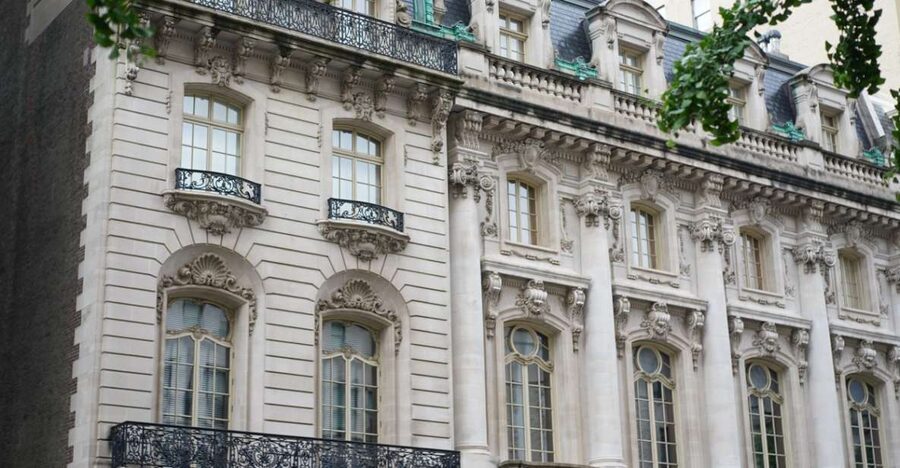
- The oldest building on Millionaire’s Row helps you map how Fifth Avenue grew up
- Frick Collection area stories turn art viewing into a behind-the-scenes power play
- A bookstore inside a Gilded Age mansion adds a warm, modern twist
- One of the last single-residence mansions on Fifth Avenue closes the loop between past and present
Why Fifth Avenue’s mansion stories feel so physical
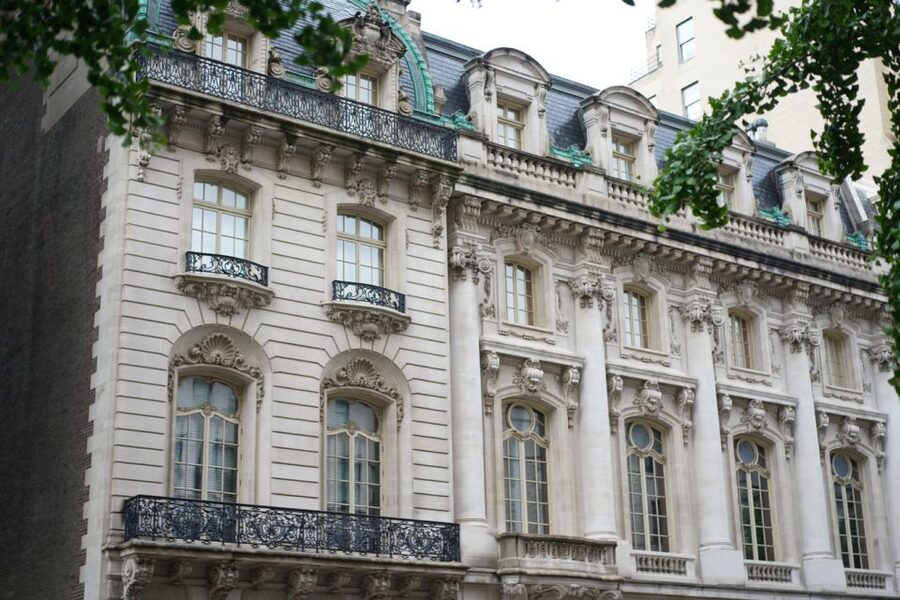
Fifth Avenue looks calm now. On this tour, it stops being a postcard street and becomes a timeline you can walk through.
I like that the focus is not just on what is left standing. You also learn how the city replaced glamour with institutions, clubs, and private uses, and how some of that erase-and-replace pattern makes certain buildings harder to notice unless someone points it out.
You get the Gilded Age in plain terms, not as distant legend. It is about wealth, design, and social life, including the kind of behind-the-scenes human drama that made these homes famous for more than their façades.
More Walking Tours in New York City
- SoHo, Little Italy, and Chinatown Walking Tour in New York
★ 5.0 · 3,153 reviews - Secrets of Grand Central Station Walking Tour New York City
★ 5.0 · 1,796 reviews - Greenwich Village Walking and Food Tasting Tour
★ 5.0 · 1,572 reviews
The walking route: from Sherman’s statue to the Met steps
This is a 2-hour experience that starts on 5th Avenue between 59th and 60th Street at the General William T. Sherman monument area. You finish near the Metropolitan Museum of Art at 5th Avenue and 80th Street.
The walk is about 1.3 miles, and the good news is that the pacing includes regular stops for photos and explanations. The slightly harder news is that it is almost entirely outdoors, so you will feel weather, wind, and sun along the way. Bring weather-appropriate clothing and stick to comfortable shoes.
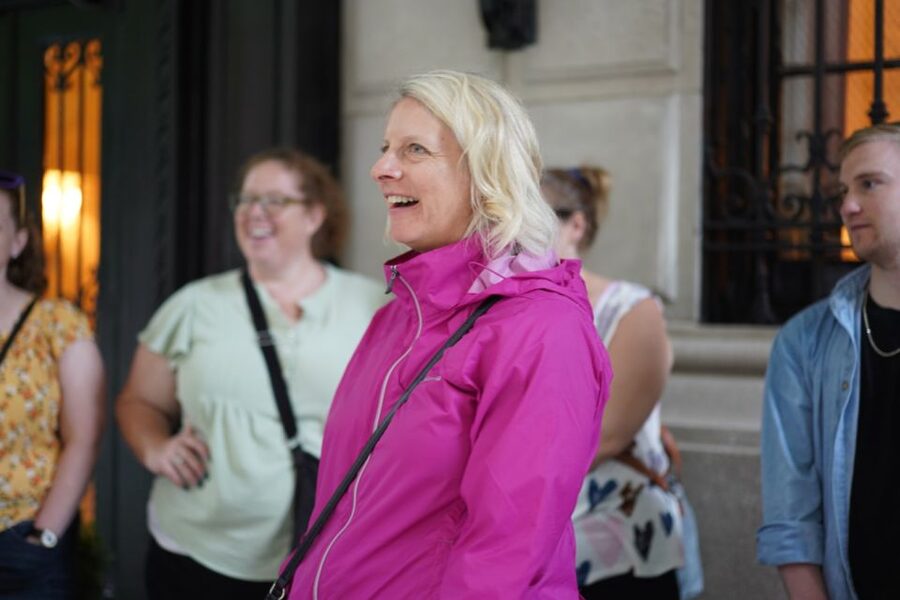
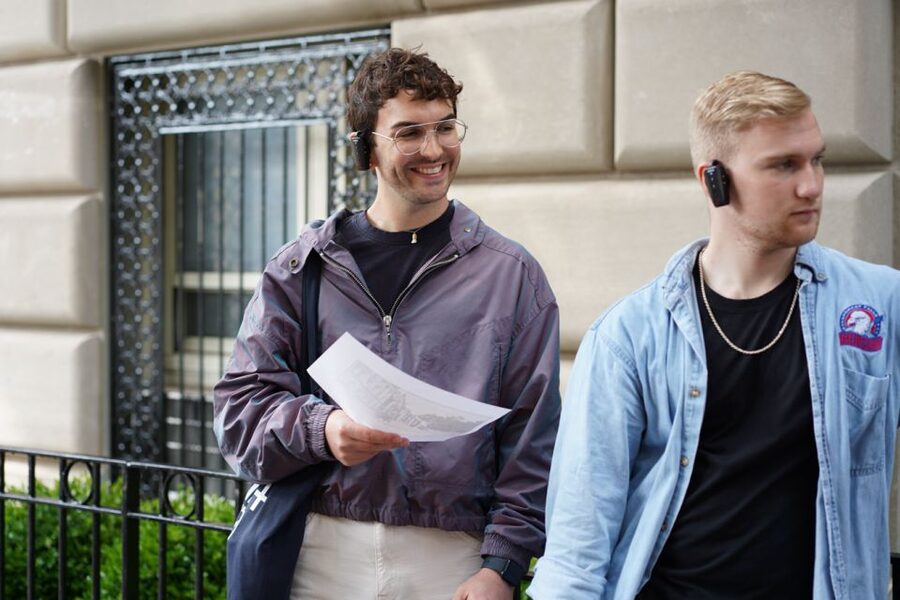
Because you are moving block to block, headsets matter. The tour provides them so you can hear even when the group spreads out to look at façades.
Sherman, Pulitzer, and the Fifth Avenue wealth map you can read
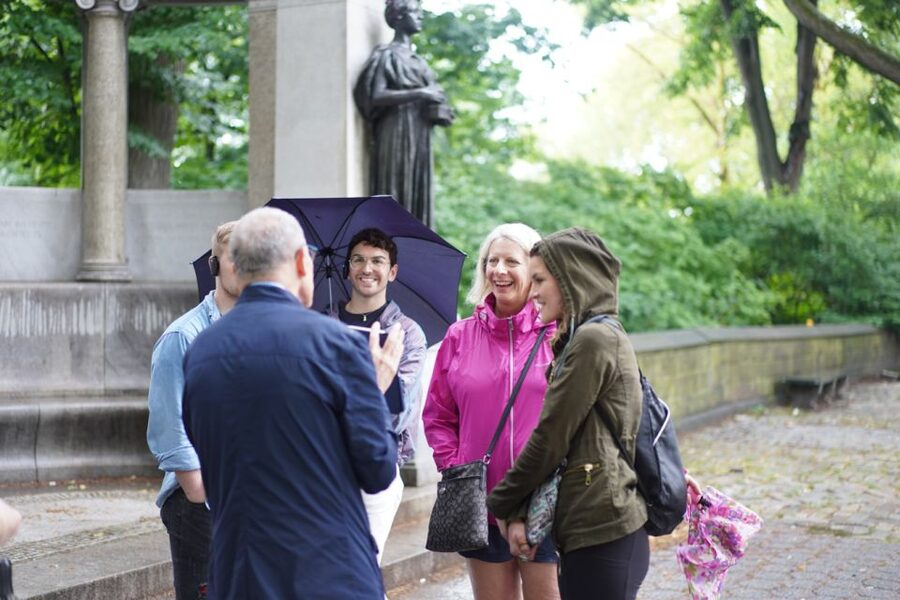
You begin with the General William Tecumseh Sherman monument photo stop and guided orientation. This opening works because it gives you a reference point for how Fifth Avenue’s prestige zone is laid out.
Then you hit the Pulitzer Fountain at Grand Army Plaza. Even if you mostly think of it as a city landmark, the guide uses it to frame how public monuments and private power ran on parallel tracks in the late 1800s and early 1900s.
Next comes the Plaza Hotel pass-by. From the sidewalk, it is easy to treat it as just another famous New York building. On this tour, it becomes a marker for how Fifth Avenue shifted from single-family spectacle toward commercial and institutional life.
After that, the tour leans deeper into the architecture you can spot instantly if you know what to look for. The Metropolitan Club and the Knickerbocker Club are both pass-by stops where the guide connects style to status, and status to the people who once shaped the avenue’s reputation.
You will also see The Arsenal (photo stop). This is one of those stops that can feel odd at first glance, because you might expect only mansion façades. Instead, it underlines how mixed Fifth Avenue became as time moved on.
The Richard Morris Hunt memorial: where design gets a name
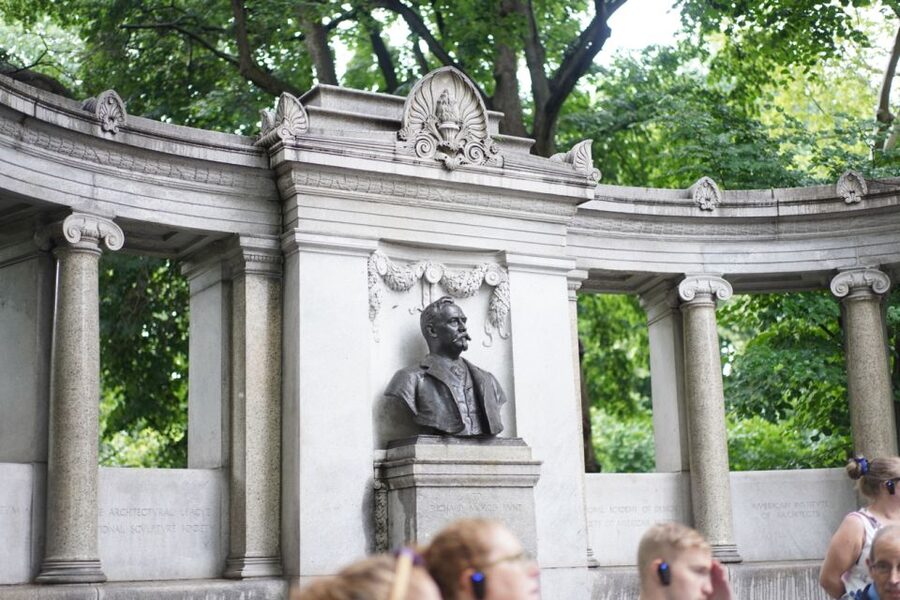
You pause at the Richard Morris Hunt Memorial, and this is a helpful moment for anyone who wants the architecture to click faster.
Hunt matters because he is tied to how prominent homes were built and how styles were translated into stone and ornament. The tour uses this stop to connect the names you hear to the buildings you are about to see, so you are not just staring at details without context.
Look for how the guide makes you notice proportions and materials. The Gilded Age wasn’t only about being rich, it was about being seen through design choices, right down to how a façade catches light.
Other New York City outings to compare
- Artistic, Alternative Greenwich Village Walking Tour
★ 5.0 · 971 reviews - Brooklyn Food Walking Tour: Local Eats & Family‑Run Shops
★ 5.0 · 592 reviews - SoHo, Little Italy, and Chinatown 2-Hour Guided Walk
★ 4.6 · 566 reviews - NYC: Brooklyn Graffiti & Street Art Walking Tour in Bushwick
★ 4.8 · 492 reviews
Frick Collection area: art, money, and the stories behind the walls
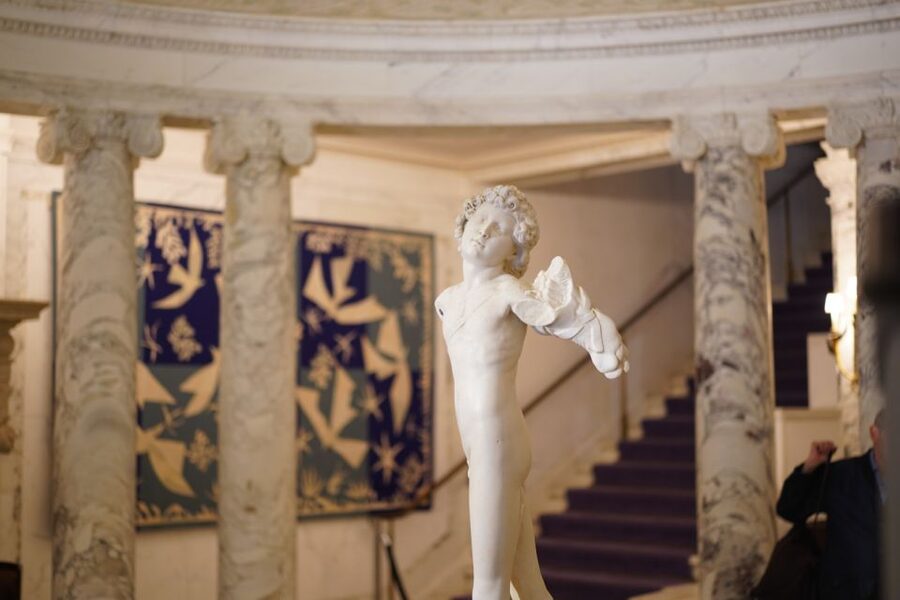
The tour includes a Frick Collection photo stop. This is where art viewing gains a layer you might not pick up from a museum visit alone.
The guide shares secrets of the Frick Collection as you stroll by. The effect is simple: you start thinking about art as part of a larger system of taste, social influence, and wealth management, not just as objects on display.
If you love museum context, you will appreciate this. You are essentially getting the street-level preface to themes you might later see inside. Even if you are not planning to go into the Frick itself during your day, the stories help you understand why certain collections were built and how they shaped reputations.
The mansion footprint lesson: how the biggest house still shapes the block
One of the tour’s standout themes is discovering the footprint of the largest single residence ever built in Manhattan. This is one of those tour ideas that sounds theoretical until you watch how the guide explains it.
You learn how the size and placement of a once-dominant home affects the way a street feels today. It is not magic, it is urban logic: spacing, neighboring structures, and the way people built around the biggest private claim on a block.
The tour also frames this with what you can still see. Some of the most important pieces of the past remain visible, but you need a map in your head to interpret them. The guide supplies that map.
The stop that feels like a time machine: entering Albertine
Here is the point that most people talk about afterward: the tour includes access inside a Gilded Age mansion.
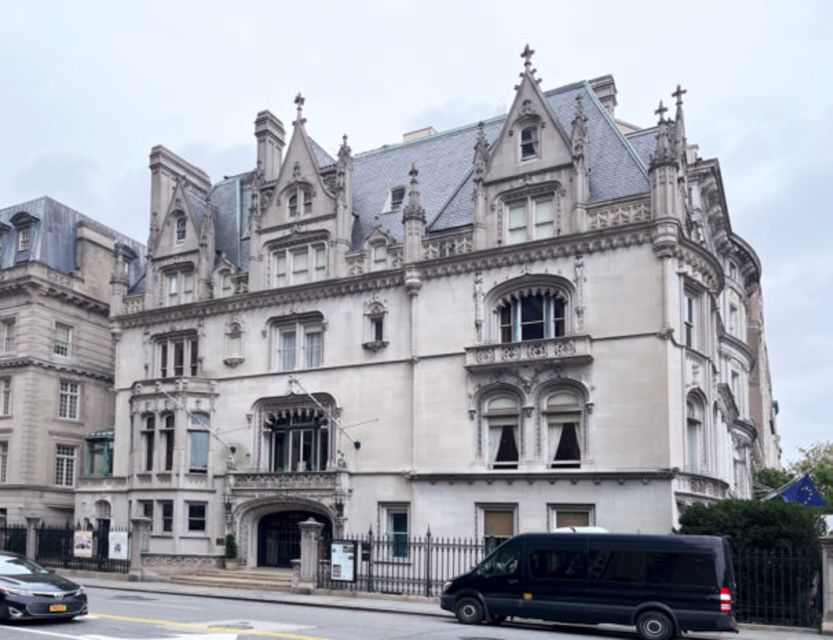
In the itinerary, this inside visit is at Albertine. You do not just glance at the exterior and move on. You step into a piece of the private-era world that is usually out of reach when the buildings now function as private residences or institutions.
This is also where you get that special modern-meets-old moment. The tour highlights a charming bookstore hidden into a Gilded Age mansion, and that detail matters because it changes your emotional experience.
A bookstore turns the building from a symbol of wealth into something you can engage with. Instead of only thinking about power and status, you start thinking about how these spaces get reused, reinterpreted, and kept alive.
“Secrets” on the sidewalk: consulates, institutes, and old money’s new roles

After the interior visit, the tour continues with more pass-by/photo stops that show how Fifth Avenue buildings were repurposed.
You walk past the Consulate General of France, then to the Ukrainian Institute of America. You also see the American Irish Historical Society and the Benjamin N. Duke House before finishing at the Met.
These stops do not just pad the route. They make a key point you can carry with you after the tour: many Gilded Age mansions did not vanish. They changed functions.
That matters because it helps you read other neighborhoods too. You start noticing how architecture survives by adapting, and how institutions can preserve façades while moving on from the original social use.
What I think makes the guide factor so important
This tour leans hard on storytelling, and the reviews back up that the guide quality can make or break the experience. You will hear names like Richard, Laura, Katy, Bill, Alexa, AJ, Hazel, Bob, Rosemary, Victor, and Ro in the broader guide lineup, and the common thread in their approach is clarity plus humor.
What that means for you on the street is that you get more than facts. You get explanations that connect buildings to people, and people to why certain design choices happened.
You also get plenty of room for questions. The best guides here keep the group moving, but they still pause to answer as curiosity pops up.
And the headsets do their job. If you have ever struggled to hear a walking tour guide while standing near traffic, you will understand why this is a big value add.
Price and value: $39 for two hours, plus one interior door
At $39 per person for about 2 hours, this tour is priced like a mid-range walking experience. What pushes it toward better value is the combination of things that are usually sold separately.
You are getting:
- a guided walking tour led by a local New Yorker
- headsets (not just optional, built into the experience)
- entry inside a Gilded Age mansion
- a route that ties together Fifth Avenue landmarks, Millionaire’s Row, and the Frick orbit
Most street tours will point at buildings and stop there. Here, you add interior access and the bookstore-in-a-mansion feeling, which turns the tour into something more than sightseeing.
It is also a smart use of time. You get a dense slice of Fifth Avenue context in about the length of a museum visit, without needing tickets for multiple sites.
Outdoors, rain or shine: who should book and who should think twice
Because it is almost entirely outdoors, this is best for people who like walking and can stay flexible with weather. It is also a good fit if you want architecture and social history mixed together, not separated into two different parts of your day.
You might think twice if you are very sensitive to walking time, because the route adds up to roughly 1.3 miles and you are out in public spaces. The tour includes headsets, which helps hearing, but it does not change the fact that you are on your feet.
If you love New York that feels real and slightly storybook, this tour hits a sweet spot. You will come away looking at Fifth Avenue differently, not just as luxury branding, but as a set of sites where design, art, and money shaped what society looked like.
Should you book this NYC Fifth Avenue Gilded Age tour?
I would book it if you want a focused, 2-hour way to understand Millionaire’s Row, learn what is still physically visible of lost mansions, and get one true inside moment at Albertine.
Skip it if you want a quiet, mostly seated experience, or if you cannot handle being outdoors for much of the time. This one is built for motion, with frequent stops, guided explanations, and a steady pace.
If you are planning a New York trip where you want one “story street” activity that connects architecture to people, this is a strong choice.
FAQ
How long is the NYC Fifth Avenue Gilded Age mansions guided walking tour?
The tour lasts about 2 hours.
Where do I meet the guide, and where does the tour end?
Meet at the gold statue of General William T. Sherman on 5th Ave between 59th and 60th St. The exact meeting address provided is 764 Doris C Freedman Pl. The tour ends by the Metropolitan Museum of Art at 5th Ave and 80th St.
How much walking is involved?
The tour is almost entirely outdoors and includes about 1.3 miles of walking.
Is the tour run in bad weather?
Yes, it takes place rain or shine.
What is included in the price?
You get a guided walking tour led by a local New Yorker, headsets to hear clearly, and access inside a Gilded Age mansion. Audio guidance is included in English as well.
Is the tour wheelchair accessible?
Yes, the tour is listed as wheelchair accessible.
Newest New York City reviews on the site
- All Inclusive Airport Departure Transfer NYC/ Brooklyn/Queens★ 4.0 · 342 reviews
- The Escape Game Brooklyn: Epic 60-Minute Adventures in City Point★ 5.0 · 332 reviews
- New York Aquarium Admission★ 4.0 · 298 reviews
- Brooklyn Food Walking Tour: Local Eats & Family‑Run Shops★ 5.0 · 592 reviews
- Brooklyn Bridge & DUMBO Food Tour: Local Eats & Landmarks★ 5.0 · 478 reviews
- New York City: City Highlights Guided Bike or eBike Tour★ 4.5 · 229 reviews
- New York City: Superheroes of NYC Guided Walking Tour★ 4.5 · 271 reviews
- NYC: Sunset Sail Aboard Schooner Adirondack★ 4.9 · 283 reviews
Walking Tours, compared.
History and Hauntings of Salem Guided Walking Tour
Read our review →
New Orleans Premier Ghost, Voodoo and Vampire Walking Tour
Read our review →

Freedom Trail History Small Group Walking Tour
Read our review →
Historic Charleston Guided Sightseeing Walking Tour
Read our review →
New Orleans Food Walking Tour of the French Quarter with Small-Group Option
Read our review →
St. Louis Cemetery No. 1 Official Walking Tour
Read our review →Browse the lists this tour appears in