
Reviewed · WALKING TOURS
SoHo, Little Italy, and Chinatown 2-Hour Guided Walk
Your street-corner history test starts here. In just two hours you’ll move from SoHo’s cast-iron storefronts to immigrant blocks in Little Italy and the shadowy side streets of Chinatown, with a guide turning landmarks into real stories. I love the mix of big-city design (SoHo’s iron architecture and famous facades) and the way the walk connects everyday corners to events like the Manhattan Well Murder and mob-linked sites. One drawback to plan for, this tour isn’t suitable for people with mobility impairments.
What makes this worth your time is how the guides run it. People mention guides like Arun and Angela for being engaging, clear, and willing to answer questions, and that matters because you want the stories to land, not just get recited.
You’ll pay $39 per person for a 2-hour guided walk, and food is not included. If you’re hoping for a fully meal-based tour, you’ll need to budget for snacks as you go.
In This Review
- Key points worth knowing before you go
- SoHo, Little Italy, and Chinatown in 2 hours, how it all fits
- Spring Street Park start, and the Manhattan Well Murder story
- SoHo’s Cast Iron District, plus celebrity spotting without the pressure
- E.V. Haughwout Building, why one elevator mattered
- Broome Street pop culture, and the 421 Broome Street death site
- Old Police Station (1909 Beaux-Arts) and how power leaves footprints
- Ravenite Club and John Gotti, mob history with a sense of place
- Old Saint Patrick’s and Little Italy’s Mulberry Street center
- Alleva Dairy, the 100-year cheese-making detail that locals care about
- Italian American Museum and the Triangle Shirtwaist Factory fire site
- Umbertos and the Joe Gallo mob hit
- San Gennaro’s story, opium den talk, and Chinatown’s darker corners
- Columbus Park finish, and why Gangs of New York comes up
- Price, pacing, and what you should budget for
- Who this walk is for, and who should skip it
- Should you book this SoHo, Little Italy, and Chinatown walk?
- FAQ
- How long is the guided walk?
- What is the price per person?
- What’s included in the tour?
- Is food included?
- Where do I meet the guide?
- Where does the tour end?
- What language is the tour guide?
- What should I bring?
- Is the tour suitable for people with mobility impairments?
Key points worth knowing before you go
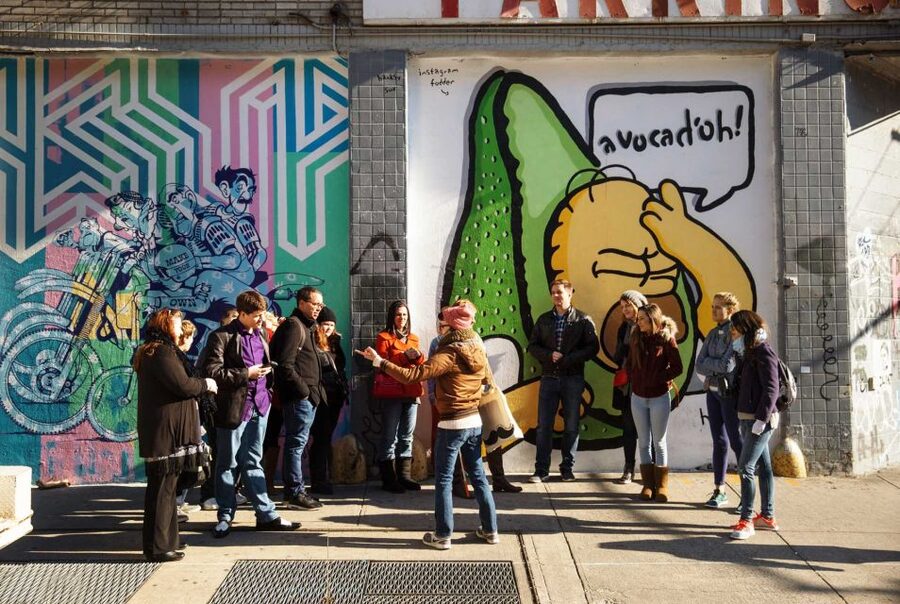
- SoHo to Chinatown in one smooth loop: three neighborhoods, lots of stops, and not a huge time commitment.
- Real event locations, not vague history: you’ll hear about the Manhattan Well Murder, the Triangle Shirtwaist Factory fire site, and more.
- Cast-iron SoHo is part sightseeing, part Hollywood hunt: keep your eyes up around the Cast Iron district.
- Mob and gang stories are built into the walk: Ravenite Club and Chinatown dark corners show up in the route.
- It’s a walk-first experience: bring comfortable shoes, and plan for weather, especially if it’s hot out.
SoHo, Little Italy, and Chinatown in 2 hours, how it all fits

This is a classic New York combo because the three areas sit close enough to stitch together into one tight route. You’ll bounce between architecture, immigrant-era neighborhoods, and later criminal history, without needing to plan separate days or take multiple transit rides.
The 2-hour timing is also part of the value. You get enough time to see major landmarks like the E.V. Haughwout Building and the Italian American Museum, but the pace is still meant to feel like a walk, not a marathon.
More Walking Tours in New York City
- SoHo, Little Italy, and Chinatown Walking Tour in New York
★ 5.0 · 3,153 reviews - Secrets of Grand Central Station Walking Tour New York City
★ 5.0 · 1,796 reviews - Greenwich Village Walking and Food Tasting Tour
★ 5.0 · 1,572 reviews
Spring Street Park start, and the Manhattan Well Murder story
Most tours start at Spring Street Park (there can be variations by option, but Spring Street Park is one of them). Right away you’re in the part of Manhattan where older street patterns and early city events overlap, and that sets the tone.
One stop focuses on Greene and Spring streets, tied to the Manhattan Well Murder, described as the first recorded murder case in New York City. Even if you know the city already, I like how this kind of story makes you look up at the surroundings differently. A quiet block becomes a clue to how the city used to work, and why “public spaces” were never really safe back then.
SoHo’s Cast Iron District, plus celebrity spotting without the pressure
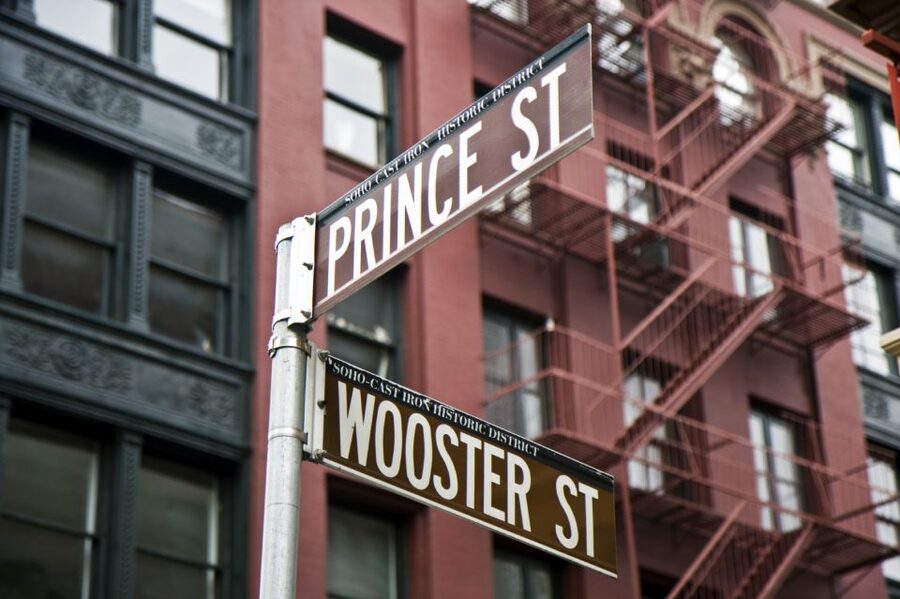
SoHo is where the tour turns visual. You’ll walk around the Cast Iron district, famous for those dramatic metal façades that made the neighborhood stand out even before it became the place for fashion and movie shoots.
The practical benefit is that you get photo-ready architecture while the guide layers in context. And yes, you’ll also be told to keep an eye out for celebrities, since this is the area where they often show up for shoots and shopping. The key is to treat it as a fun bonus, not a demand. Even without a celebrity sighting, the architecture is worth the walk.
E.V. Haughwout Building, why one elevator mattered
From the street-level drama, the tour shifts to an engineering milestone: the E.V. Haughwout Building, noted on this walk as the home of the first safety elevator. That detail is easy to miss if you’re just passing by, but it matters because vertical living is a big part of why New York grew the way it did.
When a guide points to a specific building and connects it to broader city change, the whole neighborhood becomes clearer. You start to see SoHo not just as pretty streets, but as a place shaped by technology, money, and ambition.
Other New York City outings to compare
- Artistic, Alternative Greenwich Village Walking Tour
★ 5.0 · 971 reviews - Brooklyn Food Walking Tour: Local Eats & Family‑Run Shops
★ 5.0 · 592 reviews - NYC: Brooklyn Graffiti & Street Art Walking Tour in Bushwick
★ 4.8 · 492 reviews - Brooklyn: Bushwick Street Art Walking Tour
★ 4.7 · 462 reviews
Broome Street pop culture, and the 421 Broome Street death site
The route includes 421 Broome Street, where the guide connects the location to Heath Ledger’s death and the fact it’s in an apartment associated with Mary Kate Olsen. This is one of those stops where pop culture turns into a real-world anchor.
I like this part of the tour because it gives you a bridge. You can be interested in film trivia, but you leave with a stronger sense of what it means to live in dense Manhattan blocks, where buildings hold layers of personal stories in a single address.
Old Police Station (1909 Beaux-Arts) and how power leaves footprints
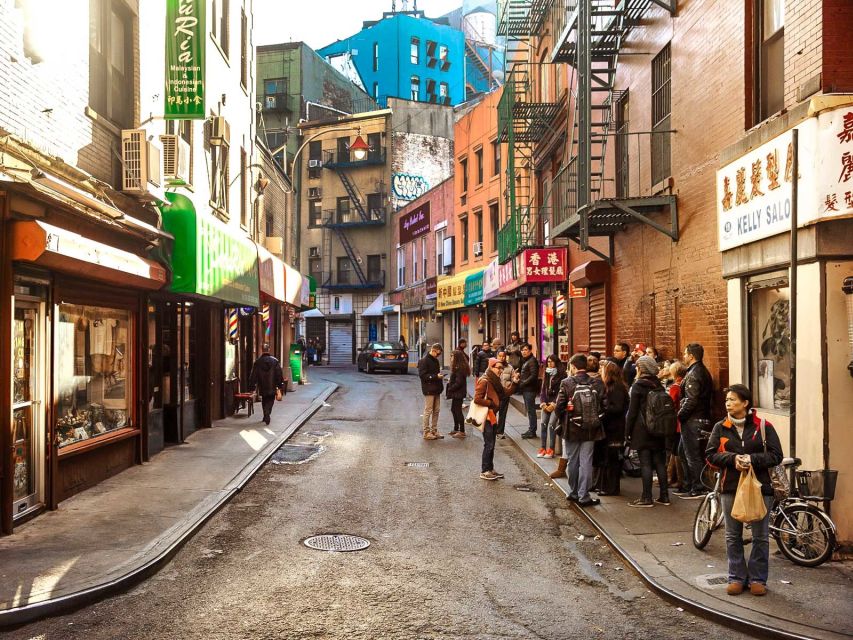
Another standout stop is the Old Police Station, a 1909 Beaux-Arts building now used as a residence. The value here is the contrast. Police history and criminal history are often told in broad strokes, but seeing a specific old civic building helps you understand how authority was built into the city.
This kind of stop also makes the later crime stories in Little Italy and Chinatown feel less random. When you see the institutions, it’s easier to grasp why the city’s disputes played out where they did.
Ravenite Club and John Gotti, mob history with a sense of place
In the route you’ll visit the Ravenite Club, tied to the story of John Gotti. It’s the kind of location where the guide can explain not only what happened, but how power and intimidation can become part of a neighborhood’s rhythm.
One reason I’d choose this tour over a self-guided walk is simple. A guide can connect the dots between buildings and people, and based on what you’ll hear from guides like George and Steve, this walk leans into that storytelling style rather than turning into a speed-reading session.
Old Saint Patrick’s and Little Italy’s Mulberry Street center
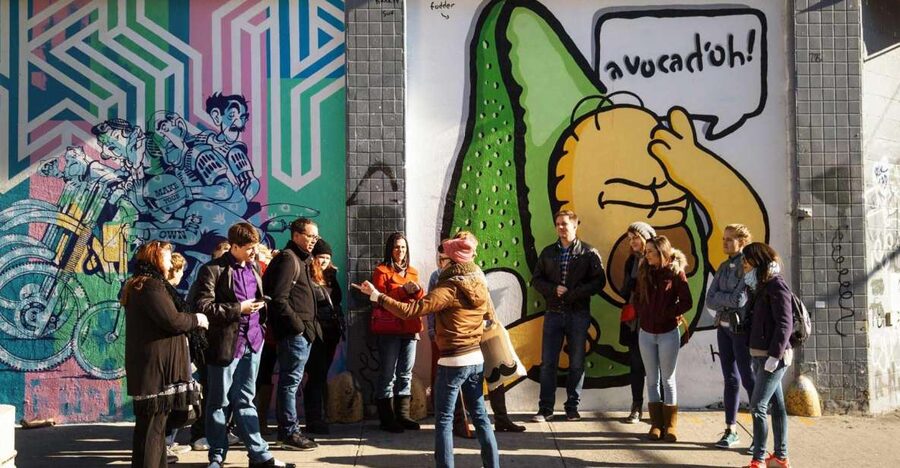
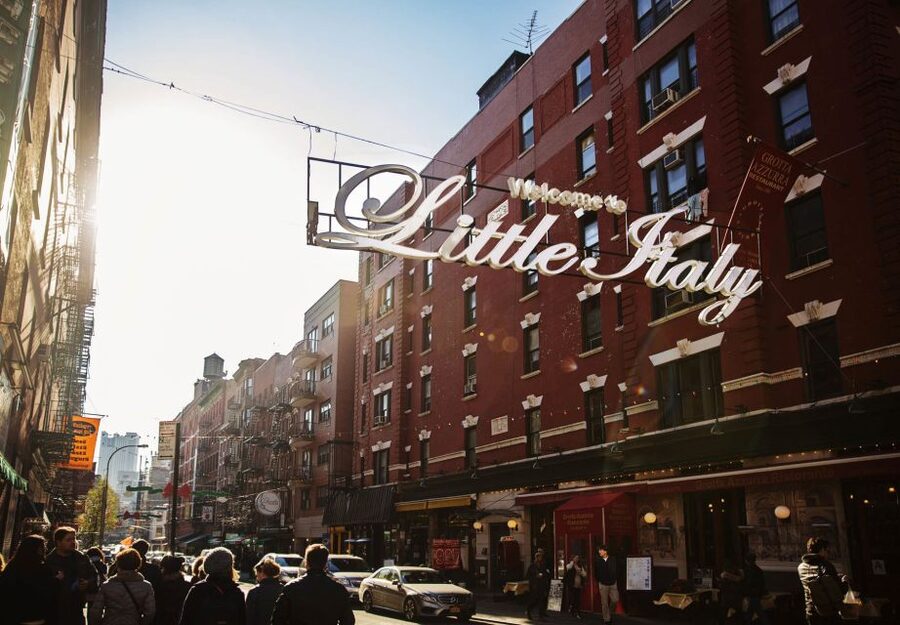
As you move into Little Italy, the vibe shifts. You’ll hit Mulberry Street, described as the heart of the neighborhood, and you’ll also come past Old Saint Patrick’s.
This is where the tour becomes more than crime and architecture. It’s where the immigrant-story angle grows more personal. You’ll hear about the struggles immigrants faced and how entire communities formed, adapted, and fought to survive in a city that could be tough on newcomers.
Alleva Dairy, the 100-year cheese-making detail that locals care about
A food stop that’s more interesting than it sounds on paper is Alleva Dairy, where cheese has been made for a hundred years. If you’re a food person, this is a great moment to slow down. If you’re not, it still works because it explains how old-school craft and neighborhood networks shaped what people ate and how they supported each other.
And since food costs aren’t included, you control the budget. You can treat this as a casual tasting opportunity, or you can just use it as a chance to learn what to look for later on your own.
Italian American Museum and the Triangle Shirtwaist Factory fire site
The walk includes the Italian American Museum, tied to the Triangle Shirtwaist Factory fire. This is one of the heavier stops, and it matters for the same reason the Manhattan Well Murder does. Those events explain why safety, labor rules, and public attention changed over time.
Even in a short tour, this stop can give you a meaningful “why” behind the neighborhood. Little Italy isn’t only picturesque. It’s connected to industry, workers, and the consequences of ignoring human life.
Umbertos and the Joe Gallo mob hit
Then you get another sharp turn into criminal history at Umbertos, identified on the walk as the site of the mob hit on Joe Gallo. The purpose isn’t to shock you. It’s to show how the city’s later eras overlapped with the older immigrant blocks, and how different kinds of danger played out in real spaces.
If you’re into true crime but you hate when it turns into sensational gossip, pick this tour because it uses locations to keep the stories grounded. The guide structure helps you follow the logic of events instead of just collecting headlines.
San Gennaro’s story, opium den talk, and Chinatown’s darker corners
You’ll also visit the National Shrine Church of San Gennaro, with the tour story connected to the liquefaction of the saint’s blood. That stop widens the lens again, because it adds spiritual and community tradition to a route that also includes mob and gang violence.
As the walk continues into Chinatown, the tone gets more shadowed. The route includes an opium den stop and the Bloody Angle at Doyers Street. These are the kinds of landmarks where the guide’s role is huge. Without context, it’s easy to treat them as spooky photo spots. With context, they become history about how lawlessness and exploitation took hold.
Columbus Park finish, and why Gangs of New York comes up
The tour ends with drop-off at Columbus Park. The walk connects this area to Gangs of New York fame, but the real value is what the neighborhood feels like after you’ve been hearing immigrant and gang-history threads for two straight hours.
You finish with a clearer mental map. SoHo stops feel like the city’s ambition in stone and iron. Little Italy starts to feel like a survival story in streets and institutions. Chinatown feels like a place where power conflicts and community life existed side by side.
And you also leave with a solid starting point for your next move. If you want more food, you’re already oriented. If you want more museums or churches, you know where to head without guessing.
Price, pacing, and what you should budget for
At $39 per person for 2 hours, the value is mainly in the number of major, specific stops jammed into a short time window. You’re not paying for a vague overview. You’re paying for someone to point out: this building matters, that intersection matters, and this corner ties to a specific event.
Two practical notes keep this experience smooth:
- Food is not included. The highlights mention ethnic food sampling, but plan to pay for what you eat.
- Wear comfy shoes and dress for the weather. This is a walking tour and the route moves through multiple neighborhoods.
The guides are praised for pacing and group management, including one review-style detail that guides find shade on hot days and keep you safe around traffic. That’s not just nice, it affects whether you can actually enjoy the stories instead of rushing through them.
Who this walk is for, and who should skip it
This tour is a strong fit if you want:
- Neighborhood history with specific locations, not just broad themes
- A mix of architecture, immigrants’ struggles, and true crime
- A guided route that helps you see why these areas evolved the way they did, especially in a short window
It’s less ideal if:
- You need mobility access, since it’s not suitable for people with mobility impairments
- You hate walking or you’re expecting a mostly sit-down experience
Should you book this SoHo, Little Italy, and Chinatown walk?
If you like your New York with streets that actually mean something, I’d book it. The tour’s best strength is balance: design and celebrity energy in SoHo, immigrant and labor stories in Little Italy, and Chinatown’s darker chapters that help you understand the city’s complicated past.
Before you go, do one simple check: are you okay paying for food add-ons and walking for two hours? If yes, you’ll come away with a much sharper sense of what you’re seeing, and you’ll have a map of stories in your head long after you leave Columbus Park.
FAQ
How long is the guided walk?
The tour lasts 2 hours.
What is the price per person?
The price is $39 per person.
What’s included in the tour?
You get a walking tour with an English-speaking guide.
Is food included?
No. Food costs are not included.
Where do I meet the guide?
The meeting point may vary depending on the option booked, but one listed option is Spring Street Park.
Where does the tour end?
Drop-off is at Columbus Park (with the listed options both showing Columbus Park).
What language is the tour guide?
The tour guide speaks English.
What should I bring?
Bring comfortable shoes and weather-appropriate clothing.
Is the tour suitable for people with mobility impairments?
No, it is not suitable for people with mobility impairments.
Newest New York City reviews on the site
- All Inclusive Airport Departure Transfer NYC/ Brooklyn/Queens★ 4.0 · 342 reviews
- The Escape Game Brooklyn: Epic 60-Minute Adventures in City Point★ 5.0 · 332 reviews
- New York Aquarium Admission★ 4.0 · 298 reviews
- Brooklyn Food Walking Tour: Local Eats & Family‑Run Shops★ 5.0 · 592 reviews
- Brooklyn Bridge & DUMBO Food Tour: Local Eats & Landmarks★ 5.0 · 478 reviews
- New York City: City Highlights Guided Bike or eBike Tour★ 4.5 · 229 reviews
- New York City: Superheroes of NYC Guided Walking Tour★ 4.5 · 271 reviews
- NYC: Sunset Sail Aboard Schooner Adirondack★ 4.9 · 283 reviews
Walking Tours, compared.
History and Hauntings of Salem Guided Walking Tour
Read our review →
New Orleans Premier Ghost, Voodoo and Vampire Walking Tour
Read our review →
Freedom Trail History Small Group Walking Tour
Read our review →
Historic Charleston Guided Sightseeing Walking Tour
Read our review →
New Orleans Food Walking Tour of the French Quarter with Small-Group Option
Read our review →
St. Louis Cemetery No. 1 Official Walking Tour
Read our review →Browse the lists this tour appears in