
Reviewed · MUSEUMS
Bishop Museum General Admission Ticket
Bishop Museum turns Honolulu into a place for real meaning, not just sightseeing. I love how the Hawaiian Hall and Pacific Hall connect stories, artifacts, and migration routes into one clear path. I also like that the campus gives you both culture and hands-on science in the same visit. One thing to plan for, it is a big complex, so give yourself time or you will miss a lot.
If you go in with a smart game plan, you can shape your day around what interests you most: deep cultural exhibits, astronomy via the planetarium, or science at the Science Adventure Center, including a live lava melting show. The ticket covers general admission, but some experiences may be optional or temporarily unavailable depending on the day, so build in flexibility.
In This Review
- Key highlights to plan around
- Bishop Museum admission: what your $38.95 really covers
- The campus feel: why Bishop Museum takes more than a quick stop
- Hawaiian Hall Complex: the best place to start for context
- Pacific Hall: migration, settlement, and shared values
- Jhamandas Watumull Planetarium: optional sky learning done right
- Science Adventure Center at Richard T. Mamiya: lava and island formation
- Castle Memorial Building: when it is worth your time
- How long should you plan? 1 to 8 hours needs smart pacing
- Weather, walking, and the practical Honolulu details that matter
- Value check: is this ticket a good deal?
- Who this visit is best for
- Should you book the Bishop Museum general admission ticket?
- FAQ
- What does the Bishop Museum general admission ticket include?
- How long is the experience?
- Is a mobile ticket used?
- Are parking fees included?
- Does the museum operate in bad weather?
- Is the ticket offered in English?
- Can I cancel for a refund if my plans change?
Key highlights to plan around
- Hawaiian Hall Complex: world-class showcase of Hawaiian history and culture, with museum-quality detail
- Pacific Hall: migration, settlement, and shared values across the wider Pacific
- Jhamandas Watumull Planetarium: star learning for Hawai‘i and Polynesian skies, tied to traditional navigation ideas
- Richard T. Mamiya Science Adventure Center: hands-on science focused on Hawai‘i and Pacific environments
- Live lava melting show: a memorable science moment tied to how the islands form
Bishop Museum admission: what your $38.95 really covers
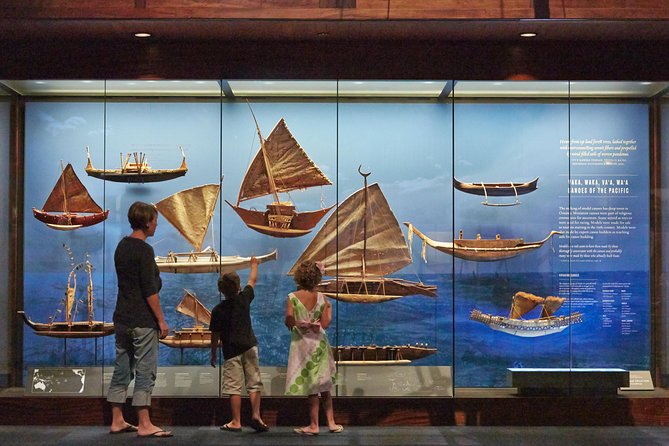
For $38.95 per person, you are buying general admission to Bishop Museum, a campus museum founded in 1889. That is a solid baseline, because it gets you inside the main exhibit buildings so you can move at your own pace.
Two “read the fine print” notes help you avoid surprise spending. First, parking fees are optional, so you will want a plan for where to park or whether to take public transportation. Second, a planetarium show and special exhibits may cost extra depending on what is running.
In other words, your ticket is a full museum entry. Then you decide whether you want to add the planetarium session and any extra-ticket items on the day.
Other Honolulu outings to compare
- NYC: 9/11 Memorial & Museum Timed-Entry Ticket
★ 4.8 · 31,428 reviews - NYC: Empire State Building Tickets – Observatory & Museum
★ 4.7 · 25,757 reviews - New York City: American Museum of Natural History Ticket
★ 4.5 · 15,447 reviews
The campus feel: why Bishop Museum takes more than a quick stop
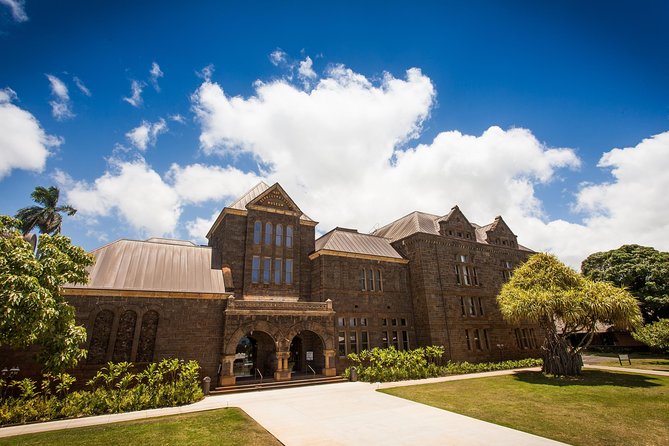
Bishop Museum does not feel like one room with a few displays. It is several major exhibit spaces across the grounds, each with its own “mode.” That matters because you can get whiplash if you try to sprint through. Slow down between buildings, especially if you are reading labels or looking closely at objects.
A good approach is to pick one “anchor” area for the morning and a second anchor for the afternoon. Many people end up planning around the times the planetarium is scheduled and when live science demos are running, since those can shape the pace of your visit.
Also, dress for real Honolulu weather. The museum operates in all weather conditions, so you will still be walking outdoors between buildings when it rains or when it is sunny.
Hawaiian Hall Complex: the best place to start for context
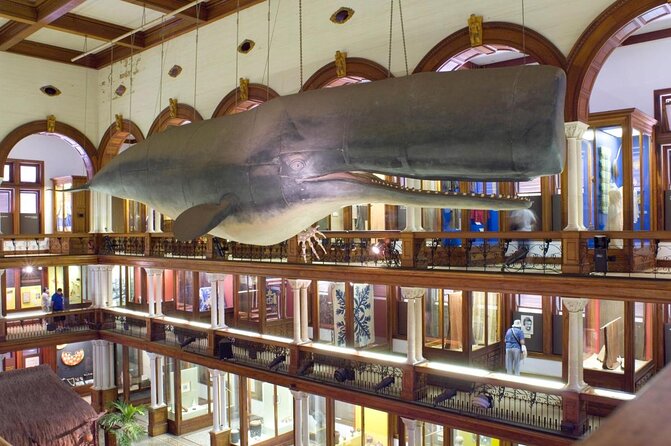
The Hawaiian Hall Complex is the flagship for Hawaiian history and culture. This is where the museum gives you grounding, so you understand what you are seeing later across the campus. If you only have a short visit, I still recommend starting here because it helps everything else click.
What makes it special is the way it presents Hawaiian stories as connected, not random. You are not just looking at isolated objects. You are getting cultural history presented as a system: people, practices, and the meaning behind traditions.
Practical tip: plan to spend more time here than you think you need. The hall is set up so you can keep learning as you move from room to room, and a rushed walk makes the details feel like background noise.
Pacific Hall: migration, settlement, and shared values
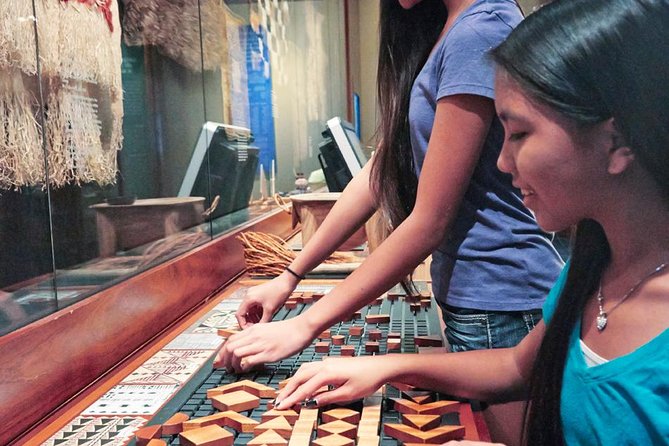
Once you get your cultural foundation, Pacific Hall is the natural next step. This section focuses on the origins and culture of Pacific peoples, including migrations and settlement across the islands. It is one of the strongest ways the museum shows you how navigation, movement, and community ties shaped the Pacific world.
If you like maps, routes, and big-picture context, this is a great stop. It also helps you see Hawaiian culture as part of a wider network of Pacific cultures, not a lonely story.
Time tip: Pacific Hall rewards a steady pace. If you only glance at labels, you will miss the connections the museum is trying to make across displays.
Same corner of the map, another day out:
- Oahu Grand Circle Island and Haleiwa Tour: 9-Hr Deluxe Experience
★ 5.0 · 17,387 reviews - Oahu: Grand Tour Around Island 16 Locations plus Snorkeling
★ 5.0 · 8,669 reviews - Salute to Pearl Harbor Including USS Arizona
★ 4.5 · 7,433 reviews - Majestic Circle Island Tour with Lunch
★ 5.0 · 7,014 reviews
Jhamandas Watumull Planetarium: optional sky learning done right
The Jhamandas Watumull Planetarium is where the museum leans into the skies of Hawai‘i and Polynesia, framed through traditional ways of looking at the heavens. If you are curious about astronomy, or you want the cultural layer behind star knowledge, this is a highlight.
Here is the practical thing to know: the planetarium show may be optional, and sometimes a session may not be available when you visit. You should check whether a show is scheduled for your date and time so you can plan around it, instead of building your entire day on a promise.
If you do get in, this is a great indoor option for weather days. Even if you are not an astronomy person, the focus on Hawai‘i and Polynesian skies makes it feel relevant, not like a generic space show.
Science Adventure Center at Richard T. Mamiya: lava and island formation
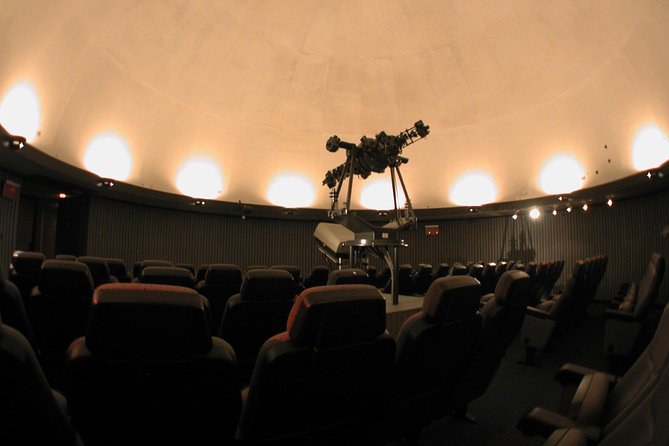
The Richard T. Mamiya Science Adventure Center is the hands-on stop that helps the museum feel alive. It focuses on science tied to Hawai‘i and Pacific environments, with a specific emphasis on lava and how the Hawaiian Islands formed.
What I like about this section is that it makes geology feel understandable. It is not just facts for reading. It is presented as a learning experience, and it fits well with families, school-age kids, and adults who want something more than text panels.
Live lava melting show: this is one of the moments people remember. The museum presents lava and island formation themes and then backs it up with a live demonstration of lava melting. If you are the kind of traveler who likes a “watch it happen” moment, this is your stop.
One caution: the live demonstration can be time-dependent. If lava is a priority for you, build your visit so you can catch the session rather than hoping it magically lines up with your schedule.
Castle Memorial Building: when it is worth your time
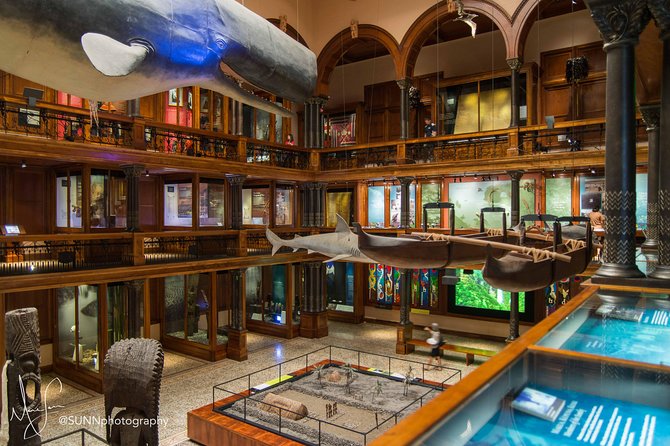
The Castle Memorial Building showcases changing exhibits for a limited time period. That means what you see depends on what is running while you are there.
A realistic way to handle this stop is to treat it as a bonus. If you are a museum-only type with lots of time, go in and check what is on display. If you are short on hours, you might feel the limited-time focus more than the other exhibit buildings.
My advice: do Castle Memorial Building last, after you have done the big anchors. That way, if your time runs tight, you can decide based on what you still want most.
How long should you plan? 1 to 8 hours needs smart pacing
The ticket experience lists a duration range from 1 to 8 hours, and Bishop Museum really can fill that whole spectrum. The difference is how your brain likes museums.
If you want the highlights only, plan about 2 to 3 hours. That usually means: Hawaiian Hall Complex as your main culture base, plus one more building such as Pacific Hall, then a quick look at the science areas depending on schedules.
If you want the full experience, plan at least half a day, and longer if you enjoy reading labels and taking your time with objects. A museum campus like this works better when you stop trying to “finish” and instead aim to “learn” at a comfortable pace.
Family tip: if you have kids, the Science Adventure Center and lava-themed moments can help make the visit feel more hands-on, but the museum still covers lots of cultural context, so build in breaks.
Weather, walking, and the practical Honolulu details that matter
The museum operates in all weather conditions, which is great because you are not stuck outside if it rains. Still, the campus layout means you will walk between buildings. You should have moderate physical fitness level, and you will want shoes that handle museum floors and outdoor paths.
For clothing, plan for sudden changes in comfort. Honolulu can shift quickly, and even if most of what you do is indoors, you still need weather-ready layers.
If you dislike stairs or long indoor walking loops, you should plan your route early. The museum is large enough that it can be efficient to choose an order that minimizes backtracking.
Value check: is this ticket a good deal?
At $38.95, the value depends on how you use the ticket.
If your goal is to see the major exhibit buildings and you are happy to use the planetarium only if it works with your schedule, you are getting a lot of museum time for your money. You are also covering Hawaiian culture, Pacific context, and science themed to Hawai‘i and the Pacific environment.
If you know you want the planetarium show and special exhibits, budget for additional optional costs. Because those items are not guaranteed by the base ticket alone, your total day cost can climb depending on what is available on your date.
My practical rule: treat the general admission as the core plan, and treat planetarium and special exhibits as add-ons you may or may not catch.
Who this visit is best for
Bishop Museum fits a wide range of travelers, especially if you want more than a photo stop.
- Culture lovers who want Hawaiian history and Pacific connections in one place
- Travelers who like science tied to place, not just abstract science
- Families who want a mix of exhibits plus interactive learning moments
- Anyone visiting Honolulu on a weather day and still wanting an excellent indoor anchor
If your travel style is ultra-fast, you may feel overwhelmed. If you love museums and have half a day or more, this place rewards patience.
Should you book the Bishop Museum general admission ticket?
Yes, if you want a meaningful Honolulu museum visit that covers Hawaiian culture, Pacific context, and Hawai‘i-centered science under one ticket. Book it if you are the type who likes to read, look closely, and let a museum unfold at a humane pace.
Consider holding back on a rigid schedule if the planetarium show or live lava timing is a must-do. Check what is running for your date so you do not build your whole day around one experience that might not line up.
If you only have a short window, go straight for the biggest anchors first, and keep expectations realistic for the changing exhibit building. With that approach, you will get the most learning per hour, and the museum will feel like a highlight instead of a chore.
FAQ
What does the Bishop Museum general admission ticket include?
It includes admission to Bishop Museum. Planetarium show access and special exhibit fees are listed as optional, depending on what you choose during your visit.
How long is the experience?
The experience duration is listed as 1 to 8 hours, so you can shape your visit from a shorter highlight walk-through to a longer museum day.
Is a mobile ticket used?
Yes, it is a mobile ticket. You should have it available for entry.
Are parking fees included?
No. Parking fees are optional and not included in the ticket price.
Does the museum operate in bad weather?
Yes. The museum operates in all weather conditions, so you should dress appropriately for rain and sun as you move around the campus.
Is the ticket offered in English?
Yes, it is offered in English.
Can I cancel for a refund if my plans change?
Yes, free cancellation is available. You can cancel up to 24 hours in advance for a full refund.
Newest Honolulu reviews on the site
- Waikiki Starlight Luau on The Great Lawn-Hilton Hawaiian Village★ 3.5 · 374 reviews
- WWII Pearl Harbor Heroes Deluxe Tour★ 4.5 · 621 reviews
- Ultimate Pearl Harbor Circle Island★ 5.0 · 404 reviews
- The Best of Pearl Harbor Full Day Tour★ 5.0 · 309 reviews
- Tribute to Pearl Harbor Arizona Memorial and Honolulu City Tour★ 4.5 · 733 reviews
- Shared Round-Trip Transfer: Honolulu Airport to Hotel or Cruise Terminal★ 4.0 · 711 reviews
- Best Waikiki Snorkel Tour: Guaranteed Turtles at Turtle Canyon★ 5.0 · 299 reviews
- Royal Crown of Oahu – 60 Min Helicopter Tour – Doors Off or On★ 5.0 · 755 reviews
Museums, compared.
Empire State Building Tickets – Observatory & Museum
Read our review →

9/11 Memorial, Ground Zero Tour with Optional 9/11 Museum Ticket
Read our review →

All-Access 9/11: Ground Zero Tour, Memorial and Museum, One World Observatory
Read our review →
Browse the lists this tour appears in