
Reviewed · WALKING TOURS
Walking tour in Manhattan Brooklyn Bridge and Waterfront
The Brooklyn Bridge is better with a guide. This walk takes you from the City Hall area to Brooklyn Heights through the Brooklyn Bridge and DUMBO, with Scott as your local narrator and photo helper. I like that you get the bridge story and neighborhood context without feeling rushed, plus plenty of time to stop, look up, and take photos.
Two things I really value here are the way Scott brings the bridge construction to life and the practical advice you can use right after the tour. One consideration is that this is a solid walking route, roughly three miles with some stairs and bridge walking, and the end point is in Brooklyn Heights, so plan how you will get back to your hotel.
In This Review
- Key highlights at a glance
- Why this City Hall to Brooklyn Heights walk feels different
- Meeting at Jacob Wrey Mould Fountain, then easing into the day
- City Hall area: Washington, the revolution, and the buildings that frame the story
- Brooklyn Bridge crossing: 133 feet up, 19th-century engineering drama
- DUMBO and the Manhattan Bridge view: warehouse walls, modern energy, and camera time
- Empire Fulton Ferry State Park: Roeblings, the waterfront pause, and bridge shadows
- Brooklyn Bridge Park’s 85 acres: shipping history plus design you can feel
- Brooklyn Heights Promenade: the best Manhattan skyline balcony
- How much time and walking you should plan for
- Price and value: what $29 buys you in New York
- Weather, timing, and cancellation realism
- Who should book this Brooklyn Bridge and waterfront walk
- Should you book this tour?
- FAQ
- How long is the walking tour?
- Where does the tour start and end?
- How much walking should I expect?
- What key sights does the tour include?
- Is the cost per person, and do I need to buy separate tickets?
- How many people are in the group?
- What if the weather is bad or I need to cancel?
Key highlights at a glance
- Scott, a long-time Brooklyn resident who explains what you are seeing in plain English and answers questions as you walk
- Photo-first stops on and around the bridges, including the classic Manhattan Bridge view area in DUMBO
- City Hall to the waterfront route, linking American Revolution landmarks to New York harbor views
- Bridge history plus Roebling family context at Empire Fulton Ferry State Park
- Brooklyn Bridge Park (85 acres) with views and sustainability design lessons
- Brooklyn Heights Promenade payoff, often the best skyline balcony stop on the whole walk
Why this City Hall to Brooklyn Heights walk feels different
This is not just a check-the-box bridge photo. The magic is how the walk strings together New York’s past and present with viewpoints that actually match the stories you are hearing. You start downtown, you cross over the East River with real engineering drama in the background, and you end in a place that feels like a front-row seat to Manhattan.
I also like the pacing. The route has multiple short stops, not one long grind. That means you can enjoy the views, soak in the details on the bridge, and still feel human at the end. And because the group stays small, Scott can pause when someone has a question or wants an extra photo angle.
You do need good walking shoes, though. This is listed as about three miles, and reviews mention around ten thousand steps. If you are the type who hates crowds and long walks, this might feel like too much. If you can handle a half-day stroll, it is a great way to get your bearings in Brooklyn and understand why people love this stretch of waterfront.
More Walking Tours in New York City
- SoHo, Little Italy, and Chinatown Walking Tour in New York
★ 5.0 · 3,153 reviews - Secrets of Grand Central Station Walking Tour New York City
★ 5.0 · 1,796 reviews - Greenwich Village Walking and Food Tasting Tour
★ 5.0 · 1,572 reviews
Meeting at Jacob Wrey Mould Fountain, then easing into the day
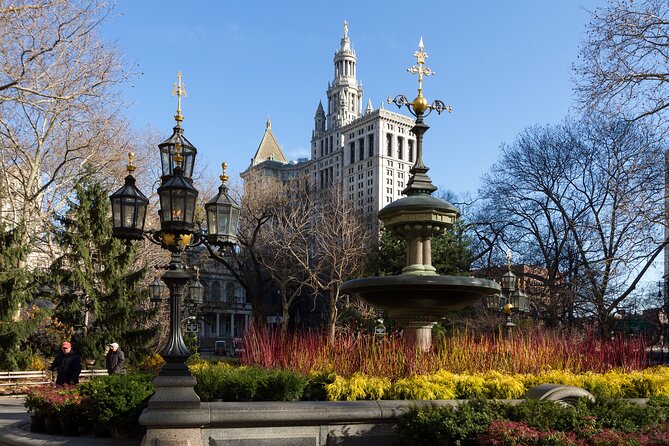
The tour starts at Jacob Wrey Mould Fountain, 43 Park Row, in Manhattan. It ends at Brooklyn Heights Promenade at Montague St and Pierrepont Pl. That end point matters. You will be dropped off in a neighborhood with lots of food options, but it is not near the start, so have your return plan ready before you finish.
The good news is that the meeting area is in a very public spot near transportation. Also, the tour uses a mobile ticket, so you are not juggling paper tickets in a crowd. Scott typically starts on time, and he tends to give clear guidance on what to expect next, including where you will stop and where you will get breaks for pictures.
Practical tip: arrive a little early and take a quick look around the fountain area. Some people have found it a bit tricky to spot the guide right at the start, so giving yourself a buffer makes the first five minutes calmer.
City Hall area: Washington, the revolution, and the buildings that frame the story
The walk begins in the City Hall area, with about fifteen minutes here to set context. This part matters because it connects the downtown setting to the big national origin story you often hear in museums, but here you are seeing it in the street-level geography.
Scott focuses on the vicinity of City Hall, including the idea that General George Washington read the Declaration of Independence nearby, with the American Revolution being born in this era. You also pass or learn about nearby landmarks such as City Hall, the Municipal Building, the Woolworth Building, St Paul’s Chapel, and Tweed Courthouse.
What I like about this opening is that it grounds you. When you later see the engineering ambition of the Brooklyn Bridge, it feels less random. You are seeing a city that keeps reinventing itself, from revolutionary-era power to industrial-age infrastructure.
Brooklyn Bridge crossing: 133 feet up, 19th-century engineering drama
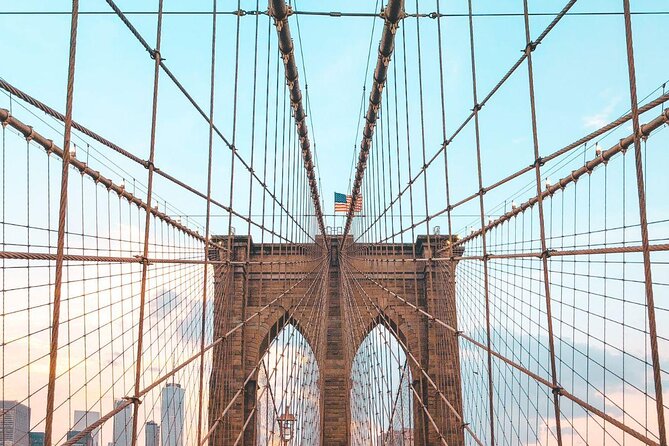
Then you hit the highlight most people came for: the Brooklyn Bridge. You walk across it with sweeping views of New York Harbor plus the Manhattan and Brooklyn skylines. The bridge is suspended about 133 feet above the East River, and the height makes the water and shoreline feel cinematic.
Expect about thirty minutes devoted to the bridge experience, including time to stop and look. Scott explains the long building effort, described as a sixteen-year project, and the idea that the bridge is both science and art from the nineteenth century. That framing helps you notice details you might otherwise walk past, like how the structure holds the city’s movement together.
Photos work well here, especially because you are elevated and your angles change as you walk. If you like architecture, you will enjoy hearing what to look for while still being able to keep your head up for views.
A realism note: bridge walking includes steps and some incline. Reviews call it manageable, but it is not a flat stroll. If you have mobility limits, plan on taking it slow and using any built-in pauses for breathing.
Other New York City outings to compare
- Artistic, Alternative Greenwich Village Walking Tour
★ 5.0 · 971 reviews - True Crime NYC: Mafia Walk w/Ret. NYPD Detective and Local Food
★ 5.0 · 848 reviews - Central Park Guided Walking Tour
★ 5.0 · 774 reviews - New York City: Private Walking Tour with a Local
★ 4.6 · 771 reviews
DUMBO and the Manhattan Bridge view: warehouse walls, modern energy, and camera time
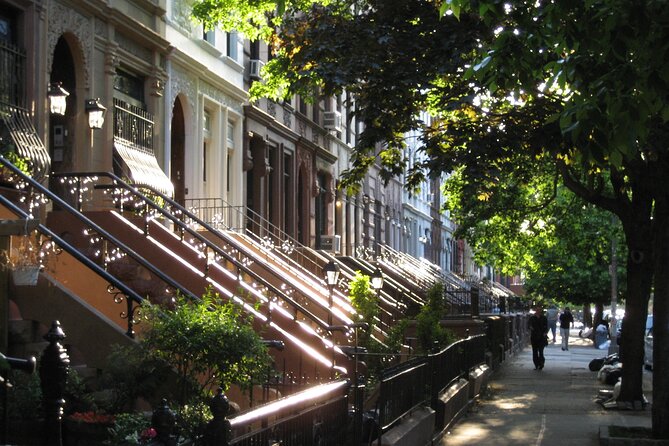
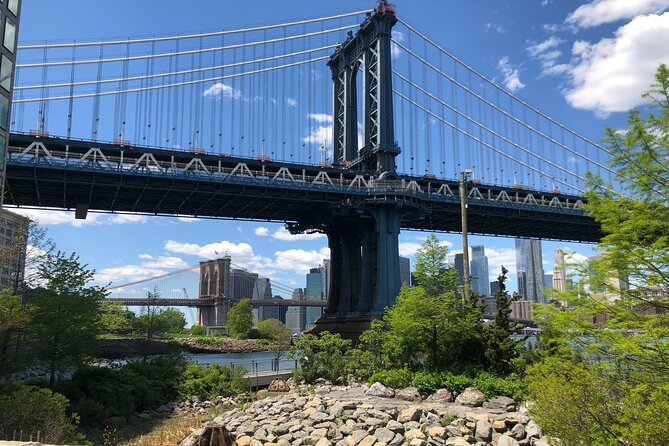
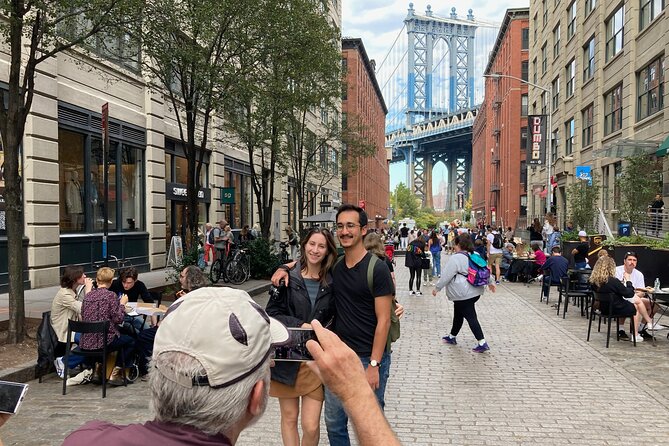
Next comes DUMBO, with a classic stop at the Manhattan Bridge view area. This is one of the most photographed spots in the area, and you get a clear look under the bridge with DUMBO’s historic warehouses and factories around you.
In practical terms, this stop is where the tour shifts into “walk, stop, shoot, laugh, repeat.” You get about thirty minutes here, with time for that icon photo moment and for understanding how the neighborhood changed over time. DUMBO is described as a neighborhood with industrial buildings transformed into upscale shops, swanky eateries, and glamorous loft homes.
What makes this stop work on a guided tour is that you are not just taking a picture. Scott ties the look of the brick and industrial bones to what people do there now, so the contrast feels meaningful rather than random.
If you want a tip that pays off: wear something you are comfortable photographing in, because you will likely want more than one angle. People also mention Scott actively helping with photos, including taking shots of individuals and groups.
Empire Fulton Ferry State Park: Roeblings, the waterfront pause, and bridge shadows
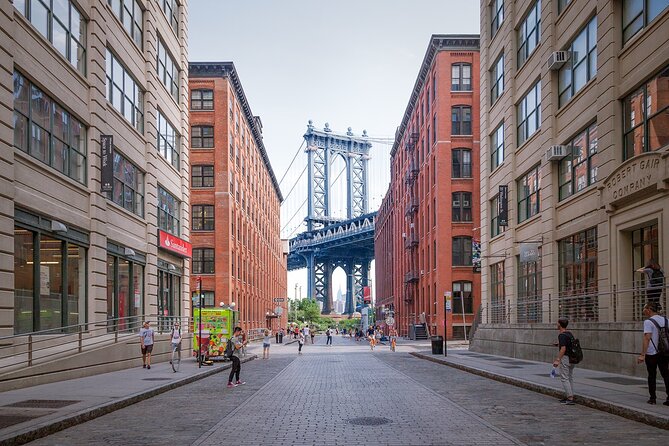
After DUMBO, you head to Empire Fulton Ferry State Park. This stop is shorter, around fifteen minutes, but it hits a smart rhythm change: you get a break under the shadow of the bridge and you hear more about the Roebling family.
This is where the story stops being only about views and starts getting more technical in a human way. The Roeblings are part of the bridge narrative, and the guide connects the family to what you are experiencing across the water. It helps you feel like the bridge was built by people, not just by history books.
I also like the “breathing room” aspect. The park stop is a good reset point. You get to stand, look at the harbor, and refocus before you head into Brooklyn Bridge Park.
Brooklyn Bridge Park’s 85 acres: shipping history plus design you can feel
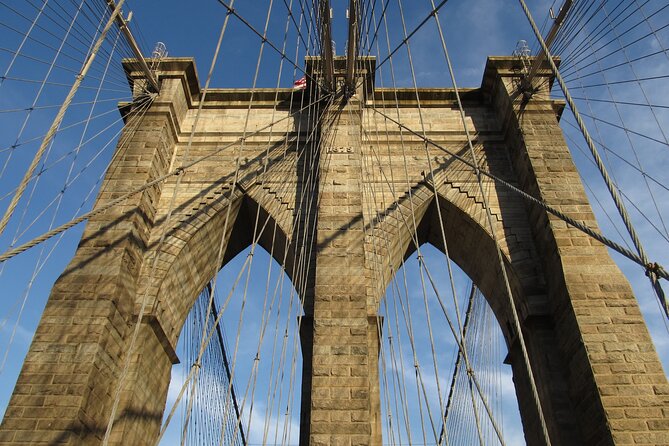
Brooklyn Bridge Park is the kind of place that makes you want to linger, but the tour keeps it moving in a good way. You get about thirty minutes here, which is enough for viewpoints, a bit of context, and a moment to appreciate the layout.
The park is described as an 85-acre expanse with woodlands, lawns, tidal pools, and active spaces like basketball courts and soccer fields. Scott also connects what you see to Brooklyn’s shipping history, so the waterfront feels like it has purpose beyond being scenic.
You will also hear about innovative and sustainable design principles used in the park. Even if you are not an architecture student, you can sense what that means through the way the park is built for water, light, and long-term use.
This is where the tour gives you a second skyline payoff. You are still near the bridge, but the framing opens up. It is a great stop if you want a few photos that feel different from the bridge itself.
Brooklyn Heights Promenade: the best Manhattan skyline balcony
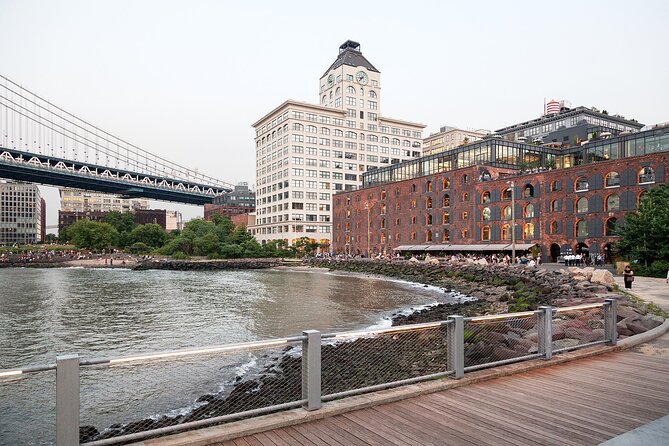
The final stop is Brooklyn Heights Promenade, about fifteen minutes. This is the payoff viewpoint, described as offering the best view of the Manhattan skyline you will find in the Big Apple.
The angle from here is why people fall in love with this part of Brooklyn. You get a balcony-like perspective that looks across water and bridges, with Manhattan laid out in front of you. Even if you have seen skyline photos before, this tends to feel more real because you are standing right there, not scrolling past images.
Scott’s closing guidance often includes what to do next and where to eat nearby. The tour ends in a spot with plenty of restaurant options, and one named favorite is Julianna’s World Famous New York Pizza. If you are hungry, this is a good moment to go for it, because you will be done with the big walk portion.
One important practical consideration: this is a natural place to extend your evening. If you want that, great. If you need to catch a specific plan back in Manhattan, decide early on your route.
How much time and walking you should plan for
The tour runs about two and a half to three hours. The route covers roughly three miles, and reviews mention ten thousand plus steps. That adds up in a hurry in NYC, especially when you are stopping often for photos and photos can require repositioning.
Fitness level is described as moderate. That usually means you should be comfortable with a steady walking pace and some stairs or inclines. One review specifically notes that the incline on the bridge is not that bad, but it is still there.
For what to wear, the most important advice is simple: comfortable shoes. Bring water if it is warm. If it is chilly, dress in layers because you can move between shaded areas and open waterfront exposure quickly.
This tour also helps if you like a guided pace rather than a self-guided wander. Scott keeps the timing smooth so you get the best photo stops without feeling like you are running behind a schedule.
Price and value: what $29 buys you in New York
At $29 per person, this tour is good value for what you get: guided history across multiple iconic stops, plus organized photo moments and local recommendations at the end. All the featured stops are described as free admission, which matters because it keeps your costs predictable.
Also, the group size is capped at a maximum of thirty people. That keeps the experience from feeling like a cattle-herding bus tour. With a smaller group, Scott can respond to questions, help with photos, and adjust pacing a bit if someone wants a slower look.
One more value factor is the guide’s “local lens.” This tour is described as showing the city through the eyes of a thirty-year Brooklyn resident. That is not just a slogan. It means you get practical suggestions, like what neighborhoods to explore next, and it helps you understand how the waterfront areas connect to daily life.
And if you are visiting during a short window, this is an efficient way to see several anchor points in one go, without needing to chart a complicated route yourself.
Weather, timing, and cancellation realism
This experience requires good weather. If it gets canceled due to poor weather, you should be offered another date or a full refund.
That matters in the NYC spring and early fall when forecasts can shift. If you are flexible with your schedule, this becomes a safer pick. If your days are tight, consider building a backup activity for the same time window.
Booking is also a smart move. The average booking window is about twenty-three days in advance, which suggests this tour can fill up around popular times. If you have a specific day in mind, locking it in ahead of time gives you more options.
Who should book this Brooklyn Bridge and waterfront walk
This is a good fit if you want three things:
1) iconic views with photo stops
2) bridge and neighborhood context explained in a way you can actually remember
3) an ending point in Brooklyn Heights where you can keep the day going
It is also a strong choice if you want a plan that is not just walking, but walking with structure. The guide helps you connect the places, including the City Hall area start, DUMBO photos, the Roebling stop, Brooklyn Bridge Park design, and the final Manhattan skyline view.
Family-friendly can work too, as long as everyone can handle the walking. Reviews include families and people who said the pace felt manageable. Couples love it as well, mainly because of the photos and the scenery payoff.
If you hate stairs, long walks, or getting stuck planning your return route, you might find it stressful. In that case, you may want to choose a tour that ends closer to where you start. Here, you are ending in Brooklyn Heights on purpose, so plan your next step.
Should you book this tour?
Yes, I would book it if you want the Brooklyn Bridge experience with more meaning than just photos. Scott is consistently praised for friendliness, clear explanations, and taking time for questions and picture moments. The route also ends in a neighborhood that makes it easy to transition from sightseeing to eating and wandering.
Book it especially if:
- you want the bridge story tied to real places
- you plan to spend time in DUMBO and Brooklyn Heights anyway
- you would rather ask a local for food and next-step ideas than guess
Just be honest about the walking. You should come ready for roughly three miles, steps, and a few inclines. If that fits your comfort level, this walk is an efficient, photo-friendly way to see the best of the bridge and the waterfront in one afternoon.
FAQ
How long is the walking tour?
The tour lasts about two hours 30 minutes to three hours.
Where does the tour start and end?
It starts at Jacob Wrey Mould Fountain, 43 Park Row, New York, NY 10038. It ends at Brooklyn Heights Promenade at Montague St and Pierrepont Pl, Brooklyn, NY 11201.
How much walking should I expect?
Plan on walking about three miles. Comfortable shoes are recommended, and the tour is listed for moderate physical fitness.
What key sights does the tour include?
You will walk across the Brooklyn Bridge, stop in DUMBO for a Manhattan Bridge view photo, visit Empire Fulton Ferry State Park, see Brooklyn Bridge Park, and finish at Brooklyn Heights Promenade for a Manhattan skyline view.
Is the cost per person, and do I need to buy separate tickets?
The price is $29.00 per person, and the stops listed are described as free admission.
How many people are in the group?
The tour has a maximum of thirty people.
What if the weather is bad or I need to cancel?
The experience requires good weather. If it is canceled due to poor weather, you will be offered a different date or a full refund. Cancellation is free up to twenty-four hours in advance for a full refund; within twenty-four hours, the amount paid is not refunded.
Newest New York City reviews on the site
- New York City: Private Walking Tour with a Local★ 4.6 · 771 reviews
- Washington DC Day Trip by Bus from New York City★ 4.7 · 600 reviews
- NYC: Wall Street and Financial District Walking Tour★ 4.9 · 284 reviews
- Wall Street Insider Tour with a Finance Professional★ 4.5 · 660 reviews
- True Crime New York: NYPD-Guided Mafia Walking Tour w/ Food★ 4.6 · 318 reviews
- NYC: Woodbury Common Premium Outlets Shopping Round Trip Service★ 4.0 · 784 reviews
- Williamsburg Food Tasting & Walking Tour★ 5.0 · 228 reviews
- Whitney Museum of American Art Admission Ticket★ 4.0 · 1,579 reviews
Walking Tours, compared.
History and Hauntings of Salem Guided Walking Tour
Read our review →
New Orleans Premier Ghost, Voodoo and Vampire Walking Tour
Read our review →
Freedom Trail History Small Group Walking Tour
Read our review →
Historic Charleston Guided Sightseeing Walking Tour
Read our review →
New Orleans Food Walking Tour of the French Quarter with Small-Group Option
Read our review →
St. Louis Cemetery No. 1 Official Walking Tour
Read our review →Browse the lists this tour appears in