
Reviewed · WALKING TOURS
San Francisco Chinatown Walking Tour
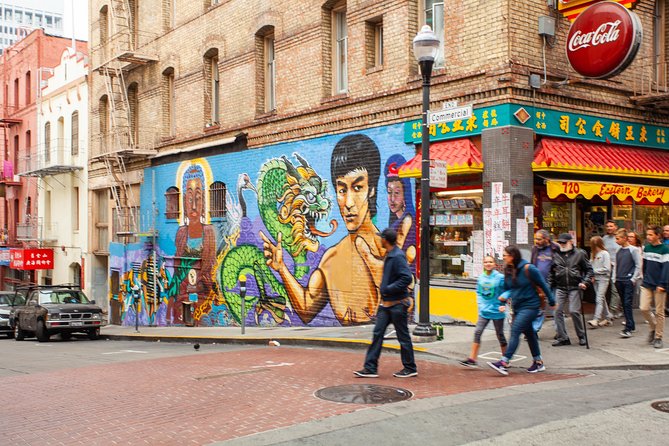
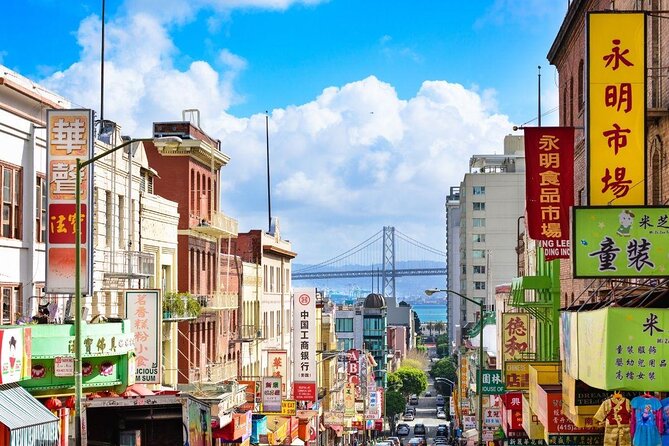
Chinatown in two hours, no rushing. This walking tour packs the neighborhood’s street life into a smart loop of markets, temples, and food stops with a guide who brings local context. You’ll pass Chinese signage, look at pagoda-style details, and hear how old traditions still show up in daily life.
I particularly love the Golden Gate Fortune Cookies Co stop, because you can watch the cookies being made and get a sample. I also love the herbal focus, with an herbal pharmacy visit that turns everyday ingredients into a story about health beliefs in Chinese medicine.
The main drawback to consider is value: at $59 per person for about two hours, some people may wish the pace were faster. If you prefer long, deep museum-style commentary, you might want to pair this with extra time wandering on your own after the tour ends.
In This Review
- Key highlights you should care about
- Where the tour begins at Old St. Mary’s Cathedral
- Portsmouth Square: the “start here” history checkpoint
- Stockton Street markets and the dried-goods world you will actually see
- Golden Gate Fortune Cookies Co: how you watch the cookies happen
- Waverly Place and the Street of the Painted Balconies
- Grant Avenue: pagoda-style architecture plus practical shop talk
- Pace, group size, and why the $59 price may feel different
- Who this Chinatown walking tour is best for
- Should you book this tour?
- FAQ
- Where does the tour start and what time is it?
- How long is the San Francisco Chinatown walking tour?
- How much does the tour cost?
- What is included in the tour?
- Is the tour offered in English?
- What happens if it rains?
- Where does the tour end?
Key highlights you should care about
- Golden Gate Fortune Cookies Co: see the production and enjoy a sample
- Herbal pharmacy stop: ginseng root, pearl pills, and unusual items like gecko lizards
- Stockton Street markets: sights and smells of seafood and dried goods
- Waverly Place: a short alley with temples and talk about secret clubs
- Street of the Painted Balconies area: architectural details plus local stories
- Small group energy: a maximum of 15 travelers, guided by a professional local
Where the tour begins at Old St. Mary’s Cathedral
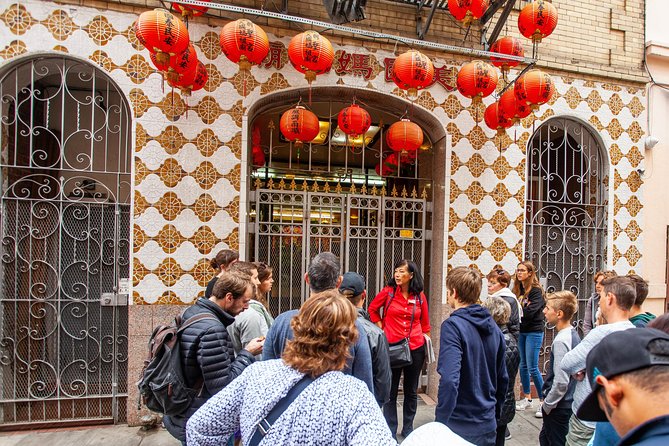
Your tour kicks off at Old St. Mary’s Cathedral, 660 California St. It is an easy landmark to find, and you are in the right place for immediate Chinatown immersion. Meeting here also makes sense logistically. You get started near the core sights without spending the first part of your day on transit or backtracking.
From the start, the guide sets expectations in a way that matters. You are not just walking past storefronts. You’re learning how to read what you see, from street-level details to the cultural clues people put into their surroundings.
A big plus here is how the tour feels personal. Many groups mention a guide named Linda Lee, and her style shows up in the details. She keeps things moving, uses humor, and can adjust her explanations depending on the people in the group. If you are traveling with kids or you have a mix of ages, that flexibility is a genuine advantage.
Practical note: the tour is offered in English and uses a mobile ticket. Also, there’s no hotel pickup. You’ll want to plan your own arrival to the meeting point.
Other San Francisco outings to compare
- North Beach & Little Italy Walking Tour: Food, History & Flavor
★ 5.0 · 1,044 reviews - San Francisco LGBTQ Walking Tour with Local Guide
★ 5.0 · 600 reviews - Chinatown Walking Tour: Food, History & Flavor
★ 5.0 · 575 reviews
Portsmouth Square: the “start here” history checkpoint
Early on, you end up at Portsmouth Square, which is sometimes treated like Chinatown’s outdoor living room. It is also where some of the city’s earlier civic milestones show up, including the first American flag raised in San Francisco and the beginnings of public education and cable car history.
Why this stop is worth your time: it acts like a mental anchor. After you leave the square, you are surrounded by Chinese commerce and cultural landmarks, and the guide’s talk helps you connect those scenes to the broader story of San Francisco.
This is also a good moment to get oriented. Chinatown can feel like a maze, especially if you haven’t visited before. Portsmouth Square gives you a basepoint and context, so later stops like Stockton Street markets and alleyways feel connected rather than random.
Stockton Street markets and the dried-goods world you will actually see
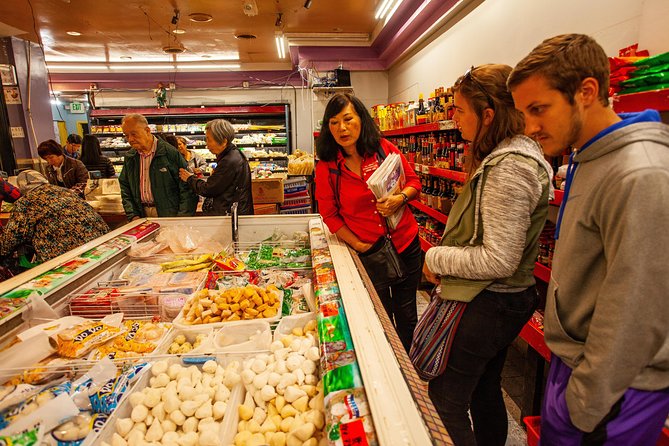
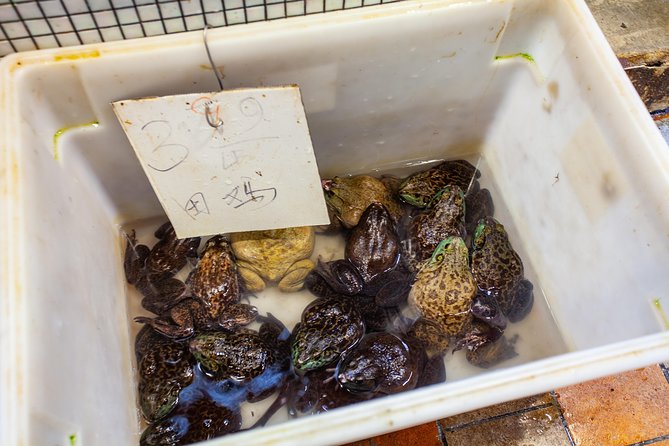
A major chunk of the experience happens on Stockton Street, where the markets give you a real sense of daily life. This is not polished postcard Chinatown. It is where you see the ingredients that drive the neighborhood’s food culture, including seafood and items you may not know how to name.
The value here is not just the visuals. It’s the way the guide helps you understand what you are looking at. When you learn what certain goods are used for, the experience shifts from sightseeing to comprehension. Suddenly those shelves of dried items and special ingredients stop looking mysterious and start looking practical.
Then you get a second layer at a store focused on medicinal and wellness ingredients. At the herbal pharmacy stop, the tour talks about items associated with traditional health practices, including ginseng root, pearl pills, and gecko lizards. You do not need to adopt any belief system to get value from this. Even if your interest is cultural rather than medical, it helps you understand why these products show up in this neighborhood and how people interpret health.
One thing to consider: this part can feel intense if you are squeamish about animal-based medicinal items. The tour frames these products in a cultural context, but the subject matter is still real.
Golden Gate Fortune Cookies Co: how you watch the cookies happen
Next comes one of the most fun stops on the whole walk: the Golden Gate Fortune Cookies Co visit. You get to sample fortune cookies, and you can watch the production process as part of the experience.
The practical reason this stop works well: it is visual. You learn by seeing. Even if you think you already know what a fortune cookie is, it helps to watch how the cookie gets formed and packaged, because it explains why these treats are so tied to celebrations and tradition in Chinese-American communities.
If you like food experiences that do not require a full meal, this is a sweet spot. The tasting gives you a direct payoff, and the guide’s commentary gives it context so it doesn’t feel like a one-minute gimmick.
Also, this is a good break moment during the walk. You’re still moving through Chinatown, but the activity is structured, so it helps keep energy up.
Same corner of the map, another day out:
- Muir Woods and Sausalito (Return by Bus or Ferry)
★ 4.5 · 5,098 reviews - Big Bus SF: Hop-on Hop-off Tour with 17 Stops and Sunset Option
★ 4.0 · 4,539 reviews - Napa and Sonoma Wine Country Full-Day Tour from San Francisco
★ 4.5 · 4,455 reviews - Small Group Yosemite and Giant Sequoias Day Trip from San Francisco
★ 5.0 · 3,671 reviews
Waverly Place and the Street of the Painted Balconies
One of the more memorable segments is the stretch around Waverly Place and the Street of the Painted Balconies area. You’ll walk through a 2-block alley lined with temples and references to secret clubs. The guide ties this to the history of social groups in Chinatown and explains why certain spaces mattered.
Here is what I like about this part: it turns an alleyway into a lesson. Instead of seeing a narrow passage as just a shortcut, you understand it as a space shaped by community needs and power structures from earlier immigration eras.
You’ll also look at architectural details along the way. The Painted Balconies area gives you a close-up view of how design can signal identity, status, and cultural memory, even when the neighborhood changes around it.
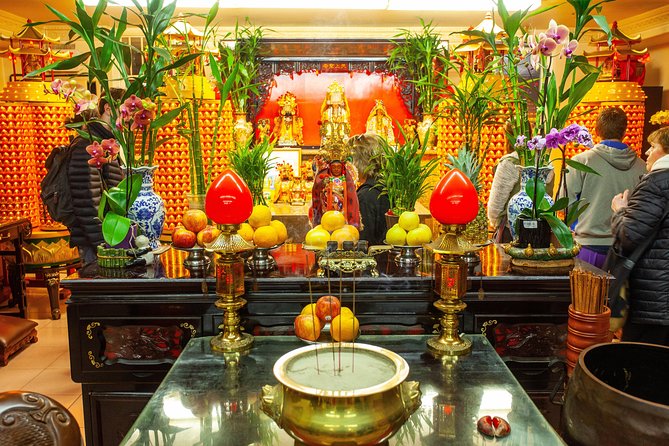
Time permitting, there may also be a stop at a secluded Buddhist temple. That’s worth keeping in mind if you want a bit more stillness in the middle of busy streets.
Grant Avenue: pagoda-style architecture plus practical shop talk
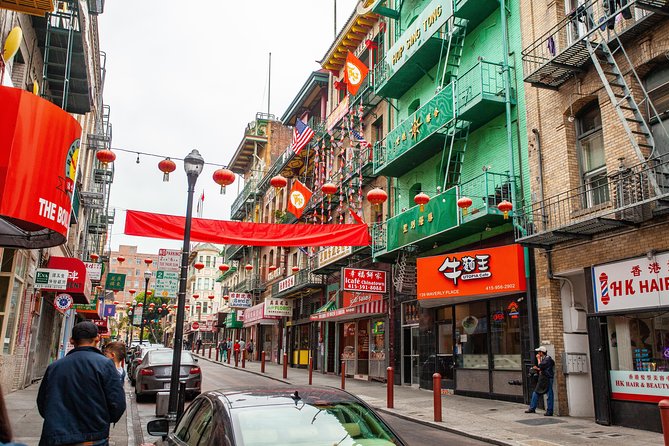
By the time you reach Grant Avenue, the tour starts to feel like a Chinatown scavenger hunt. The guide points out why certain kinds of stores exist where they do, including a stationery or party-supplies style shop.
It sounds small, but it adds up. When you learn the purpose of a store beyond what you first guess, Chinatown reads differently. You stop thinking, this is just shopping, and start seeing how commerce supports community rituals and daily needs.
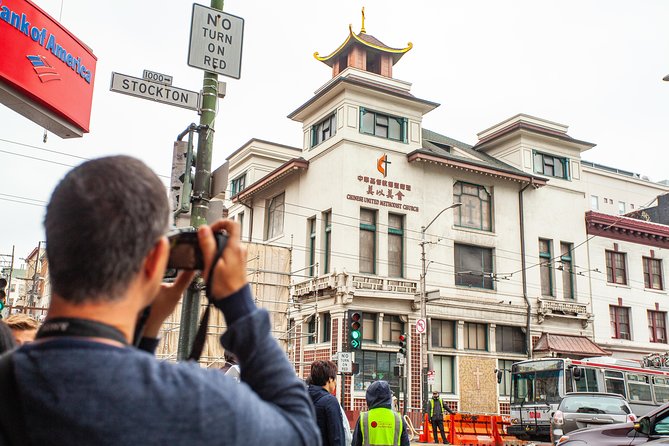
There is also an architecture moment. You’ll view pagoda style elements, including the East West Bank building as an example of that design language. The tour then also prompts you to think about what was here before the bank, and it uses that change to talk about the complexity of the Chinese language, both spoken and written.
If you enjoy architecture and language history, this is a strong closing stretch. It’s the kind of information that makes you more aware when you look at signs and details later on your own walk.
The tour ends near Grant Ave, close to the starting area, so it is easy to continue exploring afterward on your own. If you want lunch, the guide typically points you toward places to check, and you can choose what fits your appetite and budget.
Pace, group size, and why the $59 price may feel different
Let’s talk value honestly. The price is $59 per person for about 2 hours. For some people, that is a fair exchange for an organized local walk with multiple focused stops. For others, the time may feel short, especially if you want long explanations and lots of time to linger in each storefront.
Here’s what helps justify it in practice. The tour includes a professional guide and a tight set of stops where you can both see and learn. You get the herbal pharmacy visit, the Stockton Street market context, and the fortune cookie factory observation and sample. That combination is hard to replicate quickly if you are just wandering without knowing where to look.
Group size matters too. The tour has a maximum of 15 travelers. That usually keeps the pace from feeling chaotic and gives the guide room to respond to questions. It also helps with atmosphere, since the experience does not feel like you are stuck in a huge herd.
Timing is another practical piece. It starts at 10:00 am and runs rain or shine. If you book for a sunny day, the walk around outdoor areas like Portsmouth Square will feel especially good. If weather is messy, plan on wearing shoes that can handle wet sidewalks and quick turns.
Who this Chinatown walking tour is best for
This is a great fit if you want a first-time Chinatown orientation that goes beyond the obvious photo stops. You’ll get enough history context to understand what you’re looking at, but you’re also fed with a real hands-on food moment at the cookie factory.
It also suits people who like cultural details, not just architecture. The herbal pharmacy and dried goods discussion gives you a way to interpret ingredients and storefronts.
Families can do well here too, especially with a guide who can keep the group engaged. You do not need to be an expert on Chinese history to enjoy the tour. You just need curiosity and a willingness to look at everyday items in a different light.
If you are the type who hates any discussion of medicinal ingredients involving animal-based items, think about whether the herbal pharmacy stop fits your comfort level.
Should you book this tour?
I’d book it if you want a structured, local Chinatown walk that hits the big cultural anchors and still includes fun, edible payoffs. The mix of Fortune cookie making, herbal pharmacy storytelling, and street-level context is the reason it works, especially if you only have a couple hours and you want to leave with better instincts for what you see.
I’d hesitate if $59 feels steep for you, or if you strongly prefer slower pacing with more time in fewer places. In that case, consider pairing this with extra self-guided time afterward, so you can linger where you personally want to linger.
If you like getting your bearings fast, this tour is a solid starting point for a longer Chinatown visit.
FAQ
Where does the tour start and what time is it?
The tour starts at Old Saint Mary’s Cathedral, 660 California St, San Francisco, CA 94108. The start time is 10:00 am.
How long is the San Francisco Chinatown walking tour?
The tour lasts about 2 hours.
How much does the tour cost?
The price is $59.00 per person.
What is included in the tour?
The included item is a professional guide. During the tour you can also sample fortune cookies at the fortune cookie factory as part of the experience.
Is the tour offered in English?
Yes, the tour is offered in English.
What happens if it rains?
The tour operates rain or shine, so you’ll want to dress appropriately for the weather.
Where does the tour end?
The tour ends near Grant Avenue, close to 800 Clay St, San Francisco, CA 94108, and near the starting area.
Newest San Francisco reviews on the site
- San Francisco: Day Trip to Yosemite with Giant Sequoias Hike★ 4.4 · 290 reviews
- From San Francisco: Napa & Sonoma Valley Full-Day Wine Tour★ 4.5 · 513 reviews
- San Francisco: Sonoma Wine Country Tour with Tastings★ 4.7 · 218 reviews
- Small Group Napa and Sonoma Full-Day Wine Tour from San Francisco★ 4.5 · 260 reviews
- Yosemite National Park: Full Day Tour from San Francisco★ 4.0 · 937 reviews
- Yosemite Day Tour from San Francisco★ 4.5 · 713 reviews
- The Escape Game San Francisco: Epic 60-Minute Adventures Downtown★ 5.0 · 334 reviews
- Muir Woods & Wine Tour: Redwoods & Tastings at 3 Wineries★ 4.5 · 278 reviews
Walking Tours, compared.
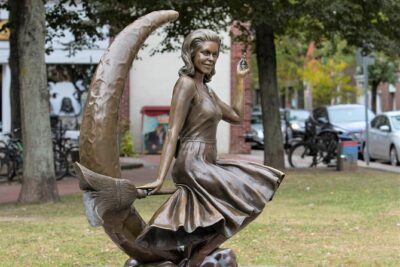
History and Hauntings of Salem Guided Walking Tour
Read our review →
New Orleans Premier Ghost, Voodoo and Vampire Walking Tour
Read our review →
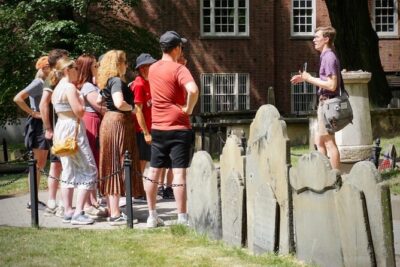
Freedom Trail History Small Group Walking Tour
Read our review →
Historic Charleston Guided Sightseeing Walking Tour
Read our review →
New Orleans Food Walking Tour of the French Quarter with Small-Group Option
Read our review →
St. Louis Cemetery No. 1 Official Walking Tour
Read our review →Browse the lists this tour appears in