Reviewed · WALKING TOURS
Richmond Downtown Walking Tour
Richmond’s downtown reads like a living storybook. This small-group walk takes you through major landmarks, but the real win is how the guide connects places you’d otherwise skim to people, trials, fires, and turning points that shaped the city. I like the small group size and the use of headsets, so you can hear every detail without crowding. I also love that the route is paced for about two hours, then you’re free to explore on your own. One thing to consider: one major stop, the White House of the Confederacy, has an admission ticket that isn’t included.
You’ll start with Jackson Ward, a neighborhood often described as the Harlem of the South and the Black Wall Street of the South, then you’ll move across Capitol Square and end at elegant churches and monuments tied to the nation’s biggest conflicts. I especially enjoy the stop-by-stop storytelling, because it turns architecture into context, like how Jefferson’s plans for the Capitol went awry, or how the Monumental Church connects to both Jefferson’s apprentice and Poe. If you’re the kind of visitor who wants to linger for long inside each building, you may feel a bit rushed at the shorter stops.
Best part: the tour gives you a clean way to get oriented fast. You’ll walk with a guide who can explain why places matter, from the Davis years in Richmond to the Burr treason trial and even the legend behind Beef Juice. The only real drawback I’d flag is scheduling friction at the start can happen sometimes, so be at the meet point a few minutes early and keep an eye on time so you don’t miss later stops.
In This Review
- Key points to know before you go
- A smart way to start Richmond: stories tied to real places
- Price and what $37.50 really buys you
- Meeting point and how the tour runs on the street
- Jackson Ward: the neighborhood origin story you’ll remember
- John Marshall House: one Richmond face behind big national impact
- The Valentine and Court End: architecture plus the Burr treason thread
- White House of the Confederacy: when the story turns from causes to consequences
- Egyptian Building and Medical College roots: war medicine and odd tales
- Monumental Church and Poe: architecture with dark backstory
- Virginia Executive Mansion and Capitol Square: from governors to civil rights
- Virginia Capitol Building: Jefferson’s plans, and a tragedy in 1870
- Virginia Women’s Monument: Voices From The Garden and the slavery record
- St. Paul’s Episcopal Church and the Church of the Confederacy: Tiffany splendor
- Virginia Washington Monument: a planned mausoleum idea
- Who this tour is best for, and who should skip it
- Should you book the Richmond Downtown Walking Tour?
- FAQ
- How long is the Richmond Downtown Walking Tour?
- Where do I meet the guide?
- How much does the tour cost?
- Is this tour small-group?
- Are headsets provided?
- Is admission included for all stops?
- What is the cancellation policy and are there weather limits?
Key points to know before you go
- Headsets for comfortable listening while keeping distance, even in close city blocks
- Max 14 travelers, so you actually hear questions and answers
- Capitol Square focus, including the Executive Mansion and the Women’s Monument
- Civil War to Civil Rights through-line, from the Great Evacuation Fire to Brown v. Board of Ed
- One paid admission stop, the White House of the Confederacy, isn’t covered
- Free time after the walk, so you can turn the tour into a bigger day
A smart way to start Richmond: stories tied to real places
If it’s your first trip to Richmond, this tour is a practical shortcut. You’ll see the downtown core and learn what you’re looking at, which makes later self-guided exploring feel much easier. The route also has a clear arc, moving from neighborhoods and early civic life toward the Civil War and then into the way Richmond remembers its past.
I like how the tour uses short, high-impact stops instead of turning it into a marathon. It helps you stay oriented, and it prevents the common problem of reading plaques with zero context. You also get the advantage of hearing about some details that most guidebooks do not connect, like why the Court End area matters to the Burr treason trial.
The pacing suits most visitors because you’re not stuck on a bus schedule. It’s a walking tour with a firm end time, and that matters when you want the rest of your day for museums, food, or just wandering the blocks you now understand.
Other America outings to compare
- History and Hauntings of Salem Guided Walking Tour
★ 5.0 · 14,564 reviews - New Orleans Premier Ghost, Voodoo and Vampire Walking Tour
★ 4.5 · 12,856 reviews - Little Havana Food and Walking Tour in Miami
★ 5.0 · 8,882 reviews
Price and what $37.50 really buys you
At $37.50 per person, this is a value-priced way to get a guided history walk with multiple downtown highlights. You’re paying for two things that are hard to DIY: a tight narrative and a guide who can explain connections between sites. For many travelers, that’s the difference between seeing monuments and actually learning why they exist.
You also get small-group handling, which helps the guide manage the route and keep everyone together. And you’ll have headsets, which makes a noticeable difference in a city street setting where other noise can swallow a normal conversation.
One caution on value: almost all the stops are listed as free admission, but the White House of the Confederacy is not included. If you want to go inside that stop, plan to budget for that separate entry cost. The upside is that you can still get a lot from the exterior and the guide’s framing, even if you decide not to pay for the interior.
Meeting point and how the tour runs on the street
You meet at 403 N 3rd St, Richmond, VA 23219, and the tour ends back at the same place. That round-trip setup is more convenient than tours that dump you miles away, and it lets you pivot quickly to lunch or a second attraction without a transit headache.
The group caps at 14 travelers, which keeps the experience from feeling like a moving crowd. In my view, this size is ideal for a downtown walk because it gives you time to ask questions and for the guide to manage small detours when the story needs a bit of context.
The tour runs in about 1 hour 40 minutes to 2 hours, which is a sweet spot. Long enough to cover major sites like Capitol Square and key churches, but short enough that you don’t lose your afternoon. Bring comfy walking shoes, because downtown pavements add up, and you’ll be outside the whole time.
Jackson Ward: the neighborhood origin story you’ll remember

The first stop is Jackson Ward, a historic area with a reputation that extends well beyond city limits. The guide frames it as the Harlem of the South and the Black Wall Street of the South, and that framing does more than sound poetic. It sets up how you’ll interpret later parts of downtown, because Richmond’s identity is tied to communities, not just government buildings.
This is where you start to see how the tour connects civic life with cultural power. Even with a short visit, you get the sense that this isn’t a random lineup of photos, it’s a structured walk. If you’ve ever visited a city and felt like you missed the point, this kind of opening stop helps you avoid that.
A possible consideration here is that the early moments are crucial. If you arrive late, you risk losing the best context for the rest of the route, so arrive a few minutes early and be ready to start.
Same corner of the map, another day out:
- NYC: SUMMIT One Vanderbilt Tickets
★ 4.7 · 51,195 reviews - NYC: 9/11 Memorial & Museum Timed-Entry Ticket
★ 4.8 · 31,428 reviews - NYC: Empire State Building Tickets – Observatory & Museum
★ 4.7 · 25,757 reviews - NYC: Empire State Building Observation Deck Tickets
★ 4.7 · 22,072 reviews
John Marshall House: one Richmond face behind big national impact
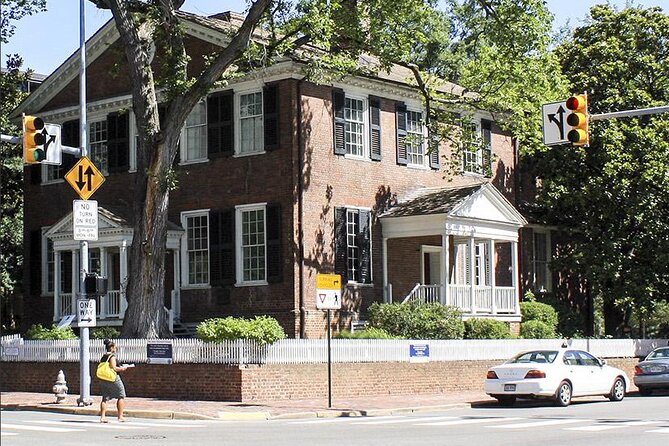
Next you’ll stop by the John Marshall House, where you hear about John Marshall, a Richmond native, and his contributions to American history. This stop gives the tour a bridge between local place and national influence, which is a theme that keeps showing up.
It’s a smart inclusion because Richmond isn’t only about the Civil War. Marshall helps the story stretch into broader United States history and helps you understand why Richmond mattered as more than just a battlefield city.
If you’re into political history and the way legal ideas travel, you’ll enjoy this stop. Even if you’re more of an architecture person, you’ll still benefit from the narrative, because the guide’s context tells you what to notice.
The Valentine and Court End: architecture plus the Burr treason thread
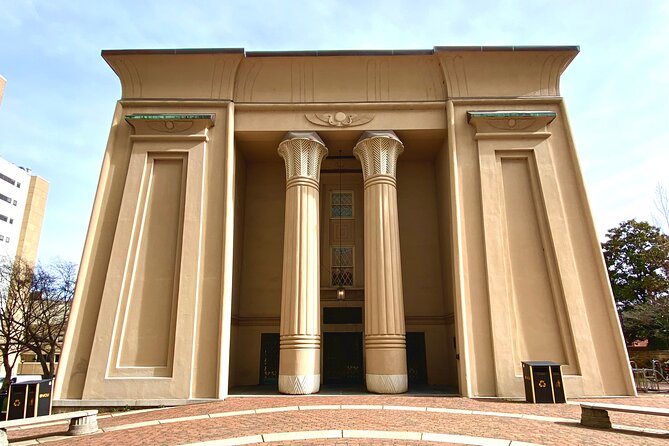
You then head to The Valentine, which anchors a visit to Court End and nearby sites tied to the Wickham and Davis houses. What makes this stop fun is that it doesn’t just read like “here’s a building.” The guide ties the area to Richmond’s role in the Burr treason trial and the colorful reference to Beef Juice.
That mix matters. It turns “downtown” from generic to specific. Court End becomes a place with stories you can carry into conversations, museum reads, and future stops.
One practical note: if it’s hot or sunny, Court End streets can feel exposed. Plan to use the guide’s timing, and if you need a quick break, grab it before you move on.
White House of the Confederacy: when the story turns from causes to consequences
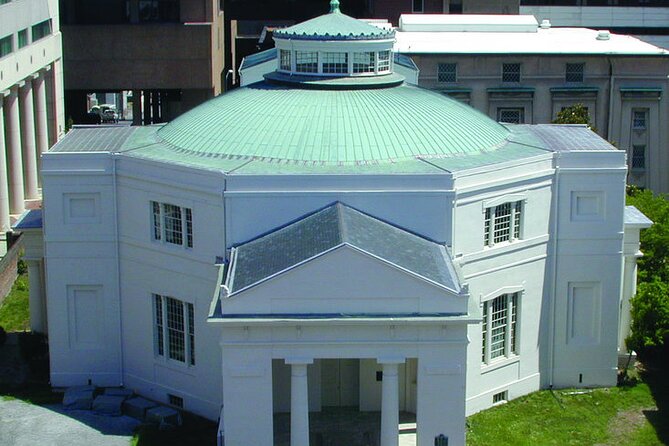
Then comes one of the tour’s biggest named stops: the White House of the Confederacy. Here the guide explains how Richmond became the capital of the CSA, the Davis years as President, and the Great Evacuation Fire. You’ll also hear about Lincoln’s visit to Richmond one day after surrender, which adds a tense end-of-war perspective you won’t get just by reading dates.
This is also the stop where admission is not included. If you want to go inside, check the ticket requirement in advance so there are no surprises in the moment. If you’re deciding on the fly, I’d treat this as your optional splurge stop. It’s one of those places where inside details can make the outdoor context click.
Even if you don’t pay for interior entry, the guide’s explanation helps you look at the site with better question in mind, like why certain moments happened when they did, not just what happened.
Egyptian Building and Medical College roots: war medicine and odd tales
Next you visit the Egyptian Building, tied to the original Medical College of Virginia. This stop is a standout because it reframes Richmond through medical and wartime labor, not only through generals and speeches. You’ll hear stories about the medical center in the Civil War and even hints of custodial skullduggery, which adds a human, slightly mischievous angle to a serious topic.
This works well for different kinds of travelers. If you’re here for history, you get the war-era medical story. If you’re here for architecture, you’ll see a distinctive style linked to an institution with real consequences for thousands of lives.
One consideration: the topics here can be heavy, so don’t feel bad if you need a second to reset your attention before moving on. The tour keeps moving, but you can take a quick pause as you go.
Monumental Church and Poe: architecture with dark backstory
Your next stop is Monumental Church, described as the only church designed by Jefferson’s apprentice. That single detail gives you a reason to look closely, because you’re not just seeing a pretty building. You’re looking at a design connection with early American influence.
The guide then pivots into the horrors of the Richmond Theater Fire and how Edgar Allan Poe became a true Richmonder. It’s an effective pairing, because Poe’s story is about more than literature. It’s about place, tragedy, and the way real events shape real artists.
If you like when a tour mixes art, tragedy, and biography in a coherent way, this stop is for you. It’s also a good example of how this experience goes beyond monument viewing, because the story comes from connections between events and people.
Virginia Executive Mansion and Capitol Square: from governors to civil rights
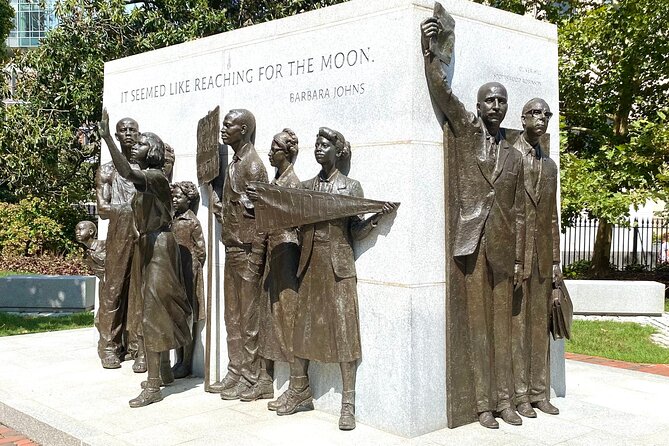
After the churches and Civil War context, you’ll reach the Virginia Executive Mansion, the second oldest governor’s mansion in the US. This stop also pulls you into the world of Capitol Square monuments, including the Civil Rights Memorial and the story behind Brown v. The Board of Ed.
This is where the tour’s timeline starts to feel complete. You go from war and governance to legal and civil rights change. It’s not a random list of landmarks, it’s a thread of power shifting over time.
For travelers, this stop is especially useful if you plan to see additional buildings later. Once you understand why Capitol Square is arranged the way it is, your self-guided exploring gets easier.
Virginia Capitol Building: Jefferson’s plans, and a tragedy in 1870
Then you’ll stand at the Virginia Capitol Building and hear why Richmond became the third capitol of the Commonwealth. You’ll also hear how Jefferson’s plans for the new building went awry, followed by a tragedy that befell it in 1870.
I like this stop because it teaches you how history is made through design choices, accidents, and political realities. It’s not just “a building exists.” The guide gives you a reason to connect what you see with what went wrong and what got rebuilt.
If you’re an architecture traveler, you’ll appreciate the focus on plans and outcomes. If you’re a history traveler, you’ll appreciate how the building becomes a character in the story.
Virginia Women’s Monument: Voices From The Garden and the slavery record
Next is the newest addition on Capitol Square, the Virginia Women’s Monument: Voices From The Garden. This stop covers the first European women in the colony, contributions from 12 prominent women, and the arrival of the first Africans. The guide also frames the history of slavery in the city, which matters because Richmond cannot be understood without confronting that reality.
This is one of the strongest “meaning” stops on the walk, because it uses memorial design to communicate history, not just commemoration. It also helps balance the earlier parts of the tour, which leaned heavily toward war-era themes.
A practical tip: take a moment at this stop to read what you can at your own pace. Even though the tour keeps time, you can still absorb more here because the content is dense and important.
St. Paul’s Episcopal Church and the Church of the Confederacy: Tiffany splendor
You end at St. Paul’s Episcopal Church, also known as the Church of the Confederacy, and you’ll get a look at its Tiffany splendor. The tour closes this chapter by reminding you that Richmond’s past is preserved in beauty as well as in scars.
Finishing with art and detail is a good move. After so many hard topics, it gives your eyes a break and makes the final photos more meaningful. You’ll also have a clearer sense of what each site represents, so the decorations do not feel like decoration-only.
Virginia Washington Monument: a planned mausoleum idea
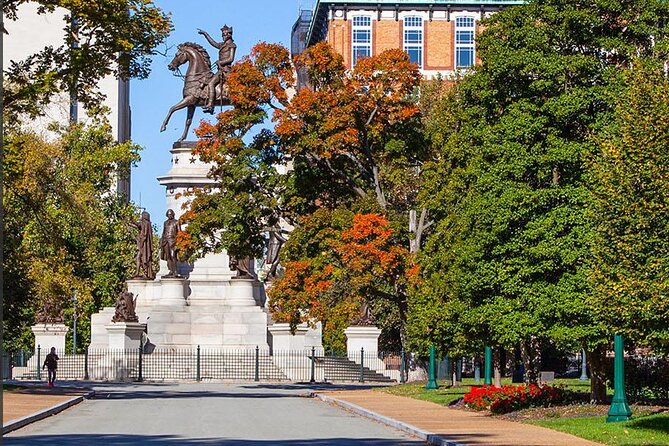
The final named highlight is the Virginia Washington Monument, where you hear the story behind the proposed mausoleum for the first president and six key figures in the founding of the nation. Even if you’re not a monument devotee, the guide’s framing helps you see this as more than a structure. It becomes part of a larger national imagination, one that connects Richmond to the early story of the United States.
This closing stop gives you a forward-looking feeling after everything the tour just covered. It’s a reminder that cities keep negotiating their identity, long after the events are done.
Who this tour is best for, and who should skip it
This tour is ideal if you want a fast start to Richmond’s downtown and you care about context. It’s also a great first-day activity, because you’ll learn what to look for and where to return later.
It also fits pairs, solo visitors, and families who like walking with a guide and keeping the day moving. The small group format and headsets are practical for anyone who prefers not to lose parts of the conversation.
If you only want museum-style deep reading inside buildings, this may feel too “outside-focused.” The stops are short, and you’ll likely want to pair the tour with your own follow-ups. And if you know you strongly prefer to linger in one place for a long time, the pacing might frustrate you.
Should you book the Richmond Downtown Walking Tour?
Yes, if you want a smart, time-efficient orientation to Richmond and you like history told through places. The $37.50 price makes sense for the number of major downtown stops, and the small-group setup plus headsets improves the experience in a way that really matters on city streets.
I’d especially recommend it if your trip is short, because two hours can give you a framework for the rest of the day. You’ll come away knowing why Jackson Ward mattered, how Capitol Square connects governance to civil rights, and why Richmond’s Civil War story is tied to medicine, tragedy, and memory.
If you’re picky about interior entry fees, decide in advance what you want at the White House of the Confederacy, since admission there is not included. Do that and you’re set.
FAQ
How long is the Richmond Downtown Walking Tour?
The tour runs about 1 hour 40 minutes to 2 hours.
Where do I meet the guide?
Meet at 403 N 3rd St, Richmond, VA 23219, USA. The tour ends back at the meeting point.
How much does the tour cost?
The price is $37.50 per person.
Is this tour small-group?
Yes. It has a maximum of 14 travelers.
Are headsets provided?
Yes, headsets are used to help encourage safe distancing and make it easier to hear the guide.
Is admission included for all stops?
Most stops list admission as free, but the White House of the Confederacy has admission ticket not included.
What is the cancellation policy and are there weather limits?
You can cancel for a full refund up to 24 hours in advance. The experience requires good weather, and if it’s canceled due to poor weather, you’ll be offered a different date or a full refund.
Newest America reviews on the site
- Yosemite: Full-Day Tour with Lunch and Hotel Pick-up★ 4.7 · 216 reviews
- Zoo Miami: General Admission Ticket★ 4.5 · 868 reviews
- Yellowstone: Old Faithful, Waterfalls, and Wildlife Day Tour★ 4.9 · 227 reviews
- San Francisco: Day Trip to Yosemite with Giant Sequoias Hike★ 4.4 · 290 reviews
- Atlanta: Zoo Atlanta General Admission Ticket★ 4.5 · 712 reviews
- Wynwood Art District 1-Hour Street Art Tour by Golf Cart★ 4.9 · 492 reviews
- Wynwood Art District 1-Hour Wynwood Buggies Street Art Tour★ 4.9 · 289 reviews
- Willow Beach: Black Canyon Kayak Half Day Tour-No Shuttle★ 4.9 · 323 reviews
Walking Tours, compared.

History and Hauntings of Salem Guided Walking Tour
Read our review →
New Orleans Premier Ghost, Voodoo and Vampire Walking Tour
Read our review →

Freedom Trail History Small Group Walking Tour
Read our review →
Historic Charleston Guided Sightseeing Walking Tour
Read our review →
New Orleans Food Walking Tour of the French Quarter with Small-Group Option
Read our review →