
Reviewed · WALKING TOURS
Old and New Downtown Los Angeles Walking Tour
Old and New Downtown Los Angeles stays interesting because DTLA keeps changing. This 2-hour walking tour threads together the city’s old icons and modern energy, with a local guide helping you connect what you see to how Los Angeles grew. I especially liked the easy pace and the way the route mixes street views with standout architecture.
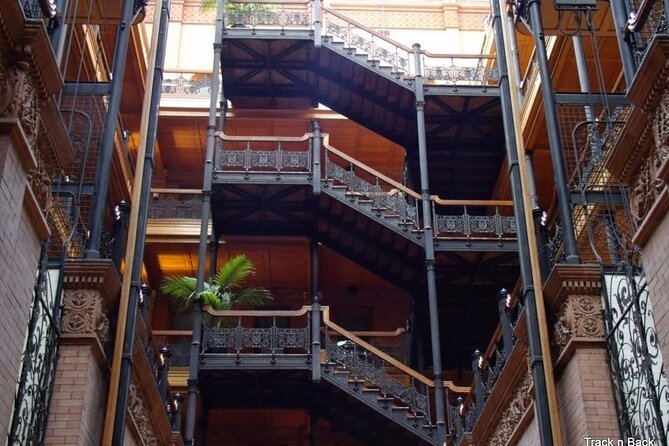
Another highlight for me is the inside stop at the Bradbury Building, a building that feels made for movies and still holds up in real life. Guides like Phil (mentioned often for his laid back, question-friendly style) turn common landmarks into stories you can actually picture.
The main drawback to plan around is that you will walk outdoors, and the tour requires good weather, plus a couple of sites have admission fees that are not included.
In This Review
- Key highlights worth planning for
- Old Downtown Los Angeles, a two-hour walk that gives you bearings fast
- Hill Street to Pershing Square, how the route keeps moving
- Grand Central Market, where 1917 still pulls people in
- Historic Theater District, pre-WWII grandeur in plain sight
- Bradbury Building, the inside stop that makes the tour stick
- Old Bank District and Spring Street of the West, read the city like an outline
- Jewelry District and Spring Arcade, a switch from monuments to everyday downtown
- Clifton’s Republic and the Biltmore Los Angeles, classic stops with different vibes
- Pershing Square at the end, why that finish point makes sense
- Who should book this DTLA walking tour
- Price and value: what $38 gets you in downtown LA
- Should you book Old and New Downtown Los Angeles on foot?
- FAQ
- Where does the walking tour start and end?
- What time does the tour begin, and how long is it?
- How much is the Old and New Downtown Los Angeles Walking Tour?
- Is admission included for every stop?
- How large is the group?
- Is the tour family-friendly and suitable for most people?
- What happens if the weather is bad or I need to cancel?
Key highlights worth planning for
- Small group feel with a maximum of 20 people, so it stays relaxed and question-friendly
- Bradbury Building inside access during the tour, not just an exterior photo stop
- A classic DTLA orientation that links the downtown blocks from early days to today
- Mostly no extra admission at stops, with a few notable exceptions
- Shaded breaks and sensible pacing to help on warm or sunny days
Old Downtown Los Angeles, a two-hour walk that gives you bearings fast
Downtown LA can feel like a patchwork if you do it on your own. One block is grand, the next is weirdly empty, and suddenly you’re standing in front of a historic building with no idea why it matters. This tour solves that problem with a simple format: walk, pause, look closely, then get the story behind what you’re seeing.
I like that it’s long enough to feel like an actual experience, but short enough to fit into a busy day. Two hours may sound quick, but when you’re combining major landmarks like Grand Central Market and the Bradbury Building, it adds up. You also get a local perspective on how the downtown core shifted across decades, not just a list of buildings.
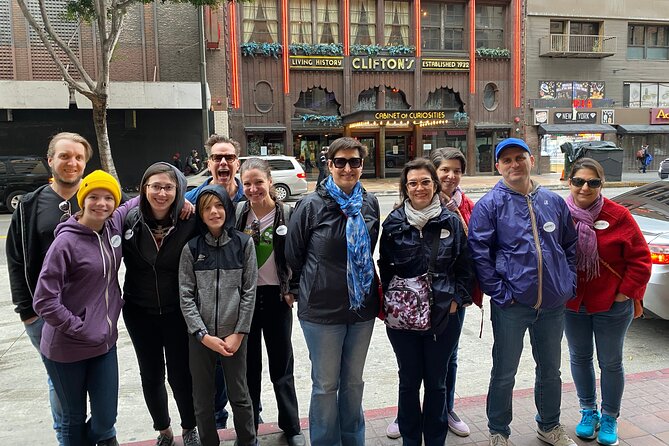
The small-group size helps too. When a tour keeps the group to a manageable number, you can ask follow-up questions without the guide shouting over everyone. The best moments on this kind of route are the in-between ones, like when you notice a detail on a facade and the guide explains what you’re looking at.
Other Los Angeles outings to compare
- Los Angeles Original 90-Minute Walking Tour to The Hollywood Sign
★ 5.0 · 693 reviews - Hollywood Stars Tour: Walk of Fame, Celebrity Homes, Sunset Strip
★ 4.0 · 341 reviews - LA: Express Hollywood Sign Guided Walking Tour with Photos
★ 4.9 · 310 reviews
Hill Street to Pershing Square, how the route keeps moving
The tour starts near 349 S Hill St and ends near 532 S Olive St at Pershing Square. That matters because you’re not doing a dead-end loop. You travel through downtown in a way that feels like walking through LA’s story as it passes your feet.
Expect a steady flow of stops over about two hours. The guide keeps you moving, but not in a sprint. People note the pace as just right, and even longer than planned when there’s still energy for extra questions and photos.
Practical tip: wear shoes you can walk in comfortably. Downtown sidewalks can be uneven in spots, and you’ll do a lot of “stop, look up, step forward” movement. Also, bring water on warm days. Even with shaded moments, you are still outside for much of the route.
Grand Central Market, where 1917 still pulls people in
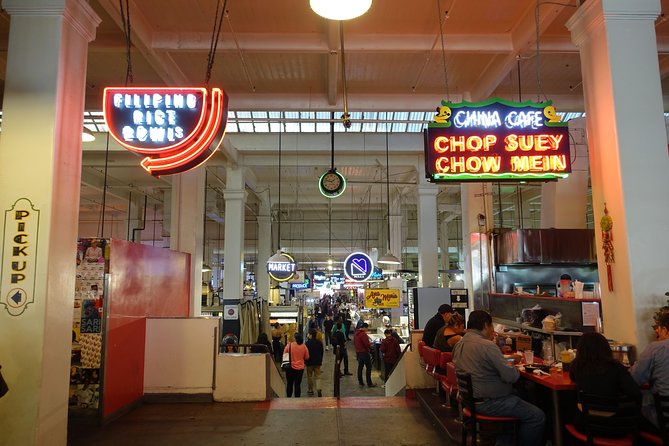
Grand Central Market is the perfect first stop, because it gives you an immediate sense of downtown as a living place, not a museum. The market has been operating since 1917, and that long timeline shows in the mix of locals, office workers, and visitors flowing through the stalls.
Why this stop works on a walking tour: it sets a baseline. Before you head into theaters, arcades, and office-building architecture, you get a feel for downtown as a daily destination. It helps you understand why people built those grand structures nearby in the first place.
Timing-wise, it’s a short visit, about 10 minutes. That’s enough time to orient yourself, spot what looks timeless, and then move on without killing the momentum. If you want to eat a full meal, you might do it after the tour since your time here is more about context than lingering.
Historic Theater District, pre-WWII grandeur in plain sight
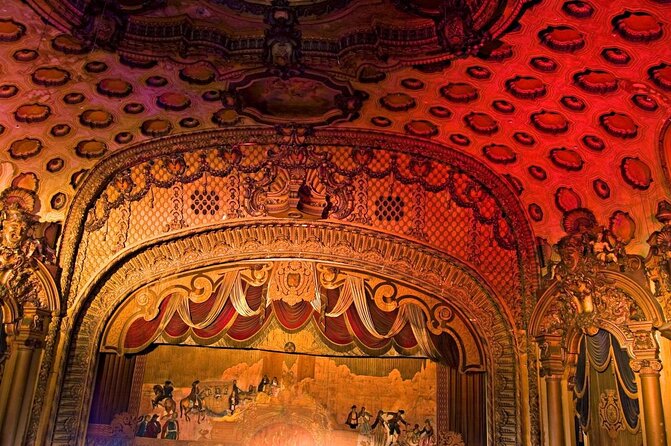
Next comes the Historic Theater District, a section known for its collection of pre-WWII theaters. The big idea here is that downtown wasn’t only about commerce. It was also about performance, glamour, and crowds gathering for a night out.
You get about 20 minutes in this area. That’s just enough time to look at the scale and the design language. You’ll likely notice how these theaters announce themselves, even from the street, and how that contrasts with modern downtown patterns.
One consideration: the stop is listed as admission not included, so if you want to go inside a specific venue, you should plan for that separately. The tour can still give you plenty to appreciate from outside, but you may want to treat theater interiors as an add-on for another trip.
Same corner of the map, another day out:
- Full-Day Iconic Sights of LA, Hollywood, Beverly Hills, Beaches and More
★ 5.0 · 6,147 reviews - Warner Bros. Studio Tour Hollywood
★ 4.5 · 5,246 reviews - Hollywood, Beverly Hills & Celebrity Homes Tour by Open Air Bus
★ 5.0 · 2,557 reviews - Hollywood Sign 2.5-Hour Tour with Comedians and Their Dogs
★ 5.0 · 2,496 reviews
Bradbury Building, the inside stop that makes the tour stick
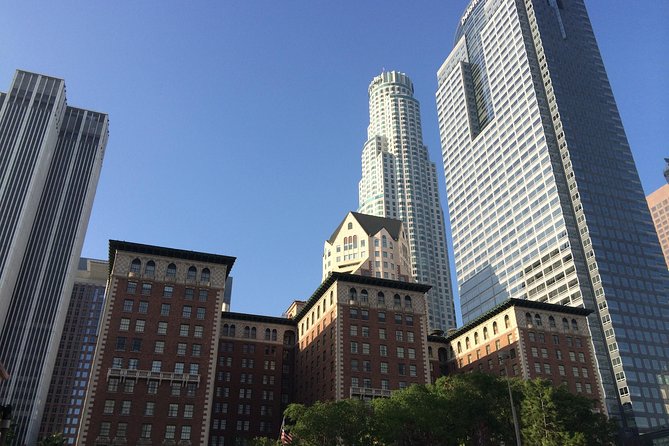
If you’re even slightly into architecture or movie locations, the Bradbury Building is the emotional center of this route. It’s described as the oldest standing office building in Los Angeles, and you don’t just see it from the sidewalk. You step inside, with time set aside for the details.
You get around 10 minutes here, and that’s a sweet spot. The building has enough visual payoff that even a short visit can feel meaningful. People consistently highlight this stop, and I get why. The interior is dramatic in a way that still looks real, not staged. It’s the kind of space where your eyes keep moving, from floor to light to ironwork.
Also, it’s admission free on the tour, which is a big value point. You get one of downtown’s most recognizable architecture moments without paying an extra ticket on top of the tour price.
Old Bank District and Spring Street of the West, read the city like an outline
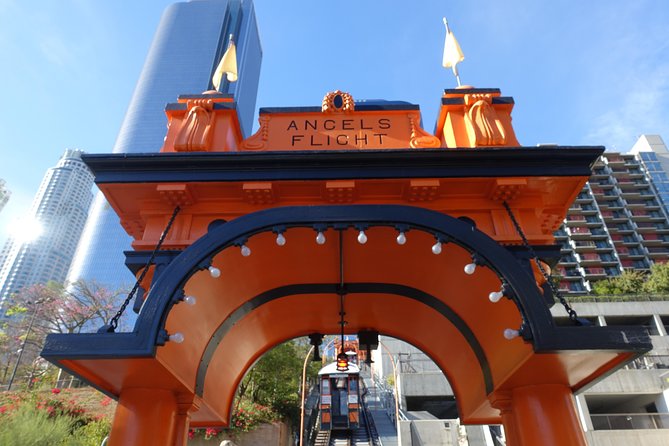
Then you head into the Old Bank District, also described as Spring Street of the West. This is where downtown history starts to feel structural, not just scenic. Bank blocks and financial districts are where you can see ambition in stone, and you can feel how power sat right on the street.
You spend about 25 minutes here, which is longer than most stops on the route. That extended time suggests the guide expects you to slow down and look. It’s also a helpful pause in the walking flow, letting you take in street-level architecture rather than constantly moving to the next location.
All of the stops in this part are listed as admission free, so you’re really paying for perspective and explanations. If you like photo opportunities with a purpose, this is where you’ll likely take more than a quick phone snapshot.
Jewelry District and Spring Arcade, a switch from monuments to everyday downtown
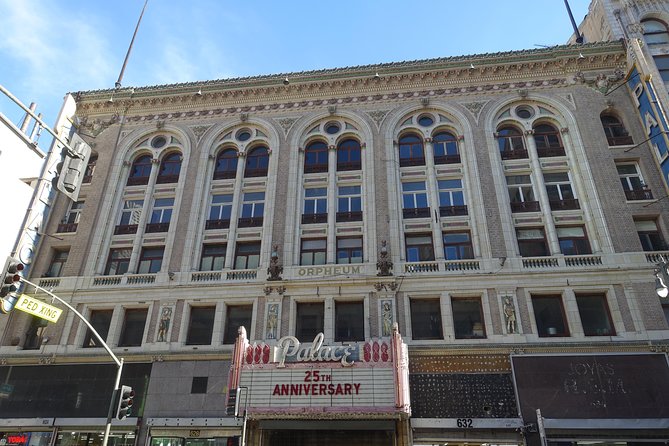
After the financial grandeur, the tour shifts into the Jewelry District, described as America’s largest jewelry district. This stop is shorter, about 10 minutes, but it changes the tone. You go from buildings that announce big-money history to a commercial zone that shows downtown as a working ecosystem.
Then you pass by the Spring Arcade Building, a collection of boutique restaurants with about 10 minutes allotted. Arcades like this matter because they show a different kind of downtown life: a place built for foot traffic, shopping, and hanging around. Even if you do not stop for a meal, you get to understand why these corridors are remembered.
Both stops are admission free, so again the value is mostly in what you learn and what you notice. And since both are outside the “single landmark” category, your guide’s direction matters. Without that, these areas can blend together. With it, you start seeing downtown as a system, not random highlights.
Clifton’s Republic and the Biltmore Los Angeles, classic stops with different vibes
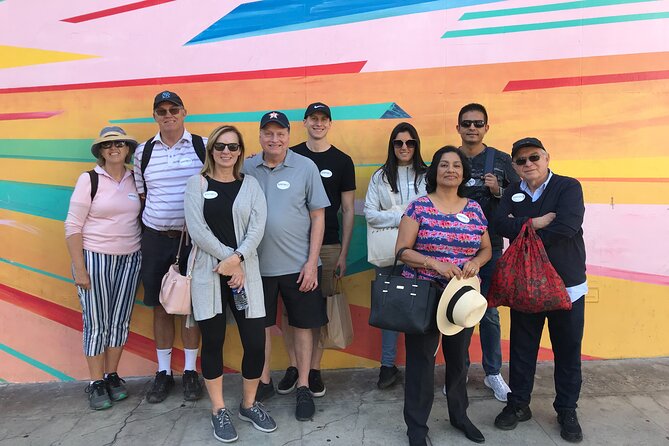
Clifton’s Republic is an iconic cafeteria dating to 1932, but this one is marked as admission not included, and the stop is only about 5 minutes. That short timing makes sense. This is more about seeing the place and understanding its role in downtown culture than about a full meal during the tour.
If you want to actually eat, you’ll likely do it before or after the walking portion. Still, even a brief stop can be useful. Cafeterias and lunch spots are where you learn how downtown fed people day after day, not just entertained them at night.
Then you head to the Biltmore Los Angeles, described as the grandest hotel of Los Angeles. This is an admission free stop with about 10 minutes. Hotels like this are built like statements, and the guide’s narration typically helps you understand what made them a big deal at the time.
Why these two stops work together: cafeteria nostalgia plus grand-hotel spectacle gives you emotional range in a small area of downtown. It’s a neat reminder that LA’s old downtown was not one single style. It was many moods, depending on where you were headed.
Pershing Square at the end, why that finish point makes sense
The tour wraps up at Pershing Square (about 532 S Olive St), and the route ends with a short walk back to the starting area, roughly five minutes, depending on your exact route.
Finishing here is practical. Pershing Square is central, and it helps you re-orient quickly after a focused walking run. You can then decide what you want next, whether that means sticking around for food, hopping to another area, or just taking a breather and letting your brain process what you just learned.
Who should book this DTLA walking tour
This tour is a strong fit if you’re:
- First-time visitors who want orientation without feeling lost
- Anyone who loves architecture with stories attached
- Travelers who prefer small-group walking tours over big-bus sightseeing
- Families looking for a stress-free way to see multiple downtown landmarks in one go
It may be less ideal if you hate walking in heat or sun, since the tour is outdoors and depends on good weather. Also, if you expect every stop to include an interior visit, you should know that some locations are listed as admission not included.
One more useful detail: people note the guide works to keep everyone comfortable, including time to stand or sit in shade. That’s worth paying attention to if you travel with older family members or you just want a tour that respects real bodies.
Price and value: what $38 gets you in downtown LA
At $38 per person for about two hours, this tour competes well in the LA market, mainly because it focuses on multiple major landmarks without making you buy a bunch of separate tickets.
Here’s the value logic:
- Several stops are admission free (Grand Central Market, Bradbury Building, Old Bank District, Jewelry District, Spring Arcade Building, and the Biltmore Los Angeles).
- You get guided context, which is where the real payoff is for a walking tour. Downtown looks different when you understand what you’re seeing.
- The group size stays limited (maximum 20), which helps you get personal attention.
The trade-off is that a couple stops list admission not included, like the Historic Theater District and Clifton’s Republic. That does not ruin the tour, but it does mean you might not get a paid interior experience at every location unless you add it yourself.
Also, the tour is a mobile ticket experience, which is convenient if you like keeping everything in your phone. Book it ahead if you’re traveling busy times, since it’s commonly reserved about 10 days in advance.
Should you book Old and New Downtown Los Angeles on foot?
I think you should book it if your goal is to understand downtown LA fast, without bouncing between far-flung sights. The mix is smart: market streets for daily life, theater blocks for old glamour, the Bradbury Building for architecture lovers, and classic hotels and cafeterias for cultural texture.
Skip it only if you want a tour that feels heavily indoors and ticketed at every stop, or if you’re not comfortable walking in outdoor conditions. For most people, though, this is a practical way to turn downtown from confusing to clickable.
FAQ
Where does the walking tour start and end?
It starts at 349 S Hill St, Los Angeles, CA 90013, and ends at 532 S Olive St, Los Angeles, CA 90013 (Pershing Square).
What time does the tour begin, and how long is it?
The tour starts at 1:30 pm and runs about 2 hours.
How much is the Old and New Downtown Los Angeles Walking Tour?
The price is $38.00 per person.
Is admission included for every stop?
No. Several stops are listed as admission free, like Grand Central Market and the Bradbury Building, but others list admission not included, including the Historic Theater District and Clifton’s Republic.
How large is the group?
The tour has a maximum of 20 travelers.
Is the tour family-friendly and suitable for most people?
Families tend to enjoy this style of walk, and it says most travelers can participate. Service animals are allowed.
What happens if the weather is bad or I need to cancel?
The tour requires good weather. If it is canceled due to poor weather, you are offered a different date or a full refund. You can cancel up to 24 hours in advance for a full refund, and within 24 hours the amount paid is not refunded.
Newest Los Angeles reviews on the site
- Perfect 5 ½ Hour LA & Hollywood Tour from Santa Monica★ 4.5 · 1,124 reviews
- Half Day Best of Los Angeles Tour from Santa Monica★ 5.0 · 221 reviews
- Malibu: Guided Vineyard Hike with Photo Stops and Wine★ 5.0 · 391 reviews
- Los Angeles: Private Vintage VW Bus Tour in Malibu★ 5.0 · 303 reviews
- Guided Whale Watching Tour from Long Beach★ 4.5 · 335 reviews
- Warner Bros. Studio Tour & Celebrity Homes Tour Package★ 3.5 · 225 reviews
- The Ultimate LA and Hollywood Photo Tour★ 5.0 · 233 reviews
- City Tour of Los Angeles, Hollywood and Beverly Hills★ 5.0 · 444 reviews
Walking Tours, compared.
History and Hauntings of Salem Guided Walking Tour
Read our review →
New Orleans Premier Ghost, Voodoo and Vampire Walking Tour
Read our review →
Freedom Trail History Small Group Walking Tour
Read our review →
Historic Charleston Guided Sightseeing Walking Tour
Read our review →
New Orleans Food Walking Tour of the French Quarter with Small-Group Option
Read our review →
St. Louis Cemetery No. 1 Official Walking Tour
Read our review →Browse the lists this tour appears in