
Reviewed · WALKING TOURS
NYC Underground Subway Walking Tour
Subway tunnels feel like a secret city. I like how this tour turns the NYC subway into a guided story you can follow step by step, with earpieces that help you catch every word down in the stations. I also love the hands-on focus, including a ride on the 6 train through abandoned ghost stations. The main drawback to plan for is physical effort, expect stairs and a good chunk of time underground.
The format is simple: a native New Yorker guide, a max group size of 12, and a route that links visible leftovers from early subway days to the modern system you use every day. You get a mobile ticket, you hear clearly thanks to provided earpieces, and you finish right back where you started at 200 Broadway so you can keep your day moving.
Price is $39 per person for about 2 hours, and it’s booked about 24 days in advance on average, so it can be smart to reserve early. One thing to budget for: your MetroCard swipe is not included, even though the experience uses the subway.
In This Review
- Key things to know before you go
- Meeting at 200 Broadway: getting ready for stairs and subway time
- Earpieces, small-group pace, and what to do if audio isn’t clear
- City Hall Park: seeing clues of the very first subway station
- The Municipal Building stop: how civic power shaped the subway
- Union Square station art: more than a quick photo stop
- The Brooklyn Bridge view and tunnel lore on the walk
- Riding the 6 train: abandoned ghost stations in real life
- What the tour does well: a subway education you can actually use
- Price and value: is $39 fair for two hours plus a MetroCard swipe
- Who should book this NYC Underground Subway tour
- When it may not match your expectations
- Should you book this Underground Subway Walking Tour
- FAQ
- Where does the tour start?
- How long is the NYC Underground Subway Walking Tour?
- How much does the tour cost?
- What language is the tour offered in?
- Is there a mobile ticket?
- What is included in the price?
- What is not included?
- How big is the group?
- Are service animals allowed?
- Where does the tour end?
Key things to know before you go
- Earpieces included so you can hear the guide clearly while moving through stations
- Max 12 people keeps the pace relaxed and questions actually get answered
- City Hall Park and Union Square are built into the route, not just treated as distant landmarks
- 6 train ride is part of the experience, including a look at abandoned ghost stations
- Fair amount of stairs means wear shoes you can climb in without stress
Meeting at 200 Broadway: getting ready for stairs and subway time
This tour starts at 200 Broadway, right in the Downtown core where you’ll quickly feel how subway planning and city planning used to overlap. You’ll meet your guide outside the Fulton Center area and then get gear before heading out.
A couple practical points matter here. First, the experience is about moving on foot through busy sidewalks and then down into stations. Second, the route includes multiple station stops and underground segments, so bring a water bottle if it’s a warm day and wear shoes with real grip. One review specifically called out the stair count, and it matches what the walking style of this kind of guided subway route usually requires.
Language is English, and it’s a small-group tour, so you should expect your guide to steer the group from stop to stop while keeping everyone oriented. If you rely on a specific pace, you’ll still want to keep up, since the tour is set around station entrances, platforms, and transit schedules.
More Walking Tours in New York City
- SoHo, Little Italy, and Chinatown Walking Tour in New York
★ 5.0 · 3,153 reviews - Secrets of Grand Central Station Walking Tour New York City
★ 5.0 · 1,796 reviews - Greenwich Village Walking and Food Tasting Tour
★ 5.0 · 1,572 reviews
Earpieces, small-group pace, and what to do if audio isn’t clear
The big differentiator is that everyone gets earpieces. That sounds basic, but it changes the whole experience in a subway setting. Down there, the sound from tracks, ventilation, and platform noise can swallow a guide’s voice fast. With earpieces, you get a real narrative instead of a series of signs you can only half read.
Most people highlight that the guide stays engaging for the full duration, and the small-group size helps with that. When the group is tighter, the guide can slow down for questions and keep the whole set together through stairs and corridors.
That said, one review mentioned not being able to hear the guide well for a substantial part of the tour. I take that as a signal to do one simple thing: when the group first gets earpieces, do a quick check. If you’re not getting clear sound early, raise your hand right away so staff can help adjust or swap the set. Fixing it early saves the whole tour.
City Hall Park: seeing clues of the very first subway station
You begin with City Hall Park, where the tour connects what you can see in the daylight to the subway story underneath. The stop focuses on the creation of the very first NYC subway station, using visible remnants from the area around the park.
This is a smart opening because it gives you context before you hit the modern complexity. You’re not just learning facts, you’re learning why the system exists where it does and how Downtown became the launch point for mass transit. The visible pieces at City Hall Park work like a “start page” for the rest of the walk.
Time at this stop is about 15 minutes. That’s enough to get the main points without turning it into a museum lecture. If you’re someone who likes architecture and civic history, this first segment sets the tone for how the guide will connect buildings, streets, and tunnels later.
The Municipal Building stop: how civic power shaped the subway
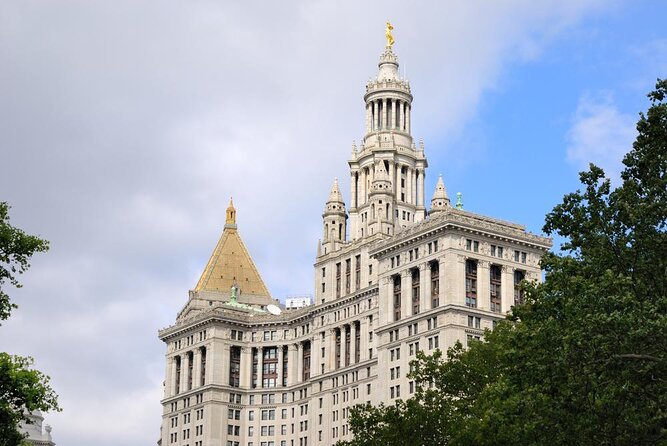
Next you move to the Municipal Building, with a focus on why it mattered for the creation of the NYC subway system. This stop is shorter, around 10 minutes, and it’s designed to keep your momentum.
What I like about this part is that it treats the subway as a city project, not just a train project. You get a clearer picture of how local government, planning, and big decisions affected what New Yorkers could build and how they could build it.
It also helps you read the area with better eyes. When you move through Midtown and Downtown later on your own, you’ll start noticing the civic and infrastructural logic that the guide points out here.
Other New York City outings to compare
- Artistic, Alternative Greenwich Village Walking Tour
★ 5.0 · 971 reviews - True Crime NYC: Mafia Walk w/Ret. NYPD Detective and Local Food
★ 5.0 · 848 reviews - Central Park Guided Walking Tour
★ 5.0 · 774 reviews - New York City: Private Walking Tour with a Local
★ 4.6 · 771 reviews
Union Square station art: more than a quick photo stop
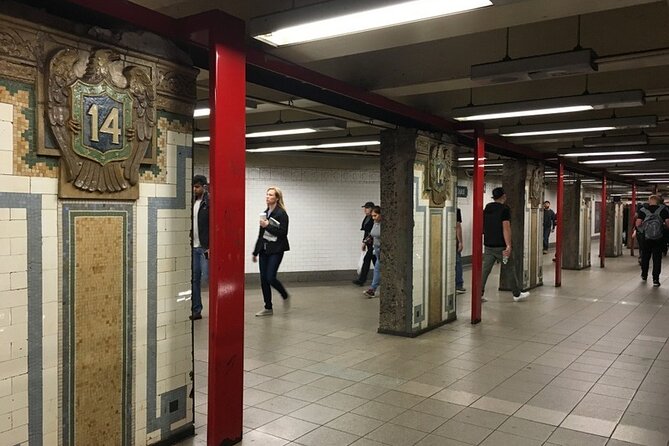
Union Square is where the tour pays attention to something many subway riders miss: station art. You spend about 10 minutes exploring Union Square station and its surprising Art installation.
This stop works well because it breaks the usual pattern of subway tours that focus only on old tunnels or train history. Here, you’re reminded that the subway is also public space. The guide connects the art to how older parts of the system influence what gets reused, shown, and highlighted in newer stations.
If you love design, you’ll likely enjoy lingering just a bit to spot how the station art interacts with the space around you. If you’re in a rush style of traveler, just keep pace with the group so you don’t fall behind before the next underground segments.
The Brooklyn Bridge view and tunnel lore on the walk

Early in the experience, you’ll get views tied to the broader city story, including the Brooklyn Bridge. This gives your brain an outdoor reference point before you spend more time inside station corridors and platforms.
The tour also emphasizes local lore about tunnels and trains. That matters because the subway is full of small mysteries if you ride it casually. Why certain areas look a certain way. Why some lines feel like they were built in stages. Why some parts seem forgotten or “too quiet.” A guide can stitch those impressions into a clearer timeline.
This is where a good guide makes the difference. Names that have led this tour include Pete, Cullen, AJ, Alexis, Rayn, and Ryan. If you get a guide in that mix, you’re likely in good shape for pacing, humor, and lots of side notes that turn a station walkthrough into a story you can repeat later.
Riding the 6 train: abandoned ghost stations in real life
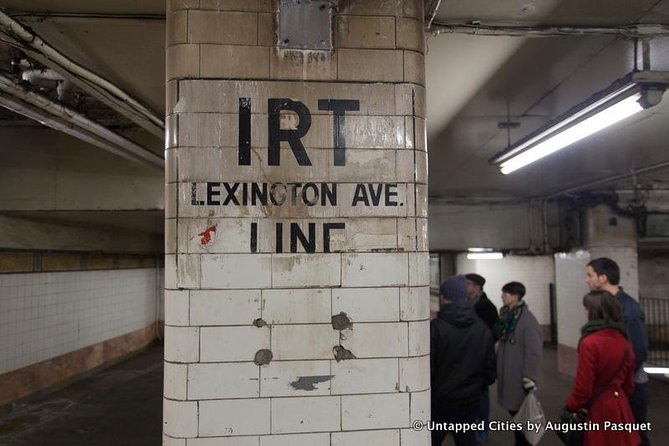
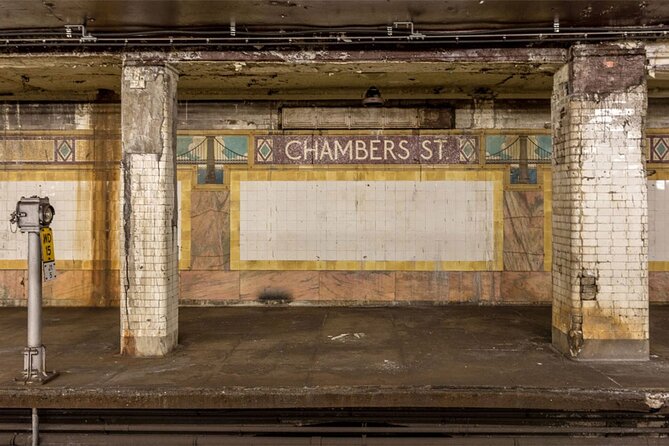
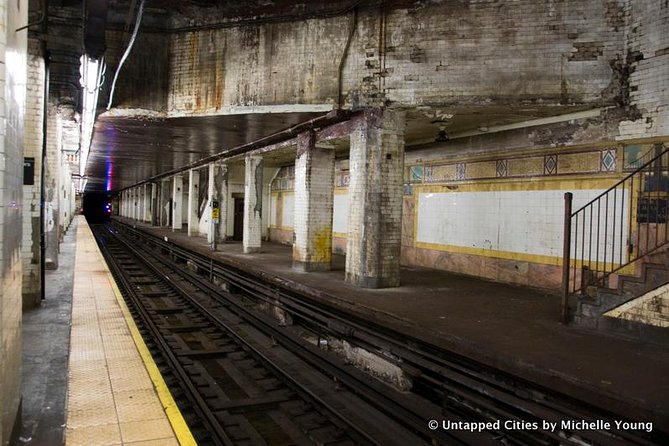
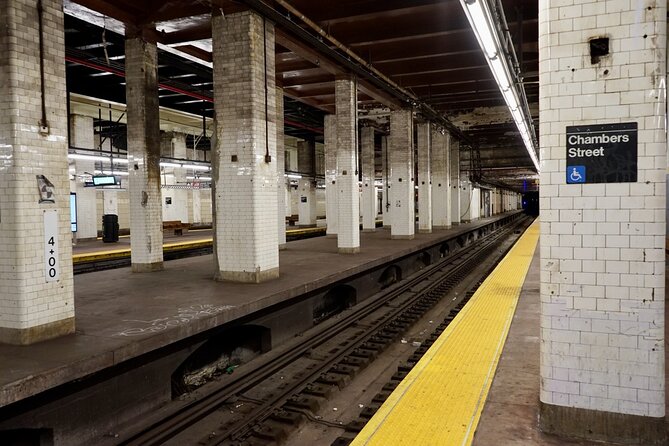
The centerpiece for a lot of train fans is the 6 train ride, including a look at abandoned ghost stations. This is not just a lecture. You’re moving through the system, watching how the active line relates to the parts of the network that are no longer in regular service.
Ghost stations hit differently in person. From a distance on a platform, they can look like perfectly preserved relics. Up close, you can start noticing architecture cues and the feeling of how space changes when trains stop running through it.
Expect this segment to be a high sensory moment. The subway environment is loud, and you’re dealing with crowds, turnstiles, platform signs, and moving trains. The earpieces help you keep up with the story while you stay aware of where the group needs to go next.
From a practicality standpoint, keep your timing flexible. This portion can feel longer than the clock reads because you’re watching, listening, and navigating in a live system.
What the tour does well: a subway education you can actually use
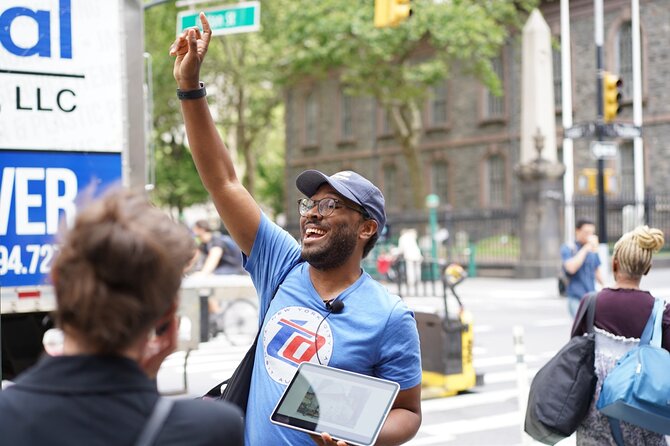
This is one of those tours that pays off after you end it. By the time you’re back near 200 Broadway, you’ll likely understand the subway as a system instead of a set of disconnected lines.
Here’s what you take with you:
- Better intuition for why routes feel the way they do
- A mental map of how different Downtown station areas connect
- A new appreciation for station design choices you used to ignore
Several guides and stories focus on the “why” behind the system’s size and complexity. That is especially helpful if you’re planning to ride the subway more during your trip. Even if you never become a full train nerd, learning how the city built and adapted this network saves time and confusion later.
Price and value: is $39 fair for two hours plus a MetroCard swipe
$39 for about 2 hours is a reasonable price for a guided, structured experience that includes earpieces and a guided subway ride. The part you must budget for is the MetroCard swipe, since that’s not included.
I think the value depends on your travel style. If you like history, architecture, and systems that run on invisible infrastructure, you’ll likely feel like the tour pays for itself by showing you what to notice. If you’re hoping for a casual walk with minimal stairs and minimal station time, you might find it more work than you expected.
Also, the group size matters. A max of 12 gives the guide room to manage the pace. That’s not guaranteed in big group tours, and it helps explain why the experience is rated highly overall.
Who should book this NYC Underground Subway tour
This tour is a great fit if you:
- Want to understand the subway as a historical and civic system
- Like train details, station design, or architecture
- Appreciate a guide with energy and lots of practical explanation
- Want a small-group format where questions are welcome
It can also work for families, since at least one family review said it was doable for all ages. Just remember the stairs and underground time are real. If you’re traveling with kids or anyone who tires quickly, plan your day so you’re not rushing into a long second activity right after.
If you love “deeper cut” stories rather than surface-level sightseeing, this matches that vibe. The focus is specific: early subway references, Union Square art, and abandoned ghost stations on the 6 line.
When it may not match your expectations
This tour is built for history and system-focused storytelling. If you want nonstop human-life stories, street-level scenes, or lots of talk about everyday subway characters, you might feel it stays more on the technical and architectural side.
The other mismatch can be sound and time underground. One negative review mentioned trouble hearing due to earpieces and suggested the tour felt rushed. That’s not the most common theme, but it’s enough for me to recommend a quick sound check early and to speak up immediately if you can’t hear.
Finally, if you’re sensitive to enclosed spaces or you hate climbing stairs, be honest with yourself. The walking and stair effort is part of the package.
Should you book this Underground Subway Walking Tour
Book it if you want a guided way to see the NYC subway’s past and present in one connected route. The earpieces, small-group size, and the actual 6 train ride through abandoned ghost stations are what make it more than a “stand and read signs” tour.
Skip or rethink it if you’re expecting a mostly outdoor experience, or if you strongly dislike stairs. Also consider alternatives if sound quality is a deal-breaker for you. The earpieces are included, but in a noisy subway environment, your ability to hear can depend on the exact set and fit.
If you do book, wear comfortable shoes, bring patience for crowd navigation, and treat this as a short education plus a transit adventure. When you walk away understanding why the subway looks the way it does, you’ll feel like you used your time well.
FAQ
Where does the tour start?
The tour starts at 200 Broadway, New York, NY 10038, USA.
How long is the NYC Underground Subway Walking Tour?
It runs for about 2 hours.
How much does the tour cost?
The price is $39.00 per person.
What language is the tour offered in?
The tour is offered in English.
Is there a mobile ticket?
Yes, the tour uses a mobile ticket.
What is included in the price?
You get a guided walking tour with a native New Yorker, and earpieces are provided to each guest.
What is not included?
A MetroCard swipe is not included.
How big is the group?
The maximum group size is 12 travelers.
Are service animals allowed?
Yes, service animals are allowed.
Where does the tour end?
The tour ends back at the meeting point.
Newest New York City reviews on the site
- New York City: Private Walking Tour with a Local★ 4.6 · 771 reviews
- Washington DC Day Trip by Bus from New York City★ 4.7 · 600 reviews
- Wall Street Insider Tour with a Finance Professional★ 4.5 · 660 reviews
- NYC: Wall Street and Financial District Walking Tour★ 4.9 · 284 reviews
- True Crime New York: NYPD-Guided Mafia Walking Tour w/ Food★ 4.6 · 318 reviews
- NYC: Woodbury Common Premium Outlets Shopping Round Trip Service★ 4.0 · 784 reviews
- Williamsburg Food Tasting & Walking Tour★ 5.0 · 228 reviews
- Whitney Museum of American Art Admission Ticket★ 4.0 · 1,579 reviews
Walking Tours, compared.

History and Hauntings of Salem Guided Walking Tour
Read our review →
New Orleans Premier Ghost, Voodoo and Vampire Walking Tour
Read our review →

Freedom Trail History Small Group Walking Tour
Read our review →
Historic Charleston Guided Sightseeing Walking Tour
Read our review →
New Orleans Food Walking Tour of the French Quarter with Small-Group Option
Read our review →
St. Louis Cemetery No. 1 Official Walking Tour
Read our review →Browse the lists this tour appears in