

Reviewed · NEW YORK CITY TOURS & ACTIVITIES
NYC: The Secrets of Grand Central Terminal
Grand Central has secrets most commuters miss. This tour turns the terminal into a real-life puzzle box, with access to places you would never notice on your own. I love the behind-the-scenes sightings like the off-limits glass walkway entrances, and I love the story-driven surprises such as the whispering gallery and the hidden tennis courts. One possible drawback: you will spend a lot of time looking up, moving through crowds, and standing in tight spots, so comfortable shoes matter.
The setup is practical, with headsets so you can hear your guide clearly, even when the station gets loud. Guides like John, Richard, Jonathan, and A.J. come across as passionate about trains and the building, and they keep the pace moving without making you feel rushed. If you just want a quick hit of photos, this might feel like more learning than you planned.
Still, at $39 for 90 minutes, I think it is a strong value if you enjoy architecture, transit history, or the kind of New York trivia you can brag about at brunch.
In This Review
- Key things I think you will care about most
- Meeting at Grand Central, and learning how to look
- The world’s largest Tiffany clock, atrium details, and that surprising design issue
- Whispering gallery moments: sound, shape, and why it works
- Hidden tennis courts in the sky, and how Grand Central used space creatively
- Off-limits glass walkways: peeking where you are not usually allowed
- Leftovers of a lost movie theater, plus a speakeasy story with real personality
- The Campbell and Dining Concourse: side looks that sharpen your orientation
- What the 90 minutes feels like: pace, crowd sense, and hearing your guide
- Price and value: $39 for access to details you cannot DIY
- Who should book this, and who might skip it
- My bottom line: Should you book Secrets of Grand Central Terminal?
- FAQ
- Where does the tour start inside Grand Central?
- How long is the tour?
- How much does it cost?
- Is the tour guided, and what language is it in?
- Can I hear the guide during the tour?
- Is the tour wheelchair accessible?
- What should I bring?
- Are tripods allowed?
- Does the tour run in bad weather?
- Do I need to plan around cancellation rules?
- Is payment due right away?
Key things I think you will care about most
- Headsets make the tour work inside a high-noise station
- Grand Central’s sound tricks are real, not just a fun myth (hello whispering gallery)
- You get to see unusual spaces like hidden tennis courts and leftover movie-theater traces
- The tour points out details most people walk past, including a multi-million-dollar jewel and the world’s largest Tiffany clock
- Guides build in crowd sense and clear pacing, and they even handle chaos without derailing the route
Meeting at Grand Central, and learning how to look
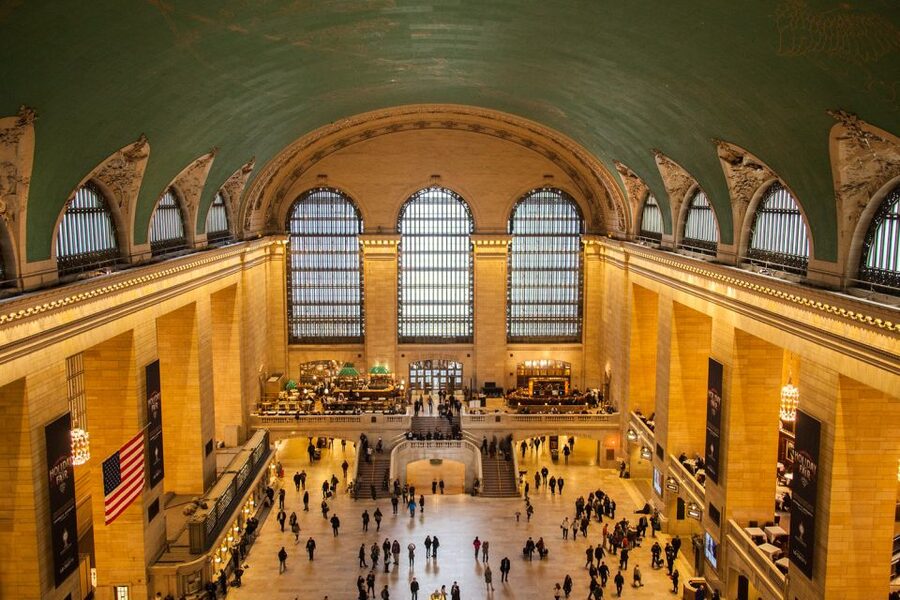
You start in the main atrium, in front of track 29, inside Grand Central’s big, light-filled space. That location matters. You are positioned where the architecture is at its most dramatic, which makes it easier to understand why the station feels both grand and oddly confusing once you slow down.
The tour is a small-group walking experience that runs for 90 minutes, and it is guided by a local New Yorker who talks in clear, human terms. The headset system is a big deal here. Grand Central is not quiet, and a lot of tours fail when the group scatters. With headsets, you stay oriented, and you can actually follow what your guide is pointing at.
Bring comfortable shoes, skip tripods, and plan to move at walking pace through different concourses. It runs rain or shine, so I treat this as a good “weather-proof” option. If you are visiting in winter or summer, you will probably appreciate the fact that a lot of the route stays inside, with only some time outside depending on the day.
Other New York City outings to compare
- NYC: SUMMIT One Vanderbilt Tickets
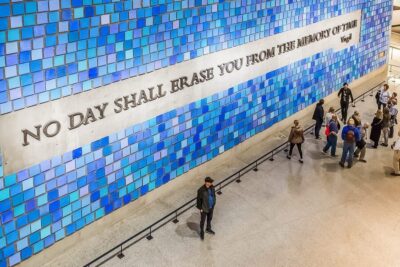
★ 4.7 · 51,195 reviews - NYC: 9/11 Memorial & Museum Timed-Entry Ticket
★ 4.8 · 31,428 reviews - NYC: Empire State Building Tickets – Observatory & Museum
★ 4.7 · 25,757 reviews
The world’s largest Tiffany clock, atrium details, and that surprising design issue
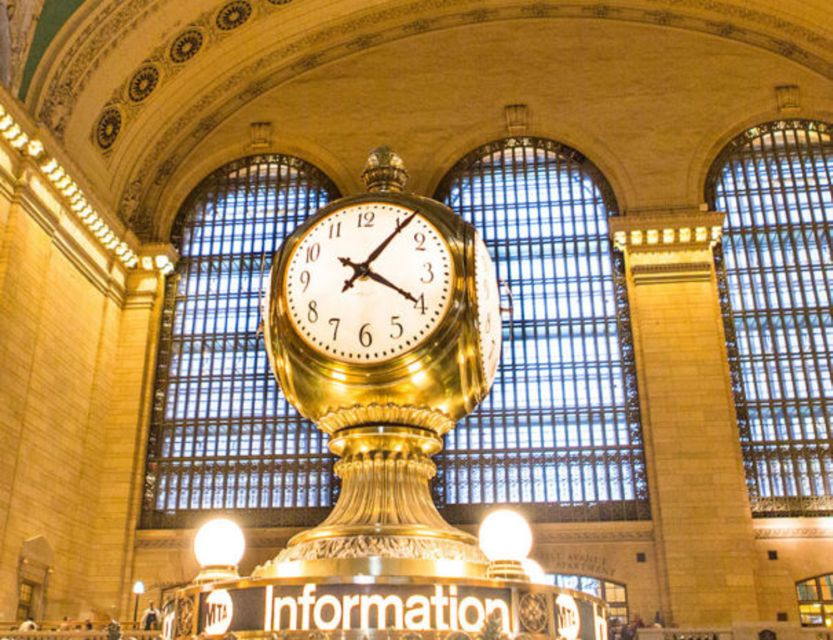
One of the first wow moments is the world’s largest Tiffany clock. People see the clock every day or at least pass by it, but the tour helps you notice how it fits into the station’s visual system. You stop treating the clock like decoration and start seeing it as wayfinding, ceremony, and branding all at once.
Then comes a head-scratcher: your guide points out a massive design flaw in the main atrium. I like that the tour does not pretend the terminal is perfect. Grand Central was built to solve real problems, but even a masterpiece can have awkward compromises. When you hear the explanation, the issue stops feeling like a random complaint and starts feeling like a clue to how the station evolved.
This is where the tour earns its keep for first-timers. Grand Central can feel like a beautiful blur of signs and platforms. The guide slows your eyes down. You start noticing the small stuff you can use later, like how lines draw you toward key areas, and how sightlines shape the flow of thousands of people.
Whispering gallery moments: sound, shape, and why it works
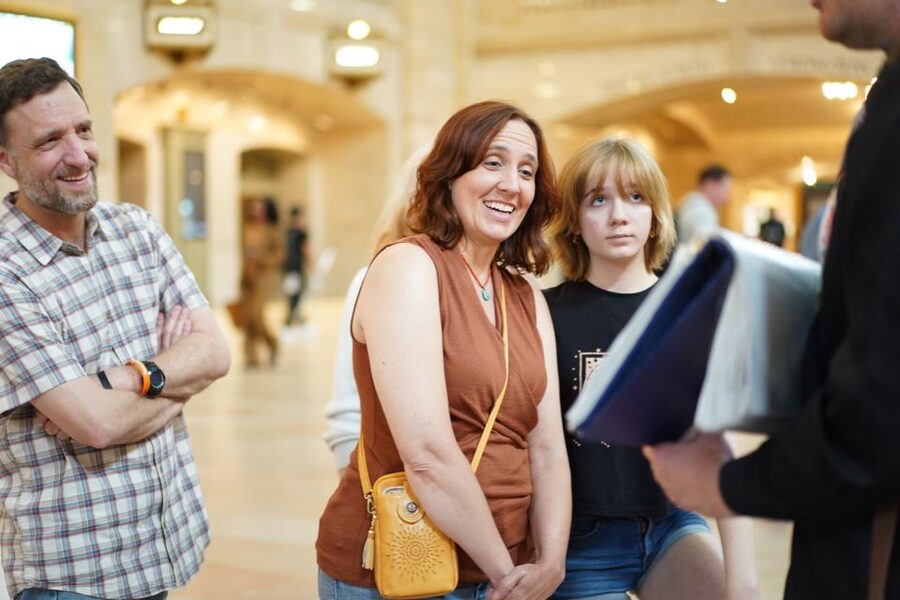
Next up: the whispering gallery. Even if you have seen whispering-gallery gimmicks elsewhere, Grand Central’s version feels more grounded because it is tied to the station’s actual architecture and history. You learn why certain shapes carry sound and why it is so easy to miss the effect when you are rushing to your train.
What I like about this stop is the hands-on logic. Your guide does not just say this is a neat trick. You get an explanation that helps you understand how the space is engineered for sound behavior, not just spectacle. That kind of “why it works” is what turns a one-minute photo moment into a memory that sticks.
If you are the type who enjoys physics-as-history, you will love it. If you are not, you will still enjoy the effect, because the experience itself is immediate: you hear it, you get the reaction, and then you understand it.
Hidden tennis courts in the sky, and how Grand Central used space creatively
The tour’s most playful stop is also one of its most surprising: hidden tennis courts. The idea sounds impossible at first, like someone made it up for a themed walking tour. But you get to see what remains, and the guide connects it to how the terminal area was imagined as more than just transportation.
This is one of those stops that makes Grand Central feel less like a museum and more like a living piece of the city’s lifestyle. It also changes how you think about “public space.” The station has always been about movement, but it has also been about aspiration, leisure, and status.
The best part is that the tour does not treat these courts as trivia. It ties them back to the station’s big picture story: how the terminal’s owners and builders tried to make the complex feel usable and attractive to people who had choices.
Same corner of the map, another day out:
- NYC: Empire State Building Observation Deck Tickets
★ 4.7 · 22,072 reviews - New York City: Statue of Liberty & Ellis Island with Ferry
★ 4.6 · 18,683 reviews - New York City: American Museum of Natural History Ticket
★ 4.5 · 15,447 reviews - Statue of Liberty and Ellis Island Tour: All Options
★ 5.0 · 13,571 reviews
Off-limits glass walkways: peeking where you are not usually allowed
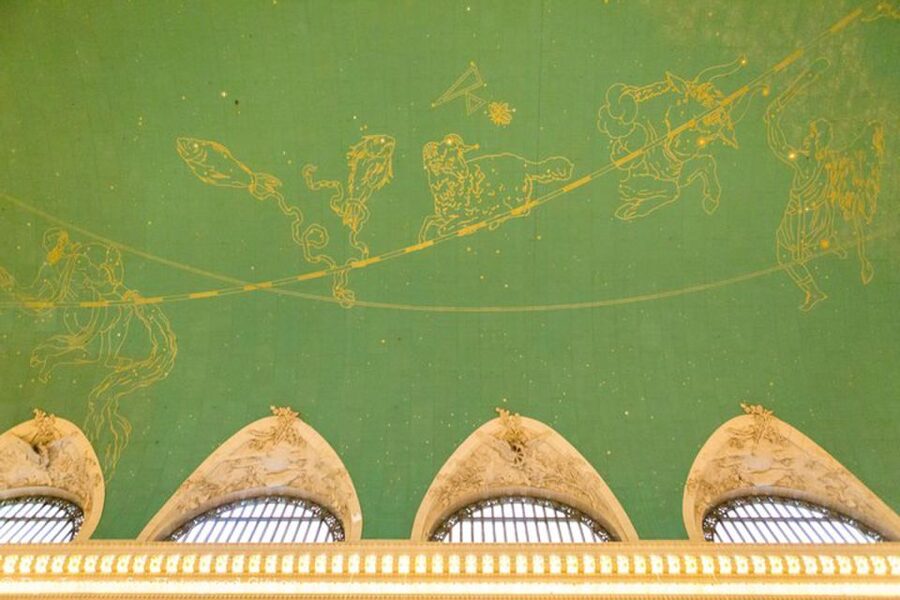
Then you get to the glass walkways area, where the tour lets you peek into the entrance of spaces that are not open for general browsing. You are not trying to sneak in. Instead, you get a curated look at what exists behind the scenes, which is exactly where the best “secrets” live in a place this regulated.
This part of the tour is valuable for one simple reason: it gives you context. The glass and the layout around it explain how the terminal is layered. You start to see Grand Central not as one big hall, but as a stack of spaces designed for different kinds of movement.
If you like architecture, this is a highlight. If you do not usually care about architecture, it still helps you understand how people get from A to B without getting lost, which is a practical benefit even after the tour ends.
Leftovers of a lost movie theater, plus a speakeasy story with real personality
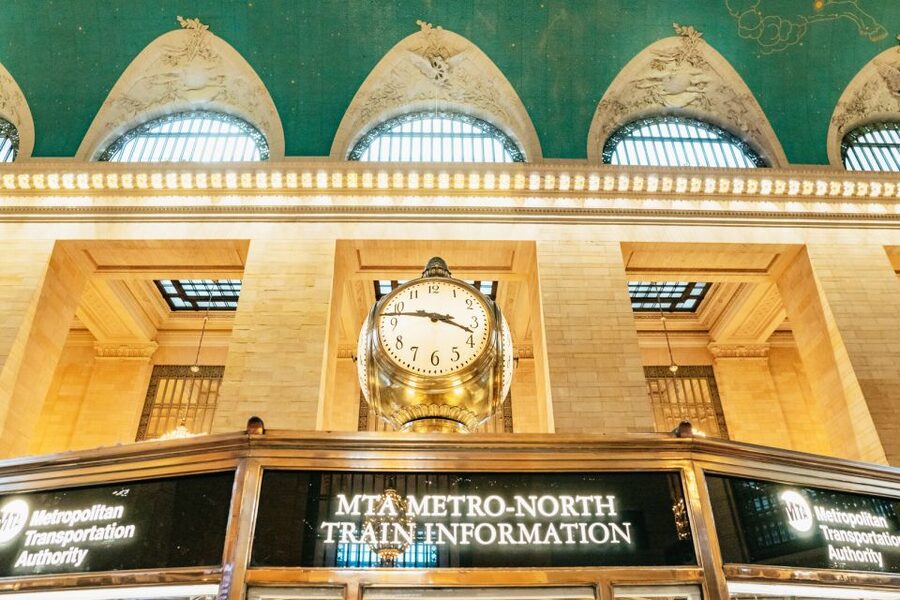
Grand Central has had eras, and one of the most fun is entertainment. Your route includes what’s left of Grand Central’s lost movie theater. The phrase lost fits, because what remains is not a full attraction you can walk into. It is more like a residue. The guide helps you see the trace and explains why it existed and what it says about the time when the terminal was more than transportation.
Then you get the after-hours angle: a tucked-away speakeasy bar that was once the private office of a business tycoon. This stop is one of those “wait, what?” moments that makes the tour feel alive instead of purely academic. It also gives you a sense of how powerful people used space. Grand Central attracted money, and the building gave that money locations with privacy and prestige.
The balance here is good. The tour gives you the romance without forgetting the function. You understand that these spaces were designed, controlled, and used. The secrets are not just spooky stories. They are clues to the station’s social history.
The Campbell and Dining Concourse: side looks that sharpen your orientation
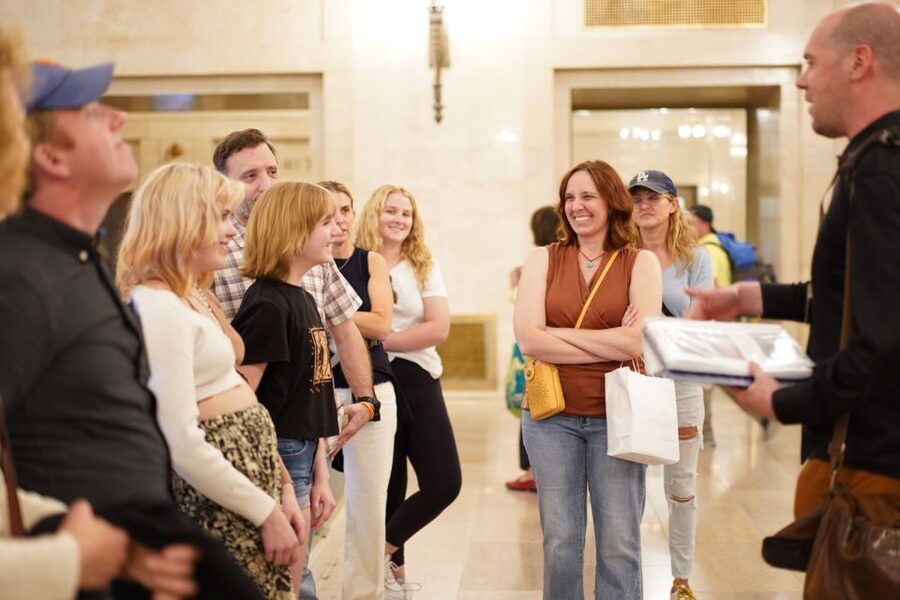
Along the way, you stop for photo moments and guided looks at The Campbell and then move through the Dining Concourse area. These are the parts of Grand Central that many people pass quickly, thinking they are just corridors or scenery.
Instead, the guide uses these stops to help you build a mental map. That matters because Grand Central is famous for confusion. If you leave knowing what these zones are, you will navigate better the next time you return.
The route also includes pass-by views of the Chrysler Building and One Vanderbilt. You are not going inside these towers, but the framing helps. You start to see Midtown as a competition of ideas, where each big project had to prove it belonged. Grand Central becomes the anchor that explains why the skyline in this area looks the way it does.
What the 90 minutes feels like: pace, crowd sense, and hearing your guide

The tour is 90 minutes, which is long enough to feel like you really got something, but short enough that you do not lose patience waiting for one highlight after another. The pace usually works because the tour has a sequence of fast, visual targets: clocks, galleries, hidden spaces, and specific architectural surprises.
From the guide side, the most praised trait is consistency under pressure. You see multiple examples of guides staying calm during tricky moments, including dealing with crowd chaos and keeping the group moving. That is not small. In a place like Grand Central, a tour can fall apart if the guide can’t manage attention.
The headset system helps your experience feel organized too. You are less likely to drift. You hear instructions, you understand where to look, and you do not miss the point because someone else blocked your view.
If you have mobility limitations, it is listed as wheelchair accessible. Still, think practical. Even when access is possible, crowds and tight corners can slow things down. Plan on taking your time during turns and photo stops.
Price and value: $39 for access to details you cannot DIY
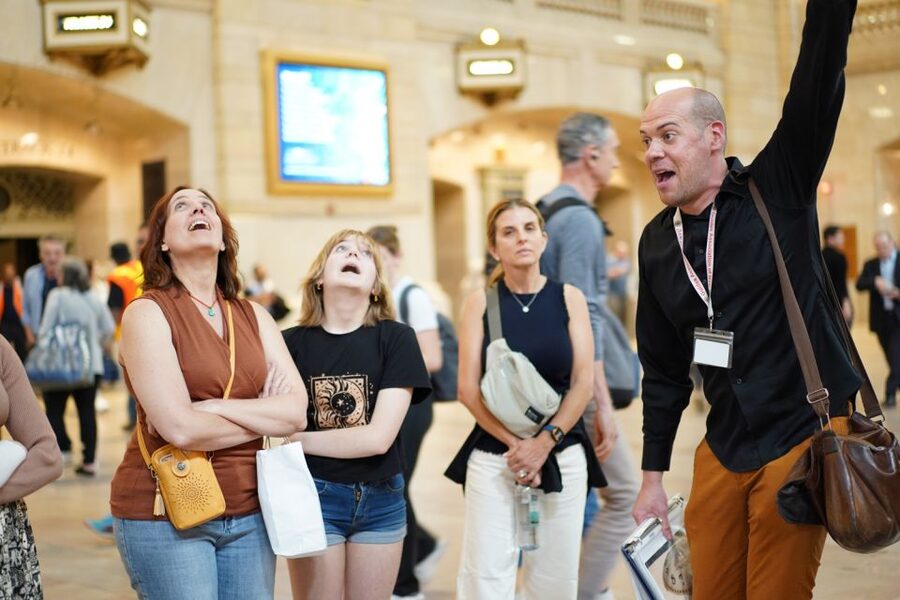
Let’s talk money honestly. $39 per person sounds like a splurge when you think of Grand Central as free to enter. But you are paying for three things you cannot get by wandering:
- Interpretation: the guide points out the design flaw, the station secrets, and what everything historically meant.
- Access and permission level: you get peeks and controlled entry to areas you would not normally be able to approach.
- Time efficiency: you spend 90 minutes focused, instead of 90 minutes getting lost or only seeing the obvious.
Grand Central is full of signage, and you can still enjoy it without a tour. But if you care about why the building works, how it was used, and what surprises it hides, the tour turns $39 into a kind of architecture lesson with real payoffs.
I especially like that the tour includes audio support in English, plus the headsets for live guidance. That combination helps you follow along even if you end up a bit further back than you expected.
Who should book this, and who might skip it
I think this tour is best for people who enjoy at least one of these:
- architecture and city design
- train history and the evolution of transit
- sound tricks and small physical surprises
- New York storytelling, with a guide who can name what you are seeing and why it matters
If you are mostly interested in shopping malls, brand views, or a quick photo circuit, you may feel this is too structured. But if you want to leave Grand Central feeling like you can actually explain what you saw, you will get that here.
Also, this is a great choice for winter or rainy days, since it is rain or shine. It is also ideal for repeat visitors who think they already know Grand Central, because the stops include spaces most people never notice.
My bottom line: Should you book Secrets of Grand Central Terminal?
Yes, if you want Grand Central to feel like more than background.
I would book it if you like being guided to specific details, especially the whispering gallery, hidden tennis courts, the glass walkway entrances, and the mix of movie theater remnants plus that speakeasy-in-disguise story. The headset setup makes the experience smoother in a noisy, crowded place, and the 90-minute length is a sweet spot.
Skip it only if you are planning a very casual, flexible day where you just want to wander and take whatever photos you stumble into. For that style of trip, Grand Central already gives you a lot for free. For the “I want the secrets” style of trip, this is one of the best ways to get them without guessing.
FAQ
Where does the tour start inside Grand Central?
Meet your guide in front of track 29 inside Grand Central Terminal’s main atrium.
How long is the tour?
The tour lasts 90 minutes.
How much does it cost?
The price is $39 per person.
Is the tour guided, and what language is it in?
Yes, it is a live tour with an English-speaking guide. Audio guide support is also included in English.
Can I hear the guide during the tour?
Yes. Headsets are included so you can hear the guide clearly, even from a distance.
Is the tour wheelchair accessible?
Yes, the tour is listed as wheelchair accessible.
What should I bring?
Wear comfortable shoes.
Are tripods allowed?
No, tripods are not allowed.
Does the tour run in bad weather?
Yes, it takes place rain or shine.
Do I need to plan around cancellation rules?
There is free cancellation up to 24 hours in advance for a full refund.
Is payment due right away?
You can reserve now and pay later, keeping your travel plans flexible.
Newest New York City reviews on the site
- All Inclusive Airport Departure Transfer NYC/ Brooklyn/Queens★ 4.0 · 342 reviews
- The Escape Game Brooklyn: Epic 60-Minute Adventures in City Point★ 5.0 · 332 reviews
- New York Aquarium Admission★ 4.0 · 298 reviews
- Brooklyn Food Walking Tour: Local Eats & Family‑Run Shops★ 5.0 · 592 reviews
- Brooklyn Bridge & DUMBO Food Tour: Local Eats & Landmarks★ 5.0 · 478 reviews
- New York City: City Highlights Guided Bike or eBike Tour★ 4.5 · 229 reviews
- New York City: Superheroes of NYC Guided Walking Tour★ 4.5 · 271 reviews
- NYC: Sunset Sail Aboard Schooner Adirondack★ 4.9 · 283 reviews
New York City Tours & Activities, compared.

Empire State Building Tickets – Observatory & Museum
Read our review →
Empire State Building Observation Deck Tickets
Read our review →


Statue of Liberty and Ellis Island Tour: All Options
Read our review →
Browse the lists this tour appears in