
Reviewed · WALKING TOURS
New Orleans French Quarter Walking and History Tour
French Quarter history can feel like a blur. This 2-hour walk turns it into a clear story, starting with how the swamp became a city and ending with literary and local legends you can picture right away. I especially love the personal pace of a small group, and I love that the guide mixes big-picture history with fun, real-life details, like the way New Orleans rebuilds after disaster. One thing to consider is that it is real walking, about 2 miles total, so comfy shoes matter if you want to enjoy every stop.
You also get to choose a morning or afternoon start, which helps if you’re trying to fit this around meals and tours. And since this runs with good-weather expectations, you’ll want a flexible mindset on rainy days.
In This Review
- Key things to know before you go
- A 2-hour French Quarter story walk, not a random sightseeing loop
- Musical Legends Park, the riverbank, and how levees created farmland
- French Market and Jackson Square, the Quarter’s easiest way to get your bearings
- Cabildo, Presbytere, and St. Louis Cathedral after the Great Fire
- Pirate’s Alley, the Quadroon Ballroom, and literary stops that stick
- The Ursuline Convent stop and your final stretch near the river levee
- Price, pace, and how good guides make the difference
- Who should book this, and who might skip it
- Should you book the New Orleans French Quarter Walking and History Tour?
- FAQ
- How long is the French Quarter walking and history tour?
- How much does it cost per person?
- What language is the tour offered in?
- How far do you walk?
- Where do you meet the guide, and where does the tour end?
- Is food or drinks included?
- Are admissions included for the stops?
- What if the weather is poor?
- Can I cancel for a refund?
Key things to know before you go
- Small group size (up to 9) keeps the experience friendly and easy to ask questions.
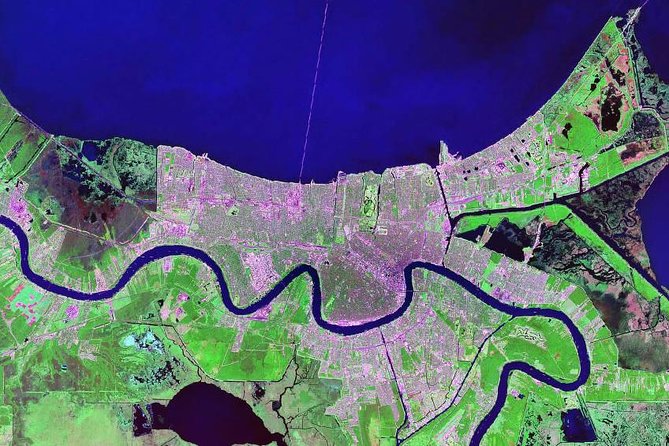
- Levee and river focus gives you the “how New Orleans worked” context that most quick tours skip.
- French Market and Jackson Square are timed well for photos and orientation in the heart of the Quarter.
- St. Louis Cathedral and the Great New Orleans Fire story helps explain why the French Quarter looks the way it does.
- Literary landmarks connect the Quarter to Tennessee Williams and William Faulkner.
- Pirate’s Alley and Creole courtyard details add an honest, human side to the area’s past.
A 2-hour French Quarter story walk, not a random sightseeing loop
Think of this tour as orientation with a plot. You start on the river edge, learn why the city exists where it does, then move inward to landmarks like Jackson Square and St. Louis Cathedral, and finally circle through spots that show how culture, class, and creativity shaped the Quarter.
What makes it feel good is the pacing. The route is about 2 miles at a leisurely walk, with short stops that keep you from feeling stuck in one spot too long. The guide also keeps things interactive, and based on what I’ve seen praised, the best ones are funny without turning the tour into a stand-up show.
The small-group format matters. With a max of 9 travelers, you are not one face in a crowd. You get clearer answers, and you can usually hear the guide well at each stop.
More Walking Tours in New Orleans
- New Orleans Premier Ghost, Voodoo and Vampire Walking Tour
★ 4.5 · 12,856 reviews - New Orleans Food Walking Tour of the French Quarter with Small-Group Option
★ 5.0 · 6,118 reviews - St. Louis Cemetery No. 1 Official Walking Tour
★ 4.5 · 3,941 reviews
Musical Legends Park, the riverbank, and how levees created farmland
Your walking journey begins at Musical Legends Park, and in practice you’ll meet at Cafe Beignet on Royal Street before heading to the start. Plan to arrive a few minutes early. People often like grabbing beignets and coffee nearby, since it sets you up for a morning or afternoon that is more walking than sitting.
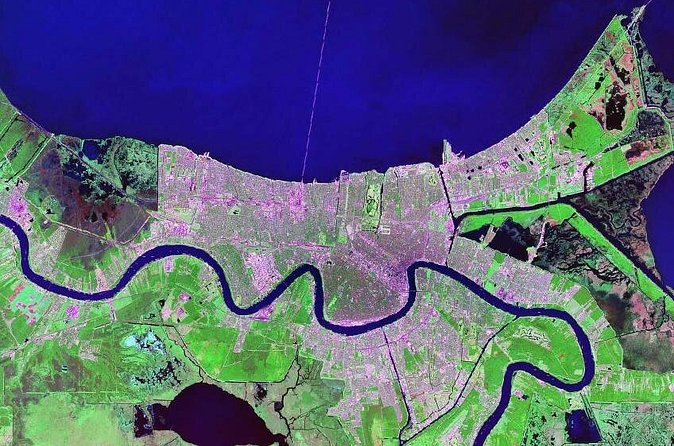
Stop 1 is where the tour earns its keep: the Mississippi River and the levee system. The guide explains how this sea-level swamp became livable land. That shift from wetland to agriculture to building helps you understand why New Orleans grew in the shape it did, and why water management is not a footnote here, it is part of the city’s identity.
Stop 2 continues the river thread. You’ll spend time along the Mississippi River area, and you get paddlewheel-style steamboat views that make the whole “river hub” idea feel real. Even if you have seen the Quarter before, this river-first approach gives you a different lens.
Practical tip: the river area can be bright and breezy. If you sunburn easily, bring protection. If you get cold fast, layer up, since evenings can feel cooler near the water.
French Market and Jackson Square, the Quarter’s easiest way to get your bearings

Next comes a quick stop at the French Market, the oldest open-air market in the United States. The guide ties it to a legend about bartering between Native Americans long before the market became what you see today. Even if you just want photos, the stop helps you understand that the Quarter has always been a place for trade, not only for nightlife.
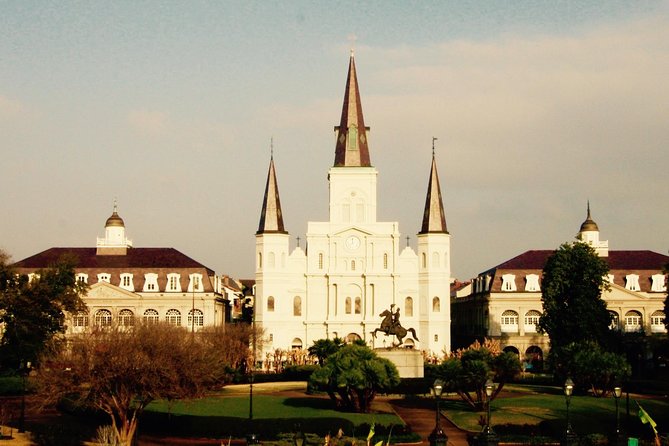
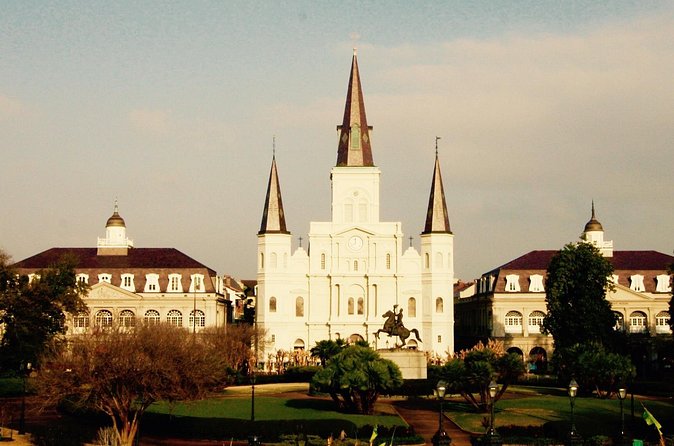
Then you move to Jackson Square, the central square that anchors much of the French Quarter. This is one of those landmarks you instantly recognize, but the tour’s value is in what you learn while looking at it. You’ll hear what is on the site of the original Place d’Armes and how Andrew Jackson is connected to the square.
You also get museum and building references here, which makes the rest of your walk easier to follow later. When you understand what you are looking at, the Quarter turns from a maze into a map.
If you’re visiting for the first time, I’d treat Jackson Square as your “reset point.” After the tour, you can point out the landmarks you learned and then explore at your own pace with less wandering.
Cabildo, Presbytere, and St. Louis Cathedral after the Great Fire
Jackson Square is framed by long, block-like buildings that form two sides of the square, and the guide points out details so you can see the layout instead of just the scenery. From there, you head to Cabildo.
Cabildo is built between 1795 and 1799 and once housed the center of government in New Orleans. Today, it is connected with the Louisiana State Museum. The key value of this stop is context: it helps you connect civic power to the physical Quarter you are walking through.
Right after, you’ll cover the Presbytere, built in 1791 to match the Cabildo. It’s described as having two permanent exhibits focused on both resilience and celebration. That pairing matters, because French Quarter stories often lean too far into either tragedy or party mode. This stop holds both.
Then the tour hits St. Louis Cathedral, one of the most important visual anchors in the Quarter. This is where the Great New Orleans Fire of 1788 comes in. The guide takes you inside, and you learn about where the fire started and how rebuilding influenced what is now considered classic French Quarter architectural style.
This is a stop that pays off even if you only care about architecture. It explains the “why” behind the look of the area, instead of forcing you to memorize facts you might forget.
Other New Orleans outings to compare
- New Orleans French Quarter, Voodoo and Culture Walking Tour
★ 4.5 · 2,961 reviews - New Orleans Garden District History Walking Tour
★ 5.0 · 2,879 reviews - New Orleans Haunted Ghost, Voodoo & Vampire Walking Tour
★ 4.5 · 2,731 reviews - French Quarter Historical Sights and Stories Walking Tour
★ 5.0 · 2,724 reviews
Pirate’s Alley, the Quadroon Ballroom, and literary stops that stick
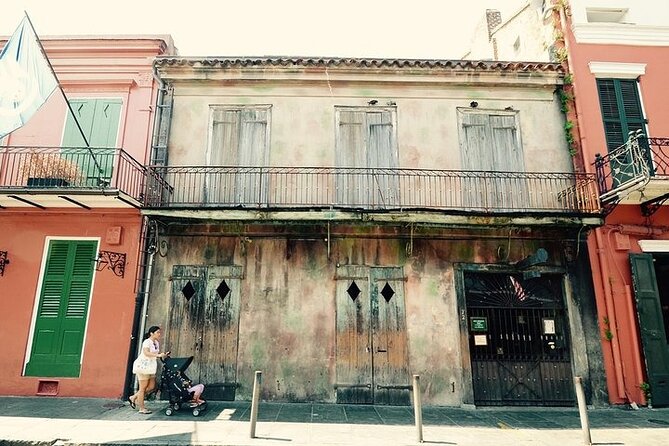
After the cathedral, you head into one of the more atmospheric parts of the French Quarter, including a step into a lush Creole courtyard. This is where the tour leans into people and systems, not just buildings.
The Pirates Alley segment is especially memorable because it connects several stories at once. You learn about complexities of Creole society and slavery in South Louisiana, and you hear about the system known as placage. You also go toward the balcony of the former Quadroon Ballroom, which helps bring the idea of social separation and relationships into focus.
For me, the literary and film spotting is what makes this portion feel like a time machine. The guide points out the building where Tennessee Williams wrote A Streetcar Named Desire. Later, you also enter William Faulkner’s home. If you like turning fiction into geography, this is a big reason to book, because you end up seeing the Quarter through authors’ lives rather than only through postcards.
And yes, you’ll also get time for local legends near Pirate’s Alley, including stories about prison escapes and dueling. Add in street music you might hear during the walk, and it becomes less like “history lecture” and more like “local stories under your feet.”
The Ursuline Convent stop and your final stretch near the river levee

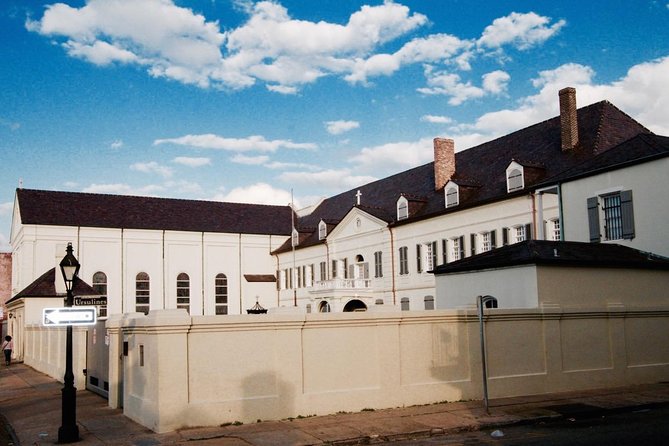
The tour’s last major stop is outside the Old Ursuline Convent Museum. You stand by the Mississippi River Valley’s oldest building and the guide frames its history as a window into early colonization efforts in Louisiana.
Even with only a short stop here, this part adds balance. Earlier you learned about levees and civic power, then you moved through markets, museums, and churches. The Ursuline Convent brings it back to settlement and daily human life, which keeps the tour from feeling like it only covers major events.
From there, the walk ends near the Mississippi River levee. That riverbank finish is a smart choice. It gives you a natural place to regroup, take photos, and decide what you want to do next in the Quarter.
Practical tip: plan to keep your pace gentle. The whole point is to enjoy the stop rhythm, not to race from one sight to the next.
Price, pace, and how good guides make the difference
At $29 per person for about 2 hours, this is priced like a value tour, not a budget compromise. You get a local guide, a small group experience capped at 9 travelers, and a route that covers major landmarks plus the details that usually get skipped when you self-tour.
The real “value” piece is the way the tour ties themes together. Levees explain the city’s survival and growth. Markets and Jackson Square show how trade and civic power shaped the Quarter. Cathedral and the fire story explain why the architecture looks the way it does. Then Pirate’s Alley and the literary stops give you emotional and cultural anchors that make the whole Quarter feel less random.
Pace is leisurely, but it is still steady. If you are the type who hates walking, you might feel it. If you can handle a 2-mile outing, this tour is a good first pick.
Guide quality seems to be a highlight. Names like Dave and Davi Higgins come up in praise, including comments about clear delivery, humor, and guides who make you feel safe while still answering questions. One guide gets described as a musician and stand-up comedian, which tells me this is not a monotone facts-only format.
Also, the guide can tailor the walk to your interests when the group is small, which is a nice perk if you show up with specific questions about architecture, literature, or social history.
Who should book this, and who might skip it
Book this if you want your first French Quarter visit to feel structured. It is ideal for people who like learning how a place works, not only what it looks like. It is also a great fit for history-minded travelers, literature fans, and anyone who wants a guided route without committing to a full day.
I’d also say it’s good for couples and solo travelers because the pace and small-group size make it easy to engage. Families can also do it, especially if your kids are old enough to enjoy guided stories, but comfortable shoes matter for everyone.
Skip it if you hate walking or if you want a pure museum-style itinerary. This tour is a promenade first. Most stops are brief and street-focused, with one inside stop at St. Louis Cathedral, so it’s not designed like a deep ticketed museum day.
Finally, remember it’s weather dependent. If rain moves in, the operator may adjust or cancel, with options offered in that case.
Should you book the New Orleans French Quarter Walking and History Tour?
If you’re trying to see the “real structure” of the French Quarter fast, I think this is a smart buy. For $29, you get a guided route that connects river engineering, civic life, architecture, and literature, all in a 2-mile walk that does not drag.
My biggest reason to book is the combination: you get major sights like Jackson Square and St. Louis Cathedral, plus the stories that make those sights make sense. If you choose this as your first Quarter activity, you’ll feel like you’ve learned how to navigate the place, not just how to look at it.
If you’re comfortable walking and you enjoy guided storytelling with humor and local details, this tour is easy to recommend. If you want minimal walking or a slower museum-heavy day, you may want a different style of tour.
FAQ
How long is the French Quarter walking and history tour?
The tour runs about 2 hours, with a leisurely walking pace and short stops along the way.
How much does it cost per person?
It costs $29.00 per person.
What language is the tour offered in?
The tour is offered in English.
How far do you walk?
You should expect to walk about 2 miles (about 3.2 km) during the tour.
Where do you meet the guide, and where does the tour end?
You meet around Cafe Beignet on Royal Street, and the tour ends in the Jackson Square area near the Mississippi River levee.
Is food or drinks included?
No. Food and drinks are not included.
Are admissions included for the stops?
The tour itinerary notes free admission for the stops. Your only built-in inclusion is the local guide.
What if the weather is poor?
This experience requires good weather. If it is canceled due to poor weather, you will be offered a different date or a full refund.
Can I cancel for a refund?
Yes. You can cancel up to 24 hours in advance for a full refund. If you cancel less than 24 hours before the start time, the amount paid will not be refunded.
More Historical Tours in New Orleans
- New Orleans Small-Group Haunted History Carriage Tour
★ 4.5 · 2,289 reviews - New Orleans Haunted History Ghost Tour
★ 4.5 · 2,084 reviews - Paddlewheeler Creole Queen Historic Mississippi River Cruise
★ 4.5 · 1,948 reviews - New Orleans Food and History Walking Tour
★ 5.0 · 1,544 reviews
Newest New Orleans reviews on the site
- New Orleans Yellow Fever Ghost Tour★ 5.0 · 1,298 reviews
- Whitney Plantation Tour with New Orleans Hotel Pickup★ 4.5 · 229 reviews
- Voodoo Queen of New Orleans Walking Tour★ 4.5 · 252 reviews
- Whitney Plantation Tour from New Orleans with Pickup★ 5.0 · 285 reviews
- New Orleans Delicious Donuts & Beignets: A Sweet Walking Tour★ 5.0 · 928 reviews
- New Orleans Private Carriage Tour of the French Quarter★ 5.0 · 537 reviews
- VIP Jazz Dinner Cruise with Private Tour and Open Bar Option★ 4.5 · 838 reviews
- New Orleans Transportation Service★ 5.0 · 238 reviews
Walking Tours, compared.

History and Hauntings of Salem Guided Walking Tour
Read our review →
New Orleans Premier Ghost, Voodoo and Vampire Walking Tour
Read our review →

Freedom Trail History Small Group Walking Tour
Read our review →
Historic Charleston Guided Sightseeing Walking Tour
Read our review →
New Orleans Food Walking Tour of the French Quarter with Small-Group Option
Read our review →
St. Louis Cemetery No. 1 Official Walking Tour
Read our review →Browse the lists this tour appears in