
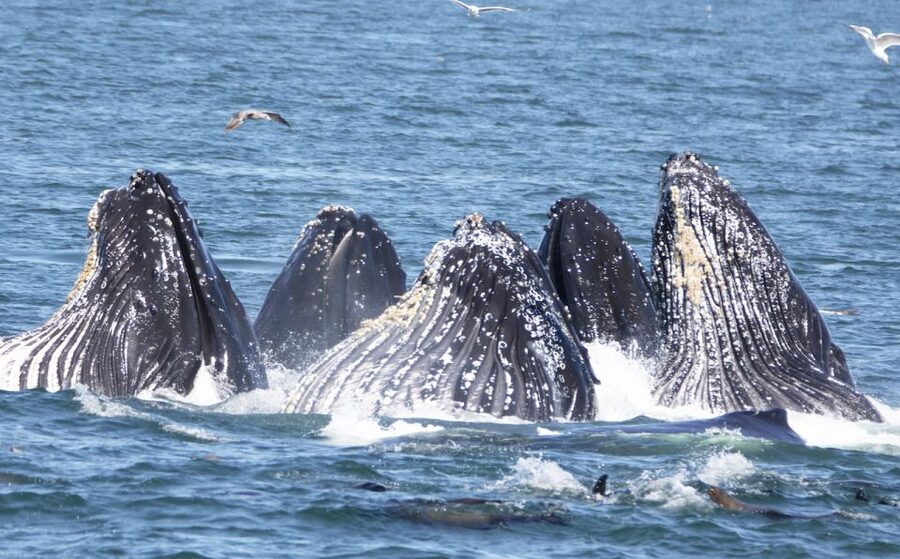
Reviewed · WHALE WATCHING
Monterey: Whale Watching Tour with A Marine Guide
Whales off Monterey, with a marine guide. This 150-minute cruise from Fisherman’s Wharf sends you into Monterey Bay Marine Sanctuary to hunt for whales and dolphins, with help from a specialist who explains what you are seeing.
I really like the setup. You get spacious seating, heated cabins, and a 360-viewing walkaround deck so you can keep switching between comfort and the best sightlines. I also love that the marine guide does more than point, they share practical info about wildlife behavior that helps you understand why the animals show up where they do.
One thing to plan for: the boat can feel crowded, so movement and perfect viewing from every angle are not guaranteed. If you want extra room, you will want to pick your spot early.
In This Review
- Key Things to Know Before You Go
- Entering Monterey Bay, Not Just Seeing It
- The 150 Minutes That Actually Changes Your Chances
- What You Can See: Humpbacks, Blues, Grays, Dolphins, and More
- The Boats: Heated Comfort Plus Real Viewing Space
- Choosing Your Seat: Outdoor, Indoor, and the Upper Deck Upgrade
- How the Marine Guide Helps You Spot Wildlife
- Logistics Made Simple, With One Common Gotcha
- Price and Value: What $70 Gets You
- Who This Monterey Whale Watching Tour Fits Best
- A Practical Packing and Camera Reality Check
- Should You Book This Monterey Whale Watching Tour?
- FAQ
- How long is the Monterey whale watching tour?
- Where is the meeting point?
- What is included in the price?
- Is food and drinks included?
- Are strollers or large bags allowed?
- Can I bring children, and is it accessible for mobility impairments?
Key Things to Know Before You Go
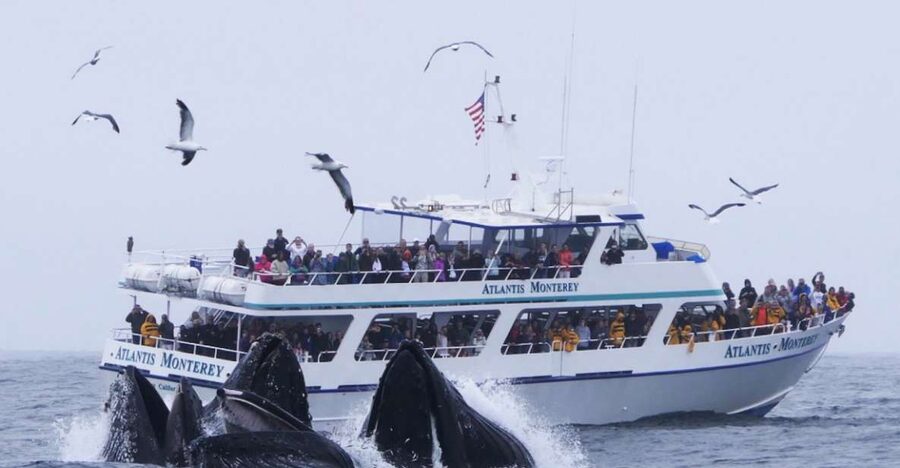
- Two big vessels, all about views: Princess Monterey (110 feet) and Atlantis Monterey (100 feet) both put you close to the water with indoor, outdoor, and deck space.
- 360 viewing matters: the walkaround deck helps you keep your eyes on surfacing blows, breaching, and dolphin movement.
- Seasonal whale chances: humpbacks and blue whales are common in summer and fall, gray whales show up winter to spring, and dolphins are year-round.
- Marine guide interpretation: you get real explanations of behavior, not just names on a checklist.
- Warmth is part of the plan: heated cabins help when you bounce between deck and interior.
- Upgrade is mixed value: limited VIP upper deck seating costs extra, and the benefit depends on where you normally sit.
Entering Monterey Bay, Not Just Seeing It
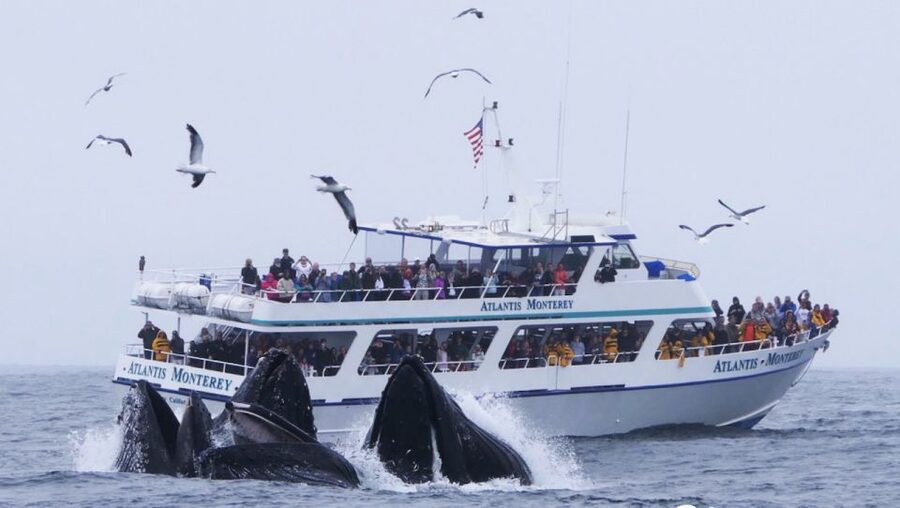
Monterey whale watching works because the bay is doing its job all the time. Nutrient-rich waters sit just offshore, pulling in marine life and setting up feeding and migration routes. So instead of a random sea drive, this cruise pushes you into the Monterey Bay Marine Sanctuary, the protected waters where many species pass through.
You board one of the two main boats used for the tour: Princess Monterey (110 feet) or Atlantis Monterey (100 feet). Either way, the experience is built around giving you constant chances to spot wildlife while staying comfortable enough that you do not have to choose between “I want to see” and “I want to feel my feet.”
What makes this tour feel worth your time is the mix of searching and understanding. You leave the harbor, move out into the sanctuary, and then you slow down and watch, with your marine guide calling out what you should look for and why. That guidance matters because whales and dolphins do not perform on a schedule. You are hunting, but you are not totally guessing.
Other Monterey outings to compare
- Monterey Bay: Whale Watching Tour
★ 4.8 · 2,300 reviews - Monterey: Monterey Bay Dolphin and Whale Watching Boat Tour
★ 4.7 · 1,645 reviews - 4 Hour Whale Watching Tour From Monterey
★ 5.0 · 1,045 reviews
The 150 Minutes That Actually Changes Your Chances
The cruise is about 150 minutes, which is long enough to circle, reposition, and follow activity without turning into a whole day of waiting. It also matches the real rhythm of whale watching: animals might surface for a short window, travel a bit, then disappear again.
Here is how the timing tends to work in a practical sense. The crew heads out from the harbor into sanctuary waters. Once they locate activity, they manage the viewing so you can keep your eyes on the same area rather than constantly giving up contact.
A good sign is when you see the boat take its time. In multiple accounts, the crew allowed riders to enjoy the whales, including close passes and repeated sightings. Sometimes activity means extended searching, like when dolphins are spotted on the way back and the captain keeps going a bit longer to give you a chance to see them.
So yes, you are out there long enough to get more than a quick glimpse. And no, it is still not a guarantee of the exact species you want. The bay decides.
What You Can See: Humpbacks, Blues, Grays, Dolphins, and More
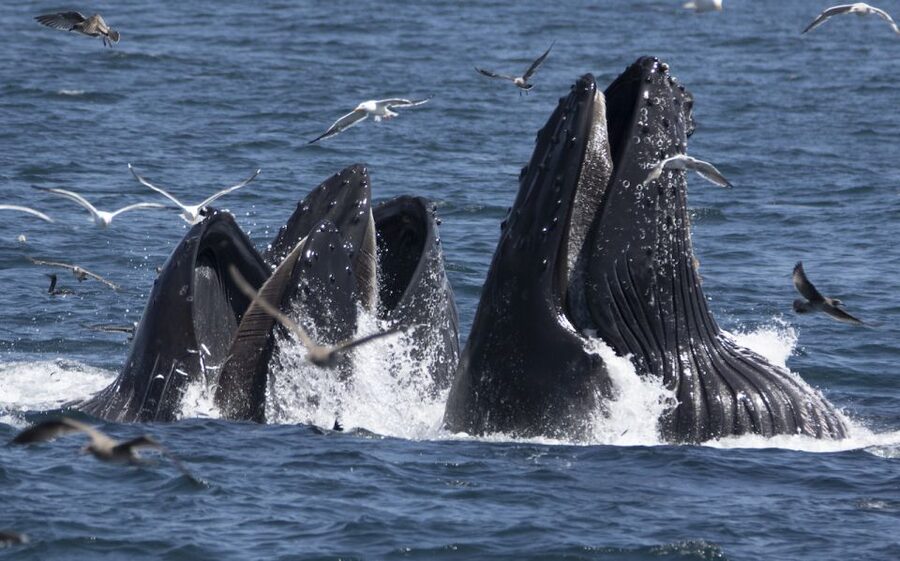
Monterey Bay has a real lineup, and this tour leans into it by targeting a wide range of seasonal wildlife. The sanctuary is described as home to 34 species of marine mammals, which is a useful reminder that this is not only about whales.
Here is the big-picture wildlife calendar you can mentally match to your dates:
- Summer and fall: humpback whales and blue whales are possible.
- Winter and spring: gray whales pass through while navigating one of the longest migrations for a marine mammal.
- Year-round: dolphins show up throughout the year.
- Ongoing across the season: sea lions and other marine life often appear as part of the feeding picture.
In real-world sightings, people have reported humpbacks up close, including whales breaching and doing repeated turns near the boat. Others have seen orcas and fin whales, and there are accounts of gray whales and dolphins in the same trip. You may also catch plenty of birds, since seabirds often show up when feeding activity is happening.
A useful way to think about this: even if you are chasing a “main event” whale, the best whale watching days often include secondary surprises. Sea lions feeding, dolphins traveling in groups, birds reacting to surface action. That variety is part of why Monterey Bay can feel more alive than a single-species outing.
The Boats: Heated Comfort Plus Real Viewing Space
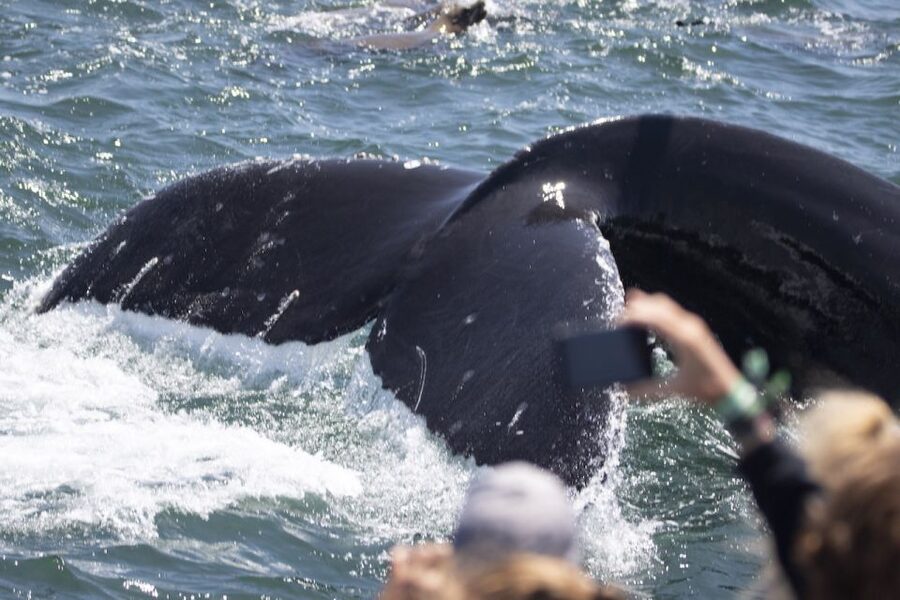
This is not a tiny skiff with one sightline and a prayer. You ride on a larger vessel designed for viewing comfort, and that makes a difference when the wind gets sharp.
Both boats offer:
- Heated cabins for when the ocean breeze gets serious.
- Indoor seating with large windows for viewing without freezing.
- Outdoor seating for direct deck spotting.
- A 360-viewing walkaround deck, which lets you reposition your angle as activity changes.
If you have ever been on a boat where you end up staring at the back of someone’s head, you will appreciate the movement options here. The deck circulation means you can keep chasing sighting angles when a blow happens in a new direction.
You also have a basic onboard bar setup where you can grab a snack or drink. Food is not included, but you are allowed to bring your own food and drinks if you want a more budget-friendly or picky-eater friendly approach.
One more practical note: toilets are available onboard. That sounds small, but on a 150-minute outing, it matters.
Same corner of the map, another day out:
- Monterey’s 17 Mile Drive Guided Electric Bike Tour, 3 hr
★ 5.0 · 870 reviews - Monterey: Sunset Whale Watching Cruise with A Guide
★ 4.7 · 519 reviews - From San Francisco: Monterey and Carmel Day Tour
★ 4.4 · 476 reviews
Choosing Your Seat: Outdoor, Indoor, and the Upper Deck Upgrade
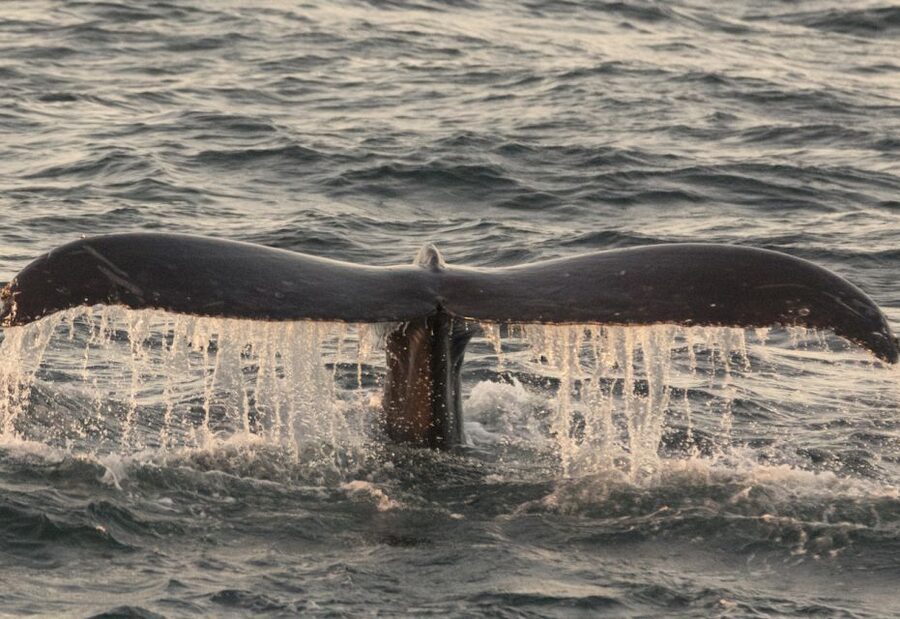
Where you sit changes what you notice. On this tour, you have options, and the boat’s layout makes it easy to switch between them.
You can go for:
- Indoor seating if you want steadier temperature and large window viewing.
- Outdoor seating if you want deck-level spotting when whales surface close enough to be dramatic.
- The 360 deck for moving around and finding your best angle.
There is also an optional VIP upper deck seating upgrade available at check-in for an additional $20 per person, and it is limited. The reactions to this upgrade are mixed, which is a polite way of saying it depends on how you like to watch. One rider felt it did not add much, while another said the views were definitely better on the upper deck.
My practical advice: if you hate the idea of standing and waiting for a sighting, the upper deck may be worth considering for your style of watching. If you are flexible and like to bounce between indoor, outdoor, and the deck, you can likely get plenty of value without paying extra.
How the Marine Guide Helps You Spot Wildlife
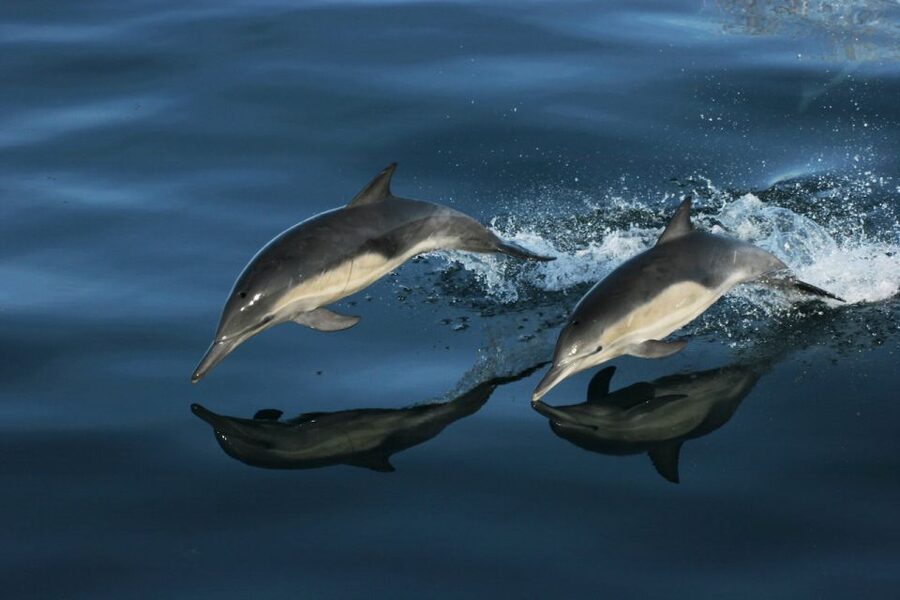
This is one of the tour’s strongest features: the marine guide does not just narrate what is happening, they interpret it. That matters because whales and dolphins follow patterns you can learn to recognize.
The guide focuses on wildlife behavior, so you understand not only what you are seeing but why it is happening. You get facts that help you make better guesses when the animals go quiet for a few minutes. And when whales are found, guides and crew often work to keep the viewing going rather than moving on too fast.
From real experiences, the guides are frequently described as attentive, professional, and genuinely engaged. You will also hear entertaining commentary, not robotic lecture mode. That energy helps when you are standing on a cold deck, waiting for the next blow.
If you get seasick easily, take it seriously. One solo rider specifically suggested taking motion sickness medication before boarding. You will also want warm layers if you plan to spend time outdoors. Even with heated cabins, the deck time can be chilly.
Logistics Made Simple, With One Common Gotcha
Getting there is straightforward, but do not treat it like a drive-and-forget situation.
Your meeting point is a bright yellow building at the end of Fisherman’s Wharf, next to shops and restaurants. It is about a 5 to 10 minute walk from the car park. One tip stands out from firsthand advice: parking directions can be confusing, because you reach the meeting spot mostly by foot. So give yourself a little extra buffer, especially if you are arriving during busy tourist hours.
Also note:
- Departure times can change, and vessels may be swapped without prior notice.
- The tour is English language with a live guide.
- Not everyone can join: baby strollers, luggage or large bags, and walking frames are not allowed.
- Toilets are onboard.
Price and Value: What $70 Gets You
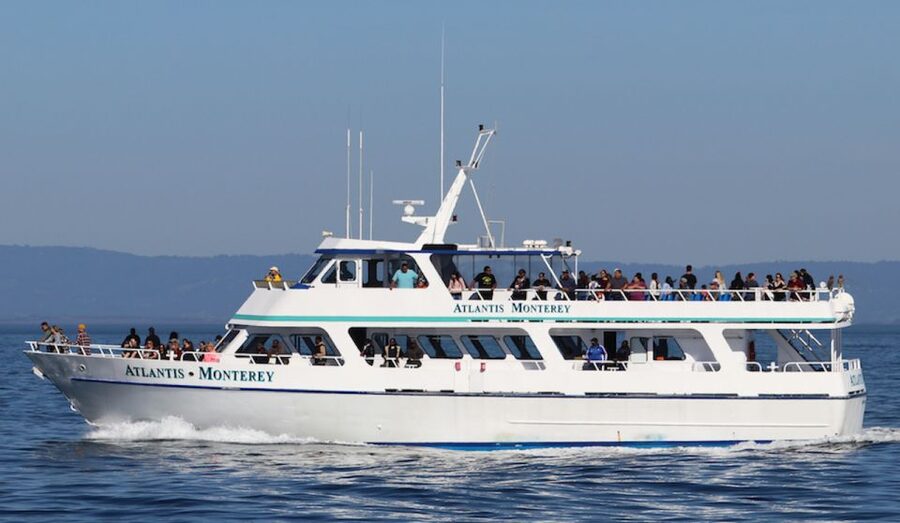
At $70 per person for about 150 minutes, this sits in the “mid-range for a guided wildlife cruise” zone, and the value comes from what is included.
Included:
- Cruise
- Marine guide
- Brochure
Not included:
- Food and drinks (though you can buy drinks/snacks onboard, and you can bring your own)
So you are paying mainly for:
1) the boat time in the sanctuary,
2) the guide’s wildlife expertise and behavior interpretation, and
3) the viewing setup that keeps you warm and in the game.
Where the tour wins on value is that you are not just watching from a single spot. You have multiple viewing modes, heated interiors, and deck circulation. If a captain keeps the search moving when wildlife is found, that extended attention is exactly what makes a paid cruise feel “worth it,” not “just entertainment.”
If you are hoping for the closest possible whale moments, you should also know that nature is unpredictable. Some trips include repeated humpback sightings, breaching behavior, even orca sightings. Others might be more modest. Your best strategy is to go prepared for a range of outcomes, then be thrilled when the bay delivers big.
Who This Monterey Whale Watching Tour Fits Best
This cruise is a strong fit if you want a guided, comfortable wildlife outing rather than a bare-bones boat ride.
You will likely enjoy it most if:
- You want to learn what you are seeing, with behavior tips from a marine guide.
- You are happy to alternate between indoor comfort and outdoor deck viewing.
- You enjoy a realistic chance at multiple species, since dolphins are year-round and whales vary by season.
- You want a short enough time block to fit into a day in Monterey without losing the whole day.
It is not suitable for:
- Children under 3 years
- Pregnant women
- People with mobility impairments
The no stroller and no walking frame rules are also important. If you travel with mobility needs, it is worth planning a different Monterey wildlife plan that matches your abilities.
A Practical Packing and Camera Reality Check
A few small things can level up your experience:
- Bring warm layers. You might spend long stretches on the deck waiting for animals to surface.
- Consider binoculars. The boat can be far from whales at times, and binoculars help you track activity between blows.
- If you care about photos, plan for a zoom lens. One person noted that you may need it because whales are not always close enough for easy shots.
- If you get motion sick, take action before you board. One rider recommended motion sickness medication in advance.
Also, check what you bring. No luggage or large bags are allowed, so keep it compact. If you plan snacks, pack what you need for your own comfort since food is not included.
Should You Book This Monterey Whale Watching Tour?
I think this tour is a good booking when you want real guidance plus a comfortable boat that actually lets you view from multiple angles. If your priority is learning and staying warm while you search for whales, this setup makes sense, and the guide support is frequently praised for keeping the experience engaging and informative.
Book it if:
- You are visiting Monterey Bay and want an anchor activity that is built for spotting whales and dolphins.
- You like structured guidance, especially behavior clues.
- You are okay with the fact that wildlife is unpredictable, and you want the best shot at sightings through a search-focused cruise.
Skip it or pick a different day if:
- You want guaranteed close-up whales. This is nature, and even great guides cannot manufacture a breach.
- Crowds would stress you out. There can be a packed feel on board, so plan to choose your viewing spot early.
- Your situation does not fit the activity rules, like mobility limitations, stroller needs, or age restrictions.
If you are flexible, dress for cold sea air, and let the guide steer your attention, Monterey Bay can deliver a very memorable set of whale watching moments in just 150 minutes.
FAQ
How long is the Monterey whale watching tour?
The tour lasts 150 minutes.
Where is the meeting point?
Meet at the bright yellow building at the end of Fisherman’s Wharf, next to the shops and restaurants. It is a 5 to 10 minute walk from the car park.
What is included in the price?
The price includes the cruise, a marine guide, and a brochure.
Is food and drinks included?
No. Food and drinks are not included, but snacks and drinks are available onboard. Guests are also welcome to bring their own food or drinks.
Are strollers or large bags allowed?
No. Baby strollers, luggage, and large bags are not allowed. Walking frames are also not allowed.
Can I bring children, and is it accessible for mobility impairments?
It is not suitable for children under 3 years, and it is not suitable for people with mobility impairments.
Newest Monterey reviews on the site
- Monterey: Sunset Whale Watching Cruise with A Guide★ 4.7 · 519 reviews
- From San Francisco: Monterey and Carmel Day Tour★ 4.4 · 476 reviews
- Monterey: Monterey Bay Dolphin and Whale Watching Boat Tour★ 4.7 · 1,645 reviews
- 4 Hour Whale Watching Tour From Monterey★ 5.0 · 1,045 reviews
- Monterey’s 17 Mile Drive Guided Electric Bike Tour, 3 hr★ 5.0 · 870 reviews
- Monterey Bay: Whale Watching Tour★ 4.8 · 2,300 reviews
Whale Watching, compared.
Juneau Wildlife Whale Watching & Mendenhall Glacier
Read our review →
City Cruises Boston Whale Watching Cruise by High-Speed Boat
Read our review →
Maui Eco-Raft Tour: Eye-Level Whale or Dolphin Watching – Lahaina
Read our review →
Browse the lists this tour appears in