
Reviewed · PLANTATION TOURS
Laura Creole Plantation Guided Tour
Hard history, told with care.
Laura Plantation, about an hour from New Orleans on the Great River Road, gives you a tight guided walk through a well-preserved Creole estate. I like that the tour uses four generations of family records to explain both free and enslaved life, not just the pretty house.
Two things really land here. First, you walk through the furnished Maison Principale, then move on to the original 1840s slave cabins, gardens, and sugar fields. Second, the tour does not dodge slavery, explaining it as it existed in French colonial and American Louisiana into the late 1800s. One caution: the experience is short (about 1 hour 10 minutes), and a few people say they wanted even more day-to-day detail about enslaved life.
In This Review
- Key highlights and what they mean for you
- Entering Laura Plantation’s Creole Heritage Site in Vacherie
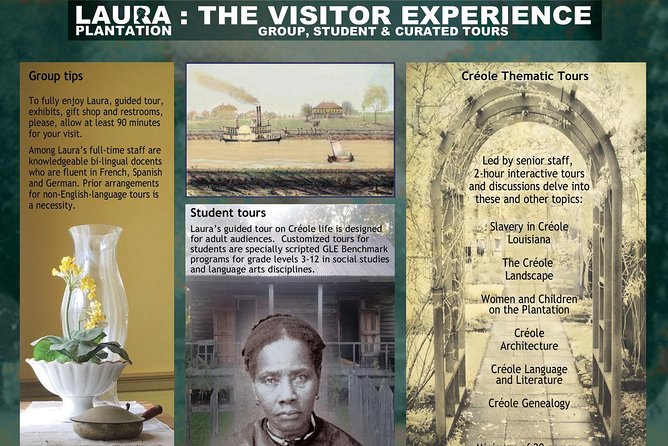
- What you actually see on the guided tour: house, cabins, and the grounds
- The furnished Maison Principale
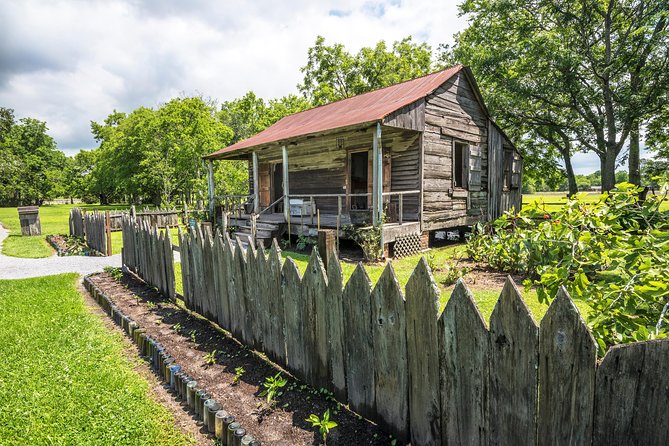
- The slave quarters and original 1840s cabins
- Gardens, sugar fields, and the plantation as a working system
- The Creole narrative: Duparc family records, memoir, and French archives
- Guide quality and group size: why it feels personal
- Price and value: how $32.06 works for a short guided experience
- Getting there from New Orleans and practical timing tips
- Accessibility and comfort notes before you go
- What kind of traveler should book Laura Plantation?
- Should you book this Laura Plantation guided tour?
- FAQ
- How long is the Laura Plantation guided tour?
- Where does the tour start?
- Is the tour offered in English?
- What does the tour include?
- Is there transportation included from New Orleans?
- Is the main house accessible for visitors with ADA needs?
Key highlights and what they mean for you
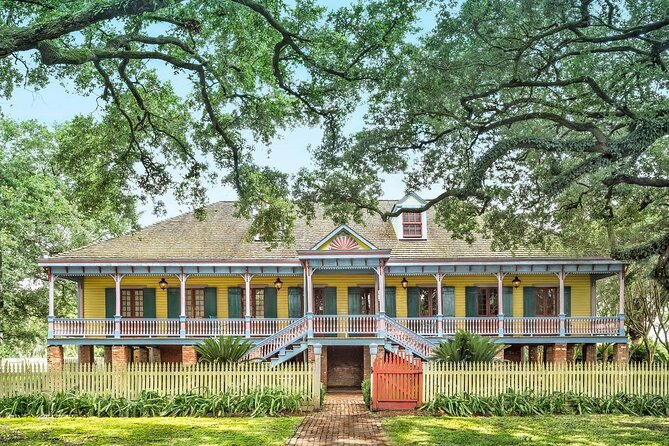
- Maison Principale, gardens, and 1840s slave cabins: you get the full estate picture, not just one room.
- Creole stories backed by surviving records: the tour references memoir and French National Archives material to build the narrative.
- A French-descended Duparc family focus: you learn how one family’s Creole identity shaped plantation life from 1804 onward.
- A guide-led pace that invites questions: ask about Creole culture and what life was like beyond plantation myths.
- Small group size (max 28): easier to hear, ask, and keep your bearings.
- Outdoor time plus weather dependence: wear real walking shoes and plan for sun, shade, or a sudden drizzle.
Entering Laura Plantation’s Creole Heritage Site in Vacherie
Laura Plantation is a serious day trip from New Orleans, but it is not a long slog. Plan on about an hour drive from the city area along the Great River Road, and then you’ll spend roughly 1 hour 10 minutes on the guided portion. The vibe is educational and factual, with the grounds doing a lot of heavy lifting once you arrive.
The big reason people make this trip is that the estate is built around a Creole story, and that story stretches back generations. You’re not being handed a one-note “plantation house” script. Instead, you learn how Creole culture in Louisiana grew and changed over more than 200 years, and how that culture intersected with power, labor, and race.
Also, the site is recognized in official history channels. Laura Plantation is on the National Register of Historic Places and is part of the Louisiana African American Heritage Trail. That matters because it signals that the place is not only pretty, it is also treated as a historical record worth preserving.
Other New Orleans outings to compare
- Swamp Boat Ride and Oak Alley Plantation Tour from New Orleans
★ 5.0 · 3,303 reviews - Oak Alley Plantation Tour with Transportation from New Orleans
★ 4.5 · 1,747 reviews - Whitney Plantation Tour with Transportation from New Orleans
★ 4.5 · 1,351 reviews
What you actually see on the guided tour: house, cabins, and the grounds
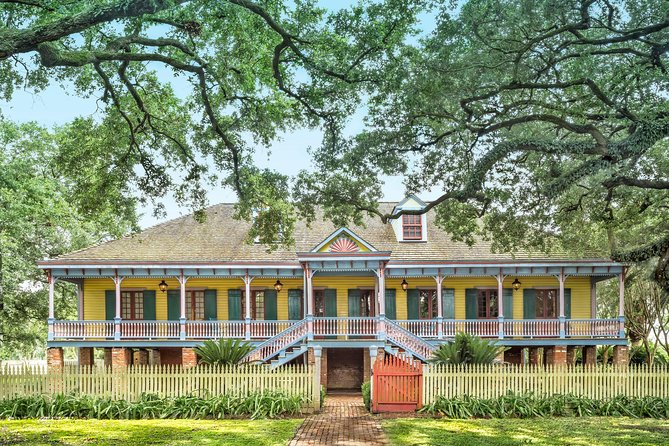
The tour is a guided loop through the estate’s most important spaces. You follow a guide through the 24,000-square-foot main house and then out to the slave quarters and the surrounding grounds. Expect furnished rooms, not a bare shell. That detail helps you understand the estate as a lived-in workplace and home, not just a museum facade.
Here is the rhythm you can expect:
The furnished Maison Principale
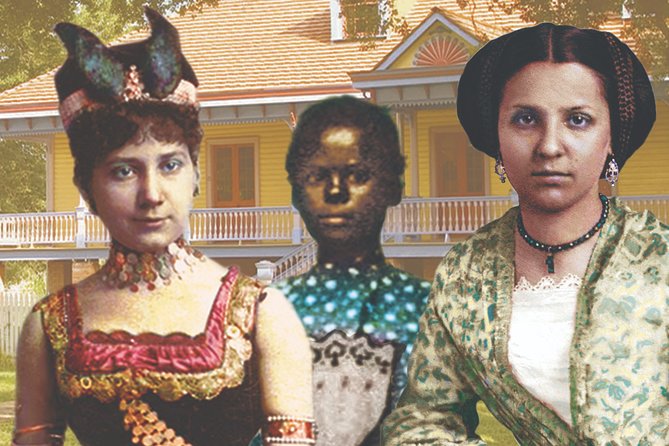
You start in the main house, where the tour connects architecture and family life. The estate’s narrative is tied to the Duparc family, who founded the plantation in 1804. Your guide ties that founding story to what the house represented, socially and economically, during the plantation era.
If you love details, pay attention to how rooms and spaces are explained. A few past visitors noted that the tour is structured so you cannot slow-walk every corner. The tradeoff is that you cover the main story areas in a single visit. If you want extra time on specific rooms, go in knowing you will have a guided pass, then independent wandering afterward.
The slave quarters and original 1840s cabins
This is the part that most changes your understanding. The tour addresses slavery as it existed through French colonial and American Louisiana, running into the late 19th century. You hear stories about both free people and enslaved people who lived here, and the point is not to soften the facts. It is to explain how the system worked and what it meant for real lives.
A practical takeaway: if you are the type who wants “day to day” specifics, ask questions during the tour. One review outcome you should keep in mind is that some people expected even more detail about day-to-day life. That doesn’t mean the tour skips it entirely, but it may mean the guide decides what to emphasize based on group questions and time.
Same corner of the map, another day out:
- New Orleans Premier Ghost, Voodoo and Vampire Walking Tour
★ 4.5 · 12,856 reviews - New Orleans Steamboat Natchez Jazz Cruise with Dinner Option
★ 4.0 · 7,533 reviews - Adults-Only New Orleans Ghost, Crime, Voodoo, and Vampire Tour
★ 5.0 · 6,545 reviews - New Orleans Food Walking Tour of the French Quarter with Small-Group Option
★ 5.0 · 6,118 reviews
Gardens, sugar fields, and the plantation as a working system
After the house and cabins, you move into the outdoor spaces where the plantation’s work shows up. You’ll see gardens and sugar fields as part of the tour flow. This is where Creole culture makes more sense, because it is easier to grasp how food, labor, and household systems were connected.
Outdoor time also means your comfort matters. The tour operates in all weather conditions, and portions of the walk are outside. Bring good walking shoes, and if rain is in the forecast, wear something you can handle. Even when the weather is fine, Louisiana sun is not subtle.
The Creole narrative: Duparc family records, memoir, and French archives
What makes Laura Plantation feel grounded is the way the tour builds its story. The site is described as having detailed surviving records kept by the family across four generations. That means you are not only hearing general plantation talk.
The tour ties much of what is known to:
- Laura Locoul’s memoir from the fourth generation of the family
- records discovered in French National Archives
You do not need to be a history nerd to benefit from this. It shows up in how the guide makes sense of people, names, and relationships, rather than only describing the estate as a symbol. You get a clearer picture of how one Creole family experienced the world around them and how enslaved people were forced into the machinery of that world.
The Duparc family connection is central. You’ll hear about a French-descended lineage shaping the plantation from 1804, with Creole culture developing over centuries in Louisiana. If you are hoping for a “Creole is just food and music” version of history, this tour won’t stay there. It connects Creole identity to the economic reality of the plantation.
Guide quality and group size: why it feels personal
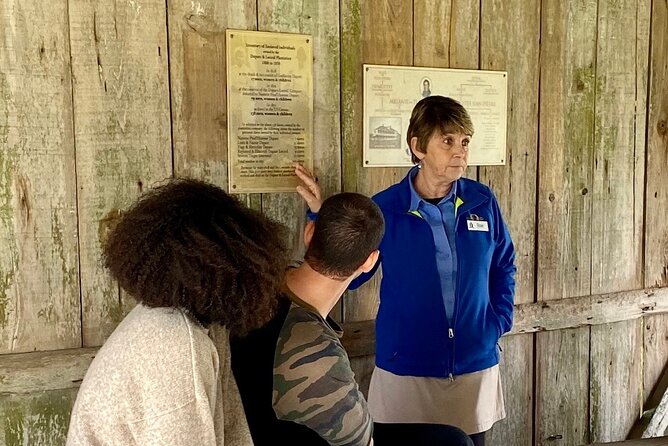
The tour is led by a local guide, and the group size is capped at 28. That matters because it keeps the tour readable. You are not stuck listening to a guide compete with a crowd, and it’s easier to ask a question without feeling like you’re interrupting a busload of people.
You’ll also notice that different guides bring different strengths. Names that came up in positive feedback include Amelia, Lee, Pam, Cameron, Joseph, Lindie, and Caroline. People praised these guides for clear storytelling, pacing, and making the families and the work behind the scenes feel real. One guide, Amelia, was specifically noted for connecting what you see to the era when the plantation was built and the period that followed.
Still, you should expect that time is limited. If you want to linger for photos or extra reading on the spot, you might not have it. One practical piece of advice from that same theme: look around as you pass through, because the tour loop does not always give you repeated chances to re-check every angle.
Price and value: how $32.06 works for a short guided experience
At $32.06 per person for about 1 hour 10 minutes, Laura Plantation is priced like a focused guided attraction, not a half-day excursion. That can be a good deal if you want a high-impact history stop without committing a whole day.
The value comes from what’s included. You get a guide and access to the main house, slave cabins, gardens, and sugar fields. You also get context that many plantation visits skip or gloss over. The tour actively addresses slavery, rather than only highlighting architecture and romance.
Could it feel steep if you expected the tour to be hours longer? Yes. This is not an all-day deep seminar. If you are the type who wants to sit and read every label, you may still enjoy a quick visit, but you should plan to extend your learning on your own after the guided portion.
Also keep transportation in mind. Laura Plantation does not provide hotel pickup and drop-off. If you need a ride from New Orleans, you may use partner operators, and those costs can vary. One disappointment was that transportation cost ended up higher than the tour ticket itself. Translation for your planning: budget for the drive, or at least price a transportation option early so the total cost does not surprise you.
Getting there from New Orleans and practical timing tips
You’ll drive yourself to the meeting point: 2247 LA-18, Vacherie, LA 70090. The estate is roughly an hour from New Orleans along the Mississippi-themed Great River Road. That’s a nice route in theory, but Louisiana traffic and stoplights still add time.
Plan to arrive with a little buffer. You’re walking, and you want to settle in before the tour starts. There’s also a practical benefit of early arrival: you’ll be less rushed when you transition from the house to the cabins and outdoors.
Parking is usually not an ordeal. Feedback included that parking works well for both cars and buses. Even if you come during a busy window, you should be able to park without a stressful scavenger hunt.
After the guided tour ends, you can continue independently. The estate is on a stretch where you can also pair it with other plantations along the Great River Road. If you like comparing sites, this is a smart way to make the day more efficient without turning it into a marathon.
Accessibility and comfort notes before you go
Comfort matters because some time is outdoors. The tour operates in all weather conditions, so dress for heat, sun, and rain. Good walking shoes help a lot, especially if the ground is wet.
Accessibility is partial. Only the ground floor of the main house is ADA accessible. If you or someone in your group needs mobility support, plan around that and expect the outdoor sections of the tour to be more variable.
Service animals are allowed, which is helpful if you travel with a working animal.
What kind of traveler should book Laura Plantation?
This tour fits best if you want:
- a guided, well-organized history stop that includes difficult topics
- a focused overview of Creole culture tied directly to plantation life
- the house plus the slave quarters, not just one side of the story
- a short day trip that still feels substantive
If you hate any talk of slavery, this is not the place to “whitewash” your understanding. The tour is designed to explain the system and its human consequences.
If you want extreme detail about daily routines down to the minute, you may need to supplement with independent reading during or after your visit. The guided tour is short, so it’s built for strong context and key stories, with questions as the main way to steer deeper.
Should you book this Laura Plantation guided tour?
Yes, with a smart plan.
Book it if you want a high-impact stop on the Great River Road that covers both the Maison Principale and the slave cabins, with a Creole narrative anchored in surviving records like Laura Locoul’s memoir. The small group size also helps the tour feel more like a conversation than a lecture.
Maybe think twice if you are only interested in the architecture and gardens, and you dislike guided time limits. Also, if you care deeply about day-to-day details of enslaved life, come ready with questions, because the tour’s structure is built to cover a lot of ground in a short window.
Bottom line: for most people doing a New Orleans trip who want real context, this one is worth the drive and the ticket price.
FAQ
How long is the Laura Plantation guided tour?
It runs about 1 hour 10 minutes.
Where does the tour start?
The meeting point is Laura Plantation: Louisiana’s Créole Heritage Site, at 2247 LA-18, Vacherie, LA 70090.
Is the tour offered in English?
Yes. The tour is offered in English (and also in French).
What does the tour include?
It includes a local guide and access to the main house (Maison Principale), gardens, and original 1840s slave cabins, along with stories about free and enslaved people.
Is there transportation included from New Orleans?
No. Hotel pickup and drop-off are not included. The site partners with operators that may provide transportation for guests who do not self-drive.
Is the main house accessible for visitors with ADA needs?
Only the ground floor of the main house is ADA accessible. A portion of the tour is outdoors, so comfortable walking shoes are recommended.
Newest New Orleans reviews on the site
- New Orleans Yellow Fever Ghost Tour★ 5.0 · 1,298 reviews
- Whitney Plantation Tour with New Orleans Hotel Pickup★ 4.5 · 229 reviews
- Voodoo Queen of New Orleans Walking Tour★ 4.5 · 252 reviews
- Whitney Plantation Tour from New Orleans with Pickup★ 5.0 · 285 reviews
- New Orleans Delicious Donuts & Beignets: A Sweet Walking Tour★ 5.0 · 928 reviews
- New Orleans Private Carriage Tour of the French Quarter★ 5.0 · 537 reviews
- VIP Jazz Dinner Cruise with Private Tour and Open Bar Option★ 4.5 · 838 reviews
- New Orleans Transportation Service★ 5.0 · 238 reviews
Plantation Tours, compared.
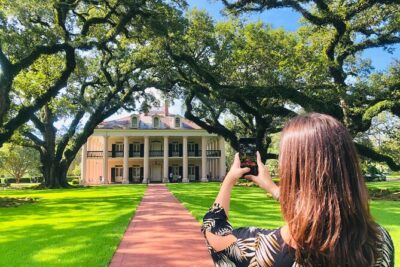
Swamp Boat Ride and Oak Alley Plantation Tour from New Orleans
Read our review →
Oak Alley Plantation Tour with Transportation from New Orleans
Read our review →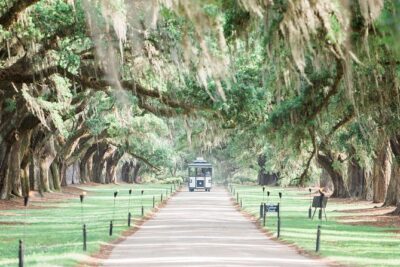
Boone Hall Plantation All-Access Admission Ticket
Read our review →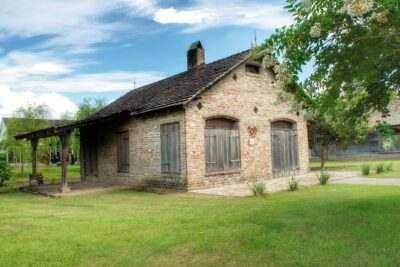
Whitney Plantation Tour with Transportation from New Orleans
Read our review →
Bayou Swamp Tour and Oak Alley Plantation Tour
Read our review →
Oak Alley Plantation & Airboat Swamp Combo Tour
Read our review →
Magnolia Plantation Admission & Tour with Transportation from Charleston
Read our review →
Pearl Harbor, Dole Plantation, and Polynesian Center from Waikiki
Read our review →Browse the lists this tour appears in