
Reviewed · WALKING TOURS
Heart of Savannah History Walking Tour – 2hr
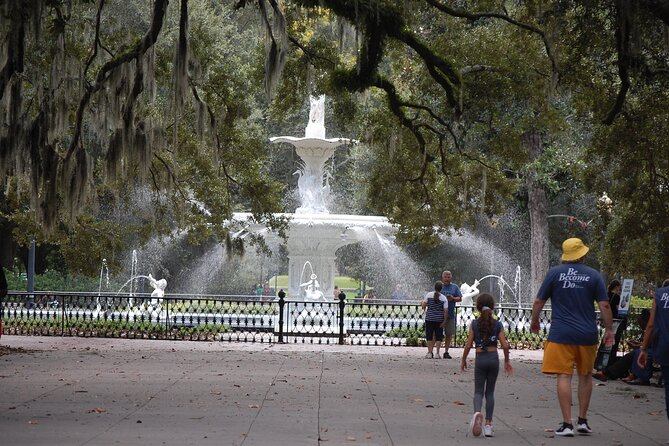
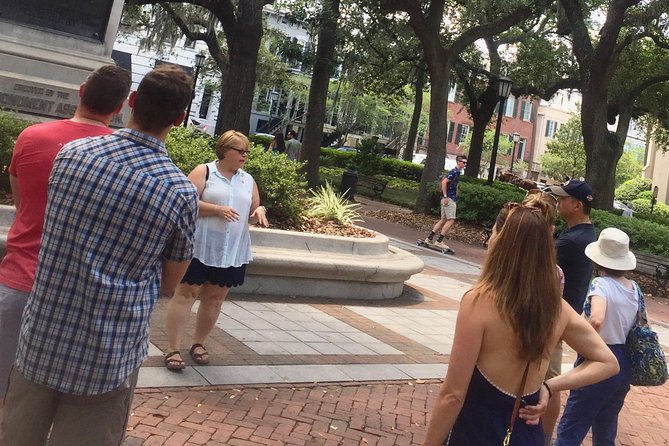
Savannah squares tell stories fast. This Heart of Savannah History walk threads together the layout of the city, the big moments of the Revolution and Civil War, and the movie-magic trivia people come for, like the Forrest Gump scene in Chippewa Square. I especially love how the guide makes the city map feel simple, and how the tour ends at the Forsyth Park Fountain with a perfect reset for your next stop. One thing to consider, most key stops are viewed from the outside, so if you want lots of inside museum time, you may feel a bit limited.
The route is about a mile total with benches along the way, and the whole thing runs around two hours. You can pick a morning or afternoon time, and the group stays small, capped at 30 people, which helps keep the pace conversational. The tour operates rain or shine, and I recommend planning for warm, humid conditions, plus bringing an umbrella just in case.
In This Review
- Key Highlights You’ll Feel Right Away
- The Pace, Path, and Practical Reality of a 2-Hour Savannah Walk
- Wright Square, the Gordon Monument, and Why Savannah Was Built on a Bluff
- Juliette Gordon Low Birthplace: Girl Scouts Began Here
- Independent Presbyterian Church and Its Pattern of Rebuilding
- Chippewa Square: Forrest Gump, Oglethorpe, and the Quick Museum of Trivia
- Sorrel Weed House: Haunted Reputation, Gray Brick, and Fingerprints
- Madison Square and the Siege of Savannah
- Green-Meldrim House: Gothic Detail and Sherman’s Headquarters
- Passing the SCAD Volunteer Guard Building, Then Sizing Up the Gryphon Tea Room
- The Mercer Williams House, Midnight in the Garden of Good and Evil, and the Real Scandal
- Armstrong-Kessler House: Admire It, But Know You Cannot Tour Inside
- Forsyth Park and the Fountain That Everyone Has to Photograph
- What You Actually Get for Your Time and Money
- Who This Walking Tour Fits Best (and Who Might Prefer Something Different)
- Should You Book the Heart of Savannah History Walk?
- FAQ
- How long is the Heart of Savannah History walking tour?
- Where does the tour start and end?
- Do I need to pay admission at the stops?
- Is the tour mostly inside museums or outside sightseeing?
- Does the tour run if it rains?
- What happens in severe weather?
- Is this tour suitable for most people, and are service animals allowed?
- What should I bring for the walk?
Key Highlights You’ll Feel Right Away

- Wright Square orientation on Savannah’s original plan, including why the colony was set on a 40-foot bluff
- Juniette Gordon Low roots in plain view, since the birthplace museum is admired from outside only
- Chippewa Square’s Forrest Gump detail, plus a correction of what the central monument actually represents
- Revolutionary-era places in the flow, like the Siege of Savannah site at Madison Square
- Gothic architecture and Civil War strategy, tied to Green-Meldrim House and Sherman’s headquarters
- A classic finish at Forsyth Park Fountain, including the France mail-order backstory
The Pace, Path, and Practical Reality of a 2-Hour Savannah Walk
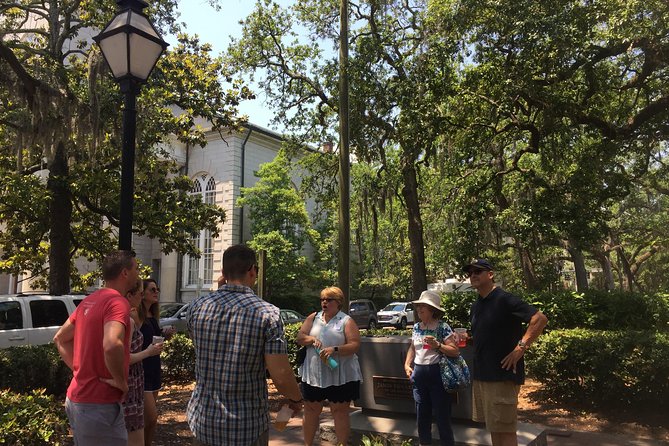
This is a smart, starter-level walking tour for Savannah’s historic district. You are moving for about two hours total, not all day, and you still get a strong sense of where the key squares sit and why the city feels the way it does.
The good news is that it is not a speed march. The tour is planned around about a mile of walking, with benches along the way, and most people can participate. Still, wear comfortable walking shoes, because you will be on your feet for the full route even if you stop to listen often.
More Walking Tours in Savannah
- Savannah History and Haunts Candlelit Ghost Walking Tour
★ 5.0 · 3,235 reviews - Savannah First Squares Culinary & Cultural Walking Food Tour
★ 5.0 · 3,229 reviews - Historic Savannah Guided Walking Tour
★ 5.0 · 2,918 reviews
Wright Square, the Gordon Monument, and Why Savannah Was Built on a Bluff
Wright Square is where the tour begins, on the north side in front of the Gordon Monument. Your guide starts by explaining how Savannah was first established, including the reason General James Oglethorpe chose a location on a 40-foot bluff. That one detail makes the rest of the city make more sense, since it ties defense, planning, and the look of the streets together.
You also get the square design story, which is a big part of what you should notice in Savannah. The guide points out what the Port of Savannah means too, since it is the third largest port in the nation. And then there is the human anchor of the day, Tomochichi, the chief of the Yamacraw Indians, whose burial is described as being under the Gordon Monument.
This stop is about orientation, and it sets your expectations for how to “read” Savannah as you keep walking. If you want to understand the city quickly, this is the right place to start.
Juliette Gordon Low Birthplace: Girl Scouts Began Here
Next comes a quick stop at the Juliette Gordon Low Birthplace Museum. You admire the birthplace where Juliette Gordon Low was born on October 31, 1860, and the guide shares the Gordon family story and what the site is used for today.
A key practical note: the tour does not go into the home. You view it from the outside, which keeps this portion fast and keeps the whole experience moving.
This works well if your goal is context. If your goal is museum deep-diving inside, you may want to plan a separate visit on your own later.
Independent Presbyterian Church and Its Pattern of Rebuilding
At the Independent Presbyterian Church, the tour focuses on persistence, because the building’s story is shaped by disasters. The church was founded in 1755 on Ellis Square, originally known as Market Square. It was destroyed by fire, then rebuilt on Telfair Square, only to be destroyed again by a hurricane.
Today, you are at a later version, on the corner of Bull St and Oglethorpe Ave, built in 1855. The guide also mentions which US President was married in the church in 1885, plus why the steeple is famous today.
This is one of those stops that feels small on paper but lands in your head. You start to see Savannah’s architecture as something that was repeatedly rebuilt and reshaped, not just preserved.
Other Savannah outings to compare
- Savannah’s Ghost City “Dead of Night” Walking Night Tour
★ 4.5 · 2,482 reviews - Southern Flavors Food, Pub Crawl, and History Walking Tour
★ 4.5 · 1,623 reviews - Genteel and Bard’s Savannah Dark History and Ghost Encounter Walking Tour
★ 5.0 · 1,546 reviews - Bonaventure Cemetery Walking Tour with Transportation
★ 5.0 · 1,467 reviews
Chippewa Square: Forrest Gump, Oglethorpe, and the Quick Museum of Trivia
Chippewa Square is where the tour leans into film fun. The guide points out where Forrest Gump sat with his box of chocolates while waiting for the bus, which is a very easy moment to connect to the real streets you are walking.
Then comes the correction you will likely appreciate: the central monument in the square is General James Oglethorpe, not Captain Morgan. The guide even acknowledges how close the resemblance can feel, and yes, Savannah does allow to-go cups, which becomes part of the playful explanation.
This stop is short, but it is memorable because it mixes popular culture with actual local history. When your next photo stop happens, you will know exactly what you are looking at.
Sorrel Weed House: Haunted Reputation, Gray Brick, and Fingerprints
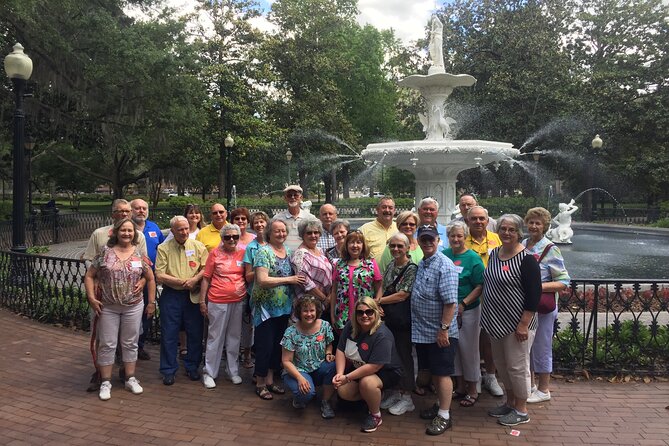
The Old Sorrel Weed House Museum and Tours is one of those Savannah stops that people either love for the spooky stories or enjoy for the architectural oddities. On this tour, you pass by the home, and the guide tells you about the Savannah gray brick wall around the courtyard.
You also hear the unusual detail about fingerprints in the brick. The guide frames the question of where the brick came from, which turns a “ghost house” reputation into something more grounded and worth noticing in person.
This is a brief stop, so you are not getting the full museum experience here. But you are getting enough to decide if you want to return later with more time, especially if the haunted angle is your thing.
Madison Square and the Siege of Savannah
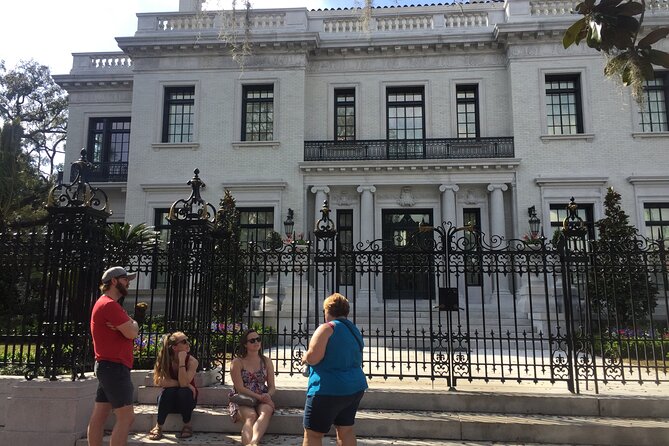
Madison Square enters with a Revolutionary-era punch. The guide explains that Madison Square today was once the setting for one of the bloodiest battles during the American Revolution, the Siege of Savannah.
Even though this is not a long stop, the explanation gives you a better sense of why Savannah’s locations matter. In a city made of squares and crossings, it helps to know which parts were once fighting grounds, not just scenic backdrops.
Green-Meldrim House: Gothic Detail and Sherman’s Headquarters
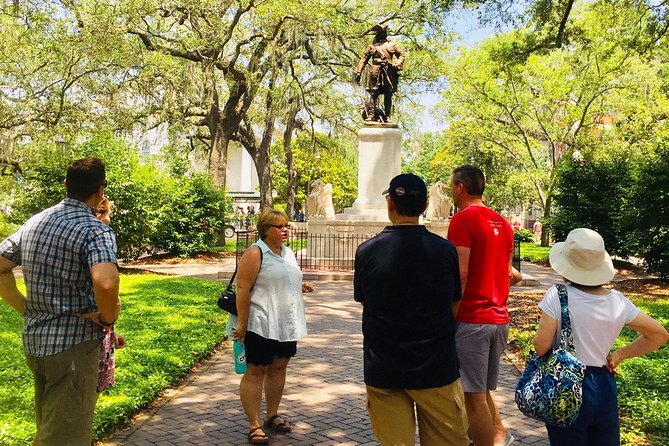
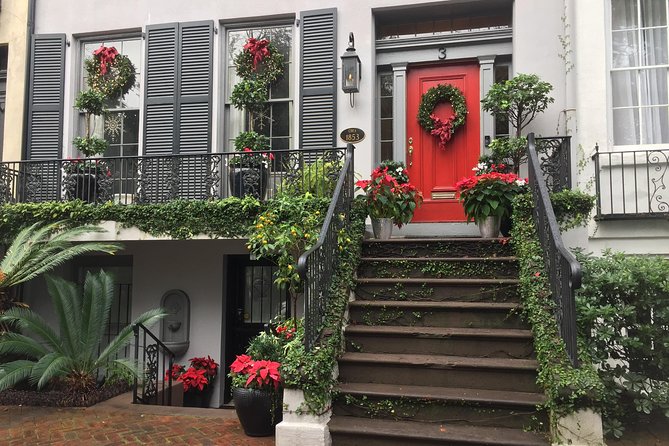
At the Green-Meldrim House, you get architecture you can actually see and explain. Completed in 1853, it is described as the finest example for Gothic architecture in the South, and you get the cost context too: $93,000 at the time, noted as about $3.2 million today.
The guide ties the house to a major moment in the Civil War, saying it served as Headquarters for General Sherman during his March to the Sea when he occupied Savannah. This is where the tour’s “big events” thread becomes physical. You are not just hearing names. You are looking at the kind of house where a headquarters could plausibly happen.
This stop lasts about 10 minutes, and it is a good one for photos, as long as you are patient with foot traffic and keep moving when the group does.
Passing the SCAD Volunteer Guard Building, Then Sizing Up the Gryphon Tea Room
After Green-Meldrim House, the tour passes by a building originally used as the Savannah Volunteer Guard building, now owned by SCAD. This is more of a “you will recognize it later” moment, so don’t expect a deep dive here.
Then you have the portion built for a break, lunch potential, or a slower moment: the Gryphon Tea Room. It is located inside what the tour calls the Shriner’s Building, and inside is described as a museum in itself. The tour notes original mahogany cabinetry and cubbies used to store medicines, linked to Solomon’s Apothecary.
This is one of the more appealing parts of the route because it gives you a chance to pause and reset. If you want tea or a sit-down meal, this is the place the tour leans into as one of its favorites.
The Mercer Williams House, Midnight in the Garden of Good and Evil, and the Real Scandal
Another standout stop is the Mercer Williams house, connected to the book Midnight in the Garden of Good and Evil by John Berendt. The guide frames it as a true story about Jim Williams, who purchased the home in 1969, and the shooting of his assistant Danny in 1981.
Then comes the publishing impact. The book was released in 1993 and is described as spending 216 weeks on the New York best seller list, longer than any book in history. The movie release is said to have helped put Savannah on the tourism map.
This stop is fun if you like character-driven stories, but it is also useful because it gives you a way to connect what you saw in photos to what you will read later. You will walk away with a head start if you plan to watch the movie or read the book before or after your trip.
Armstrong-Kessler House: Admire It, But Know You Cannot Tour Inside
Armstrong House, now known as the Armstrong-Kessler house, is the “wow” moment. The guide shares the house’s scale, noted as 26,000+ square feet, and points out that it is a private home today. You also learn who lives there now, though the key point is simple: this is not a home you can tour on this walk.
The tour notes that admission is not included for it, and you should expect to see it from outside. That does not make it less important. It just changes your expectations. If you are hoping for interior rooms, plan a separate plan for that kind of visit.
Forsyth Park and the Fountain That Everyone Has to Photograph
The tour ends in Forsyth Park, at the Fountain, with the crowning visual: the Forsyth Park Fountain. The guide explains that the park began in 1848 with 10 acres, and it now covers about 30 acres, described as Savannah’s version of Central Park.
Then comes the fountain detail that you will want to tell people back at your hotel. The guide says the fountain was a catalog mail order from France and installed in 1858. That little story is exactly the kind of fact that makes your photos feel more meaningful, not just pretty.
This last stop is about 5 minutes, but it sets you up nicely. You get to finish with open space, then you can choose what you want next without feeling rushed.
What You Actually Get for Your Time and Money
I like the value of this tour because so many of the key stops are built for free viewing. Each major square and landmark point is treated as a quick, high-impact story moment, and most stops are listed with admission ticket free.
You are paying mainly for a professional local guide and the way they connect the dots. That connection is where the tour becomes more than a photo walk. You come away knowing which names and events matter, and you learn how Savannah’s square plan works so you can keep exploring afterward without guessing.
The best reason to book is also the clearest tradeoff: you see a lot quickly, but you do not linger inside homes or museums for extended time. If you want deep interior access, you will likely want to pair this with a museum visit you choose yourself.
Who This Walking Tour Fits Best (and Who Might Prefer Something Different)
This is a great fit if you are arriving in Savannah and want to understand the city fast. You’ll enjoy it if you like stories tied to specific streets and squares, and if you appreciate a guide who can mix serious events with lighter pop-culture details like the Forrest Gump stop.
It is also a good match if you travel in a small group and want personal attention. The tour’s max size of 30 helps, and the tour is built to keep the pace manageable.
If you are the type who needs lots of interior time, you may find the outside-focused stops less satisfying. The Juliette Gordon Low birthplace is viewed from the outside, the sorrel weed house is passed by, and Armstrong-Kessler is private and not open on the tour. In that case, treat this as your “orientation and story” layer, not your full museum day.
Should You Book the Heart of Savannah History Walk?
Yes, if you want the fastest way to get oriented in Savannah’s historic district and you enjoy your history mixed with real-world street details. I’d especially recommend it for first-time visitors who want to understand why Wright Square, Chippewa Square, Madison Square, and Green-Meldrim House matter, then finish at Forsyth Park Fountain with a clear end point.
I would think twice if your ideal day is mostly inside buildings with long stays. This is a walking tour where outside viewing and storytelling do most of the heavy lifting.
FAQ
How long is the Heart of Savannah History walking tour?
It is about 2 hours long.
Where does the tour start and end?
It starts at Wright Square in Savannah, GA and ends at the Fountain in Forsyth Park.
Do I need to pay admission at the stops?
Most listed stops are marked admission ticket free. Armstrong-Kessler House is noted as not included.
Is the tour mostly inside museums or outside sightseeing?
The tour includes outside viewing for several locations, including the Juliette Gordon Low birthplace (no entry). Some stops are passed by, like the Sorrel Weed House and the SCAD Volunteer Guard building.
Does the tour run if it rains?
Yes, the tour operates rain or shine.
What happens in severe weather?
If severe weather happens, you are offered the option to reschedule. It states no refunds unless the provider cancels the tour.
Is this tour suitable for most people, and are service animals allowed?
Most people can participate, and service animals are allowed.
What should I bring for the walk?
Comfortable walking shoes are recommended, plus an umbrella for weather changes. In hot weather, bring water, since Savannah can be hot and humid.
More Historical Tours in Savannah
- Narrated Historic Savannah Sightseeing Trolley Tour
★ 4.5 · 2,375 reviews - 60-Minute Guided Segway History Tour of Savannah
★ 5.0 · 1,163 reviews - Savannah: Old Savannah Tours Historic Overview
★ 4.6 · 874 reviews - Bonaventure Cemetery Scenic History Art Symbols and Film Tour
★ 5.0 · 870 reviews
Newest Savannah reviews on the site
- Savannah: Tybee Island Dolphin Tour★ 4.7 · 359 reviews
- Welcome to Savannah Guided Walking Tour★ 5.0 · 329 reviews
- Savannah Yes, Queen! Drag Queen Pub Crawl★ 4.5 · 367 reviews
- The Grave Tales Ghost Tour in Savannah★ 4.5 · 396 reviews
- Tybee Island Day at the Beach Experience from Savannah★ 5.0 · 261 reviews
- American Prohibition Museum Admission★ 4.5 · 403 reviews
- Genteel and Bard’s Savannah History Walking Tour★ 5.0 · 684 reviews
- Savannah Historic District Walking Tour★ 5.0 · 223 reviews
Walking Tours, compared.

History and Hauntings of Salem Guided Walking Tour
Read our review →
New Orleans Premier Ghost, Voodoo and Vampire Walking Tour
Read our review →

Freedom Trail History Small Group Walking Tour
Read our review →
Historic Charleston Guided Sightseeing Walking Tour
Read our review →
New Orleans Food Walking Tour of the French Quarter with Small-Group Option
Read our review →
St. Louis Cemetery No. 1 Official Walking Tour
Read our review →Browse the lists this tour appears in