
Reviewed · AUDIO TOURS
Gettysburg Battlefield Self-Guided Driving Audio Tour
Gettysburg hits different when you drive, not rush. This self-guided driving audio route turns major battle sites into a narrated time machine, with stories that play as you move and an offline setup that does not care about cell signal.
I love the hands-free feel, where you can start, pause, and stop for photos without needing to follow a guide’s pace. The only real drawback is that the audio depends on GPS timing, so you may need a minute to get everything synced at the start.
For value, the pricing is refreshingly fair: you pay per group, up to 4 people in your vehicle, so the cost per person drops fast compared with guided options. And the tour gives you more than dates, it adds human details like mascots, farms, and the little stories that make monuments feel personal.
Still, it is a long loop, about 19 miles, so if you hate driving or you want to spend a ton of time wandering each stop, you might feel rushed unless you plan extra breaks.
If you want a Civil War experience that fits your schedule, this is a smart pick. Just treat setup and pacing as part of the tour, not an afterthought, because GPS sync is the key to keeping the narration aligned with where you are parked.
In This Review
- Key highlights you’ll feel right away
- Why a self-guided audio drive fits Gettysburg
- Price and value, what $16.99 per group really buys
- Getting the app to play nicely in your car
- Start at the Heritage Center, then follow the Auto Road flow
- Day 1: McPherson’s Ridge to Oak Ridge and Battlefield Sallie
- Day 2 in motion: memorials, Longstreet views, and Little Round Top
- Farms turned hospitals: Plum Run, Weikert, and Pennsylvania’s stakes
- East Cemetery Hill at night, then Pickett’s Charge and the cemetery ending
- How long it takes, and how to pace your stops without getting tired
- Who this Gettysburg self-guided driving audio tour is best for
- The practical stuff that makes or breaks the experience
- Should you book this Gettysburg audio tour?
Key highlights you’ll feel right away
- GPS-triggered narration that plays on its own as you reach each location
- Offline maps and no signal stress, so the route works without cellular or WiFi once downloaded
- Buy per car, not per person, making it a great deal for small groups
- Memorials plus “side stories” that add character to the big moments
- Many chances to pause, read monuments, and step out when you want
- A complete arc across the battle days, ending with the National Cemetery and Lincoln’s address site
Why a self-guided audio drive fits Gettysburg
Gettysburg can feel overwhelming fast. You park at one monument, then you turn a corner and the next one is just as important, and suddenly you are guessing what mattered most. This audio tour solves that problem with a simple promise: you drive the battlefield route, and the story comes to you right where you are standing.
What I like most is that the narration is not just a lecture. It’s built around what you can actually see from the road and the observation points, so the battle stops feel connected instead of random. You also get the freedom to pause for side reading, quick restroom breaks, or a slow look at cannons and markers.
The format also helps families. If your group has different interests, you can stay on the main route while still taking breaks to “browse” monuments at your own speed. That freedom is one reason this kind of tour works so well here.
Other Gettysburg outings to compare
- 2-Hour Gettysburg Battlefield Guided History Bus Tour with a National Park Guide
★ 4.5 · 2,201 reviews - Civil War Ghosts: Echoes of the Fallen Gettysburg Ghost Tour
★ 4.5 · 913 reviews - Gettysburg: Horse-Drawn Carriage Battlefield Tour
★ 4.8 · 896 reviews
Price and value, what $16.99 per group really buys
You’re paying $16.99 per group, up to 4 people, for a tour that runs roughly 2 to 4 hours. The big value comes from how you pay. Instead of paying per person, you buy the experience for your vehicle, so your per-person cost drops quickly if you are traveling with friends or family.
You also get lifetime access with no expiration. That matters more than it sounds. Gettysburg is a place you want to return to, because each visit changes what you notice. With lifetime access, you can come back for a second pass without paying again.
One more practical value: the tour is not limited to a single day or set time slot. You can start when you want, pause when you want, and take your time on the stops that grab you. That flexibility is the real “deal” behind a lower headline price.
Getting the app to play nicely in your car
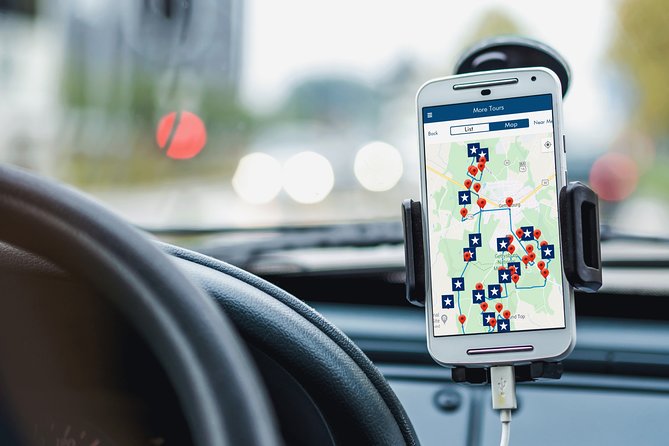
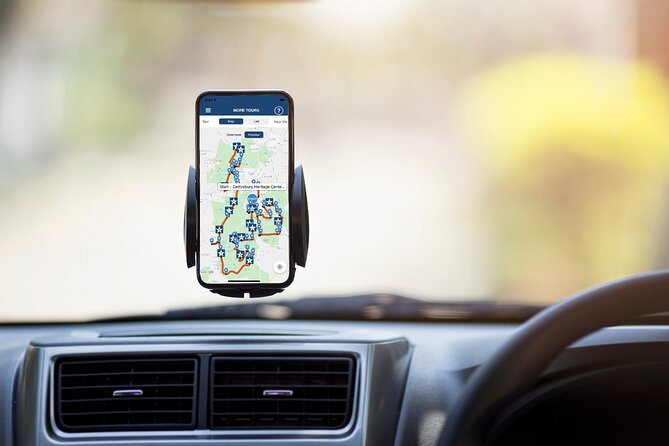
This is a phone-based tour, delivered through Action’s Tour Guide App. After you book, you’ll get email and text setup instructions and a password. The app download has one important rule: you must download the tour while you have strong WiFi or cellular, then it works offline after that.
Once onsite, you open the app, enter the password, and start the tour from your chosen direction. No one meets you at the start, so you need to be ready to start the audio at the correct location. After that, audio should begin automatically at the first story point and continue with location-based cues.
For sound, you connect your phone to your car stereo using Bluetooth, USB, or AUX. If you prefer, headphones can work too for walking. The tour also supports Apple CarPlay (with navigation features coming later), and Android Auto is on the way.
My practical tip: if you notice the narration feeling slightly off, don’t panic. Slow down, confirm you’re staying near the route and within the posted speed limits, then restart only if needed. Since GPS triggers location-based audio, your phone’s ability to track where you are matters.
Start at the Heritage Center, then follow the Auto Road flow

You begin at the Gettysburg Heritage Center parking area (lot 297, 10-minute museum visit time is suggested, and admission ticket is not included). The tour can also start from the National Park Visitor Center, but the official start point you choose should be where you begin the app.
From there, you follow the Auto Tour route. The driving is part of the experience, because the narration is timed to the view lines, ridges, and key roads. You are doing a loop of about 19 miles with more than 60 audio stories.
Plan for breaks. Even if you drive the full route, you’ll want time to read monuments and step out at observation towers. The tour is designed for pacing, so you can spend a few extra minutes at the places that pull you in.
Same corner of the map, another day out:
- Echoes of War All Ages Ghost Tour
★ 5.0 · 658 reviews - Gettysburg: Ghost Hunt Tour with Ghost Hunting Equipment
★ 4.5 · 589 reviews - Civil War Ghosts: Echoes of the Fallen Gettysburg Ghost Tour
★ 4.3 · 480 reviews - Ghost Tour: History and Haunts – Family Friendly – Best in Gettysburg
★ 4.5 · 378 reviews
Day 1: McPherson’s Ridge to Oak Ridge and Battlefield Sallie
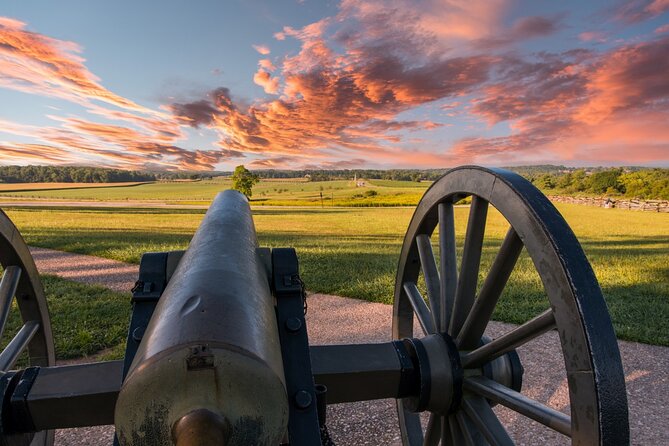
Day 1 is about getting your bearings for the fighting terrain. The tour begins with the Heritage Center, then you roll out to McPherson’s Ridge, where Union and Confederate forces clash and generals position regiments. Standing in this area is one thing, but hearing how forces formed and moved makes it easier to visualize why the ridges mattered.
Next comes the Railroad Cut. This is a smaller-looking spot that becomes important because of what it enabled during the first day’s fighting. You also start picking up the tour’s style here: it mixes battlefield strategy with human backstories of key figures, so you are not just collecting facts.
Then you pass the Eternal Light Peace Memorial. It’s a different mood from the battlefield itself, built with Maine granite and Alabama limestone as a symbolic reunification of North and South. These memorial moments matter because they remind you that Gettysburg is not only about the battle, it’s also about what came after.
A short drive later, you reach Oak Ridge Observation Tower. This is one of the best “stop and look” moments because the view helps you connect the earlier stories to what came later in the day. The narration helps you jump forward from morning to afternoon, basically giving you a sense of how time and pressure changed the battlefield.
Then comes one of the tour’s most memorable character details: the 11th Pennsylvania Volunteer Infantry Regiment Monument and the dog sculpted on the base, Battlefield Sallie. The tour explains how Sallie served as a mascot and accompanies the 11th Pennsylvania for much of the Civil War. If you like the texture of Civil War life, this is your kind of stop, and it also ties into the role of military music and drummers.
Before you roll onward, the tour keeps following the logic of the first day into evening. You’ll hear the question that always hangs over day one at Gettysburg: what hope is left after heavy losses and shifting ground? The audio frames the planning in a way that matches what you’re seeing from the road.
Day 2 in motion: memorials, Longstreet views, and Little Round Top
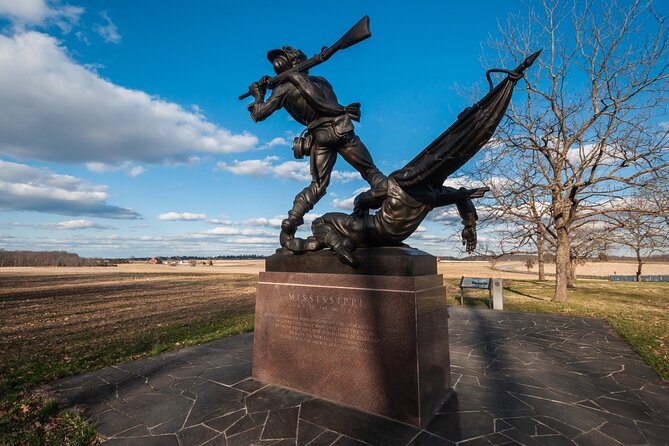
As you transition deeper into day 2, the tour stays built around perspective. You pass the North Carolina Memorial and Virginia Monument, then head toward the areas where the fighting reorganizes and escalates. It’s a good shift point, because you stop feeling like it’s one continuous battle and start seeing it as a sequence of decisions.
At some point, you’ll also pass Longstreet Observation Tower, which gives you another chance to look across the fields as the story moves forward. Observation towers are not just for photos. They help you understand why certain outposts mattered.
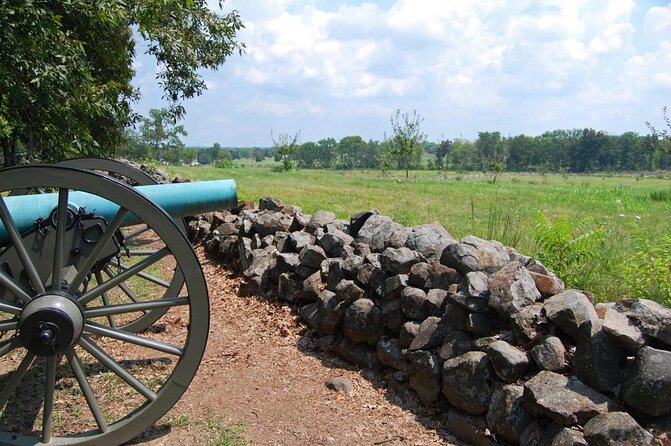
Then you hit Little Round Top, one of the most critical moments in the whole Gettysburg story. The hill is explained through the tension of Union troops holding just barely while Confederate forces press. As you drive around the hill, you cross the Valley of Death, a name that fits the tone you are hearing in the narration.
Right nearby is the Devil’s Den area and the volcanic rock cover used by Confederate sharpshooters. This is the kind of stop where the terrain explanation makes the story click. You’re not just hearing that people were picked off, you’re understanding how cover changed odds.
The tour also brings you to the Wheat Fields, where day 2 continues with intense fighting and a story about Union soldier JJ Purman. That detail is a great example of why these audio stops feel more alive than a standard monument walk.
Next, you pass the Peach Orchard and then the Abraham Trostle Farm. At Trostle, the story is chilling in a simple way: when fighting broke out, the Trostle family fled so quickly that dinner was still on the table. That’s not the same as reading a textbook line. It hits because it’s specific.
Farms turned hospitals: Plum Run, Weikert, and Pennsylvania’s stakes
This part of the route slows your brain down in a good way. After the Peach Orchard, the tour moves toward Plum Run, picking up soldiers who escaped the skirmish and carrying the day forward.
Then you reach the George Weikert Farm. Like the Trostles, the family evacuated quickly, but the farm came back as something far darker: it became a battlefield hospital. If you want to understand the human cost beyond the battlefield, this is one of the most sobering stops.
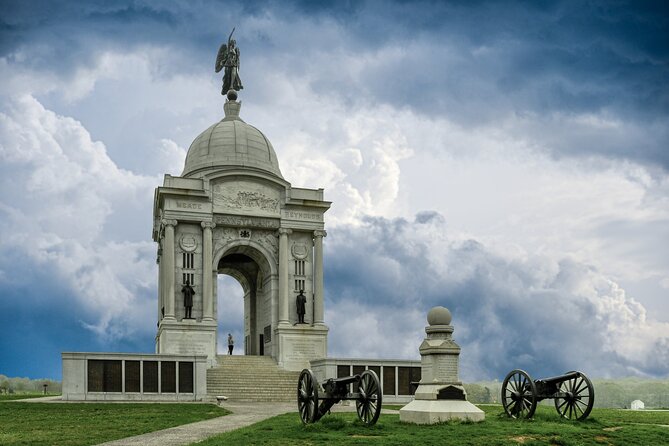
From there, the Pennsylvania Memorial brings you back to scale. The monument commemorates nearly 35,000 Pennsylvanians who fought at Gettysburg. The tour ties it to something personal: these men were defending their state, not some distant abstract idea. That framing makes the monument feel less like a label and more like a weight.
As you keep driving, you move back into the woods and reach Spangler’s Spring. It’s a small stop, but the narration explains why it mattered, and then you head toward Culp’s Hill Tower for another clash over a strategic outpost.
The tour keeps the rhythm tight, but you still get those “pause points” that make the long drive feel manageable.
East Cemetery Hill at night, then Pickett’s Charge and the cemetery ending

One of the most dramatic arcs in Gettysburg is the nighttime fighting, and the tour does a good job setting it up at East Cemetery Hill. After night falls, fighting should be over, but the Confederate failure to fully capture Culp’s Hill drives an attempted nighttime raid. The narration explains this as the moment the Union came closest to losing, and then it closes the day with the Union prevailing through a mix of perseverance, skill, and luck.
That payoff is important because it prevents the battlefield from feeling like a collection of unrelated scenes. Instead, you feel the stakes rising and falling across the three days.
From there, the tour reaches Gettysburg National Military Park and then transitions to the third day. You arrive at the area tied to Pickett’s Charge, with the narration pointing you toward the farthest Confederate advance, the high water mark. Standing near that line while you hear the story makes the moment feel different than just watching a postcard view.
Finally, you end at the National Cemetery. This is where you honor the fallen Union soldiers and hear the significance of Lincoln’s Gettysburg Address site. The tour notes a key detail about Lincoln’s approach: he did not want to steal attention from the soldiers whose sacrifice deserved the focus. It’s a fitting close for an audio route that started with morning tension and ended with a final, solemn look at what survived.
How long it takes, and how to pace your stops without getting tired
Expect 2 to 4 hours as a realistic range. That depends on two things: how much you park and walk, and how long you linger at observation towers and monuments. The drive itself is long enough that you will probably want to plan a “light walking” pace, not a marathon.
Here’s a pacing approach that works well:
- Do the day one and day two observation points, then slow down at your favorite story stops.
- If you are traveling with kids or anyone who gets bored, prioritize the towers and the personal stories (like Battlefield Sallie, Trostle’s dinner-on-the-table moment, and Weikert as a hospital).
- Start early enough that you can handle stopping for photos without rushing at the end.
If you try to speed-run every stop, you may feel like you are driving more than touring. The tour is built to reward slowing down.
Who this Gettysburg self-guided driving audio tour is best for
This tour is a great fit if you want:
- Independence without a bus schedule
- A narrated route that keeps your place so you don’t feel lost
- A cost-effective option for small groups in one vehicle
It also works well if you’re not sure how to pick between many battlefield sites. The audio path gives you a full arc across the fight, so you get the major moments in the right order.
If your group hates app-based tours or you dislike any GPS-trigger format, you might find the setup annoying. In that case, you may prefer a fully guided tour where someone solves the tech problems for you.
The practical stuff that makes or breaks the experience
A few small details matter more here than you’d think.
Follow the route and speed limits: the audio cues rely on accurate vehicle location. If you cut corners or drive far from the intended road, the narration can feel late or early.
Start at the real starting point: because audio triggers at the location of each story, starting a few turns away can mess with the sync.
Download first: offline playback depends on downloading while you have strong signal.
One more useful tip: many stop pages include a learn more button, so you can add extra context when a story hits you. That is handy if you want some deeper reading without leaving your car.
Should you book this Gettysburg audio tour?
Book it if you want a flexible, value-first way to experience the key Gettysburg moments with narration tied to what you see. The per-car pricing, offline setup, and strong stop selection make it easy to recommend, especially for couples, families, and small groups who want control over their time.
Skip it only if you know you will struggle with app setup or GPS-trigger audio. If tech annoys you, you might spend too much energy troubleshooting and not enough time soaking in the stories.
If you like history but also like freedom, this is an efficient way to turn a drive into the kind of visit you will remember.
Newest Gettysburg reviews on the site
- Spirits Speak Orphanage★ 5.0 · 271 reviews
- Spirits of Jennie Wade Ghost Night Tour in Gettysburg★ 5.0 · 310 reviews
- Ghost Tour: History and Haunts – Family Friendly – Best in Gettysburg★ 4.5 · 378 reviews
- Echoes of War All Ages Ghost Tour★ 5.0 · 658 reviews
- Gettysburg: Ghost Hunt Tour with Ghost Hunting Equipment★ 4.5 · 589 reviews
- Gettysburg: Private Tour with Licensed Battlefield Guide★ 5.0 · 362 reviews
- Gettysburg: Ghost Hunt Tour with Ghost Hunting Equipment★ 4.5 · 308 reviews
- Gettysburg: 1863 Historic Downtown Walking Tour★ 4.9 · 306 reviews
Audio Tours, compared.


City Sightseeing Hop-On Hop-Off Bus Tour with Audio Guide
Read our review →
Medieval Torture Museum Ticket with Audio Guide and Ghost Hunting
Read our review →
Joshua Tree National Park Self-Guided Driving Audio Tour
Read our review →

Ultimate Acadia National Park Self-Guided Driving Audio Tour
Read our review →
Self Guided Classic Freedom Trail Location Aware (GPS) Walking Audio Tour
Read our review →Browse the lists this tour appears in