
Reviewed · ARCHITECTURE TOURS & CRUISES
Chicago’s Secret Interiors Architectural Walking Tour
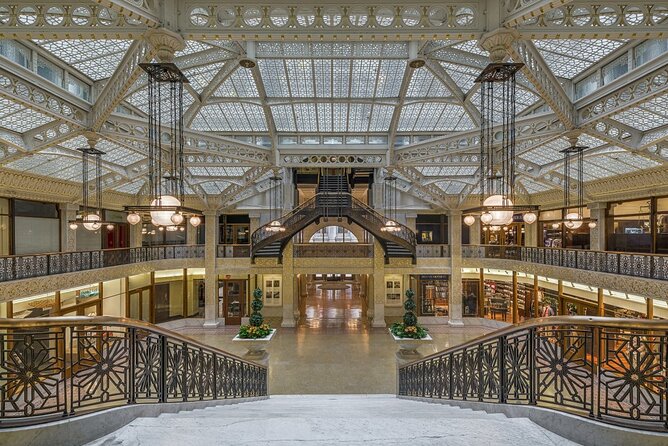
Chicago hides luxury in plain sight. I like how this Chicago architecture walking tour lets you see rarely opened interiors, from the Rookery light court to the Marquette lobby mosaics, not just the street-facing exteriors. I also enjoy the way the guide ties each building to the money and showbiz of the Gilded Age and Roaring Twenties, so the skyline has a story you can follow. One catch: the Rookery is left out on Sundays.
For $35, you get an expert guide and a route that runs from Chicago Union Station at 225 S Canal St to the Marshall Field and Company building at 111 N State St, with short, focused stops inside. Expect a small group of up to 15 travelers, a mobile ticket, and plenty of time indoors to make cold or rainy weather feel more manageable.
In This Review
- Key things to know before you go
- Why this walking route works when you want more than skyline views
- Plan your walk: tickets, time on your feet, and what to wear
- Stop 1 and 2 in the Loop: Board of Trade, Willis Tower, and the La Salle canyon feeling
- Union Station: Beaux-Arts drama and the Great Hall skylight moment
- The Rookery Building: light court engineering and Wright’s interior makeover (and the Sunday issue)
- Field Building (Art Deco) and the Marquette lobby mosaics: two different ways to say Chicago
- Palmer House a Hilton Hotel: Beaux-Arts hotel luxury after the Great Fire
- Chicago Cultural Center or Monadnock Building: how the route swaps
- Marshall Field and Company Building: Tiffany glass and the Tea Room finish
- Guide energy makes a real difference, and names you might hear
- Value check: is a $35 Chicago architecture walking tour worth it?
- Should you book Chicago’s Secret Interiors Architectural Walking Tour?
- FAQ
- How much does the Chicago’s Secret Interiors Architectural Walking Tour cost?
- How long is the tour?
- Where does the tour start and end?
- Do I need a ticket, and is it mobile?
- How many people are in the group?
- Is the Rookery Building included every day?
- Are the tour stops admission-free?
- What’s included in the price?
- Is the tour accessible for people using public transportation?
- What should I know about weather and cancellation?
Key things to know before you go
- Small group, easier listening: Limited to a maximum of 15, so you can actually hear the guide at each stop.
- Interiors, not just facades: You’ll spend real time inside famous spaces like Union Station’s Great Hall and opulent hotel and retail lobbies.
- Architecture plus power stories: The tour connects design choices to the Gilded Age and Roaring Twenties world of magnates and stars.
- A tight Loop-to-retail route: It’s built to move you through the Loop quickly, ending at Marshall Field, with a convenient downtown start.
- Sunday routing changes: The Rookery Building closure can swap what you see.
- Designed for good weather: The experience requires good weather, but the route still works because many stops are indoors.
Why this walking route works when you want more than skyline views
Chicago is famous for buildings you can spot from a block away. This tour gives you the next layer: what those buildings look like up close, and what you miss when you only stare upward.
I like the balance here. You get big-name Loop landmarks, like the Board of Trade and Willis Tower area, but you also get the quieter wow moments inside, where craftsmanship shows off. Think mosaics, domes, skylight light, and metalwork, all explained in plain language.
It also helps that this is a walking format, not a single long lecture. You move block by block, so the city changes around you. Even if you know Chicago fairly well, the interior focus makes it feel like a new way to see the Loop.
More Walking Tours in Chicago
- Chicago: Gangsters and Ghosts Walking Tour
★ 5.0 · 7,155 reviews - Chicago Favorites Ultimate Food and Walking Tour
★ 5.0 · 1,962 reviews - Chicago: Gangsters and Ghosts Guided Walking Tour
★ 4.7 · 1,697 reviews
Plan your walk: tickets, time on your feet, and what to wear
The tour runs about 2 hours. The stop length is short and intentional, which is great if you want a fast hit of multiple architectural styles without sitting all day.
You’ll use a mobile ticket. Service animals are allowed. The route is near public transportation, and most people can participate, since it’s a straightforward downtown walk.
What to wear depends on the season, because you will still be outside between buildings. Even on cold or wet days, you can find comfort since many stops are indoors. Bring a light layer you can adjust quickly. If you’re going when rain is possible, pack something for your hands too, since you’ll likely hold an umbrella while still keeping your group in sight.
Stop 1 and 2 in the Loop: Board of Trade, Willis Tower, and the La Salle canyon feeling
Your tour starts at Chicago Union Station and immediately puts you in the Loop mindset. The early focus is the financial district energy, and it’s not just theory. The streets feel like corridors, shaped by height, density, and the way crowds move through the city.
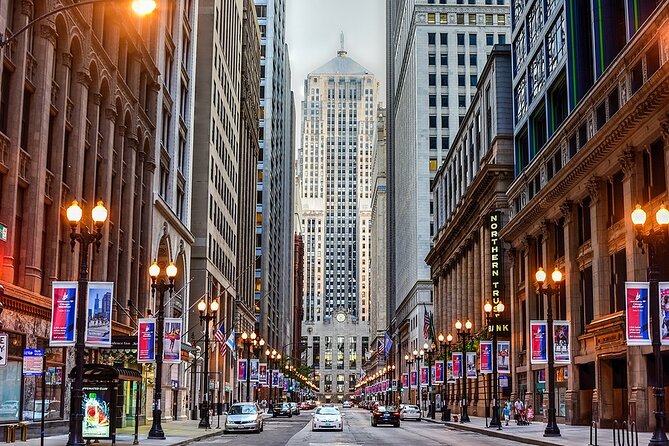
At the Loop stop, you’ll learn how the area became Chicago’s economic powerhouse and how major towers changed what business life looked like. Expect name recognition with real context, including the Chicago Board of Trade and the Willis Tower area. You also get attention to art and detail, not just massing, including the contrast between older grandeur and newer height.
The next stop centers on La Salle, often described like a financial canyon. The idea is simple and useful: when buildings form tight “street walls,” they change how light hits the sidewalk and how you experience scale. This is where you’ll hear about architects and engineers solving real structural problems to create those giant spaces above you.
Practical note: because the stops are relatively quick, your best strategy is to come ready to look. When the guide points out a design choice, try to spot it before you move on. That turns the 10-ish minutes into a memorable snapshot instead of a blur.
Union Station: Beaux-Arts drama and the Great Hall skylight moment
Then the tour shifts from office-canyon energy to travel-hub grandeur: Union Station.
You’ll spend time on what makes Union Station feel like a landmark even if you use it just to catch a train. The big story is its early 20th-century design by Daniel Burnham, with completion in 1925. The exterior Beaux-Arts look sets expectations, but the real show is inside.
In the Great Hall, the skylight is the headline. When the light hits the space, it changes how the ceiling and ornament feel, and it makes the hall look larger than you expect. You’ll also notice how details repeat, which is a common theme in Beaux-Arts work, and it’s one of the ways architects create order inside a massive volume.
Possible drawback: Union Station can be busy. Even so, the guide timing helps you get the key moments without feeling like you’re stuck waiting for quiet.
Other Chicago outings to compare
- Chicago Architecture River Cruise
★ 5.0 · 15,756 reviews - Chicago River 90-Minute Architecture Tour
★ 4.5 · 9,629 reviews - Chicago River: 1.5-Hour Guided Architecture Cruise
★ 4.8 · 8,046 reviews - Chicago Architecture Center River Cruise aboard First Lady
★ 5.0 · 5,536 reviews
The Rookery Building: light court engineering and Wright’s interior makeover (and the Sunday issue)
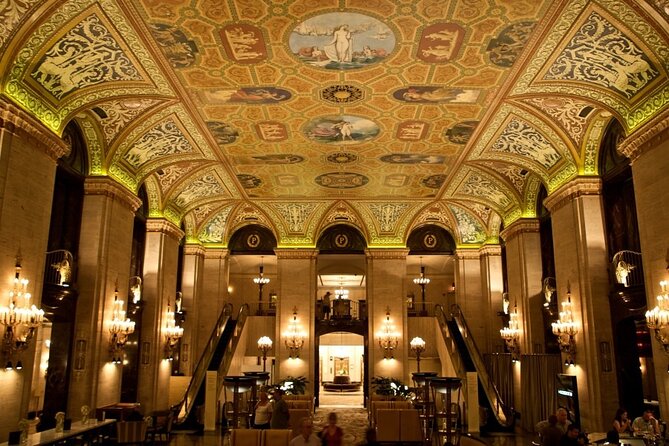
This is one of the most design-forward stops on the route, and it’s the one you should plan around.
The Rookery Building was designed by Burnham and Root in 1888, and later, the lobby was reimagined by Frank Lloyd Wright. The building mixes Romanesque and Moorish styles, which sounds fancy in a brochure, but on-site it means you see textures and shapes that don’t match the generic downtown look.
The highlight is the light court. It’s not just pretty. The guide explains it as a practical solution, a way to bring daylight into the heart of the building. You’ll also have a chance to look closely at ironwork and the famous oriel staircase, which is exactly the sort of detail you’d miss if you walked past quickly.
One important heads-up: the Rookery is closed on Sundays, so it won’t be part of the Sunday route. If you’re choosing dates, this matters, because it’s one of the stops most people talk about for the interior “how did they do that” factor.
Field Building (Art Deco) and the Marquette lobby mosaics: two different ways to say Chicago
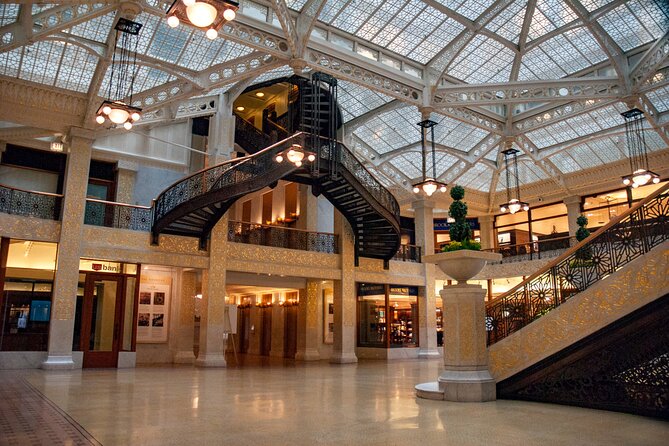
After the Rookery, the tour turns to style changes. You go from older, mixed-style grandeur into the visual confidence of the early 20th century.
First up is the Field Building. It’s known as a standout Art Deco work, and the tour’s focus is on the design intricacies. Art Deco is all about crisp lines, strong patterns, and a sense of modern pride. Even if you don’t study architecture as a hobby, you’ll feel the difference in the look and feel of surfaces.
Next you visit the Marquette Building, which is a big deal in the Chicago School story. What you’re looking for is the “Chicago window” concept and the terra cotta facade. Those features helped shape how Chicago moved toward a more distinctive urban style.
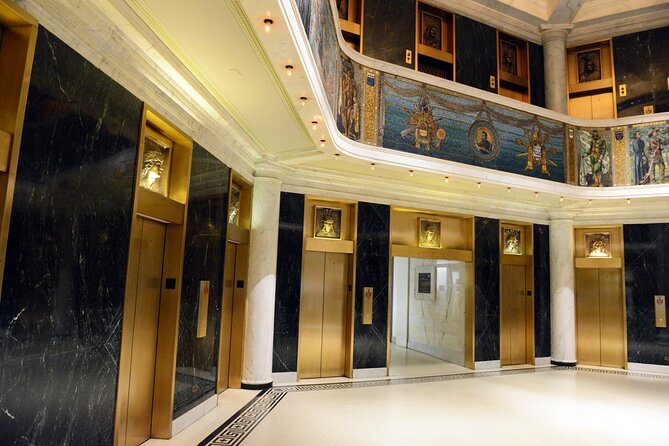
Inside, the lobby mosaics are a major payoff. They narrate the story of Jacques Marquette’s exploration of Illinois. It’s a reminder that Chicago’s architecture doesn’t just celebrate buildings, it also tells local identity stories through art.
Quick practical thought: because the time inside each stop is short, don’t try to take everything in at once. Pick one element the guide points out, then scan the rest with that same theme in mind. It makes the whole building feel easier to read.
Palmer House a Hilton Hotel: Beaux-Arts hotel luxury after the Great Fire
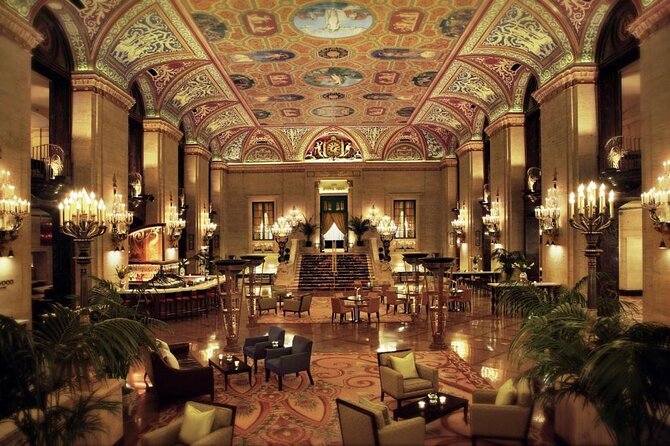
The tour then steps into Gilded Age glamour at the Palmer House a Hilton Hotel.
This hotel is famous for lavish interior design and Beaux-Arts architecture, but the most interesting part of the story is resilience. It was rebuilt in 1871 after the Great Chicago Fire, so you’re not just seeing decoration. You’re seeing a city’s determination to return larger and better.
Inside, the highlights include a frescoed ceiling, mosaic floors, and bronze peacock doors. Those details matter because they show how hotels competed for status. In other words, the design was part of the marketing.
If you like celebrity stories, this stop has them too. The Palmer House has hosted celebrities and dignitaries over the years, so the building feels like a living stage rather than a museum-only object.
The practical side: hotels can be crowded, so it helps that the guide keeps the group moving while still stopping long enough to see the key points.
Chicago Cultural Center or Monadnock Building: how the route swaps
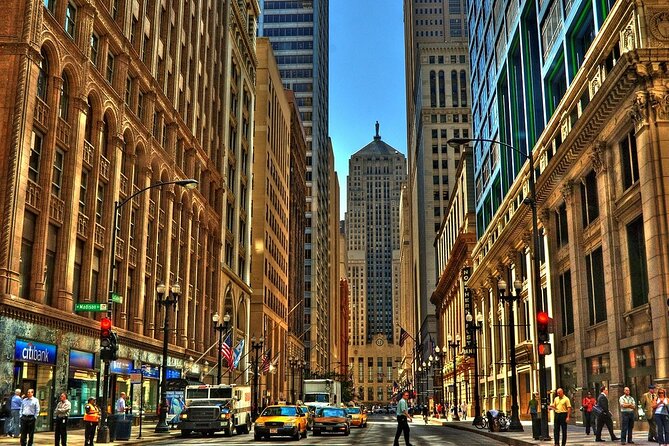
Stop eight is a small twist. The tour visits either the Chicago Cultural Center or the Monadnock Building, depending on the day’s plan.
At the Chicago Cultural Center, the focus is the mix of architectural beauty and cultural heritage. It’s a change of pace after the offices and hotels, and it helps you see how civic spaces use design to signal importance.
If the Monadnock Building is on your route, your focus shifts to a late 19th-century commercial style. The Monadnock is known for the look and feel of that era, and this stop helps you connect Chicago’s modern skyscraper era to earlier commercial ambitions.
Practical tip: don’t assume you’ll see both. If you’re picky about specific interiors, check your exact day before you plan extra time in this area.
Marshall Field and Company Building: Tiffany glass and the Tea Room finish
The finale is a department store icon: the Marshall Field and Company Building, now housing Macy’s.
The big wow factor here is the Tiffany glass mosaic dome. Even with limited time, it creates a feeling of ceremony, like the building wants you to slow down and look. It’s also a perfect example of how Chicago mixed modern commerce with high art.
Another interior highlight is the walnut-paneled Tea Room. This is where the tour’s theme comes together: you get the story of retail history, but you also get the sense that design decisions were made to create comfort and status.
As you wrap up, you’ll end near 111 N State St, which makes it easy to continue on foot to other downtown sights. The best move is to keep your eyes open after the tour. Once you’ve learned to look for engineering and symbolism, you’ll spot it in everyday storefronts too.
Guide energy makes a real difference, and names you might hear
The guide quality is a core part of why this tour gets such strong marks. I love how frequently the guides keep the group organized while still making each stop feel alive.
In particular, names come up again and again, like Grant, Ethan, Ty, Matt, Matthew, and Avery. The pattern is consistent: warm delivery, clear structure, and enough humor to keep you interested even when the weather turns.
You’ll also notice that the pace is managed for a group of up to 15. Several guides have been praised for keeping people together and making sure everyone can hear at each interior stop. One guide even handled a rough weather day while still keeping the experience engaging, with lots of time indoors helping you stay comfortable.
There is one practical caution to share. In rare cases, something can go wrong with a guide showing up late or not at all. If that happens, the best approach is to follow the contact steps provided by the operator right away, since the booking platform may not act instantly. This is uncommon, but it’s worth knowing so you don’t feel stranded.
Value check: is a $35 Chicago architecture walking tour worth it?
At $35, you are buying a lot of guided access for a short time.
Here’s why it’s good value, in practical terms:
- You get an expert guide to explain what you’re seeing and why it matters.
- The route stacks multiple major buildings in a compact area, so you’re not wasting transit time.
- Each scheduled stop is marked with admission free on the tour schedule, which helps you avoid surprise entry costs during the walk.
You also get something you can’t easily recreate on your own: a storyline that connects engineering and style to the human forces behind Chicago’s growth. Magnates and stars in the Gilded Age and Roaring Twenties are part of the framing, and that makes the buildings feel less abstract.
Who should book: this is ideal for first-time Chicago visitors who want an architecture-focused afternoon, or locals who want to see the “I walk past that every day” buildings from the inside. It’s also a strong add-on if you plan to do the architecture river boat later, since this walking route takes a different angle on the same skyline.
Who might not love it: if you want long, quiet museum-style viewing where you can linger for 45 minutes in each room, this may feel too time-efficient. The stops are short on purpose. Think of it as a greatest-hits tour of interiors, not a slow crawl.
Should you book Chicago’s Secret Interiors Architectural Walking Tour?
I’d book it if you want Chicago architecture with actual inside access, plus a guide who turns details into a story you can remember. The $35 price is hard to ignore when you’re getting multiple signature interiors in one trip.
Book it if:
- You like architecture details, especially mosaics, domes, and lobbies.
- You want a guided walk through the Loop with an organized pace.
- You’re doing other Chicago architecture highlights and want a different view than a one-time skyline look.
Choose your date carefully. If you’re visiting on a Sunday, plan for the fact that the Rookery won’t be on your route. If the Rookery is the main reason you’re interested, that might push you toward another day.
And bring the basics for a downtown walk: comfortable shoes, a layer, and a plan for weather. Many parts are indoors, but you will still walk between stops.
If you want a short, high-impact architecture day in Chicago, this one is a solid bet.
FAQ
How much does the Chicago’s Secret Interiors Architectural Walking Tour cost?
The tour price is $35.
How long is the tour?
The duration is approximately 2 hours.
Where does the tour start and end?
It starts at Chicago Union Station, 225 S Canal St, Chicago, IL 60606, and ends at the Marshall Field and Company Building, 111 N State St, Chicago, IL 60602.
Do I need a ticket, and is it mobile?
Yes. You’ll receive a mobile ticket.
How many people are in the group?
The tour has a maximum of 15 travelers.
Is the Rookery Building included every day?
No. The Rookery Building is closed on Sundays, so it is not included on Sundays.
Are the tour stops admission-free?
Each stop listed in the schedule is marked as Admission Ticket Free.
What’s included in the price?
An expert tour guide is included.
Is the tour accessible for people using public transportation?
The meeting area is near public transportation.
What should I know about weather and cancellation?
The experience requires good weather. There is free cancellation up to 24 hours in advance for a full refund, and within 24 hours the amount paid is not refunded.
Newest Chicago reviews on the site
- Walkin’ with Colin: Chicago History-Mystery-Comedy-Tragedy Tour★ 5.0 · 218 reviews
- BYOB Spray Paint and Sip at Studio W.I.P.★ 5.0 · 401 reviews
- Original Chicago Architecture Interiors Tour: Dazzling Interiors★ 5.0 · 1,489 reviews
- Field Museum of Natural History Admission Tickets★ 4.5 · 489 reviews
- Delicious Donuts & City Sights: Chicago’s Original Donut Tour★ 5.0 · 1,389 reviews
- City Cruises Chicago: Signature Lunch Cruise on Lake Michigan★ 4.0 · 348 reviews
- The Escape Game Chicago: Epic 60-Minute Adventures in River North★ 5.0 · 332 reviews
- Skip-the-line: Art Institute of Chicago Guided Tour★ 5.0 · 417 reviews
Architecture Tours & Cruises, compared.
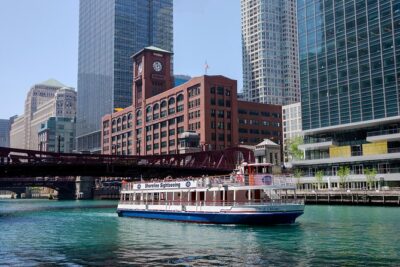
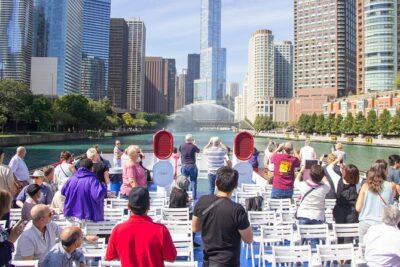

Chicago River: 1.5-Hour Guided Architecture Cruise
Read our review →
Chicago Architecture Center River Cruise aboard First Lady
Read our review →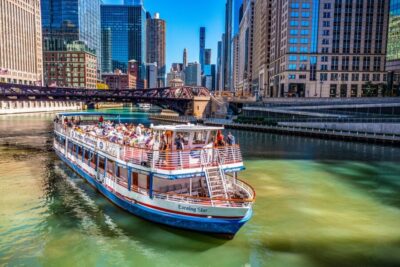
Architecture River Cruise Skip-the-Ticket Line
Read our review →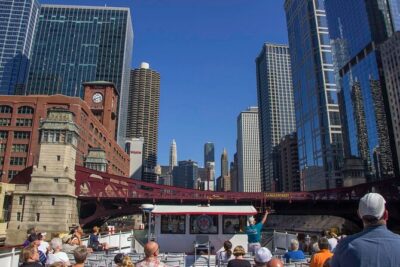
Chicago River 45-Minute Architecture Tour from Magnificent Mile
Read our review →
45-Minute Family-Friendly Architecture River Cruise
Read our review →Browse the lists this tour appears in