
Reviewed · SKIP THE LINE
Skip-the-line: Art Institute of Chicago Guided Tour
Two and a half hours, and you get it. This skip-the-line highlights tour is a smart way to see the Art Institute’s biggest hits without getting lost in a maze of galleries. I love the small group feel, because you can actually ask questions, and you get a clear overview of what matters most. The only drawback is the pace is brisk, so if you want to sit with a single painting for a long time, you may feel time is short.
You meet at 111 S Michigan Ave with a 10:30 am start and about 2 hours 30 minutes on the clock. Admission is included, and you leave with a game plan for what to revisit on your own. Guides are often praised for turning artworks into stories, which helps first-timers and art fans alike.
In This Review
- Key things to know before you go
- Skip-the-line and small-group pacing at the Art Institute
- Price and value: what $71.40 really covers
- Your meeting point, timing, and how to plan your morning
- Inside the highlights: how the 2.5 hours are structured
- Stop 1: Art Institute of Chicago, the route built around big names
- Tiffany glass and the idea of American decorative art
- Paris Street, Rainy Day and the shift toward modern city life
- Seurat and the precision of looking
- Van Gogh’s The Bedroom: art that feels personal
- Georgia O’Keeffe and scale that changes your sense of space
- Hopper’s Nighthawks and the art of stillness
- Albright’s A Picture of Dorian Gray: visual drama with a literary edge
- Grant Wood’s American Gothic and instant recognition
- Chagall’s America Windows and storytelling that bends reality
- Picasso’s The Old Guitarist and the power of form
- Warhol’s Four Mona Lisas and repetition as meaning
- Pollock’s Greyded Rainbow and the shift to abstract expression
- What you’ll actually feel by the end of the tour
- How to make the most of it, without fighting the pace
- Who should book this highlights tour
- Should you book this Art Institute skip-the-line highlights tour?
- FAQ
- What is the duration of the Art Institute of Chicago guided tour?
- What time does the tour start?
- Where do I meet for the tour?
- How many people are in the group?
- Is admission included in the tour price?
- What language is the tour offered in?
- Is there a skip-the-line benefit?
- Is the tour ticket mobile, and is confirmation sent after booking?
- Is the tour cancelable for a refund?
Key things to know before you go
- Skip-the-line, semi-private touring with a maximum group size of 12
- Admission ticket included, so you pay for the guided plan, not just the entrance
- A tightly packed route built around museum essentials, not an open-ended wander
- Iconic artworks on the shortlist, from Tiffany glass to Warhol and Pollock
- A guide-led flow that saves time, especially when galleries get crowded
Skip-the-line and small-group pacing at the Art Institute
The Art Institute of Chicago is a big museum, and big museums can turn into logistical puzzles. This tour is built to solve that problem fast. You start with a skip-the-line approach and stay on a guided route that keeps you moving toward the most important works.
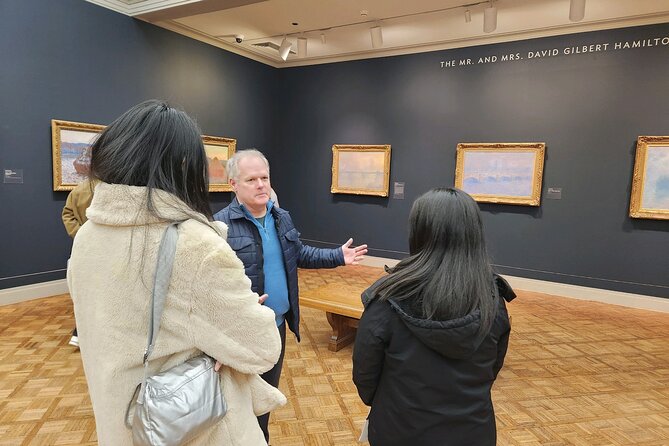
What I like most is the small-group setup, capped at 12 travelers. In a group that size, you are not just following a voice in the distance. You get moments to ask a question, and your guide can adjust pace if people are confused or curious.
The tradeoff is that highlights tours are inherently selective. Expect to see many masterpieces, but expect less time to linger. If you know you want slow looking, plan to do some solo exploring afterward, since the admission is part of the package.
Other Chicago outings to compare
- Chicago Architecture River Cruise
★ 5.0 · 15,756 reviews - Chicago River 90-Minute Architecture Tour
★ 4.5 · 9,629 reviews - Chicago River: 1.5-Hour Guided Architecture Cruise
★ 4.8 · 8,046 reviews
Price and value: what $71.40 really covers
At $71.40 per person, you are paying for three things: guided interpretation, timed entry that cuts friction, and museum admission included in the experience. In plain terms, you are buying back time and replacing guesswork with a route someone else planned.
This is especially good value if you are short on Chicago time. Two and a half hours can sound quick, but the tour is designed as a guided “starter map” that helps you understand what you are looking at and why it matters. Instead of spending that time scanning labels for clues, you get the context straight from your guide.
If you are the type who already loves museum-going and reads everything, you might feel the pace is still too fast. But if you want a strong first pass through the collection, the price starts to make sense quickly.
Your meeting point, timing, and how to plan your morning
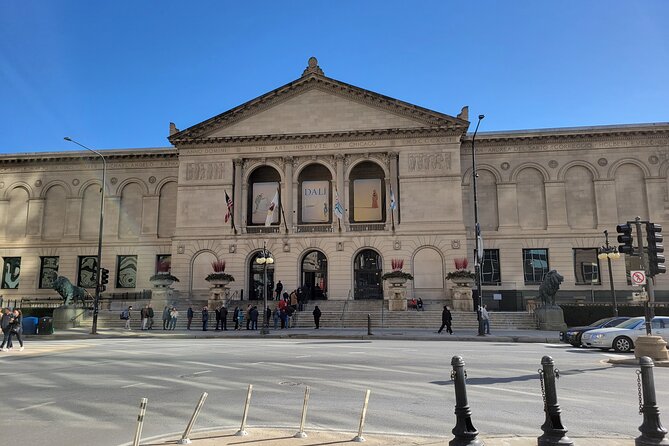
You meet at 111 S Michigan Ave, Chicago, IL 60603 and the tour starts at 10:30 am. It ends back at the meeting point, so you do not have to worry about where you will be dumped afterward.
Because the tour runs about 2 hours 30 minutes, I’d plan your day with a little breathing room afterward. You’ll likely have feet-on-the-floor time, and reviews reflect that the walking can add up. Wear comfortable shoes, and bring a water bottle if you tolerate museum water searches.
This is also a practical choice if you use public transit. The start location is described as near public transportation, so you can build your day without long taxi rides.
Inside the highlights: how the 2.5 hours are structured
Even though your entire tour is focused on the Art Institute, the experience is really about progression. Your guide moves you through a curated set of works that represent different movements, periods, and collecting strengths. The result is a museum overview that feels coherent, not random.
You can think of it as two layers at once. First, you see major paintings and decorative arts that most visitors come to Chicago for. Second, you get the “why” behind the selection, which helps you notice connections across styles.
Your route typically emphasizes story and context. Many guides on this tour are praised for storytelling that makes the galleries feel alive, not like a checklist. That matters because the Art Institute is so vast. Without interpretation, it is easy to miss what you are actually looking at.
Same corner of the map, another day out:
- Chicago: Gangsters and Ghosts Walking Tour
★ 5.0 · 7,155 reviews - Chicago Architecture Center River Cruise aboard First Lady
★ 5.0 · 5,536 reviews - Chicago: Willis Tower Skydeck and The Ledge Ticket
★ 4.6 · 4,350 reviews - Chicago: Architecture River Cruise Skip-the-Ticket Line
★ 4.8 · 4,325 reviews
Stop 1: Art Institute of Chicago, the route built around big names
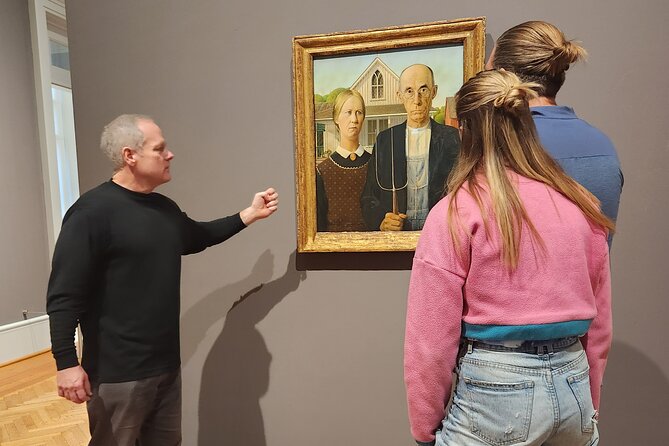
This is a single-stop tour, and that stop is the Art Institute itself. The goal is not to see every room. The goal is to see the major landmarks and leave understanding how the collection fits together.
Here are the headline works that shape the route, and what they help you get out of the visit:
Tiffany glass and the idea of American decorative art
One of the first wow moments on the route is the Hartwell Memorial Window by Tiffany Studios. Tiffany is known for turning glass into something that feels almost architectural, and this kind of work trains your eye for color and craftsmanship. If you usually skip decorative arts, this window is a good way to notice how “fine” art can also be design and light.
Paris Street, Rainy Day and the shift toward modern city life
Next, you move into Paris Street; Rainy Day by Gustave Caillebotte. This kind of painting helps you recognize the modern city as a subject, not just a backdrop. It is also a good bridge from older traditions into works that feel more immediate and observational.
Seurat and the precision of looking
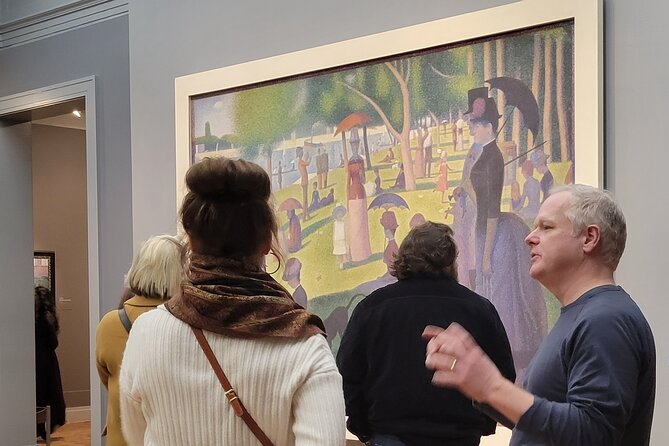
Sunday on La Grande Jatte by Georges Seurat is the point where you slow down mentally, even if your feet do not. Seurat’s style rewards attention to surface details. As you walk, your guide’s explanation helps you see how the composition is built, not just what is pictured.
Van Gogh’s The Bedroom: art that feels personal
You then hit The Bedroom by Vincent van Gogh. Even without getting lost in technique, this work tends to land emotionally, because it feels lived-in and intimate. It is a great counterpoint to outdoor scenes, and it reminds you that the tour covers variety, not just famous landscapes.
Georgia O’Keeffe and scale that changes your sense of space
Sky Above Clouds by Georgia O’Keeffe is about perspective and presence. O’Keeffe’s work often makes you rethink what a “small” subject can mean. On a highlights tour, this is a useful checkpoint because it shows how American modernism can feel both bold and carefully composed.
Hopper’s Nighthawks and the art of stillness
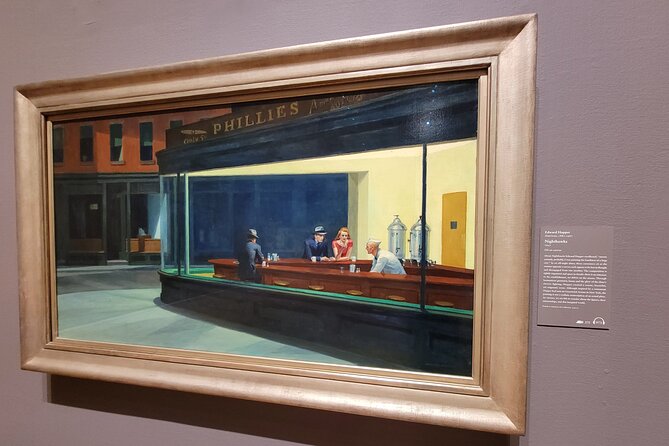
Nighthawks by Edward Hopper is one of those paintings that people think they already know, then you see it fresh with better context. Hopper is great for learning how mood works. The scene is quiet, but it is loaded, and the guide’s storytelling usually helps you notice the tiny signals that create that night-time feeling.
Albright’s A Picture of Dorian Gray: visual drama with a literary edge
A Picture of Dorian Gray by Ivan Albright gives you the sense that paintings can be theatrical. It also helps you connect art to the wider culture of its time. If you enjoy crossovers between literature and visual art, you’ll likely like this stop.
Grant Wood’s American Gothic and instant recognition
American Gothic by Grant Wood is probably the best known work on your route, and your guide uses that familiarity to go deeper. Instead of treating it like a pop-culture icon, the tour framework encourages you to look at it as an image with intention, not just a photo you’ve seen online.
Chagall’s America Windows and storytelling that bends reality
America Windows by Marc Chagall adds a different kind of energy. This is where the route reminds you that modern art is not one thing, it is a lot of different ways of thinking. The “window” idea also makes it easier to understand how visual art can feel like memory and symbol at once.
Picasso’s The Old Guitarist and the power of form
Then you meet The Old Guitarist by Pablo Picasso. Picasso is often a turning point in a museum visit, because the style teaches you how to read form. Even at highlights pace, the guide’s explanation helps you see how shapes and structure carry the meaning.
Warhol’s Four Mona Lisas and repetition as meaning
Four Mona Lisas by Andy Warhol is where contemporary art clicks in. Warhol’s approach is built on repetition, and your guide usually helps you understand why repeating an image changes what you think you are seeing. It’s a fun stop if you like modern culture references.
Pollock’s Greyded Rainbow and the shift to abstract expression
Finally, Greyded Rainbow by Jackson Pollock brings you into abstraction. Pollock can feel like either pure motion or pure confusion depending on what context you bring in. A good guide turns the visit into a puzzle with an answer, showing you what to look for in the paint itself.
What you’ll actually feel by the end of the tour
When a tour like this goes well, you leave with three wins.
First, you get oriented. The Art Institute is not easy to navigate at speed, and having a guide-led route means you can later find major rooms without wasting energy. Second, you build vocabulary for what you see. Even if you only remember a few names, you start connecting movements, not just collecting thumbnails in your phone.
Third, you get momentum. Seeing this range of works, from Tiffany to Warhol, makes you want to come back to the parts you care about most. That is a big deal for first-timers, because you stop feeling like you missed everything and start feeling like you started something.
How to make the most of it, without fighting the pace
This tour is designed to be efficient, so help it work for you.
Plan to move quickly between stops. The tour is about coverage, not extended contemplation. If you want a slower museum day, you can still book this, but you should treat it like your “orientation day,” not your only day.
Bring questions, not just curiosity. One of the best things about this format is the chance to ask. If a painting feels confusing, ask what the guide thinks most visitors misread. If you like a style, ask what other artists in the museum connect to it.
Wear comfortable shoes. You will be standing and walking for a sustained period, and multiple people mention that foot fatigue can sneak up near the end.
Use the admission wisely. Since admission fees are included, you can revisit favorites after the tour. I like leaving the guided part knowing what I want to repeat, rather than trying to memorize the whole place on the first visit.
Who should book this highlights tour
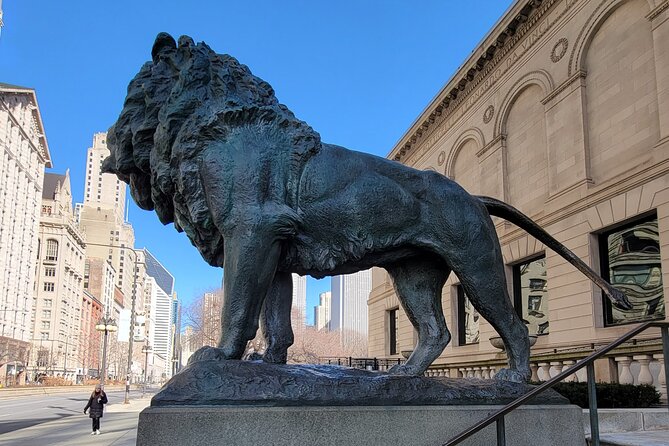
This tour is a great fit if any of these sound like you:
- You want a first-time Art Institute plan that covers major works fast
- You like learning art history through stories, not thick guidebooks
- You are traveling with family members who still want a structure and a clear route
- You have limited time in Chicago and need a smart use of it
It may be less ideal if your priority is slow looking and deep reading. The tour is built for highlights, so you should expect less time in front of any single work.
Also, if you are very sensitive to walking time, consider the fact that the tour calls for a moderate physical fitness level. Nothing here suggests it is extreme, but it is not a sit-down lecture either.
Should you book this Art Institute skip-the-line highlights tour?
If you want an efficient, guided introduction to the Art Institute’s most famous works, I think this is a strong booking. The value comes from the combination of skip-the-line entry, admission included, and a small-group format that makes questions practical.
I would book it if you like structure and you want someone to translate what you are seeing into context. I would also book it if you plan to return later, because it helps you choose where to spend your second visit.
I would hesitate only if you are aiming for a museum day where you linger for long stretches. In that case, you might prefer self-guided time, or pair this with extra hours afterward so you can slow down where your favorites actually are.
In a museum as large as the Art Institute, this tour is basically a well-designed shortcut to understanding. And once you understand what you are looking at, the rest of the galleries start feeling much less overwhelming.
FAQ
What is the duration of the Art Institute of Chicago guided tour?
The tour lasts about 2 hours 30 minutes.
What time does the tour start?
The start time is 10:30 am.
Where do I meet for the tour?
You meet at 111 S Michigan Ave, Chicago, IL 60603, USA.
How many people are in the group?
The tour is limited to a maximum of 12 travelers.
Is admission included in the tour price?
Yes. All admission fees are included.
What language is the tour offered in?
The tour is offered in English.
Is there a skip-the-line benefit?
Yes. It is a skip-the-line semi-private guided museum tour.
Is the tour ticket mobile, and is confirmation sent after booking?
You get a mobile ticket, and confirmation is received at the time of booking.
Is the tour cancelable for a refund?
Yes. Free cancellation is available if you cancel up to 24 hours in advance for a full refund.
Newest Chicago reviews on the site
- Walkin’ with Colin: Chicago History-Mystery-Comedy-Tragedy Tour★ 5.0 · 218 reviews
- BYOB Spray Paint and Sip at Studio W.I.P.★ 5.0 · 401 reviews
- Original Chicago Architecture Interiors Tour: Dazzling Interiors★ 5.0 · 1,489 reviews
- Field Museum of Natural History Admission Tickets★ 4.5 · 489 reviews
- Delicious Donuts & City Sights: Chicago’s Original Donut Tour★ 5.0 · 1,389 reviews
- City Cruises Chicago: Signature Lunch Cruise on Lake Michigan★ 4.0 · 348 reviews
- The Escape Game Chicago: Epic 60-Minute Adventures in River North★ 5.0 · 332 reviews
- Chicago Loop District Food Tour with Deep Dish & Beef Sandwich★ 5.0 · 870 reviews
Skip the Line, compared.


Circle Line 1-Hr Statue of Liberty Skip-The-Line Cruise
Read our review →

Statue of Liberty Sunset Cruise Skip-the-Line Ticket
Read our review →
Skip-the-Line Escape from The Rock Bay Cruise
Read our review →
Skip the Line: Express Ticket at Universal Studios Hollywood
Read our review →

Browse the lists this tour appears in