
Reviewed · WALKING TOURS
Birmingham Civil Rights Tour- Riding & Walking
History hits harder with a good guide. This Birmingham Civil Rights Tour, running about 3 hours, pairs guided stops at the places you hear about in textbooks with an air-conditioned vehicle that keeps the pacing realistic. Two things I love are the small group size (max 14) and the way the guide turns each stop into a clear story you can actually follow on the ground.
One thing to plan for: you will walk over a mile total, in temperatures that can run from 40 to 100F. If you cannot walk unassisted at a reasonable speed, or you are very sensitive to heat or cold, this tour may feel tough even though it is thoughtfully scheduled.
In This Review
- Quick hits before you go
- Why this Birmingham civil rights tour beats a DIY walk
- The 9:45 meeting and the 3-hour rhythm
- Stop 1, Kelly Ingram Park and the Civil Rights District
- Stop 2 and Stop 3, Kelly Ingram Park to 16th Street Baptist Church
- Stop 4, Linn Park and where the march ended
- Stop 5, Boutwell Auditorium and Bull Connor’s clashes
- Stop 6, Smithfield and Dynamite Hill
- Stop 7, Historic Bethel Baptist Church and Rev. Fred Shuttlesworth
- Stop 8 and Stop 9, Eddie Kendrick Memorial Park and the Black Business District
- Stop 10, the Wells Fargo ATM and the Freedom Riders attack site
- Small group size, breaks, and keeping your energy
- The best part is the guide, and the tone they use
- Price and value: what you avoid paying for later
- Who should book this Birmingham Civil Rights Tour
- Should you book it
- FAQ
- How long is the Birmingham Civil Rights Tour, Riding and Walking?
- Where do I meet for the tour?
- What language is the tour offered in?
- Is the tour mostly walking or mostly riding?
- What should I know about the weather?
- Is the tour appropriate for kids?
- What if I cancel close to the start time?
Quick hits before you go
- A guide-led route that connects the dots between key Birmingham sites, not just a pile of photos.
- Kelly Ingram Park to 16th Street Baptist Church gives you the emotional center of the story quickly.
- Dynamite Hill and Bethel Baptist Church show how attacks and organizing happened in real neighborhoods.
- Bull Connor and the city’s response are explained with names, motives, and cause and effect.
- The Freedom Riders attack site is handled respectfully and clearly, not vague or generic.
- All entrance fees are included, so you do not end up juggling tickets mid-tour.
Why this Birmingham civil rights tour beats a DIY walk
Birmingham is one of those cities where the history is everywhere, but the meaning is not always obvious. You can wander downtown and see buildings and statues, yet miss why they mattered, who led what, and what the next event was connected to.
This tour fixes that problem with a simple formula. You move between sites in an air-conditioned vehicle, then get short, focused walking segments where the guide explains the significance in plain language. That makes it easier to remember details later, and it helps you understand how the civil rights struggle in Birmingham worked day to day, not as a single dramatic moment.
Also, the small group matters. With a group under 14, you get enough space to ask questions without the tour turning into a loud train ride through history. Many people enjoy that mix of structure plus room for personal questions.
Other America outings to compare
- History and Hauntings of Salem Guided Walking Tour
★ 5.0 · 14,564 reviews - New Orleans Premier Ghost, Voodoo and Vampire Walking Tour
★ 4.5 · 12,856 reviews - Little Havana Food and Walking Tour in Miami
★ 5.0 · 8,882 reviews
The 9:45 meeting and the 3-hour rhythm
You meet at 512 16th St N, Birmingham, AL 35203, starting at 9:45 am. The tour is set up for a smooth rhythm: ride between key clusters of sites, then walk when the story needs to be anchored to place.
The guide handles the flow of stops in a logical order that builds context. In practice, you get a sequence that feels like a timeline, starting with the civil rights district and then moving through other neighborhoods and institutions tied to the movement.
You are also not stuck outdoors the entire time. There are short walking blocks, and the overall schedule is designed for mobility without turning it into an all-day hike. Still, you should treat it as a walking tour, because the total distance is a bit over a mile.
Stop 1, Kelly Ingram Park and the Civil Rights District
The tour starts in the Civil Rights District, with time around Kelly Ingram Park and the nearby 16th Street Baptist Church area. This is a smart first move. Kelly Ingram Park is a public space where you can see how protest, intimidation, and public attention collided.
Here is what you should watch for. Pay attention to the park’s statues and the layout, because the guide will connect them to specific marches and specific tactics used during the civil rights push in Birmingham. Even if you already know the big headlines, this is where the story becomes more concrete, and you get a sense of why Birmingham became such a flashpoint.
Good to know: the first walking block is about keeping your bearings. You will not be hit with the longest distances right away. If you are taking photos, this is a good place to start because you will build a mental map early.
Stop 2 and Stop 3, Kelly Ingram Park to 16th Street Baptist Church
Next comes more time in Kelly Ingram Park, then the tour shifts to 16th Street Baptist Church. These two stops work together like chapters. The park helps you understand the public stage, while the church shows the spiritual and organizing core.
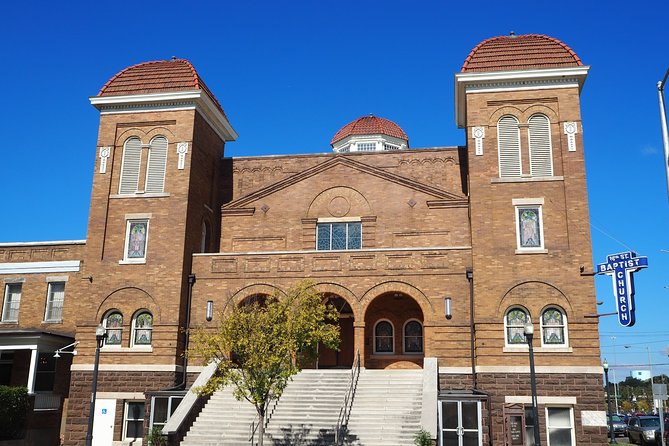
At 16th Street Baptist Church, the guide focuses on the role the church played in the movement in Birmingham and the history of the bombing that tragically killed four little girls. The tone here is sober, but the explanation is clear. You are not left guessing about why the church mattered to organizers or why the attack echoed beyond the city.
If you care about getting context, this stop is a big one. It is one thing to read that a bombing happened. It is another to hear how the church functioned, how community life was shaped around it, and why the loss became part of the national narrative.
Same corner of the map, another day out:
- NYC: SUMMIT One Vanderbilt Tickets
★ 4.7 · 51,195 reviews - NYC: 9/11 Memorial & Museum Timed-Entry Ticket
★ 4.8 · 31,428 reviews - NYC: Empire State Building Tickets – Observatory & Museum
★ 4.7 · 25,757 reviews - NYC: Empire State Building Observation Deck Tickets
★ 4.7 · 22,072 reviews
Stop 4, Linn Park and where the march ended
Then you head to Linn Park, a shorter stop but an important one. This is where the march protests ended in Birmingham. That detail matters because it changes your understanding of what a protest was meant to do. Ending points are not random. They tell you where organizers expected support, where authorities expected control, and where confrontation became unavoidable.
This is also one of the places where the guide often connects groups fighting for civil rights to the physical geography of the city. If you like learning through place names and real routes, this stop is a quick win.
Stop 5, Boutwell Auditorium and Bull Connor’s clashes
At Boutwell Auditorium, the discussion turns to Bull Connor and his clashes with those fighting for civil rights. This is where Birmingham’s resistance to change becomes very human. You learn that the system did not run on abstract ideas. It ran on specific officials making specific decisions, using specific pressure.
You should be ready for the frustration of how long it took and how calculated the opposition could be. But the way it is presented helps you understand cause and effect. You see how public actions triggered crackdowns, and how crackdowns reshaped tactics.
In other words, you are not just hearing about one leader. You are learning how authority was used as a weapon.
Stop 6, Smithfield and Dynamite Hill
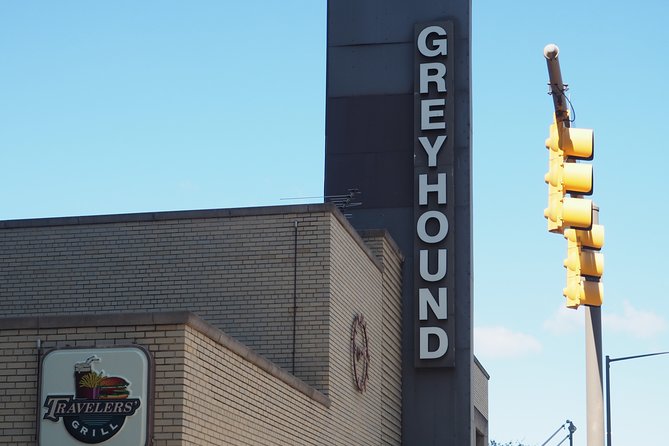
Next you reach Smithfield, including Dynamite Hill. This is one of the stops that often hits people hardest because it takes the conflict out of civic buildings and places it into homes, churches, and the daily reality of living under threat.
The focus here is on houses and churches that were being bombed during the civil rights movement in Birmingham. The name Dynamite Hill is not just dramatic. It is an indictment of what intimidation looked like when violent backlash tried to stop organizing.
This is also a good example of why guided context matters. If you simply look at a neighborhood, you might see architecture or street lines. The guide helps you see what was targeted and why, and that makes the place more meaningful without turning it into spectacle.
Stop 7, Historic Bethel Baptist Church and Rev. Fred Shuttlesworth
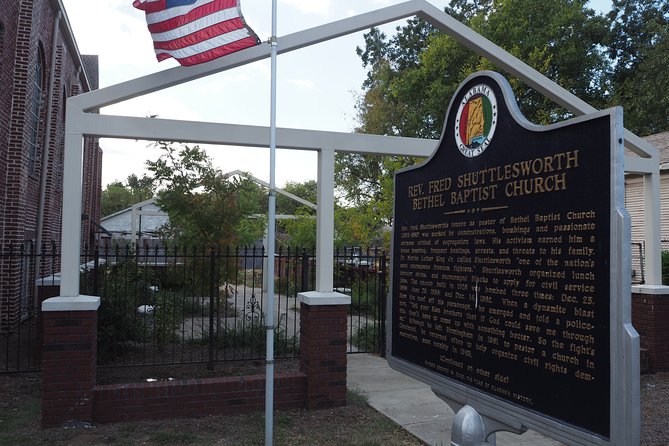
Then you visit the Historic Bethel Baptist Church, tied to Rev. Fred Shuttlesworth, who led the movement from there. This stop is a powerful reminder that civil rights history is not only about reactions. It is also about leadership, planning, and courage.
I appreciate how this stop balances the story. You learn about the movement’s resilience alongside the violence and retaliation. The guide frames Shuttlesworth’s role in a way that makes him feel like a working leader, not just a name in a timeline.
If you like stories of people who built something under pressure, this is a standout moment.
Stop 8 and Stop 9, Eddie Kendrick Memorial Park and the Black Business District
At Eddie Kendrick Memorial Park, the tour points you toward the Black Business District and how Black life in Birmingham looked during its heyday. This is a deliberate change of pace from the most intense conflict sites.
Why it matters: civil rights history is not only about arrests and bombings. It is also about what communities were creating, supporting, and protecting. When you only see the crisis, it is easy to forget what was at stake beyond basic rights. This stop helps you remember the everyday strength and economic life that authorities tried to disrupt.
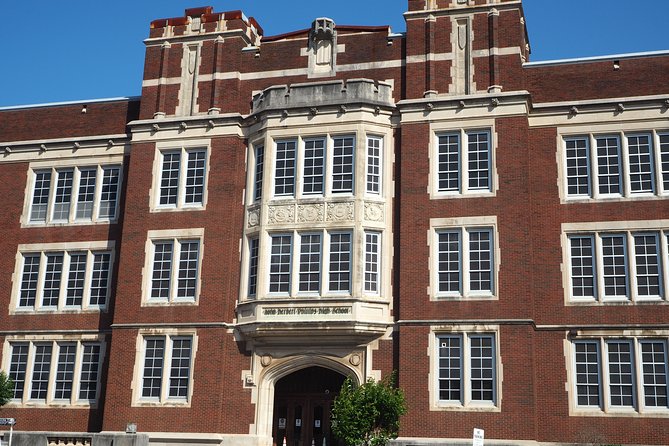
Then comes John Herbert Phillips Academy, where the tour highlights an attempt by Rev. Fred Shuttlesworth to integrate schools in Birmingham. This adds another layer: the movement pushed for equal access not only in public spaces, but in education, where change could shape the future.
Stop 10, the Wells Fargo ATM and the Freedom Riders attack site
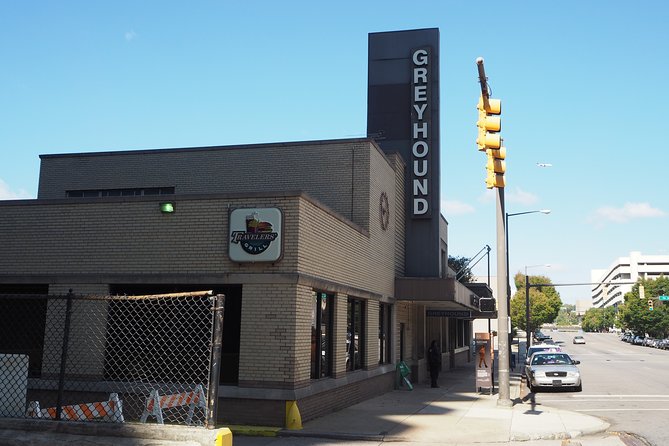
The final major stop is at a Wells Fargo ATM location, identified as the site where the Freedom Riders were attacked in Birmingham. This stop is short, but it is crucial because it anchors the 1961 Freedom Riders attack to a real spot in the city.
The guide handles these details in a way that keeps the focus on what happened and why it mattered. You should expect the subject to feel emotionally heavy, but explained clearly, with context for the bigger arc of civil rights activism.
This is the moment where the tour starts to feel complete. You have moved from church and public protest to neighborhood intimidation, leadership strategy, and then to interstate activism hitting Birmingham directly.
Small group size, breaks, and keeping your energy
The tour caps at 14 travelers, and that size changes how it feels. The guide can pause for questions. You can actually hear the explanation without straining. And you can take in each site without feeling rushed like you are in a herd.
The mix of riding and walking is also a practical win. You are walking just over a mile total, spread across multiple short segments. In real terms, that means you can keep your brain engaged rather than zoning out from fatigue.
Some guides, including Mike and Clay (two names mentioned often in how people describe their experience), run the tour with care. That shows up in how they manage pacing, including breaks and the chance to step into shade when needed. I also like that the tour runs rain or shine, with transportation if rain becomes an issue.
Still, bring a realistic attitude about weather. Temperatures can be anywhere from 40 to 100F, and the tour is not a sit-and-watch experience.
The best part is the guide, and the tone they use
This tour has one job: explain what you are seeing, and do it with respect. The reviews you will likely hear from other people often point to the same thing: guides like Mike and Clay combine strong local grounding with a story-telling style that keeps the timeline clear.
What that looks like on the ground is simple. You get names, motives, and context, not just a list of stops. The guide also tends to tackle tough topics with tact and compassion, which matters because some sites involve violent acts and child victims.
Another thing I value: the way the guide seems to connect the civil rights struggle in Birmingham to the present. People often leave with a mix of being moved and being clearer about why organizing and courage mattered, not only in the 1960s but in everyday life now.
That is hard to measure, but it is why this tour feels more than a sightseeing outing.
Price and value: what you avoid paying for later
The tour includes all taxes, fees, and handling charges, and it covers air-conditioned transportation plus driver/guide and live commentary. It also includes entrance fees for the sites, so you are not scrambling for payments or ticket counters while you are already thinking about the story.
That is real value. For a history tour, the cost is usually not just the guide. It is the friction of paying entry fees, figuring out where to park, and trying to coordinate logistics while your attention is split.
Here, the structure is doing that work for you. And with all entrance fees included, you get one less decision to manage during the day.
Who should book this Birmingham Civil Rights Tour
This is a strong match if you want:
- a guided route that connects major Birmingham sites in a clear order
- a mix of walking plus van time so you can stay focused
- a tour that treats the subject with seriousness without turning it into a lecture
You might also like it if you enjoy hearing leadership stories, not only tragedy. Places tied to Rev. Fred Shuttlesworth and the integration efforts at schools bring in people and strategy, not just events.
Who should think twice:
- if you cannot walk unassisted at a reasonable speed, because the tour includes walking over a mile
- if you are very sensitive to cold or heat, since the temperatures range widely
Should you book it
Yes, I would book it if Birmingham civil rights history is a priority for your trip. The route is well thought out, starting in the civil rights district and moving through protest sites, churches, neighborhoods under attack, school integration efforts, and the Freedom Riders attack context. The pacing keeps you learning, not just looking.
The only real catch is physical comfort and weather. If you can manage a mile of walking in 40 to 100F conditions, you are set.
If not, you could still visit these sites on your own, but you will miss the connective tissue that makes Birmingham’s story so clear.
FAQ
How long is the Birmingham Civil Rights Tour, Riding and Walking?
It runs about 3 hours (approximately).
Where do I meet for the tour?
You start at 512 16th St N, Birmingham, AL 35203. The tour ends back at the meeting point.
What language is the tour offered in?
The tour is offered in English.
Is the tour mostly walking or mostly riding?
It is a mix. You will walk over a mile total, but you also travel between stops using an air-conditioned vehicle.
What should I know about the weather?
The tour runs rain or shine. If canceled due to significant weather like a hurricane, tornado, or ice, you can choose an alternative date or receive a full refund. If rain becomes an issue, there is transportation.
Is the tour appropriate for kids?
Children must be accompanied by an adult.
What if I cancel close to the start time?
You can cancel for a full refund up to 24 hours in advance. If you cancel less than 24 hours before the experience starts, the amount paid is not refunded.
Newest America reviews on the site
- Alaskan Cultural, Culinary and Lumberjack Show Experience★ 4.5 · 230 reviews
- 3 Hour Rainforest Walk & Totem Park Wild Wolf Tours★ 5.0 · 265 reviews
- Snorkel Alaska★ 5.0 · 301 reviews
- Walking Food Tour Exploring Hanalei★ 5.0 · 282 reviews
- Waimea Canyon Downhill Bike Ride★ 5.0 · 650 reviews
- Bourbon History Tour★ 5.0 · 219 reviews
- Kauai Adventure: Kayak & Hike to Secret Falls with Expert Guide★ 5.0 · 1,387 reviews
- Wailua River Kayak and Sacred Falls Guided Hike with Lunch★ 5.0 · 783 reviews
Walking Tours, compared.
History and Hauntings of Salem Guided Walking Tour
Read our review →
New Orleans Premier Ghost, Voodoo and Vampire Walking Tour
Read our review →
Freedom Trail History Small Group Walking Tour
Read our review →
Historic Charleston Guided Sightseeing Walking Tour
Read our review →
New Orleans Food Walking Tour of the French Quarter with Small-Group Option
Read our review →
St. Louis Cemetery No. 1 Official Walking Tour
Read our review →Browse the lists this tour appears in