
Reviewed · SEDONA TOURS
The Night Sky Star Story, Galaxy, and Sedona Story Tour
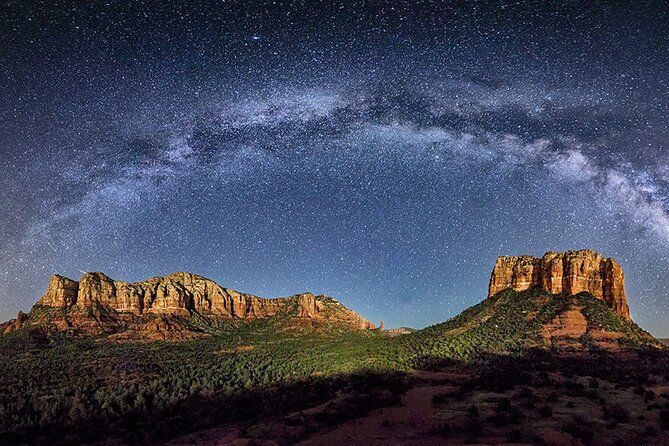
Sedona at night turns into story time. I love how the guide weaves Greek and local Indigenous constellation stories into what you can actually see, and I love the big-picture astronomy approach that uses a planisphere and a Milky Way visual (not telescopes). The main trade-off is that this is a guided learning experience first, so if you’re hunting for heavy telescope viewing, go in with the right expectation.
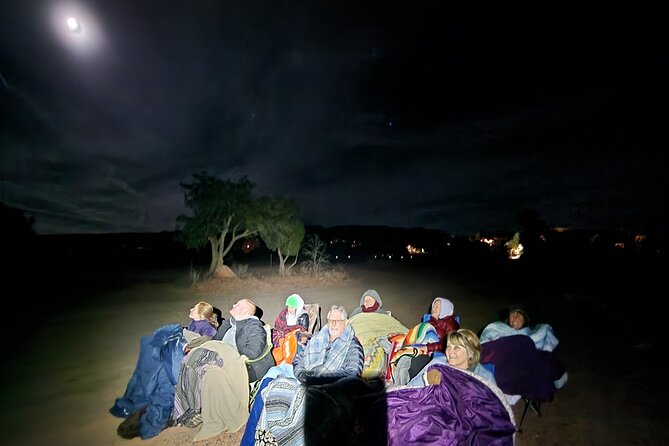
You’ll stay in one spot with chairs, and the comfort setup is real: blankets and hand warmers are provided, and you’re asked to dress warmly. The group stays small, and the tour starts at 7:30 pm from 77 Cultural Park Pl, Sedona.
One more thing to know up front: the tour is weather dependent. Sedona nights are often clear, but if clouds roll in, the guide notes you can choose a full refund at your discretion based on the situation, and the standard policy still allows a full refund if you cancel 24 hours in advance.
In This Review
- Key things to know before you go
- What You’re Really Doing Under Sedona’s Night Sky
- The Guide Style: Chad’s Big-Picture Astronomy, With Humor
- Your 7:30 pm Plan: Timing, Group Size, and the One-Spot Setting
- What You’ll See: Constellations, Planets, and the Milky Way Moment
- The Story Stops: How the Evening Unfolds in One Location
- Stop focus: Sedona under Orion and the winter-spring highlights
- The “big picture” layer
- A teachable moment that sticks
- Props and Tech: Planisphere, a Milky Way Visual, and a Star App
- Comfort in Sedona: Blankets, Hand Warmers, and What to Wear
- Weather Reality: Clear Nights vs. Cloudy Nights
- Price and Value: Is $100 Worth It?
- Who This Tour Fits Best (And Who Might Want Something Else)
- The Practical Stuff I’d Plan For
- Should You Book This Sedona Night Sky Tour?
- FAQ
- Where does the tour start?
- What time does the tour begin?
- How long is the tour?
- What does it cost?
- Is it a telescope tour?
- What should I bring for comfort?
- Is the tour in English?
- What happens if the weather is cloudy?
- What is the cancellation policy?
- Are pets allowed?
Key things to know before you go
- No telescope focus: you’ll learn the constellations and planets using what you can see with your eyes
- A story-first sky: Greek mythology and local Indigenous star associations get tied directly to the patterns overhead
- Big-picture astronomy: you’ll get the “how it all fits” view of our solar system and galaxy from Earth
- Laser pointer + props: the guide uses visuals (planisphere, Milky Way-style visuals, and sometimes a star app) to keep pointing clear
- Small group comfort: chairs, blankets, and hand warmers help you actually relax and watch
- Practical weather expectations: clouds can happen, and there is a path to a refund if the night is not working
What You’re Really Doing Under Sedona’s Night Sky
This tour is for people who want more than “here’s a constellation.” I like the way it turns the sky into a story map. You’re not just memorizing names, you’re learning how the sky works from your exact viewpoint on Earth, and you’re seeing why people in different cultures cared enough to build myths around those same patterns.
A big strength is the mix of astronomy plus culture. The guide connects familiar star patterns, then adds mythic explanations. At the same time, he also slows down the science side enough that you can follow it without needing homework.
You’re also getting a tour structure that stays friendly for different levels. Some people arrive with casual stargazing curiosity, and they still leave with “I get it now” moments. If you’re the type who wants every fact shouted at you, you’ll probably be okay here. If you want long, quiet stargazing time with zero talking, this is not built for that.
Other Sedona outings to compare
- The Original Sedona UFO and Stargazing Night Tour
★ 4.5 · 269 reviews - Sedona/Flagstaff: Grand Canyon Day Trip and Sunset
★ 4.9 · 214 reviews - DC Memorials Night Tour: Glass-Roof Convertible Upgrade Option
★ 4.5 · 6,933 reviews
The Guide Style: Chad’s Big-Picture Astronomy, With Humor
Chad is the name you’ll hear for this experience (Adventure Explore and Soar). Based on how the evening is described, his teaching style is lively and very human. He uses jokes and performance energy, and he encourages participation, including questions from the group.
What I found especially useful in this setup is that the astronomy is explained as a mental model. Instead of starting with distant objects and zooming in, he starts with what you can see, then builds outward. That is a smart way to learn the sky because most of us start staring upward without any map.
From the feedback, one standout teaching point is the way he explains how stars appear to move. You’ll get those “fast and slow” ideas made understandable, the kind of concept that usually feels confusing when it’s explained in school terms.
And yes, a laser pointer is part of the experience. That matters more than it sounds. When someone can point precisely and talk at the same time, you spend less time guessing which “bright dot” they mean.
Your 7:30 pm Plan: Timing, Group Size, and the One-Spot Setting
The tour starts at 7:30 pm and runs a little over two hours, about 2 hours and 5 minutes. It is offered in English, and the group size is capped at a maximum of 15 people. That small cap is a comfort advantage. In a small group, it is easier for the guide to read the room and keep pointing to the right place without losing people.
You do not hop between multiple locations like some bus tours. The plan is to stay at a single viewing spot with chairs. That means you can focus on looking up instead of constantly relocating.
There’s also a specific night-sky planning detail: the tour notes that there is no moon during the hours of the tour. Even without getting overly technical, that’s a real boost for seeing fainter features and getting that darker, calmer sky.
What You’ll See: Constellations, Planets, and the Milky Way Moment
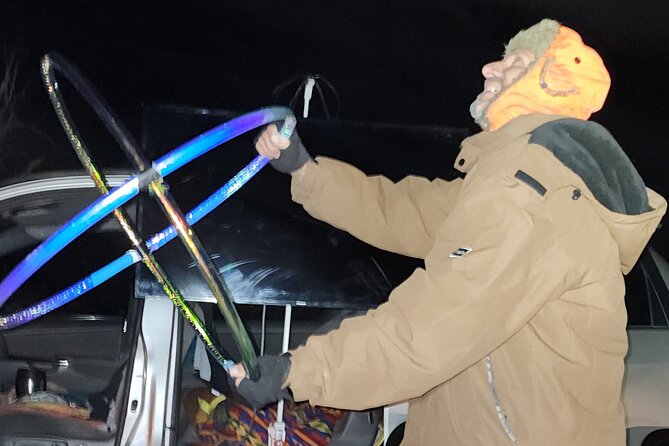
The sky part is not vague. The tour highlights mention a range of targets, including Orion, Sirius, Cassiopeia (spelled Casiopia in the listing text), Leo, Gemini, Taurus, and the Pleiades. It also calls out the Big Dipper and Little Dipper, plus planets like Jupiter and Saturn.
You should expect the exact showpiece stars to depend on the season and what’s visible from that night. But the big point is that you’re getting a guided “walk” across recognizable patterns. That’s what turns a random star field into something you can name.
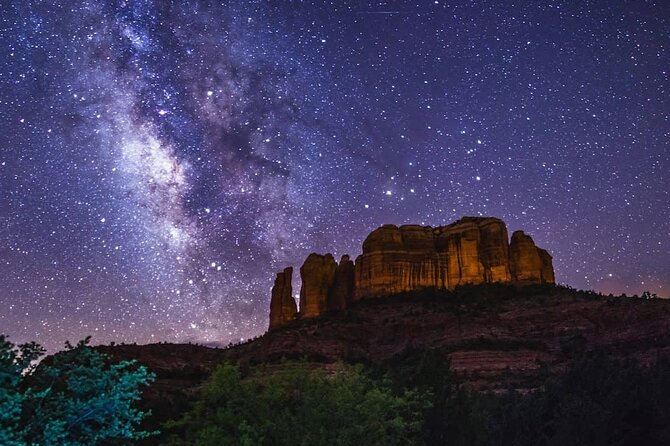
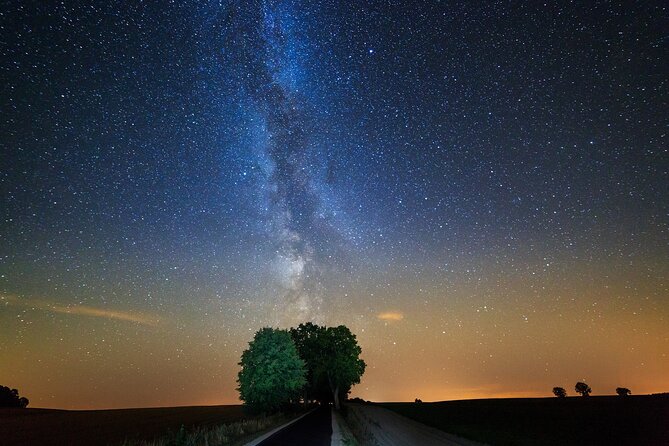
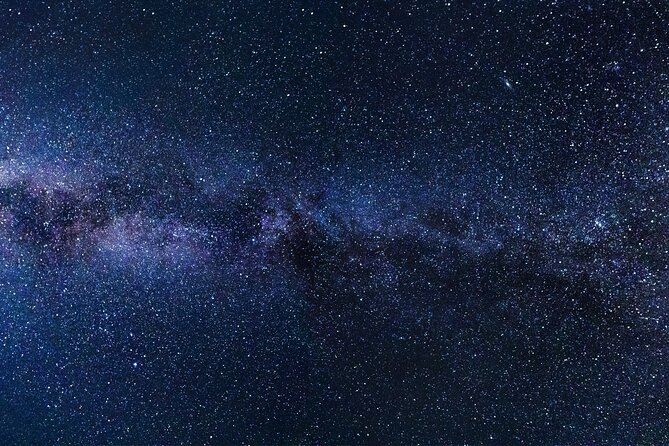
The Milky Way is part of the experience too. On clear nights, the combination of a no-moon window and a focused guide can make the galaxy feel surprisingly close. If the sky is not fully clear, you may miss some of the Milky Way visibility, but you can still have a good learning evening because the constellations and story connections remain the core.
And there is a practical expectation from the tour notes: “no telescopes.” You’re learning to use your own eyes. That might sound basic, but it is exactly what makes it repeatable. After you know the big patterns, you can take that skill anywhere.
Same corner of the map, another day out:
- Verde Canyon Railroad Adventure Package
★ 4.5 · 2,821 reviews - Small-Group Grand Canyon Complete Tour from Sedona or Flagstaff
★ 5.0 · 1,928 reviews - Explore Sedona’s Vortexes: 2.5 Hour Jeep Tour of Mysticism
★ 5.0 · 1,834 reviews - Guided ATV Tour of Western Sedona
★ 5.0 · 1,767 reviews
The Story Stops: How the Evening Unfolds in One Location
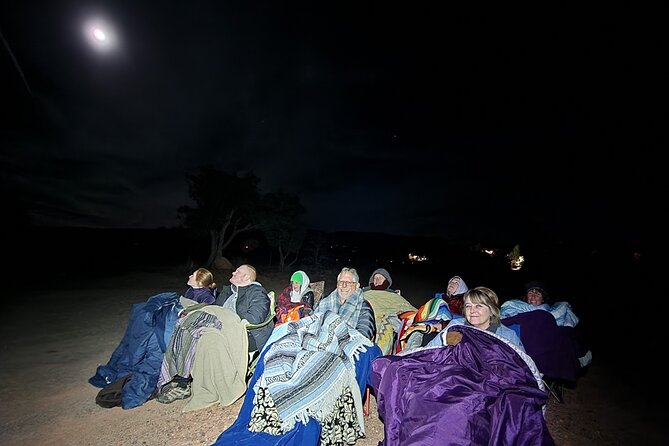
Even though the itinerary text lists multiple Sedona stops, the experience is effectively one evening in one place, with different story and astronomy segments.
Stop focus: Sedona under Orion and the winter-spring highlights
The tour’s first segment is built around a list of classic sky landmarks. Orion is often the anchor for a lot of beginners because it is easy to spot once you know the shape. Sirius is usually the star people notice next, since it’s so bright.
Then Cassiopeia comes in like a zig-zag handshake in the sky. It’s one of those constellations that becomes much easier to find once someone shows you the pattern and then ties it to a story.
From there, the evening moves through other patterns like Gemini and Taurus and connects them to mythology and local Indigenous associations. The guide also mentions connections to his daytime tour, the Experiential and Scientific Vortex Tour, framing the evening as a history-rich story about how we’ve interpreted the sky over time.
The “big picture” layer
This is where you stop thinking of stars as decoration and start thinking of them as a system. The tour emphasizes how you experience the solar system and galaxy from Earth’s perspective as you move through space. That framing helps the sky feel less like random dots and more like a geometry problem with culture layered on top.
A teachable moment that sticks
A recurring theme in the feedback is that people walked away with concepts they could explain afterward. One example is the clear explanation of stellar motion. Another is the sense that the guide helps you understand what you were looking for in the sky, not just what he said.
That is the difference between “entertaining lecture” and “learning with your eyes.” This tour tries to hit the second one.
Props and Tech: Planisphere, a Milky Way Visual, and a Star App
A unique part of this tour is how the visuals are used to bridge the gap between overhead reality and something you can understand quickly.
You should expect:
- A planisphere to help you map where to look
- A play-doh style Milky Way visual used during the storytelling and explanation
- A laser pointer to connect the story to the actual star pattern
- Sometimes a big-screen star app, but still with the emphasis on naked-eye viewing
This matters because sky learning is mostly about reducing frustration. If the guide points and tells you what you’re looking at, you stop feeling lost. And if he uses a planisphere, you get a tool you can reuse later at home or outside on your own time.
One caution that comes from a minority of feedback: a few people wanted the constellations shown even earlier or wanted less talking before seeing what to look for. So if you’re the kind of learner who needs immediate visual targets, pick a tour time when you can be patient through the setup.
Comfort in Sedona: Blankets, Hand Warmers, and What to Wear
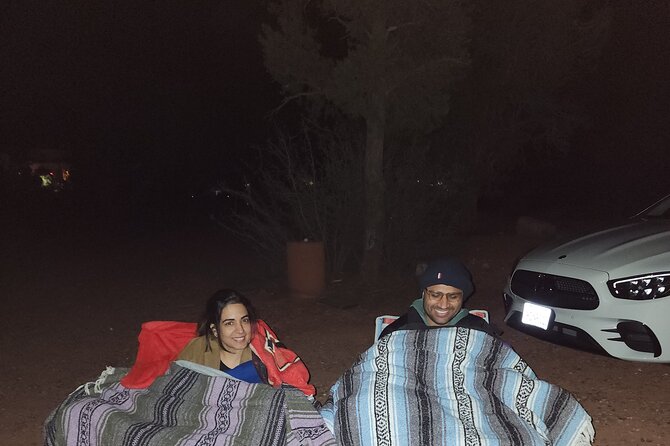
Night in Sedona can get chilly fast. The tour asks you to dress warmly, and it notes that Northern Arizona gets colder due to elevation. The good news is that the guide provides blankets and hand warmers, and chairs are available.
From practical experience, I’d still treat this as an outside event where layers matter:
- Wear gloves if you run cold
- Bring a stocking cap if you get chilled easily
- Have a warm layer for your legs, even if you’re fine for the first 20 minutes
If you show up prepared, the evening becomes much more about the sky instead of surviving the weather.
Weather Reality: Clear Nights vs. Cloudy Nights
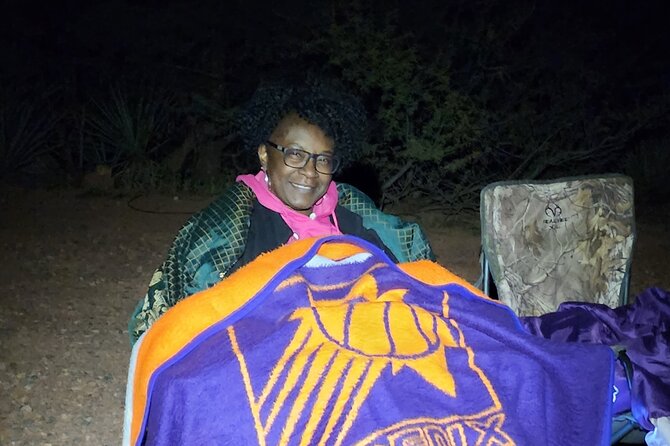
This tour requires good weather. The listing also points out that clouds are not common in Sedona at night, and it gives an average annual rainfall figure. Still, you should plan for variability.
Here’s the approach you’ll want to take:
- If the sky clears close to your start time, conditions can improve quickly
- If it is truly cloudy, your constellation viewing and Milky Way chances may drop
- The guide states that if it’s cloudy the night of the tour, you have the option to cancel for a full refund at your discretion, even if you are inside the 24-hour window
Also, if the tour is canceled due to poor weather, the standard policy is to offer another date or a full refund.
That refund flexibility is one reason I’m comfortable recommending this tour in shoulder seasons, as long as you can stay flexible.
Price and Value: Is $100 Worth It?
At $100 per person for about two hours, you’re paying for three things:
- The guide’s storytelling skill, not just star pointing
- The structured learning approach (props, laser pointer, big-picture astronomy)
- The comfort setup (chairs, blankets, hand warmers)
If you compare it to renting your own telescope or trying to learn the constellations alone, the value here is speed. You get an explanation tailored to what you can see from the ground in real time.
A quick reality check: if you want a quiet nature experience with minimal instruction, $100 might feel like too much. If you want to leave with clear mental maps of Orion, Cassiopeia, and friends, plus a stronger grasp of what “the sky is doing,” it’s much easier to justify the cost.
Also, the small group size helps. In a larger crowd, star tours can feel rushed. Here, the cap at 15 gives the guide room to keep the pointing accurate and the stories flowing.
Who This Tour Fits Best (And Who Might Want Something Else)
This is a great match for:
- First-time visitors who want to understand the sky without needing any astronomy background
- People who like myth, culture, and science in the same conversation
- Anyone who enjoys interactive teaching and humor
- Families and mixed-age groups, since the guide works to keep everyone engaged
It might not be ideal if:
- You only care about telescope viewing and want that style of astronomy
- You need constellations shown with minimal preamble, every minute of the talk must lead directly to what you look for
- You dislike guided group experiences outdoors, even when warmth gear is provided
The Practical Stuff I’d Plan For
Before you go, do these quick prep moves:
- Confirm you are ready for an outside winter-evening style event
- Dress in warm layers, even though blankets and hand warmers are provided
- Keep expectations focused on naked-eye viewing and guided learning
- Arrive a few minutes early at 77 Cultural Park Pl so you’re settled before the sky talk starts
If you’re the type who takes photos, you may want to be mindful that clouds and lighting conditions can change quickly. This tour is more about seeing and understanding than chasing perfect images.
Should You Book This Sedona Night Sky Tour?
If you want a story-rich, learn-the-sky evening and you’re excited to connect constellations to both mythology and local Indigenous star associations, I think you’ll enjoy it. The strongest reasons to book are the combo of big-picture astronomy, the practical pointing tools, and the comfort setup that makes it easier to stay outside for two hours.
If you’re expecting a telescope-heavy night, or you want minimal talking, you may feel like it’s more “class with a view” than “pure sky watching.” But even then, the no-moon timing and the guided targets can still make it worth your time.
My call: book it when you can dress warm, keep an open mind, and let the sky become a narrative you can follow with your eyes.
FAQ
Where does the tour start?
The meeting point is 77 Cultural Park Pl, Sedona, AZ 86336, USA, and the activity ends back at the same meeting point.
What time does the tour begin?
The start time is 7:30 pm.
How long is the tour?
The duration is about 2 hours and 5 minutes.
What does it cost?
The price is $100.00 per person.
Is it a telescope tour?
The experience focuses on what you can see with your own eyes, and it does not involve telescopes.
What should I bring for comfort?
Dress warmly. The guide provides blankets and hand warmers, and there are chairs to sit in.
Is the tour in English?
Yes, the tour is offered in English.
What happens if the weather is cloudy?
The tour requires good weather. If it is canceled due to poor weather, you’ll be offered a different date or a full refund. The tour also states that if it is cloudy the night of your tour, you have the option to cancel for a full refund based on your discretion.
What is the cancellation policy?
You can cancel up to 24 hours in advance for a full refund. If you cancel less than 24 hours before the experience starts, the amount paid will not be refunded.
Are pets allowed?
The tour asks you to refrain from bringing pets and alcohol. Service animals are allowed.
Newest Sedona reviews on the site
- Bliss – Sedona’s Most Luxurious Wine Tour – Lunch Included!★ 4.5 · 552 reviews
- Visit 4 Wineries in Limo Party Bus-Includes Charcuterie Lunch!★ 4.5 · 756 reviews
- Sedona Boynton Canyon Trolley Tour★ 4.5 · 326 reviews
- The Ultimate Sedona Experience★ 5.0 · 236 reviews
- Sedona’s Seven Canyons: 2-Hour Rugged Adventure & Stunning Views★ 5.0 · 655 reviews
- Tour to Sacred Sites and Vortexes in Sedona★ 5.0 · 363 reviews
- Sightseeing Highlights Tour of Sedona★ 4.5 · 1,279 reviews
- Private Grand Canyon Day Tour★ 5.0 · 347 reviews
Sedona Tours, compared.

Small-Group Grand Canyon Complete Tour from Sedona or Flagstaff
Read our review →
Explore Sedona’s Vortexes: 2.5 Hour Jeep Tour of Mysticism
Read our review →


Sedona Outlaw Trail: 3-Hr 4×4 Tour of Western Canyons & Wildlife
Read our review →

Sedona Red Rocks Outback Tour: Scenic with mild off-roading
Read our review →Browse the lists this tour appears in