
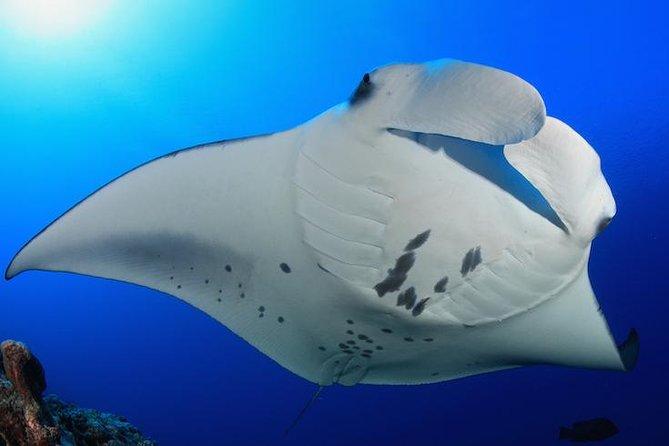
Reviewed · SNORKELING
Snorkel with Manta Rays Guaranteed
Manta rays feel unreal at night. This evening trip takes you from a calm sunset trimaran sail to the World Famous Manta Ray Village, where a lit manta float helps pull plankton into view for some very close sightings. It is one of those rare nature moments that feels personal, not touristy.
I especially like two things. First, you get real face-to-face time with the mantas, often within inches, and you can watch them feed as they glide through the light. Second, the whole experience is run with tight safety-first organization, from the briefing to the way the crew helps you get in, stay positioned, and out again.
The main drawback to plan for is physical comfort. You spend the snorkel time holding onto the flotation light bar, so your shoulders can feel it, and some nights have choppy water that can make seasickness a real possibility.
In This Review
- Key takeaways before you go
- Why Manta Ray Village is different after dark
- The Hokulani sunset sail: comfort that helps you start calm
- Entering the water: the manta floatation setup
- What you actually see when the mantas arrive
- Safety and rules that keep the experience respectful
- Gear, wetsuits, and onboard snacks you will be glad you have
- Seasickness, rough water, and physical comfort
- How much time you really spend in the experience
- Price and value for an evening manta-ray experience
- Who should book, and who should consider alternatives
- Should you book snorkel with manta rays guaranteed
- FAQ
- How long is the snorkeling portion?
- Where does the tour start?
- What snorkeling gear is included?
- Are full-face masks allowed?
- What happens if weather affects the tour?
- Can I cancel for a full refund?
Key takeaways before you go
- Lit flotation device = plankton + manta feeding zone once the light attracts food at night
- Sunset cruise on the Hokulani includes drinks and snacks, so you ease into the evening
- About 45 minutes in the water with staff guiding you on and off the float area
- Wetsuit, mask, and snorkel included (fins are not needed), and gear is sized for real bodies
- Safety rules matter including no full-face masks and a strong don’t-touch-the-mantas stance
- Group size is capped at 49 which keeps the experience from feeling chaotic
Why Manta Ray Village is different after dark
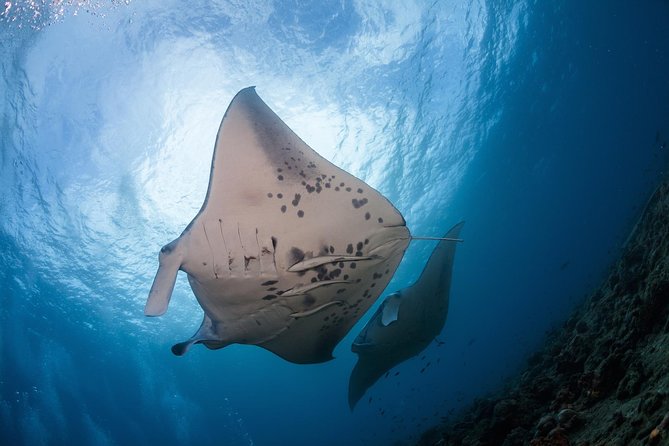
Night turns this manta habitat into a feeding theater. The process is simple: plankton rises near the surface at night, and the light attached to your flotation device brings it into a concentrated area. That means mantas show up to feed, then cruise through the glowing water like they own the show.
What makes this valuable is that you are not just hoping for a sighting. You are being placed where the food chain connects, and you are set up to watch without fighting the water. Even when conditions are not perfect, the whole point of the system is to keep the mantas coming into the viewing zone.
And yes, you should expect close range. When the mantas circle in, it can feel like they are right there with you, because they really are very near the surface. That is the magic, but it also makes the safety rules and calm behavior important.
Other Big Island of Hawaii outings to compare
- Big Island Manta Ray Night Snorkel
★ 5.0 · 5,656 reviews - Big Island: Kona Manta Ray Snorkel Tour in Keauhou Harbor
★ 4.5 · 2,465 reviews - KONA Manta Ray Night Snorkel – FREE re-ride if no Sightings
★ 5.0 · 2,212 reviews
The Hokulani sunset sail: comfort that helps you start calm
You begin with a sunset cruise on the Hokulani, a comfortable trimaran that gives you a smoother, steadier start than you might expect for night water. Drinks and snacks are served onboard, which sounds small until you are trying to settle your stomach and focus on what happens next.
One practical plus from people who tend to feel queasy: the boat ride to the snorkel spot can be short. That matters because less time on choppy water means fewer people reaching for ginger. It is not a guarantee, of course, but the trip is planned so you are not stuck out in the dark for long before you get to the action.
Also, the boat is set up for real comfort. You get a clean, spacious vessel experience, and there is even a bathroom onboard, which is more helpful than it sounds when you are spending a chunk of time out at night.
Entering the water: the manta floatation setup
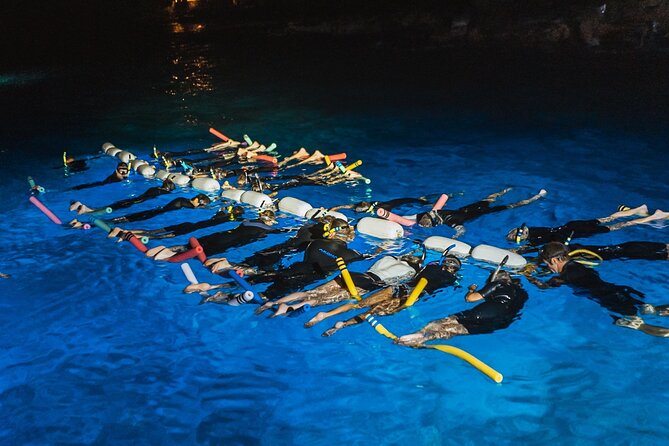
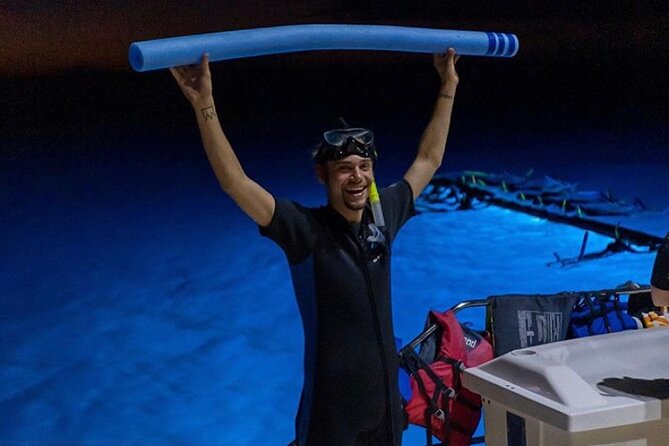
Here is how this works in the real world. After you arrive at World Famous Manta Ray Village, the staff gives a clear briefing, then places you onto the one-of-a-kind manta flotation device. Instead of doing long free swims, you float while holding onto the flotation light bar as the mantas feed below.
That design is a big deal for first-timers. If you are not a strong swimmer, you still get to enjoy the experience without constantly battling for position. You are close enough to see how the mantas move and how they pass under the light, and you spend long enough in the water to notice patterns, not just one quick sighting.
Your snorkel time is about 45 minutes, which is a sweet spot. It gives time for mantas to circle multiple times, for you to adjust your breathing, and for the crew to help anyone who needs a minute. There is also an important comfort perk: you can usually ask to exit if you need to, rather than feeling trapped.
The tradeoff is that you are holding on the whole time. Some people describe it as surprisingly tiring. If you have shoulder issues, or if you are bringing a child who gets fatigued easily, that is the one part you should think about up front.
What you actually see when the mantas arrive
Once the lights are on and the plankton starts drawing things in, the mantas can show up fast. On some nights, sightings can happen within the first ten minutes, and then they keep returning, circling close to the float and moving underneath you. Expect them to glide calmly, then sometimes turn in a way that makes you look down and realize you are watching the underside of a truly large animal.
People consistently mention how detailed the moment feels. When a manta comes that close, you can see the way it cuts through the water, how it banks, and how it feeds. It can feel almost unreal because the animal is huge, yet it moves with grace.
Another thing to plan for is the intensity of the proximity. You are not just looking at them from a respectful distance. It can be inches away at times. That is why the tour runs a firm don’t-touch-the-mantas policy and why everyone stays focused on their positioning.
Same corner of the map, another day out:
- Big Island in a Day: Volcanoes Waterfalls Sightseeing and History
★ 5.0 · 6,569 reviews - Hilo Shore Excursion: Volcanoes National Park & Black Sand Beach
★ 4.5 · 2,338 reviews - Big Island: Captain Cook Snorkel On A Power Catamaran With Lunch
★ 5.0 · 2,232 reviews - Manta Ray Night Snorkel at Kona, Big Island
★ 5.0 · 1,758 reviews
Safety and rules that keep the experience respectful
This tour takes safety seriously, and it shows in the routine. Before you get in, staff walk you through how to use the gear and how the flotation device works, then they help you get into a comfortable stance. In choppy conditions, the crew’s job gets harder, but the approach stays the same: clear instructions, quick assistance, and constant attention to how people are handling themselves.
There are also rules designed to protect both people and mantas. Full-face masks are not allowed due to safety concerns. That is a small item that can matter because some snorkelers like the coverage of a full-face style mask, but here you will need a standard mask.
The other key behavior rule is simple: do not touch. This is not about politeness, it is about keeping the animals stress-free and preventing gear from accidentally striking them. You will also notice that the setup helps reduce accidental contact, since people are not flailing fins around in the same tight space.
If you are nervous about night snorkeling, this is one of the reasons people feel comfortable. The staff is right there with you, helping you settle in, so you are not left to figure it out on your own.
Gear, wetsuits, and onboard snacks you will be glad you have
The essentials are included: wetsuits, masks, and snorkels. Fins are not needed. That can simplify your packing, and it also reduces the risk of someone arriving with gear that does not fit or works poorly in the water.
Even better, wetsuits tend to work for a wide range of sizes. If you are the kind of traveler who worries about getting stuck with one size that does not fit right, you will likely appreciate this. A well-fitted wetsuit makes a big difference in night water, where you can feel the cold more sharply once you stop moving.
Onboard, you get filtered water plus soda or pop and varied juices. That matters because people often go into night tours hungry or a little keyed up, and having something available helps everyone stay steady. A snack and drink also makes the sunset sail feel like more than just transportation to the water.
One more practical note: water temperature can feel chilly. Even if you are a Hawaii veteran, night snorkeling can bring a different cold factor. Bring a light layer for the boat ride if you run cold easily.
Seasickness, rough water, and physical comfort
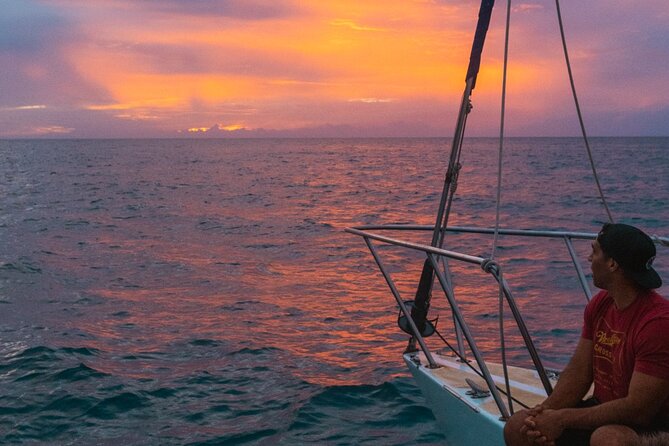
Even with a well-run plan, ocean conditions can affect how the night feels. Some evenings have larger swell and choppier surf, and a few people mention that sitting on the boat can trigger sea sickness. If you are prone to it, consider taking motion-sickness steps ahead of time and keeping your focus on the horizon during the sail.
Then there is the flotation grip factor. Holding onto the float bar throughout the snorkeling session can be tiring, especially with chop. People with shoulder problems may want to think carefully before booking, and for kids, the best approach is to expect that this is more like guided floating and watching, not free swimming.
The good news: the crew monitors closely and helps people adjust. If you feel overwhelmed, it helps to communicate early, because staff can usually spot who needs a short break before a small issue becomes a bigger one.
How much time you really spend in the experience
The tour runs about 1 hour 30 minutes total, with snorkel time around 45 minutes. The rest of the time is the sunset cruise, briefings, getting kitted up, and transitioning between boat and float platform.
That timing matters for planning your Big Island evening. You are not committing to the whole night or losing an entire day. It also fits well if you want a second activity later, since you are back at the meeting point after you finish the water session.
Also, the experience is paced for beginners. You are not expected to be an expert swimmer, and the guided setup reduces the stress of keeping your head up and staying afloat.
Price and value for an evening manta-ray experience
At about $141.57 per person, this is not a cheap activity. But you are paying for a few things that add real value.
You are not paying just for a general boat ride. You are paying for a purpose-built setup that concentrates feeding activity, plus guided safety support once you are in the water. The included wetsuit and snorkeling gear also reduce hidden costs and hassle.
Then there is the big one: proximity time. When mantas show up and stay around, you get extended viewing rather than a quick glance. That is why so many people call it a must-do. If you go in expecting a calm, controlled floating-and-watching experience rather than a long swim adventure, the price starts to make sense.
Who should book, and who should consider alternatives
This tour is a strong fit if you:
- want a short, well-run evening activity on the Kona side
- like the idea of seeing mantas close to the surface without needing to swim hard
- appreciate clear safety briefings and staff help, especially if it is your first night snorkeling
- travel with kids who are comfortable in the ocean at night and can follow instructions
It may be less ideal if you:
- have shoulder issues, because you hold onto the float for the full viewing time
- get sea sick easily, since choppy conditions can make the boat ride rough
- want to spend time actively swimming around, because this experience is mostly holding position on the platform while mantas pass through your view
Should you book snorkel with manta rays guaranteed
If you want one standout Big Island evening, I think this is an easy choice. The combination of a sunset cruise on the Hokulani, a focused manta feeding setup, and close viewing time is exactly what makes nighttime manta snorkeling special. The staff presence is also a big plus, especially for nervous first-timers.
I would only hesitate if shoulder fatigue or seasickness are major issues for you. For most people, though, it hits the right balance of wonder, comfort, and guided safety.
If you book, go in with the right mindset: you are there to float, watch, and be respectful. Do that, and you will likely come away feeling like you saw something truly rare.
FAQ
How long is the snorkeling portion?
Snorkel time is approximately 45 minutes, within a total tour time of about 1 hour 30 minutes.
Where does the tour start?
The tour meets at Keauhou Bay, Kahaluu-Keauhou, HI 96740, USA, and it ends back at the meeting point.
What snorkeling gear is included?
You get wetsuits, masks, and snorkels provided. Fins are not needed, and the tour also includes use of the snorkeling equipment plus filtered water.
Are full-face masks allowed?
No. Due to safety concerns, full-face masks are not allowed on this tour.
What happens if weather affects the tour?
This experience requires good weather. If it is canceled due to poor weather, you will be offered a different date or a full refund.
Can I cancel for a full refund?
Yes. You can cancel up to 24 hours in advance for a full refund, but cancellations made less than 24 hours before the start time are not refunded.
Newest Big Island of Hawaii reviews on the site
- Zodiac Raft Whale Watching Adventure★ 5.0 · 456 reviews
- Kealakekua Bay Snorkeling Tour – 4 hour Kona Zodiac Adventure★ 5.0 · 508 reviews
- Volcano, Chocolate and Waterfalls of the Big Island★ 5.0 · 238 reviews
- Whale Watch Excursion from the Big Island★ 4.5 · 263 reviews
- Whale Watching On The Big Island★ 5.0 · 573 reviews
- Volcano National Park Adventure from Waikoloa★ 5.0 · 216 reviews
- Big Island, Hawaii: Volcanoes National Park Safari★ 4.5 · 545 reviews
- Hawaii Volcanoes, Waterfalls, Beaches & Hilo Highlights Day Tour★ 5.0 · 391 reviews
Snorkeling, compared.
Grand Tour Around Island 16 Locations plus Snorkeling
Read our review →
Oahu’s Ultimate Tour: Dole, Turtle Snorkel, Pali Lookout & More
Read our review →
Oahu Circle Island Tour with Turtle Snorkeling— Small-Groups
Read our review →
Waikiki, Hawaii: Turtle Canyon Snorkel Excursion
Read our review →
Shell Island Snorkel and Dolphin Catamaran Cruise with Island Time
Read our review →
Turtle Canyon Snorkel Adventure in Waikiki, Oahu
Read our review →
The ‘OG’ Manatee Snorkel Tour with In-Water Guide/Photographer
Read our review →Browse the lists this tour appears in