
Reviewed · AMERICA
Santa Fe Revisited
Santa Fe history walks fast when led right. This 2 hour 15 minute Santa Fe Plaza tour strings together Native, Spanish, Mexican, and American stories, with Ana Pacheco guiding you through the landmarks that shape how the city looks today. I love the way the tour turns architecture and art into human-scale stories you can actually remember, not just facts you forget.
I also like the pace. It is longer than most Plaza walks, so you get breathing room for key stops like the Cathedral Basilica area, the Palace of the Governors, and Loretto Chapel. One possible drawback to plan around: guided entry into churches is not included, so if you want extra time inside, you will likely want to go on your own before or after the tour.
In This Review
- Key things to know before you go
- Santa Fe Plaza history, built around real landmarks
- Meeting Ana Pacheco at 10:00 and the small-group advantage
- Stop-by-stop: what you actually learn on this walk
- The Cathedral Basilica area, La Conquistadora, and the art-and-architecture story
- 109 East Palace and the WWII Manhattan Project checkpoint
- The Palace of the Governors: government roots plus Pueblo connections
- Loretto Chapel and the Miraculous Staircase, plus why it is now a museum
- Burro Alley: salt, firewood, saloons, and Doña Tules
- The pace and what to do before and after
- Price and value: is $80 worth it?
- Who should book this tour
- Should you book Santa Fe Revisited?
- FAQ
- What is the duration of Santa Fe Revisited?
- How much does the tour cost?
- Where do I meet, and where does the tour end?
- Is the tour offered in English?
- Is admission included for all stops?
- What is the cancellation policy?
Key things to know before you go
- Ana Pacheco, Santa Fe native historian: you learn directly from someone steeped in local history and storytelling.
- A longer Plaza-area route: you spend more time on the big sights than typical short walks.
- Spanish roots plus modern culture: the tour connects centuries of change to what you see on the street now.
- Church interiors may require your own time: the tour focuses on exterior and context, with limited guided access.
- Small group size: capped at 10 travelers, so questions feel easy.
Santa Fe Plaza history, built around real landmarks
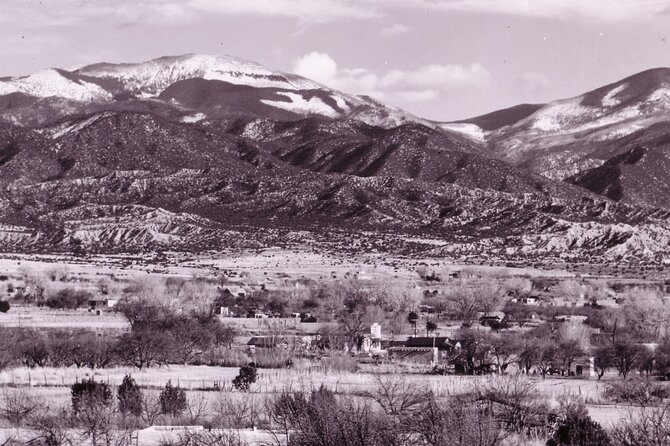
If you have ever wandered the Santa Fe Plaza, you know it looks simple. Stone buildings, open space, easy sidewalks. Then you start noticing the details, and you realize the area is packed with layers. That is exactly what this tour is built for.
The goal is not just to point at famous places. It is to help you understand how Santa Fe became Santa Fe, and why certain buildings matter. The route covers about four hundred years of Native American, Spanish, Mexican, and American history, with an emphasis on Spanish roots and the way later cultures shaped what you see now. You get that context in a walking format that feels practical, not academic.
This is also one of the better choices if you want a history tour that does not feel like a lecture. Ana Pacheco’s style is story-led. She connects art and architecture to events and people, and she keeps moving at a pace that gives you time to absorb what you are seeing.
More America tours worth your time:
- NYC: SUMMIT One Vanderbilt Tickets
★ 4.7 · 51,195 reviews - NYC: 9/11 Memorial & Museum Timed-Entry Ticket
★ 4.8 · 31,428 reviews - NYC: Empire State Building Tickets – Observatory & Museum
★ 4.7 · 25,757 reviews
Meeting Ana Pacheco at 10:00 and the small-group advantage
You meet at the Cathedral Basilica of St. Francis of Assisi, 131 Cathedral Pl. The start time is 10:00 am, and the tour ends at San Miguel Chapel, 401 Old Santa Fe Trail.
The group stays small, with a maximum of 10 travelers. For you, that matters more than you might think. You can ask questions without the whole group turning into a slow-moving classroom. You also get a more flexible experience, since the guide can slow down for the parts you care about most.
Another small practical point: this is in English, and it uses a mobile ticket. You will want your phone handy at the start. The tour is also described as suitable for most travelers, and service animals are allowed.
Finally, plan around weather. The experience requires good weather, so if it gets rained out, you should expect a different date or a refund.
Stop-by-stop: what you actually learn on this walk
The Cathedral Basilica area, La Conquistadora, and the art-and-architecture story
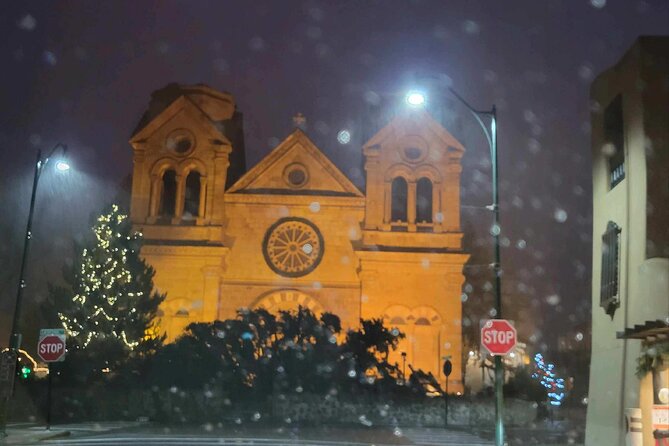
Your first stop is the Cathedral Basilica of St. Francis of Assisi, right at the Plaza area. This is a strong opener because the building anchors the Spanish Catholic story in a way that is visible and immediate.
From here, you focus on a few named landmarks and themes:
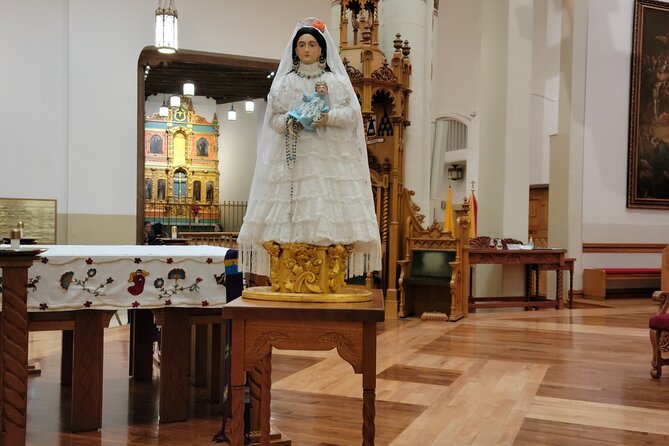
- La Conquistadora, described as the oldest Madonna in the United States
- Santa Fe’s Plaza context, since the cathedral’s meaning ties into how the town was organized
- The Santa Fe Plaza area and the surrounding story of how the city grew
You also get a structured explanation of history and aesthetics, including the idea of how art and architecture in Santa Fe reflect centuries of change. If you like figuring out why buildings look the way they do, this stop is where the tour starts paying off.
Important consideration: even if you might be able to enter on your own, guided entry into churches is not included. So treat this as a context and landmark tour. If you want inside time, plan to do that separately.
A nice side effect of starting here is timing. You begin with the most central, easiest-to-understand anchor point, then the later stops will feel less like random trivia and more like a timeline.
Same corner of the map, another day out:
- NYC: Empire State Building Observation Deck Tickets
★ 4.7 · 22,072 reviews - NYC: Edge Observation Deck Admission Ticket
★ 4.6 · 20,918 reviews - Grand Canyon West, Hoover Dam Stop and Optional Lunch and Skywalk
★ 5.0 · 19,535 reviews - New York City: Statue of Liberty & Ellis Island with Ferry
★ 4.6 · 18,683 reviews
109 East Palace and the WWII Manhattan Project checkpoint
Next you head to 109 East Palace, and this stop adds a surprising modern layer. You are not just learning about the Spanish era or Native heritage. You are also learning about Santa Fe’s role in 20th-century history.
At this address, the tour frames the site as a military checkpoint for the Manhattan Project during WWII. That is the kind of detail that changes how you see a place. Suddenly Santa Fe is not only a historic capital. It is also part of the story of how the United States moved through global conflict and scientific work.
This stop is short, about 5 minutes, but it matters. It helps you understand that Santa Fe’s identity has always been shaped by far-reaching events, not only local tradition.
If you prefer history that connects places to broader events, you will like this turn. It is a reminder that the story does not stop at the postcard era.
The Palace of the Governors: government roots plus Pueblo connections
The Palace of the Governors is a highlight, and it earns it. The tour describes it as the oldest government building in the United States, and it also connects that political history to New Mexico’s 19 Indian Pueblos.
For you, this stop does two things:
- It gives you a concrete sense of governance in the region, not just culture and religion.
- It ties the physical building to a wider network of communities, rather than presenting Santa Fe as one isolated culture bubble.
There is also an architectural-symbol angle. The tour mentions the history of the only U.S. government building designed as a Native American symbol. That is a useful lens when you look at official buildings. You start noticing how symbolism communicates power and identity, even when you are standing on ordinary sidewalks.
This stop is about 10 minutes, so it is not rushed. You get enough time to connect the names on the walls to the larger story the guide is building.
Loretto Chapel and the Miraculous Staircase, plus why it is now a museum
Then comes the stop many people remember after the tour: Loretto Chapel.
The tour explains that the chapel was built in 1878 by Archbishop Lamy to accompany the Sisters of Light Loretto Academy. It also lays out the design inspiration, including that the Gothic-Revival style was inspired by Saint Chapelle in Paris. The guide also shares details about architect Antoine Mouly and restoration work, which helps you understand where the chapel’s style comes from.
Then you get the legend that makes Loretto Chapel famous: the chapel’s 360-degree staircase, known as the Miraculous Staircase. The guide notes the story that it had no visible means of support, and links the legend to St. Joseph the Carpenter.
Here is the practical side you need to know: the tour notes that admission for this stop is not included, and that the chapel was closed in 1968 and deconsecrated. It is now run as a privately owned museum.
So you should decide ahead of time what you want. If you want to see the staircase up close and spend time inside, this is where you will likely want to budget for admission separately. The payoff is that the tour gives you the story, and the museum gives you the visual details.
Burro Alley: salt, firewood, saloons, and Doña Tules
The final stop is small but fun: Burro Alley. It is a narrow street connecting Palace Avenue and San Francisco Street, and the tour uses it to explain daily-life logistics behind Santa Fe’s economy.
You learn about vendors who sold salt from the Galisteo Salt Basin and firewood from surrounding mountains. The story says they would tie up their burros in Burro Alley to rest, then spend time at nearby places like saloons and brothels.
The tour also points out the gambling hall run by María Gertrudis Barceló, known as Doña Tules, near Palace Avenue.
This stop is about 5 minutes, so it is not a big time commitment. But it adds texture. After learning about churches, government buildings, and WWII history, Burro Alley gives you the human-scale routine side of the city. You leave thinking about the alley not just as a cute passage, but as a work-and-rest hub tied to real commerce.
The pace and what to do before and after
At roughly 2 hours 15 minutes, you get a longer walking experience without feeling like you are stuck for half a day. The route is designed so you can learn the big picture while still having time to explore on your own afterward.
Here is the big practical tip I would give you: since guided entry into churches is not included, plan your schedule so you can get interior time either before your tour or after it. Start with the tour for the stories and context, then use your free time to go inside if you still want more.
Also, bring the basics that make old-city walking easier. Comfortable shoes help because you are moving between Plaza-area stops. Water is smart too, even if you are visiting in mild weather.
If you come early in your trip, this tour helps you pick up the meaning behind what you will see later. If you come mid-trip, it can still help you connect the dots you missed earlier.
Price and value: is $80 worth it?
At $80 per person, the price is not “cheap,” but it is not out of line for a history-focused, small-group guide experience in Santa Fe.
What you are paying for is not just access to landmarks. You are paying for:
- A locally rooted guide, Ana Pacheco, who brings long-form perspective and story structure
- A route that is longer than many similar Plaza tours, which usually means you get more explanation per stop
- A focused theme, Spanish roots and how later cultures shaped modern Santa Fe
If your goal is to understand the city rather than just check boxes, the value improves. If your goal is only photos from the street corners, you might not feel as satisfied.
One more value note: the tour uses a mobile ticket and is capped at a small group size. That often translates into smoother Q and A time, and that is part of what makes the learning stick.
Who should book this tour
This is a great fit if you:
- Want a history-first walking tour that connects Spanish roots to later American life
- Like architecture and the meaning behind what you see
- Prefer small-group time with room for questions
- Plan to visit multiple Plaza-area sites and want them to make more sense
It is also a smart choice for couples and solo travelers who want a guided framework for exploring. Families can do it too, especially if your group likes stories and has patience for a longer walk.
If you dislike walking, or if you only want inside admissions and skip storytelling, you may feel constrained by the tour’s design.
Should you book Santa Fe Revisited?
I’d book it if you want your Santa Fe time to feel connected. This tour is the kind that makes the Plaza area go from pretty streets to a living timeline.
Because church interiors are not part of the guided entry, you will get the most value if you treat the tour as your context-building first step, then add your own time inside key buildings. With Ana Pacheco at the helm, the stories are the draw, and the landmarks are the proof.
If you are short on time, you might consider a shorter option. But if you can spare 2 hours 15 minutes, this one tends to give the best payoff per stop, with enough variety that you come away with Santa Fe you can explain.
FAQ
What is the duration of Santa Fe Revisited?
It runs for about 2 hours 15 minutes.
How much does the tour cost?
The price is $80.00 per person.
Where do I meet, and where does the tour end?
You meet at the Cathedral Basilica of St. Francis of Assisi, 131 Cathedral Pl. The tour ends at San Miguel Chapel, 401 Old Santa Fe Trail.
Is the tour offered in English?
Yes, it is offered in English.
Is admission included for all stops?
Admission is noted as free for several stops, but Loretto Chapel has admission not included. Other stops like Burro Alley are noted as not requiring admission.
What is the cancellation policy?
You can cancel for a full refund up to 24 hours in advance. If you cancel less than 24 hours before the start time, the amount you paid will not be refunded. If the tour is canceled due to poor weather, you will be offered a different date or a full refund.
Newest America reviews on the site
- Yosemite: Full-Day Tour with Lunch and Hotel Pick-up★ 4.7 · 216 reviews
- Zoo Miami: General Admission Ticket★ 4.5 · 868 reviews
- San Francisco: Day Trip to Yosemite with Giant Sequoias Hike★ 4.4 · 290 reviews
- Atlanta: Zoo Atlanta General Admission Ticket★ 4.5 · 712 reviews
- Yellowstone: Old Faithful, Waterfalls, and Wildlife Day Tour★ 4.9 · 227 reviews
- Wynwood Art District 1-Hour Street Art Tour by Golf Cart★ 4.9 · 492 reviews
- Wynwood Art District 1-Hour Wynwood Buggies Street Art Tour★ 4.9 · 289 reviews
- Willow Beach: Black Canyon Kayak Half Day Tour-No Shuttle★ 4.9 · 323 reviews