
Reviewed · NATIONAL PARK TOURS
Great Smoky Mountains National Park Self-Guided Driving Tour
Great Smokies, zero guesswork. This self-guided drive turns the park into a story-filled route, with offline maps and location-triggered audio so you can pull over, look around, and not worry about what to do next. I especially like that it is priced per car (up to 4 people), and the narration makes familiar viewpoints feel fresh with history and heritage woven in. One thing to consider: it depends on your phone setup and a correct starting point, so plan a little time before you enter.
My top caution is the tech part. You cannot rely on cell signal inside the park. If you wait to download, or you start the tour at the wrong place, you can end up with audio that feels off or skips ahead.
In This Review
- Key things I’d bet on before you go
- A GPS audio road trip through the Smokies
- What $16.99 buys, and why per-car pricing matters
- Plan your setup before you enter: offline download and GPS timing
- The route vibe: a heritage tour plus big Smokies viewpoints
- Oconaluftee Visitor Center and the heritage that sets the tone
- Detours and easy wins: Mingus Mill, Beech Flats, and sunset viewing
- Clingman’s Dome: the view you came for
- Morton Tunnel, Alum Cave history, and Smokies fire lessons
- Sugarlands Valley Trail and the rare moment of easy access
- Waterfall route: Rainbow Falls to Cataract, then Grotto and the thousand drips
- Newfound Gap and the old routes that shaped the Smokies
- The quirky museum stop you did not know you needed
- Roaring Fork Motor Nature Trail, Reynolds Cabin tech, and the salamander stop
- Gatlinburg finish, and why lifetime access changes the value
- Should you book this self-guided driving tour?
- FAQ
- Does this tour work without cellular service?
- How long is the drive?
- Is the price per person?
- Do I need to buy park passes?
- How do I start the audio during the drive?
- What are the hours for this activity?
Key things I’d bet on before you go

- Offline-first convenience: download in strong signal, then use the tour without cellular or wifi.
- Hands-free audio tied to your location: stories play as you drive and stop.
- A tight route with big payoffs: 45+ miles and 40+ audio stories in about 2 to 3 hours.
- Real variety, not just viewpoints: overlooks, quiet walkways, heritage sites, and multiple waterfalls.
- Smokies for families and different mobility needs: Beech Flats Quiet Walkway and wheelchair or stroller-friendly Sugarlands Valley Trail.
- Lifetime access: you can reuse it on future trips, not just one weekend.
A GPS audio road trip through the Smokies
The Great Smoky Mountains can feel like a choose-your-own-adventure even when you have a plan. This tour basically gives you a guided route without the pressure of a group bus schedule. You drive your own pace, and the audio keeps you pointed toward the next story spot.
The big win is how the park’s best moments are spaced out for car travel. You are not trying to hike from scratch at every turn. You get classic Smokies views at places like Newfound Gap and Clingman’s Dome, then you switch gears into easy walk options and waterfall stops.
For me, the audio format works best when you treat it like a “slow drive with stops.” If you keep rolling at a brisk clip and never actually park and look, you will miss half the experience.
Other America outings to compare
- Miami: Everglades National Park Airboat Tour & Wildlife Show
★ 4.5 · 7,296 reviews - Discover Rocky Mountain National Park
★ 5.0 · 3,419 reviews - Mt. Rainier National Park Highlights Tour
★ 5.0 · 3,156 reviews
What $16.99 buys, and why per-car pricing matters
At $16.99 per group (up to 4 people), this is set up for families and small groups. That matters in the Smokies, because a lot of tours charge per person, and the park is expensive enough once you add lodging and food.
For the money, you are essentially buying:
- a prebuilt driving route through major highlights
- 40+ audio stories (so you get more than signpost-level info)
- offline maps and hands-free playback
- lifetime access, meaning you can repeat it on another trip when the light, crowds, and weather are different
If you are traveling solo, it is still decent value because you are paying for a car experience, not a per-seat ticket. If you are two people in one car, the cost per person drops quickly.
The only “hidden cost” is time spent getting your phone ready. If you do the setup wrong, you may lose time trying to fix it on the roadside.
Plan your setup before you enter: offline download and GPS timing
Inside Great Smoky Mountains National Park, cell service is spotty to absent. So your mission is simple: get the tour downloaded on a strong wifi or cellular connection before you get deep in.
Here is the practical routine that keeps things smooth:
- Buy and then follow the email or text instructions with your password.
- Open the Action’s Tour Guide App once you are onsite and start the correct tour version.
- Let the app use your phone’s location (GPS). This is what triggers each story.
- Connect your phone to the car using Bluetooth, USB, or AUX. If you prefer, use the audio through your car stereo or headphones.
Two small tips that come straight from how this kind of GPS audio system behaves:
- Start at the exact first story point it tells you. If you are off by a bit, the audio can feel like it is behind your reality.
- Keep an eye on the speed limit. If you drive too fast through the tour route, the next story may trigger late or feel cut off.
Also, bring patience if you are using an older phone or a complicated car audio setup. One clean setup beats repeated roadside troubleshooting.
The route vibe: a heritage tour plus big Smokies viewpoints

This drive is built around a backbone road through the park, with stops that mix scenery and stories. You get the classic “ride and pause” rhythm: pull off, listen, look, then move to the next anchor point.
The tour is about 2 to 3 hours if you keep stops reasonable. It can run longer if you spend extra time at popular overlooks, do the walk to Clingman’s Dome, or linger around waterfalls and parking areas.
Roadside wildlife is part of the Smokies experience, and this route gives you lots of chances to spot it. You might see elk along the road near visitor areas, especially when the park is calm.
Same corner of the map, another day out:
- NYC: SUMMIT One Vanderbilt Tickets
★ 4.7 · 51,195 reviews - NYC: 9/11 Memorial & Museum Timed-Entry Ticket
★ 4.8 · 31,428 reviews - NYC: Empire State Building Tickets – Observatory & Museum
★ 4.7 · 25,757 reviews - NYC: Empire State Building Observation Deck Tickets
★ 4.7 · 22,072 reviews
Oconaluftee Visitor Center and the heritage that sets the tone

Many people start their Smokies day around Oconaluftee Visitor Center, and that is a great place to begin because it feels like the park in miniature. You are in the right mood quickly: lush forests, misty ridgelines, and a sense that you are about to drive through history.
Early on, the tour leans into why this park became what it is. You also hit the Rockefeller Memorial, a dedication tied to President Theodore Roosevelt. It is a small stop, but it anchors the story of conservation in a way a roadside pull-off alone never does.
If you like “why this place matters” more than “look at that mountain,” you will enjoy these early audio sections.
Practical note: this is also where you will want to have your phone battery in good shape. Between maps, GPS, and audio, the app can drain a phone if you are not charging.
Detours and easy wins: Mingus Mill, Beech Flats, and sunset viewing
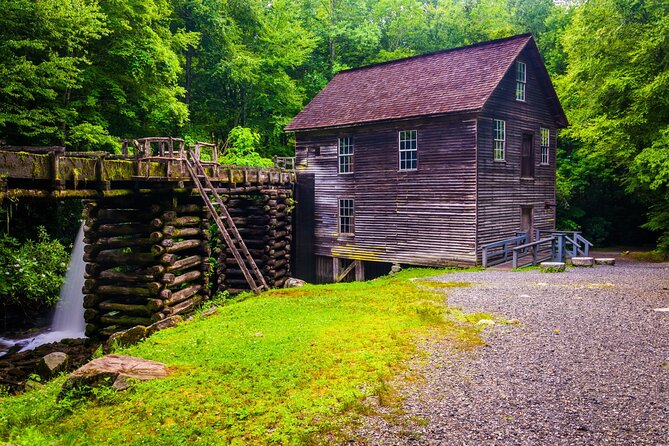
One of the nicest things about this tour is the option to detour to Mingus Mill. It is an 1886 grist mill that is still fully functional. If you are there on weekends, you may even see mill operators grinding corn like they did in the 1800s. Even if you do not catch that, the mill is one of those “wow, that is still working” moments.
Next you get Beech Flats Quiet Walkway. This is designed as a manageable way to soak up the forest without committing to an arduous hike. It is perfect when you want nature time but your group includes kids, older legs, or just people who do not want to race the clock.
Then comes Morton Overlook, one of the park’s most popular sunset spots. If you can time it, plan to arrive near golden hour. If not, it still works. You just get a different mood, less drama and more clarity.
Clingman’s Dome: the view you came for

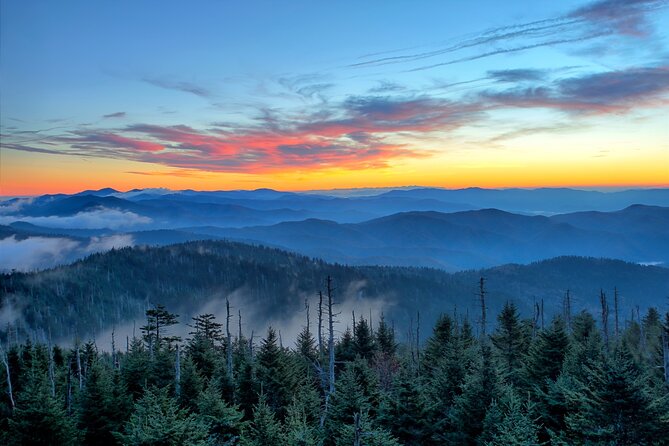
Clingman’s Dome is the kind of place where you understand why people talk about it. The tour leads you right to the observation tower, and the views are classic Smokies: ridges fading into mist, forests spreading out as far as your eyes can track.
A quick reality check for your day: access often involves a walk uphill from the parking area. Some visitors estimate about a half-mile uphill walk to reach the tower area, depending on where you park and where the sidewalks and access points lead.
If weather is foggy, the view can be limited. Your best shot is a clear day. Still, even when it is partly cloudy, the tower experience feels like a proper “arrived at the highlight” moment.
Morton Tunnel, Alum Cave history, and Smokies fire lessons

As you continue, you pass through the Morton Tunnel, where the audio picks up the story of Ben Morton, the politician the park remembers through names around the area.
Then you slide toward Alum Cave Trail. You do not need to hike the full trail to get value from the audio. The narration focuses on the remains of an old salt mine and the layered use of these mountains over time.
Near Chimney Tops Overlook, the tour shifts to a tough but important topic: wildfires and the long-lasting impact they can have on mountains and slopes. It is not just an environmental lecture. It helps you “read” what you are seeing, like burns and regrowth patterns instead of just a scorched view.
Sugarlands Valley Trail and the rare moment of easy access
Sugarlands Valley Trail is one of the tour’s best “everyone can do this” features. It is accessible by wheelchair or stroller, which makes it stand out in a park where many trails are steep and rocky.
The audio here is especially useful because it turns a walk into a history lesson. You get a sense of how settlers lived in this valley and how the story is more complicated than the simple postcard version.
If you have any mobility limits, this is the part of the day I would protect. Plan your breaks so you are not rushing. Even a short, gentle trail can feel long when you are trying to meet a timing window for another stop.
Waterfall route: Rainbow Falls to Cataract, then Grotto and the thousand drips
If you love waterfalls, this tour does not stop at one. It chains together several, each with a different feel.
Rainbow Falls is the headline. It is 80 feet, and it is described as the tallest waterfall in the Smokies. There is also the legend-like detail that when the sun hits just right, it can glimmer like a rainbow. Even if you do not get perfect sun angles, it is still one of the most satisfying stops on the drive.
Next is Cataract Falls. This one feels tucked away under a shaded canopy of beech trees. That shade matters in summer because it can make the whole area feel cooler, even if the air outside is warm.
Then you reach the Grotto Falls trail area. The waterfall itself may be less grand than Rainbow Falls, but the payoff is that it can feel more secluded and less crowded. If you want a quieter moment to listen to audio and take photos, this is a good candidate.
After that, you hit the Place of a Thousand Drips. Instead of one main drop, you get many narrow falls funneling into a single rushing torrent. It is a great “variety check” after the big dramatic falls.
Finally, Baskin Creek Falls rounds things out. The audio includes the amusing and slightly misguided history behind the name, which gives you a human angle on a natural feature.
A practical note on waterfalls and parking: some stops involve walking. In at least one case, visitors found that getting to a waterfall viewpoint along the Roaring Fork section required more walking than expected. If you have your heart set on specific falls, plan for extra time and consider boots or supportive shoes.
Newfound Gap and the old routes that shaped the Smokies
Newfound Gap is the classic Smokies pass, and the audio makes it more than a scenic checkpoint. You hear how trappers, farmers, and merchants used to cross the mountains, and how this gap changed travel and commerce over time.
Even if you have seen Newfound Gap before, the history layer helps you see it as infrastructure, not just scenery. It is a reminder that people have always been moving through these ridges, not just wandering for leisure.
If you are traveling at busy times, treat Newfound Gap like a “drive slow and pull in safely” place. The viewpoints here are popular for a reason.
The quirky museum stop you did not know you needed
At one point on the route, the tour pivots to a kitschy oddities museum. Think shrunken human heads and rare animal skeletons, with a backstory tied to how it started as a one-panel comic strip and grew into a national phenomenon.
If you like offbeat roadside detours, this is a fun palette cleanser. If you are museum-shy, you can keep it quick or skip it. The bigger point is that the tour does not only worship nature. It gives you a break from the outdoors rhythm.
Roaring Fork Motor Nature Trail, Reynolds Cabin tech, and the salamander stop
Roaring Fork Motor Nature Trail is where the drive shifts into a slower, scenic mode. The narration encourages you to slow down and enjoy the forest and historic buildings along the way. It also includes three of the park’s famous waterfalls, but access can mean more walking than you expect at peak times.
Parking can fill up during busy hours, and you might have to keep moving to find space. I would strongly recommend a calmer time of day or a quieter season if your goal is to park easily and enjoy without stress.
Next you pass the Reagan Cabin, with the story of old-timey technology called the tub mill. It is a neat “how did they do that?” moment, and it fits well with the surrounding theme of historic mountain life.
After that, you reach the Grotto Falls trail area again on the broader route plan, where the audio also points out a rare salamander found right there. It is the kind of detail that makes a stop feel specific and real instead of generic.
Gatlinburg finish, and why lifetime access changes the value
The tour ends in Gatlinburg. Even though the driving is the main event, you also get a clean cutoff point for your day, rather than trying to keep scanning your phone for “what’s next” until dinner.
The lifetime access is a big deal because the Smokies are not the same twice. Come back in fall for foliage, come back in winter for quieter roads (when weather allows), or repeat it on a day when you want to linger longer at waterfalls.
You might also notice things the second time. GPS audio is good for first-time orientation, but a repeat trip is where you start spotting details you missed earlier.
Should you book this self-guided driving tour?
Yes, if you want a value-priced way to experience major Smokies highlights without hiring a guide and without a group schedule. It is especially worth it if your group includes mixed ages or mixed hiking comfort levels, because there are genuinely accessible trail options like Sugarlands Valley Trail and lower-effort nature stops like Beech Flats Quiet Walkway.
Also book it if you like history with your views. The audio repeatedly connects the scenery to people and events, from conservation figures to mountain resource stories like the salt mine and the tub mill.
I would think twice if you hate phone setup or you tend to arrive without charging and downloading ahead. This tour works best when your GPS and location permissions behave, and when you start at the correct story point. If you want a zero-tech day, a traditional ranger-led program might be a better fit.
FAQ
Does this tour work without cellular service?
Yes. You are required to download the tour while you have strong wifi or cellular. After that, the tour and offline maps are designed to work without signal.
How long is the drive?
Plan on about 2 to 3 hours to complete the full route, which is described as 45+ miles long.
Is the price per person?
No. It is $16.99 per group, up to 4 people, so it is priced per car.
Do I need to buy park passes?
Park passes are not included.
How do I start the audio during the drive?
After booking, you will receive setup instructions and a password by email and text. Once onsite, open the Action’s Tour Guide App, launch the tour version matching your planned starting point and direction, then begin at the first story point. Audio starts automatically and plays based on your location.
What are the hours for this activity?
The listed opening hours are 9:00 AM to 5:00 PM, Monday through Sunday. The activity availability runs from 07/22/2020 to 03/01/2027.
Newest America reviews on the site
- Alaskan Cultural, Culinary and Lumberjack Show Experience★ 4.5 · 230 reviews
- 3 Hour Rainforest Walk & Totem Park Wild Wolf Tours★ 5.0 · 265 reviews
- Snorkel Alaska★ 5.0 · 301 reviews
- Bourbon History Tour★ 5.0 · 219 reviews
- Walking Food Tour Exploring Hanalei★ 5.0 · 282 reviews
- Waimea Canyon Downhill Bike Ride★ 5.0 · 650 reviews
- Kauai Adventure: Kayak & Hike to Secret Falls with Expert Guide★ 5.0 · 1,387 reviews
- Wailua River Kayak and Sacred Falls Guided Hike with Lunch★ 5.0 · 783 reviews
National Park Tours, compared.

Everglades National Park Airboat Tour & Wildlife Show
Read our review →


Grand Canyon National Park South Rim Bus Tour from Las Vegas
Read our review →
Bryce Canyon & Zion National Park from Las Vegas with Lunch, WiFi
Read our review →
Hilo Shore Excursion: Volcanoes National Park & Black Sand Beach
Read our review →
2-Hour Gettysburg Battlefield Guided History Bus Tour with a National Park Guide
Read our review →
Grand Canyon National Park South with Optional Upgrades
Read our review →Browse the lists this tour appears in